





Alicia Yubero: “‘The Ministry of Time’ is a very cinematic series”
The executive producer of TVE's new fiction bet analyzes in this interview the evolution of this genre and some of the most notable aspects in the production and post-production of 'El Ministerio del Tiempo'.
An interview by Rodrigo Espinel
ProduccionAudiovisual.com
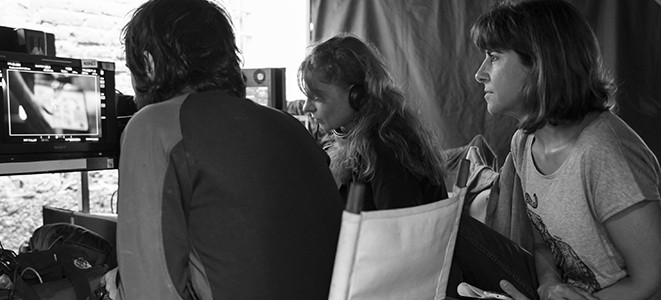
TVE has just premiered The Ministry of Time, his new fiction series. An original proposal that mixes fantasy, drama, comedy and adventure. Here's how it works: The government has a secret that has been kept away from public knowledge for centuries. A kind of magical doors that allow you to travel to any point in the past. Through them three time travelers fight to prevent any modification that could alter the History of Spain from a secret ministry (that of time). Alicia Yubero is its production director and executive producer.
With several proposals acclaimed by critics and supported by the audience, do you think we are living in a “golden age of television series” in Spain?
I think it is happening in many countries and also here. In recent years, fiction has evolved a lot. We make series of different genres and many of them are among the programs with the most audiences every day, above the big productions from abroad.
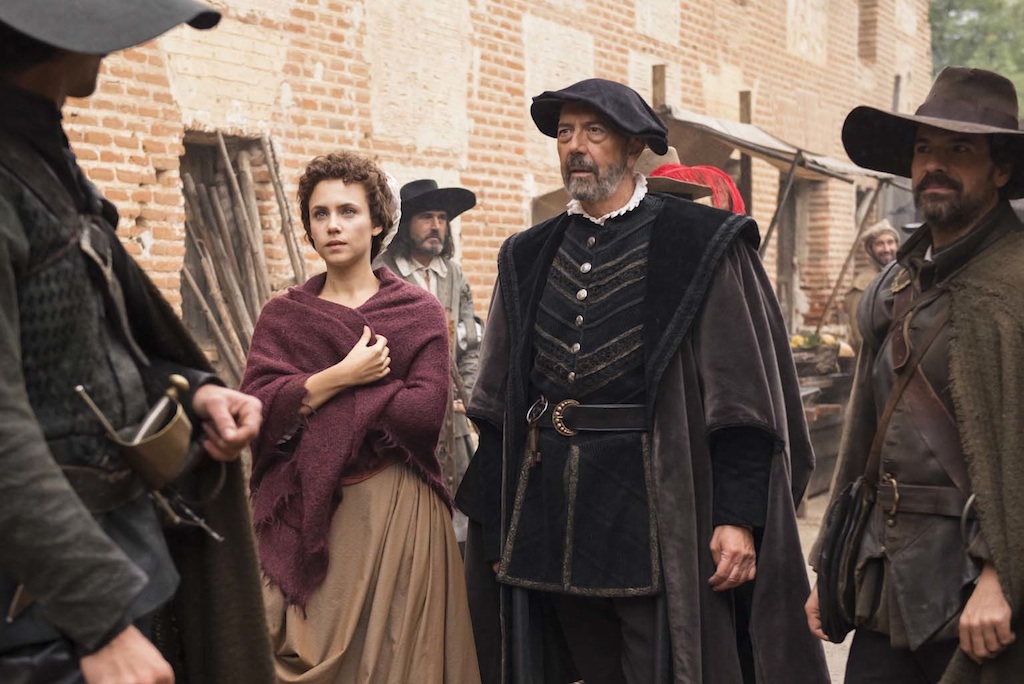
The Ministry of Time It is TVE's new commitment to the fantasy genre. What do you think are the network's criteria when choosing a specific project?
I hope they are audience seeking through quality products. In the case of The Ministry of Time, is a commitment to a relatively new genre on our television. I think it is more of an adventure series with classic overtones, written and done with a sense of humor, than science fiction. Trips to the past are a pretext to explore episodes of our history. The anecdotes and characters are ours, but what underlies it is universal, the dilemma or drama of being able to change the past of others but not your own.
The series surprises because in each chapter it travels to a different moment in history. From a production point of view, what is the most important challenge you have had to face?
That one precisely. As each chapter takes place in a time period, we have had to consider them as almost independent filming units. The immediacy of the broadcast and the complexity of post-production have contributed to this. We have had to shoot the chapters linearly, without being able to group locations, for example. If in all the series the preparation, recording and post-production work of the chapters overlaps, in The Ministry of Time the effort has been greater for all departments: locations, sets, costumes, characters, characterization... Different in each episode.
Approximately, what budget do you have for each chapter? What is the most important game?
Approximately 550,000 euros per chapter. The most important, personal item, by far: technical and artistic team. Then, scenery.
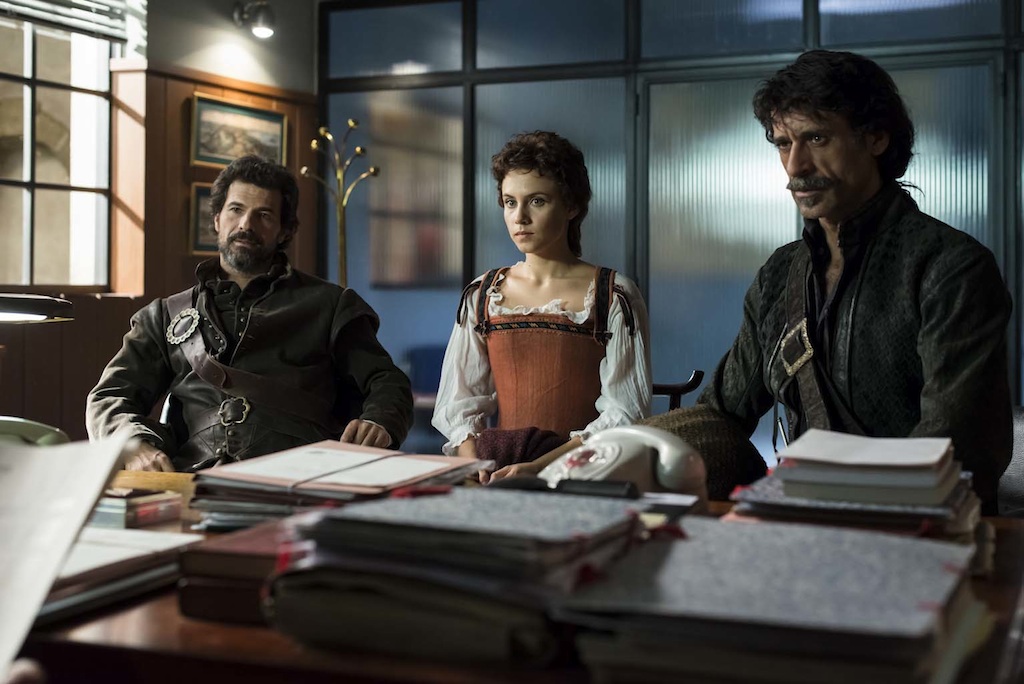
Could you briefly explain the production values of the series?
We have recorded 8 episodes between October and February, with an average of 10 days of recording per episode, with two cameras. We have barely made double units, because the weight of all the plots has fallen on the protagonist patrol. It was difficult to shoot days without the three main actors.
Except for the direction of photography, there has been a single person in charge per department, with the teams organized into even-odd or preview-shooting-dismantling chapters. The director of the series who has set the main guidelines and supervised all the chapters, in addition to directing half of them.
From the beginning, collaboration between all departments was very important, especially between Art and VFX (along with direction and production). You just have to watch the series to realize the work done by the entire team. The series has great visual and sound appeal, but the key is the scripts. I think it has been a challenge for everyone to work on such a demanding project.
On its opening night, more than 7 million viewers watched your series at some point, triumphing especially on social networks. Nowadays, is it produced thinking about an audience that is already multi-screen?
We are still assimilating the enormous impact on social networks and how that will translate into the number of real viewers of the series. The week before the broadcast there has been real expectation. We did a press screening of chapter 1 prior to the press conference and it was very favorably received.
During the broadcast of the first episode, the official MdT account #MdT1 was already Trending Topic. And others even spontaneously appeared, such as #ElMinisteriodelTiempo or #RodolfoSancho, which became global trending topics! Countless Twitter users declared themselves fans of the series.
Let's see how this translates into real audience, both in viewers of the broadcast on La1 and through the Internet.
On the other hand, in cinema you have worked alongside Daniel Sánchez Arévalo as production director of his films The Great Spanish Family y Cousins. What do you think is the main difference between producing for film and producing for television?
Without entering into the first phase, the development of the project (script writing, financing or in the case of television, sale to a network), the big difference is that in cinema you start working with a single script, already written, which allows you to plan and budget for something closed and in television parts of a general idea (the Bible) and more or less defined plot lines for each chapter. You rarely have several scripts written and approved. You have to prepare the work plan taking into account many conditions: not only the locations or the actors' sessions but also the post-production times or the delivery times to the chain. In our case, the issue date has conditioned the entire work calendar.
When we say that The Ministry of Time It is a very cinematic series, we refer to the formal finish, the quality of the photography, the set design, the costumes, makeup, sound... Also to the filming: we have mobilized a superior team, in technical and human resources, than that of most national film productions.
Proportionally, the budgets and deadlines are lower in television: In just ten days we have shot 70 minutes of fiction, with many more exteriors than set, with different periods, even within the same episode, with “movie” qualities. Each chapter has been prepared in just over a week. As for post-production, the editors have worked very well and very quickly, as have those in charge of VFX. And the musician and those responsible for the sound. It is difficult to imagine that this level of quality can be achieved in these times.
Did you like this article?
Subscribe to our NEWSLETTER and you won't miss anything.
Related articles
 Globomedia and Onza Partners begin recording the fourth season of 'El Ministerio del Tiempo'
 This is how the new virtual reality installment of 'The Ministry of Time' was filmed
 'The Ministry of Time' is filming these days in Peñíscola
 Netflix acquires the broadcast rights to 'The Ministry of Time'
 Onza Entertainment begins filming the third season of 'The Ministry of Time'
 'The Ministry of Time' will have a third season
 China and Portugal will produce adaptations of 'The Ministry of Time'
 TVE premieres with 'El Ministerio del Tiempo' the first virtual reality episode of a series in the world
 'The Ministry of Time' returns to TVE leading prime-time with a 14.6% share
 Javier Olivares presents 'The Ministry of Time' at the FIPA International Festival in Biarritz
 'The Ministry of Time' convinces at the MiM Awards
 TVE and Onza begin filming the second season of 'El Ministerio del Tiempo'
 TVE takes a risk with 'El Ministerio del Tiempo' with new formats
 Onza Partners and Cliffhanger produce the new series 'El Ministerio del Tiempo' for TVE