





V-Nova's Perseus technology made it possible to send and receive HD video telemetry from the E-Fan
The flight of the first electric twin engine between Lydd (England) and Calais (France) has not only been a historic milestone for Aisbus but also for the V-Nova consortium in order to demonstrate the robustness of its HD signal compression technology over 3G networks.
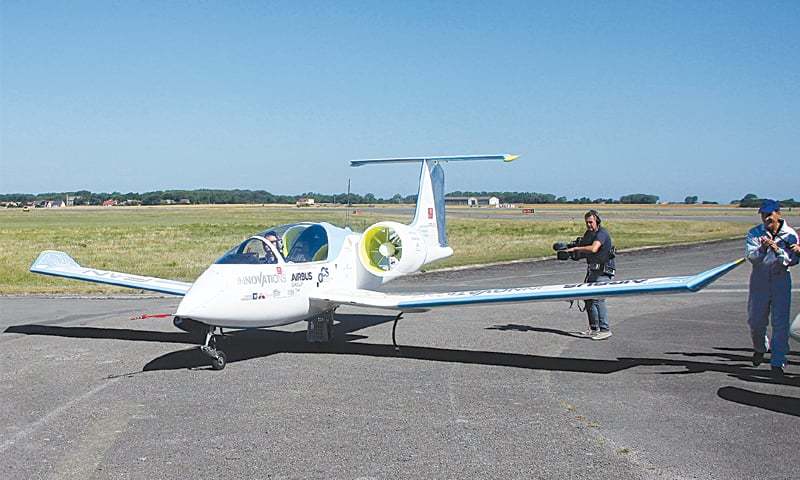
The 37-minute flight carried out on July 10 by the Airbus E-Fan prototype traveling the 74 kilometers between Lydd (England) and Calais (France) was not only historic because it was the first electric twin-engine to cross the English Channel under its own power. For the consortium V-Nova It has also been a historic moment to demonstrate the robustness of its HD signal compression technology through 3G networks.
During the flight, Perseus technology has made it possible to send video telemetry in high definition both in download and upload at 720p 25fps using public 3G mobile networks with an 80% reduction in bandwidth.
"The ability to demonstrate up/down stream HD video telemetry over 3G networks from a moving aircraft under highly dynamic operating conditions is a testament to the robustness of Perseus and its broad applicability across multiple industries, including aerospace. We are proud to assist the exploration of these applications together with the Airbus group and see great potential in this relationship," commented Guido Meardi, CEO and co-founder of V-Nova.
Perseus technology has been developed and tested over the last five years within a consortium formed by around twenty companies such as Broadcom, Dell, Encompass, Hitachi, Intel, Sky Italia, TataSky, VisualOn and Wtplay, among others.
[youtube]https://www.youtube.com/watch?v=vN-xWsmUAZ4[/youtube]
Did you like this article?
Subscribe to our NEWSLETTER and you won't miss anything.
Related articles
 V-Nova demonstrates its hierarchical data coding technology at the IBC 2024 AI Tech Zone
 Teradek TV arrives, platform to configure and send UHD encrypted video feeds
 Trail Blazers, first NBA team to broadcast AR graphics from a camcorder with disguise technology
 A private 5G network deployed by QTV allowed coverage of Elizabeth II's last trip from Scotland
 Mo-Sys technology allows Papertown to fly from a virtual plane
 Newton's stabilized head allowed images to be captured from the top of the Oscars stage
 Latest advances in coding with Perseus from V-Nova
 DJI M600, a drone capable of sending 1080p video from five kilometers away
 V-Nova's Perseus technology allowed in the 'Classic' to carry out contributions in UHD at low latency
 V-Nova's Perseus video compression system now offers support for Nvidia GPUs
 The Firstv1sion system made it possible to follow the Spanish Athletics Championships from “the eyes of the athlete”
 Blackmagic technology allowed the distribution of signals to different spaces of the Eurovision Song Contest
 Satellite, the technology most used by Europeans to receive television in SD and HD
 The EBU will broadcast live from the European Parliament with hybrid radio technology