





The ICT hypersector in Spain experienced an increase of 2.1% in 2014
Primer cambio de tendencia tras haber caído un 18% en el periodo 2008-2013. La cifra de ingresos procedente de contenidos audiovisuales es de 8.490 millones, lo que supone un incremento del 4,9% frente al año anterior.
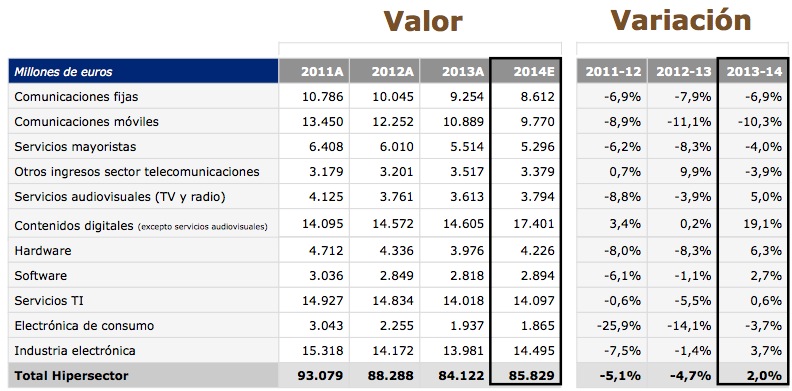
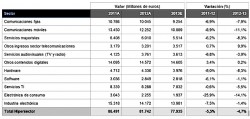
El mercado español de las TIC y los contenidos digitales experimentó un incremento del 2,1% en el 2014, alcanzando, aproximadamente, una cifra de negocio de 86.000 millones de euros, lo que supone el primer cambio de tendencia tras haber caído un 18% en el periodo 2008-2013. No obstante, las telecomunicaciones y electrónica de consumo continúan en recesión.
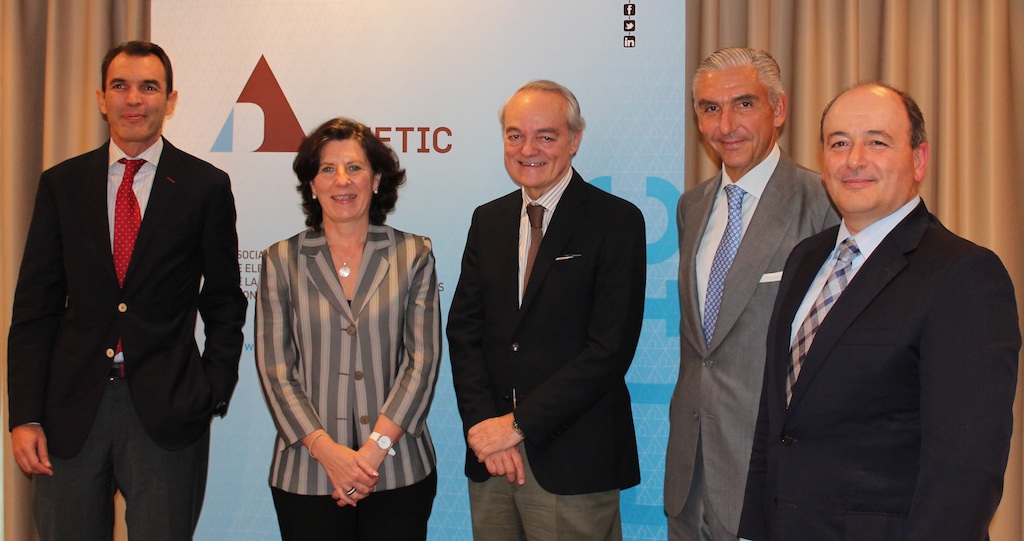
To AMETIC, Asociación Multisectorial de Empresas de la Electrónica, las Tecnologías de la Información y Comunicación, de las Telecomunicaciones y de los Contenidos Digitales, los datos son buenos ya que se trata del primer síntoma de recuperación, sin embargo, subrayan, “no podemos obviar que el sector TIC en Norteamérica ha crecido un 4,7% en 2014 (y sigue acumulando años en positivo), que en la zona Asia/Pacífico lo ha hecho a un 6,3% o que en LatAm ha experimentado un incremento del 6,7%”.
La patronal tecnológica asegura que los gobiernos de la Unión Europa no están resolviendo a tiempo la necesidad de una Economía Digital. “Tenemos que presionar activamente para lograr que cumplan con su obligación y terminen un diseño adecuado a la mayor brevedad”. Y asegura que es preciso el liderazgo empresarial en el proceso de transformación digital de nuestros sectores productivos. “No podemos esperar a que las Administraciones lo hagan por nosotros. Porque no van al ritmo adecuado”. Por lo cual entiende que es indispensable restituir el valor de la figura del empresario, “como generador de empleo y riqueza”. Para AMETIC, la maquinaria educativa del Estado no produce los profesionales que el sector demanda, “lo cual está lastrando el desarrollo de la economía digital”. Y subrayan, “se sigue sin entender que la innovación que propicia la revolución digital es una cuestión de Estado y que las inversiones han de multiplicarse con carácter inmediato”.
Según José Manuel de Riva, presidente de AMETIC, “Europa ha perdido una posición de liderazgo industrial y, además, nuestra tasa de crecimiento es inferior a la de nuestros competidores, luego no parece posible recuperar este liderazgo a corto plazo con las condiciones regulatorias, estructurales (particularmente la educación) y de mercado actuales”.
La inversión de los sectores productivos en USA es un 50% superior a la inversión en TIC en Europa. Sólo un 1,7% de las empresas europeas se ha transformado digitalmente de manera intensiva. Un 41% de las empresas europeas ni tan siquiera han iniciado el camino.
 Audiovisual
Hay tres segmentos de negocio que concentran un 90% de los ingresos. Contenidos Audiovisuales (televisión, cine y video), Business to Business (Plataformas para transacciones electrónicas, Contenidos digitales profesionales y herramientas para desarrollo de software profesional para contenidos digitales) y e-Content (e-gambling, e-commerce, e-learning y e-advertising) con un peso dentro del sector de un 35%, 20% y 36% respectivamente.
En el caso de Contenidos Audiovisuales la cifra de ingresos es de 8.490 millones, y su incremento con respecto al año pasado se ha mantenido en un 4,9%. Business to Business alcanza un volumen de ingresos igual a 4.799,3 millones de euros con un incremento con respecto a 2014 de un 10%.
Electrónica de consumo
Según los datos que maneja AMETIC, podemos observar un notable descenso de los ingresos en electrónica de consumo, pasando de 924,8 millones de euros en el primer semestre del 2014 a 846,5 millones en el mismo periodo del 2015, lo que supone una caída del 8,5%.
Sin embargo, dos aspectos pueden interpretarse como anticipo de un cambio de tendencia. Por una parte, el subsector Imagen, que representa el 74,8% del total, ha tenido una caída en ingresos menor que la del cómputo global, esto es del 7,5%. Por otro lado, se aprecia un buen comportamiento del sector de Recording Media, que supone aproximadamente el 6% del total y que ha tenido un incremento de ingresos de un 5,6% con respecto al primer semestre del pasado año.
Concienciación frente a las TIC
AMETIC se lamenta de que la baja concienciación social, administrativa, empresarial y política frente a las TIC haya desencadenado factores negativos como un mercado fragmentado, lejos de convertirse en un mercado único digital eficaz; una Agenda Digital Europea con un impacto insuficiente; ecosistemas débiles de industrias digitales en Europa; así como una pérdida importante de capital intelectual. Y afirman que lo más desalentador es que “sin una revolución digital no seremos capaces de incrementar nuestra competitividad, estando cada vez más distantes de otras economías avanzadas”.
¿Cuáles son los pilares que sustentarían un más rápido, eficaz y próspero avance hacia la economía digital? Según AMETIC, un Mercado Único Digital Europeo operativo a la mayor brevedad posible; el impulso decidido de la Industria TIC en Europa; y la transformación Digital de los Sectores productivos, de la Sociedad y de las AA.PP.
Aunque el discurso político, venga de donde venga, incluye en su doctrinario las palabras “innovación”, “digital”, “Internet”,…. “La realidad –aseguran desde la patronal tecnológica- es que ningún Gobierno ha sido aún lo suficientemente atrevido como para hacer de la Economía Digital una apuesta para nuestro país. Y aún observamos que existe dificultad para asimilarlo adecuadamente”.
Para lograr, a juicio de AMETIC, serian necesarias una legislación y regulación orientadas al crecimiento y la inversión; la orientación a la transformación digital y a la evaluación de los resultados; y una mayor velocidad en el cambio.
“Y si se nos pregunta quiénes son los actores, necesariamente hemos de decir que nos encontramos en un momento en el que los empresarios han de asumir mayor liderazgo y responsabilidad en el proceso, pues los gobiernos resulta obvio que no logran ir al ritmo de esta revolución. La Unión Europea no se puede permitir el lujo de fallar otra vez en sus planes estratégicos”, aseguran.
¿En qué dirección debe ir España?
España aparece situada en el puesto 34 del índice NRI (índice del World Economic Forum) del año 2015, que se calculó considerando 143 países. “Nuestro país no puede conformarse con un puesto tan discreto en la Economía Digital”, afirman desde AMETIC.
Para lograrlo, estas son las recomendaciones que se hacen desde AMETIC para España: contar con una estrategia de infraestructuras orientada a la inversión; mayor inversión del sector privado en su transformación digital; y desarrollo de poyectos tractores multisectoriales, apoyados en TIC, que mejoren la competitividad y contribuyan al desarrollo de la Industria (Smart Cities, Industria 4.0, Infraestructuras inteligentes de transporte, Turismo inteligente, …). También consideran que la maquinaria educativa española no está formando adecuadamente los profesionales del futuro que demandan las empresas y esto se debe corregir. Por último, desde AMETIC señalan que es necesario un esfuerzo público-privado para incrementar la inversión en I+D+i.
Did you like this article?
Subscribe to our NEWSLETTER and you won't miss anything.
Related articles
 The digital content industry increased its turnover by 4.8% in 2016
 The Information Technology sector registers an increase in its activity of 7%
 The increase in smart devices, mobile video and 4G networks will multiply global mobile data traffic by 8
 Cellnex Telecom's revenues reach 453 million euros, an increase of 42%
 Income from the audiovisual sector in Spain exceeded one billion euros in 2014
 The ICT hypersector persists in its contraction in 2013
 Adobe's CreateNow Tour Spain 2014 will visit four cities in October
 The spot for the 2014 Cycling Tour of Spain will be filmed in Cádiz
 La Pasión del Prado is shown at BIT Broadcast 2014 as the “Spain brand” of 4K
 BIT Broadcast 2014 will be the framework for the presentation in Spain of the AEQ-Kroma group
 Sennheiser achieves strong increase in billing and profits
 The increase in unemployment in the audiovisual sector was 9.3% in 2011
 Panorama Audiovisual increased its unique visitors by 65.2% in 2011
 The AVA Foundation and Andalucía Emprende organize the First ATIC Hypersector Meeting