





The Constitutional Court endorses the constitutionality of the General Telecommunications Law
El Pleno del Tribunal Constitucional desestima el recurso de inconstitucionalidad interpuesto por la Generalitat de Cataluña contra varios artículos de esta ley.
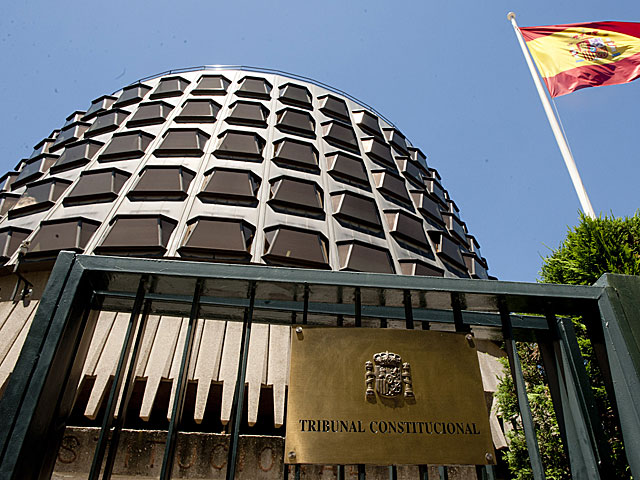
El Pleno del Tribunal Constitucional ha dictado Sentencia en el recurso de inconstitucionalidad interpuesto por la Generalitat de Cataluña contra los artículos 34.3, 5 y 6; 35.4 y 7; 65; 69.j).6; y, por conexión, 73 y 74, de la Ley 9/2014, de 9 de mayo, General de Telecomunicaciones, desestimando el recurso, con la excepción de la declaración de inconstitucional y nulo, un inciso del párrafo quinto del artículo 34.6 de la Ley, relativo a una regulación puntual de un plazo.
La Sentencia del Pleno del Tribunal Constitucional dictada el 4 de febrero de 2016, que resuelve el recurso de inconstitucionalidad que interpuso la Generalitat de Cataluña el 5 de febrero de 2015, señala en los antecedentes que el recurso dividió los preceptos impugnados en dos bloques: el primero integrado por los artículos 34.3, 5 y 6; 35.4 y 7 y 45.4 de la Ley General de Telecomunicaciones, que a juicio del recurrente, vulneraban las competencias exclusivas de la Generalitat sobre ordenación territorio, el paisaje y el urbanismo (artículos 149.1 y 5 del Estatuto de Autonomía de Cataluña); y un segundo bloque de preceptos recurridos que incluye los artículos 65, 69.j).6 y, por conexión, 73 y 74 que infringían su competencia sobre regulación y control de los medios de comunicación audiovisual (artículo 146 del Estatuto de Autonomía).
Tras recordar la doctrina constitucional en relación con supuestos de concurrencia de los títulos competenciales sectorial (telecomunicaciones), de titularidad estatal y títulos de carácter transversal u horizontal (urbanismo, ordenación del territorio), de titularidad autonómica, el Tribunal señala en relación con el primer bloque de preceptos que no ve una limitación vulneradora de dichas competencias autonómicas en materia de urbanismo y ordenación.
Tampoco aprecia el Tribunal inconstitucionalidad en los artículos del segundo bloque de preceptos impugnados, el 65 y el 69.j).6. y por conexión, 73 y 74, concluyendo el máximo órgano constitucional que “las competencias autonómicas sobre medios de comunicación social no incluyen la inspección, control y protección del uso del dominio público radioeléctrico desvinculado de los medios de comunicación social usuarios del mismo, de sus títulos habilitantes y de los contenidos difundidos”.
Sin embargo el Tribunal declara inconstitucional y nulo el inciso del párrafo quinto del artículo 34.6 de la Ley, párrafo relativo al plan de despliegue o instalación de red pública de comunicaciones electrónicas, que se entenderá aprobado si la administración pública competente, no ha dictado resolución expresa. El Tribunal considera necesario en este caso el establecimiento de la regla general del silencio positivo para garantizar el funcionamiento del sistema, eliminando la incertidumbre asociada a la falta de respuesta. Sin embargo, no ampara la fijación del concreto plazo de dos meses dado para la aprobación de los planes, contenida en el inciso “transcurridos dos meses desde su presentación”, que considera que vulnera la competencia de la Generalitat en materia de procedimiento administrativo.
La ley también impulsa una simplificación administrativa, eliminando licencias y autorizaciones y eliminando cargas administrativas innecesarias e introduce medidas que permiten el acceso a las redes de operadores de otros sectores como el del gas, la electricidad o el transporte en condiciones equitativas, no discriminatorias, neutrales y orientadas a costes.
Por otro lado, refuerza la coordinación de los Derechos de Usuarios estableciendo un procedimiento para solucionar las posibles controversias a través de una Comisión Bilateral constituida al efecto. También refuerza el control del dominio público radioeléctrico y modifica otros textos legales como la Ley 34/2002 de 11 de julio, de Servicios de la Sociedad de la Información y de Comercio Electrónico introduciéndose precisiones sobre las cookies.
Did you like this article?
Subscribe to our NEWSLETTER and you won't miss anything.
Related articles
 The Government appoints Matías González Martín new Secretary General of Telecommunications
 Is DAB in Spain getting closer? The tender reaches the Constitutional Court
 COITT will present the challenges and opportunities of the new General Telecommunications Law in a new event
 The COIT highlights the progress of the new General Telecommunications Law, in which it has actively participated
 Congress gives the green light with broad political consensus to the General Telecommunications Law
 Congress gives the green light to the General Telecommunications Law Project
 The Government gives the green light to the new General Telecommunications Law
 Roberto Sánchez assumes the general direction of Telecommunications and Information Technologies
 El Tribunal de la UE avala el modelo de financiación de RTVE
 Congress gives the green light to the new General Telecommunications Law
The new General Telecommunications Law could be approved in the first months of 2014
Congress gives the green light to the new General Telecommunications Law
The new General Telecommunications Law could be approved in the first months of 2014
 AMETIC positively values the draft General Telecommunications Law
The Government approves the new General Telecommunications Law
AMETIC positively values the draft General Telecommunications Law
The Government approves the new General Telecommunications Law
 Bolivia enacts the General Telecommunications Law