





Reasons to migrate to new generations of smart tape from Fujifilm
La cinta que hasta ahora se consideraba como un soporte para copia o archivo a largo plazo comienza a vivir una segunda edad dorada como un sistema de acceso de primer nivel junto con los sistemas LTO de nueva generación.
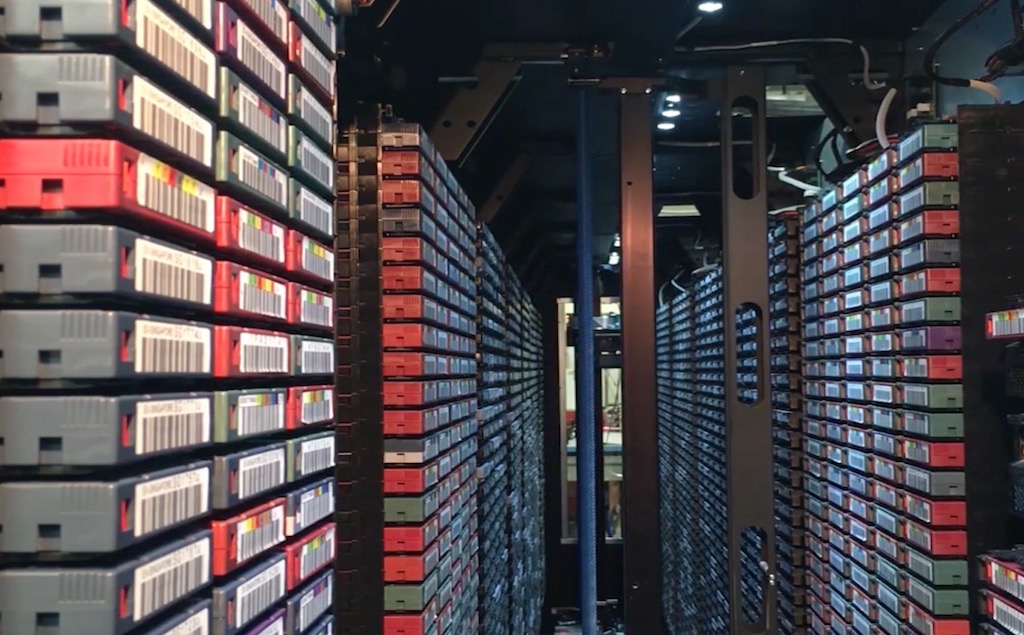
Fujifilm está dispuesta a demostrar que, a pese a la opinión de muchos, la cinta no está muerta en entornos broadcast y corporativos.
La división de recording media en la multinacional japonesa continúa desarrollando innovadores sistemas de almacenamiento sobre soportes magnéticos en cinta. De hecho, es el único fabricante de cintas que cuenta con dos centros de producción propia, garantizando así una total estabilidad en el suministro. Además, tres centros de servicio técnico aportan un valor añadido de soporte para clientes contando, incluso, con un servicio de atención telefónica personalizada para sus clientes.
Uno de los pilares sobre los que el área de recording media de la compañía basa su actividad actualmente es la tecnología LTO. Durante más de una década, esta tecnología está demostrado su efectividad en la conservación y la protección de datos críticos en los entornos empresariales más exigentes. A lo largo de los últimos años cada nueva generación LTO mejora la capacidad de lectura y escritura. Por ejemplo, la última generación actualmente en el mercado, el LTO 7, proporciona una velocidad de transferencia casi dos veces más rápida que el LTO 6.
Su gran capacidad, bajo precio y gran portabilidad hacen de la cinta una opción a tener muy en cuenta no solo en media, entretenimiento, postproducción y conservación de fondos sino también en otras aplicaciones como digitalización de grandes volúmenes de datos, salud, big data, imagen satelital…
Referencia mundial
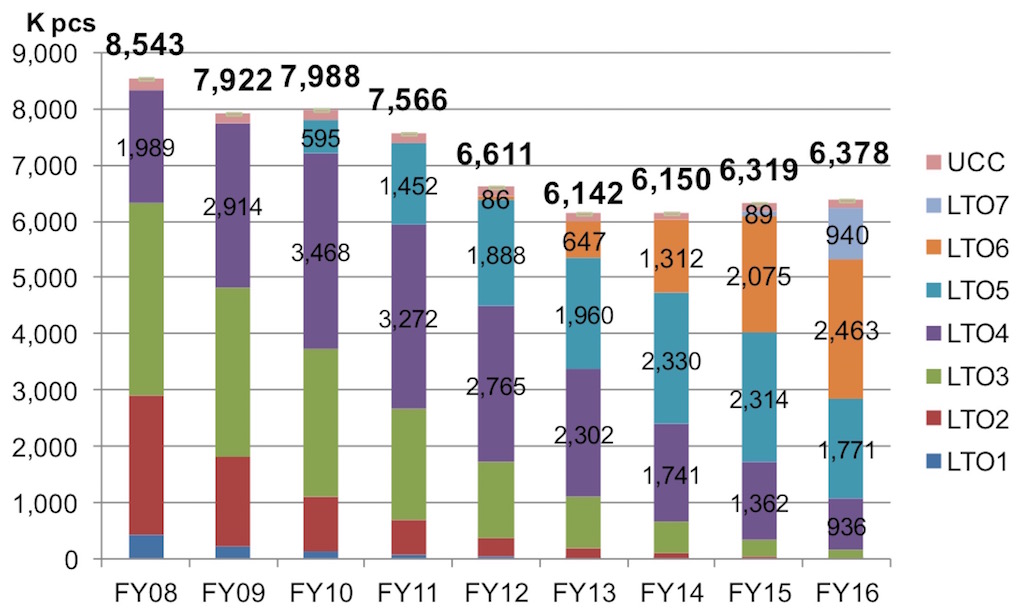
Fuji fabrica actualmente el 60% de las unidades de cintas distribuidas en todo el mundo. A lo largo de los últimos años, ha ido evolucionando los materiales en los que basa la fabricación de cintas. Hoy por hoy, las partículas Barium Ferrite (BaFe) se han impuesto a las partículas de metal. Entre sus ventajas, frente a las partículas de metal, destaca el hecho de que las propiedad magnéticas del Barium Ferrite no dependen de su forma ya que están verticalmente magnetizadas alcanzando un mayor rendimiento con respecto a las partículas magnéticas por minúsculas que éstas sean. Como es obvio, unas altas propiedades magnéticas conduce siempre a menores pérdidas de rendimiento.
Uno de los problemas que las partículas de metal arrastraban era su oxidación con el consiguiente impacto en la reducción del rendimiento de lectura y escritura. En el caso de la tecnología Barium Ferrite, al tratarse de un óxido no se deteriora por oxidación, manteniendo en todo momento el máximo rendimiento.
Las cintas de alta capacidad que usan Barium Ferrite ofrecen no solo mayor velocidad de escritura e integración de datos en comparación con un disco duro y con las antiguas generaciones de cintas LTO que no empleaban este material.
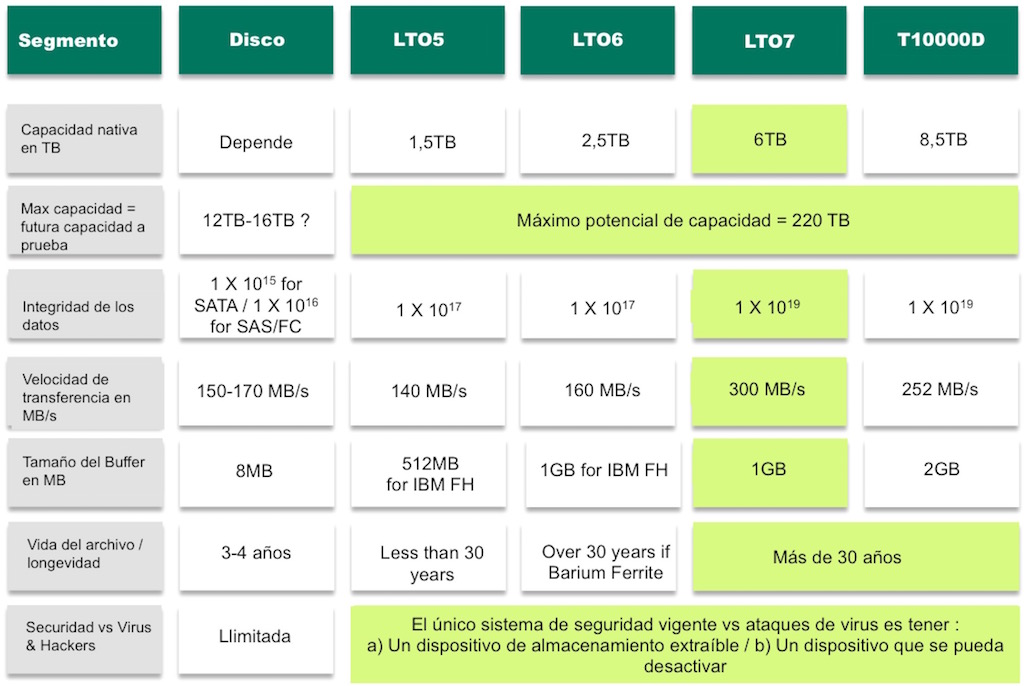
Con BaFe se puede fabricar una cinta con 88 veces mayor capacidad que una cinta LTO6 y más de 146 veces en relación al LTO5, por ejemplo.
A la espera de que lleguen al mercado las nuevas generaciones de LTO que verán la luz en los próximos tres años (hasta LTO 10), en este momento el uso del LTO 7 permite llevar a cabo un backup 2,15 veces más rápido que en LTO 5.
Future proof
Uno de los aspectos que han vuelto a traer a la cinta a primera línea entre las opciones de almacenamiento de grandes volúmenes de datos es su inmunidad frente a ataques de virus o hackers.
Según algunos estudios la cinta sería más fiable que el disco ya que es más sólida, segura y con un riesgo de pérdida de datos es más de cien veces menor que el disco.
En lo que a capacidad se refiere, la cinta es ya capaz de multiplicar por 22 la más alta capacidad existente, mientras que el disco ha alcanzado su más alta densidad de almacenamiento.
Además, es más rápido restaurar datos desde una cinta que desde un disco usando la deduplicación y los datos deduplicados deben ser “rehidratados” (consumiendo tiempo y esfuerzo…)
Huella ecológica
El uso de BaFE asegura, por otra parte, una mayor vida útil del soporte. Una cinta basada en este material tiene asegurada una vida útil por encima de 30 años en condiciones normales.
Por otro lado, en lo que respecta al ahorro de espacio y energía, el LTO 7 necesita 2,4 veces menos slots en la librería que el LTO 6 y cuatro veces menos que el LTO 5.
Según un estudio de Clipper Group el disco usa 105 veces más energía que la cinta para una solución de 1PB (con un crecimiento de un 45% en 9 años). La cinta también permite ahorrar más de 34.000 megavatios-hora de electricidad.
Fuerte apuesta por el I+D
Fujifilm, con oficina central en Tokio, está presente en 140 países con 273 filiales donde trabajaban cerca de 80.000 profesionales. Sin duda, uno de los puntos fuertes que han posicionado a Fuji en primera línea de la innovación tecnológica es su fuerte apuesta por el I+D desde sus más de veinte centros dedicados a la investigación. Para hacernos una idea de la dimensión de este empeño por crear constantemente nuevos niveles de calidad, destacar que solo este año, Fujifilm destina a esta partida 1.300 millones de euros. Es precisamente este compromiso con el I+D lo que le ha permitido dar un paso de gigante en lo que podríamos ya denominador como la nueva cinta inteligente…
[youtube]https://www.youtube.com/watch?v=BoSwjgs21pA[/youtube]
Did you like this article?
Subscribe to our NEWSLETTER and you won't miss anything.
Related articles
 Fujifilm brings the cinema look and efficient data storage on tape to broadcast
 GECA and Konodrac agree to work hand in hand to promote hybrid television
 Fujifilm focuses its presence at IBC on new solutions in data storage and optics
 Ross Video explains the reasons why he will not attend IBC 2021
 Actus Digital will demonstrate its intelligent media platform and the possibilities of intelligent compliance at IBC
 Fujifilm adds new compact 4K broadcast lenses to its portfolio
 Masato Yamamoto, presidente de Fujifilm Europe, inaugura las nuevas oficinas de la multinacional en Madrid
 Salvador Luna (Fujifilm): “the new Premista are premium lenses designed for sensor sizes up to Vista Vision”
 Movistar+ trusts its storage to Fujifilm LTO7 tape
 Fujifilm supplies 22 new 4K HDR Fujinon UA lenses to BBC Studioworks
 Audio-Technica Unveils New Generations of 3000 and 5000 Series Wireless Microphones
 Fujifilm will actively participate with its new MK series lenses at the Sony Pro Tour
 'Blade Runner 2049' returns us to the universe that captivated generations
 Mil y una razones para confiar en la tecnología de Tedial