





Movistar+ trusts its storage to Fujifilm LTO7 tape
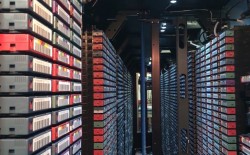
With the aim of optimizing space with solutions that offer higher performance, Movistar+ has now adopted the new generation of LTO7 tapes with which it hopes to face new challenges such as Ultra High Definition.
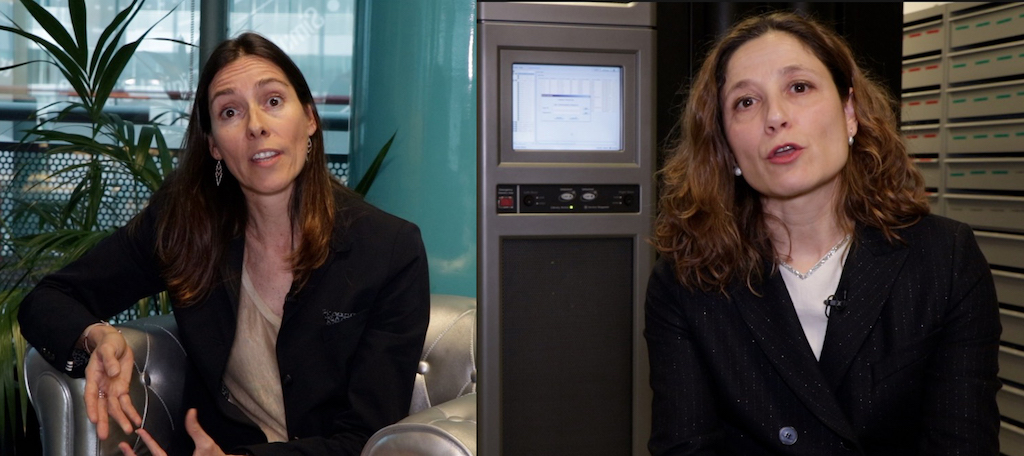
Manuela Martínez, head of engineering and maintenance Movistar+ y Anna Baldris, responsible for the Data Storage Division for Spain and Portugal in Fujifilm In this video interview they review how the experience of the Movistar+ platform is being in terms ofLTO7 tape storage.
The introduction of high definition in Movistar+ has meant the adaptation of all the processes involved in the life cycle of the content and logically the archive has been one of the key points by exponentially multiplying storage needs.
The digital archive of the platform has its origins in the one that was designed in 2002 coinciding with the launch of the Tres Cantos center (Madrid).
In 2008, the platform launched its first HD channel, starting to work with a 120 Mbps per second format, which in some cases meant multiplying the file size by five.
To respond to this demand, a new storage system. In 2010, the file system was renewed, going from a capacity of 100 GB to 800 GB thanks to the adoption of Fujifilm LTO4 tapes (with an ingestion of 7 drives).
Throughout all these years Fujifilm has accompanied the platform, initially as Digital Plus and later as Movistar+ after the purchase of Telefónica, throughout the digital transformation that has entailed the transition from analog to digital and the adoption of high definition.
Continuing with the objective of optimizing space with solutions that offer greater performance, Movistar+ has now adopted the new generation of LTO7 tapes with which it hopes to face new challenges such as Ultra High Definition.
This new generation of LTO has exponentially multiplied performance capacity, transfer and writing speed as well as the integrity of the data.
Until the LTO6 generation, dual heads were used. Now in an LTO7 environment the revolutionary Terzetto head from IBM It has improved writing and reading (with a 32-channel head, 2 times more channels than the traditional head). Additionally, Barium Ferrite technology has allowed the LTO7 drive to write data 2.5 times faster than an LTO4 drive.
These developments will allow the platform to increase the number of services and the launch of new channels in high resolutions in an environment with maximum security.
https://www.youtube.com/watch?v=z99q6UBVYLU
Did you like this article?
Subscribe to our NEWSLETTER and you won't miss anything.
Related articles
 The Film Academy proposes the film 'Sirât' to represent Spain at the Oscars
 Fujifilm gains storage density with new LTO Ultrium 10 data cartridge
 Fujifilm brings the cinema look and efficient data storage on tape to broadcast
 Fujifilm exhibits its solutions for broadcast, projection and data storage at ISE 2024
 Movistar Plus+ trusts Podium to launch the video podcast 'Los del Plus'
 The new Duvo 24-300mm lens and Kangaroo storage, Fujifilm's protagonists at IBC 2023
 Fujifilm focuses its presence at IBC on new solutions in data storage and optics
 LTO8: the tape lives on… and it is a revolution in terms of capacity
 This is and this is how the future of tape storage in broadcast environments will be
 Reasons to migrate to new generations of smart tape from Fujifilm
 Fujifilm and Imagina bet on LTO storage
 HSE24 relies on Harmonic for shared storage in post-production and playout
 Antena 3 relies on EVS O³ servers to digitize 150,000 hours of tape content
 The CATA of the SGAE trusts in DDN storage