





Deliver live video from the cloud when the whole world is watching
Viewers want to experience experiences with video on demand similar to those they have with linear television at major sporting events. Ian Munford presents in this Forum some suggestions to help programmers offer an excellent Quality of Experience.
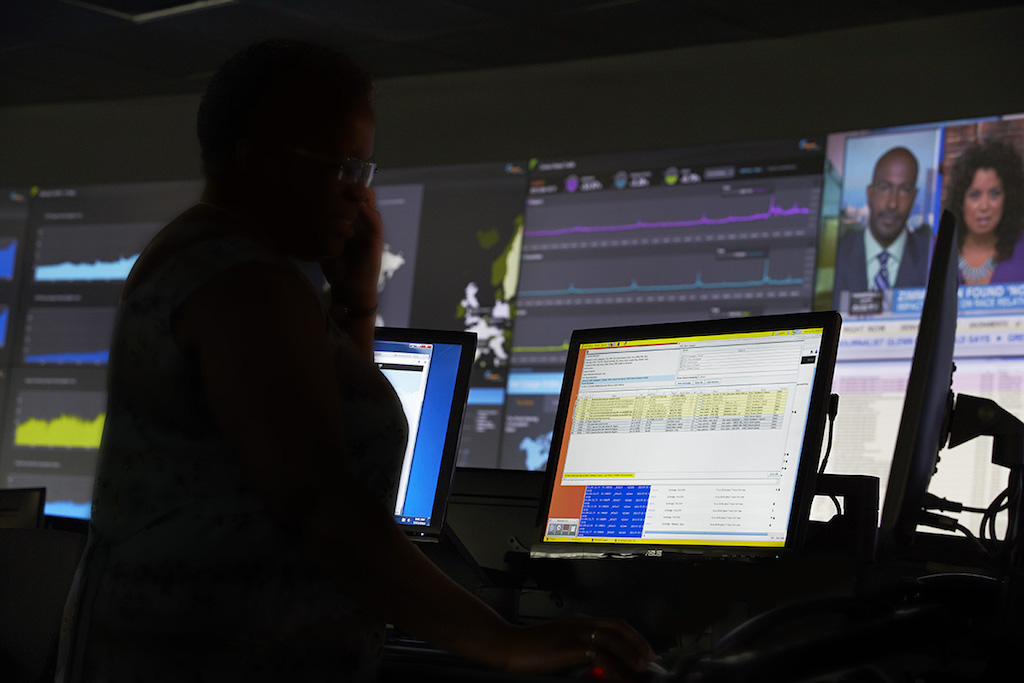
Los grandes eventos televisivos en directo son emocionantes y este verano promete ofrecer mucho más que de costumbre con la celebración de la Eurocopa y de los Juegos Olímpicos. Con casi 10 veces más de espectadores que en vídeo bajo demanda según Frost & Sullivan (Putting Broadcast Online Video Workflows in the Cloud), it's no surprise that programmers have embraced live TV and major events via the Internet.
But in today's fickle online environment, viewers are now demanding TV-like experiences with video regardless of the device they use, so here are our suggestions to help programmers deliver excellent Quality of Experience during sporting events and ensure audience loyalty:
1. Incorporate quality during planning
Many quality problems can be avoided before the first byte is transmitted, whether it's a huge event like the Olympics or a new concert series starting to build an audience.
Programmers have to think about the scale of the audience, the devices they will use, likely traffic spikes, and what happens if something goes wrong. Contact the CDN provider as soon as possible so that both teams can create a detailed picture of the required workflow, from camera to viewer.
Key points to consider are the resilience and reliability of the source infrastructure and ingest streams, encoder profiles, video stream security, and capacity planning. Teams should jointly detail support and escalation procedures for each step of the process. If any problem were to occur, there should be no fingers pointing at anyone.
2. Ensure quality in intake/acquisition
Quality starts at the ingest, so to ensure a great viewing experience, and prevent live streams from faltering, work with your CDN provider to ensure live stream ingest points are close to the encoders. Live streams should not have to traverse multiple networks before being ingested.
Live stream ingestion points need to be resilient and not offer any opportunity for poor performance. CDNs should also offer peace of mind by dynamically and automatically remapping live video streams for optimal alternative ingestion should any issues occur. Finally, you should consider using an accelerated ingestion technology for live streams such as UDP. This can not only dramatically increase the quality of live streams but also offers more resilience.
3. Ensure quality during content processing – Transcoding, encryption, and packaging
Transcoding and packaging live streams is a complex and resource-intensive process for event producers. But today's demanding audience makes it crucial to deliver the right video format and bitrate to ensure a high-quality viewing experience. To this end, many producers now use cloud providers to eliminate complexity from their workflows without headaches.
One consequence of delivering high-profile live video over the Internet is the interest of hackers who can break unprotected live streams during these vulnerable stages of the workflow. High-profile pay-per-view events, for example, are prime targets.
Protecting streams is therefore vital and event producers should work closely with their video delivery partner to ensure all security measures are implemented. At a minimum, first mile SSL protection should be included for live video streams. By encrypting streams when they leave the encoder, hackers are prevented from capturing video content. Event producers also need to apply appropriate DRM technology based on the devices they want to deliver content to, such as FairPlay Streaming for iOS devices. You should talk to your CDN partner about whether to apply encryption in the encoder or let them encrypt the content and serve DRM licenses in the cloud. Check that your provider has protected their DRM license servers against DDoS (Distributed Denial of Service) attacks to ensure that malicious individuals cannot ruin an event through the back door – and that every angle is covered.
4. Ensure quality during monetization
Monetizing live video streams through ads often involves different manufacturers for ad insertion and delivery of live streams, which can compromise quality. Handovers are complex, video content and ads are often of different quality or different aspect ratios, resulting in a disjointed viewing experience, and if an unexpectedly large influx of viewers flags a program, the ad insertion maker can often fail under load, resulting in a poor viewing experience and an incremental loss of ad revenue.
Check that your CDN partner works with leading ad insertion companies to simplify the process and improve the experience viewers have with server-side ad insertion. By coupling live video streams and ad insertion into the same workflow, ad streams will be of much higher quality, engaging viewers and ultimately emulating a broadcast-like experience. This of course means less risk and more monetization opportunities.
5. Ensure quality during playback
Delivering live video streams over the Internet is challenging. There is the wide range of devices, including mobile phones and connected TVs, on different types of networks and conditions. There is also the unpredictability of audience volume, whether global or local. To counter this, the CDN provider has to at least be able to support ABR (Adaptive Bitrate) streaming to offer high-quality viewing on fixed and mobile network types with varying connection speeds.
Verify that your CDN provider has sufficient redundancy within its global and local infrastructure to absorb all traffic spikes. Popular sporting events can have millions of concurrent viewing types and huge traffic spikes can stop any event if your CDN cannot handle this traffic.
It is also recommended to investigate whether the CDN provider is capable of providing accelerated live stream delivery technologies such as the use of UDP. This can significantly improve the processing capacity of live streams and deliver 4K image quality at scale. Our recent experiences delivering major sporting events to 4K online have shown that the products can not only differentiate your proposition from linear TV but also offer the best possible viewing experience, so we strongly recommend investigating the possibilities.
6. Measure the quality and support of the service during an event
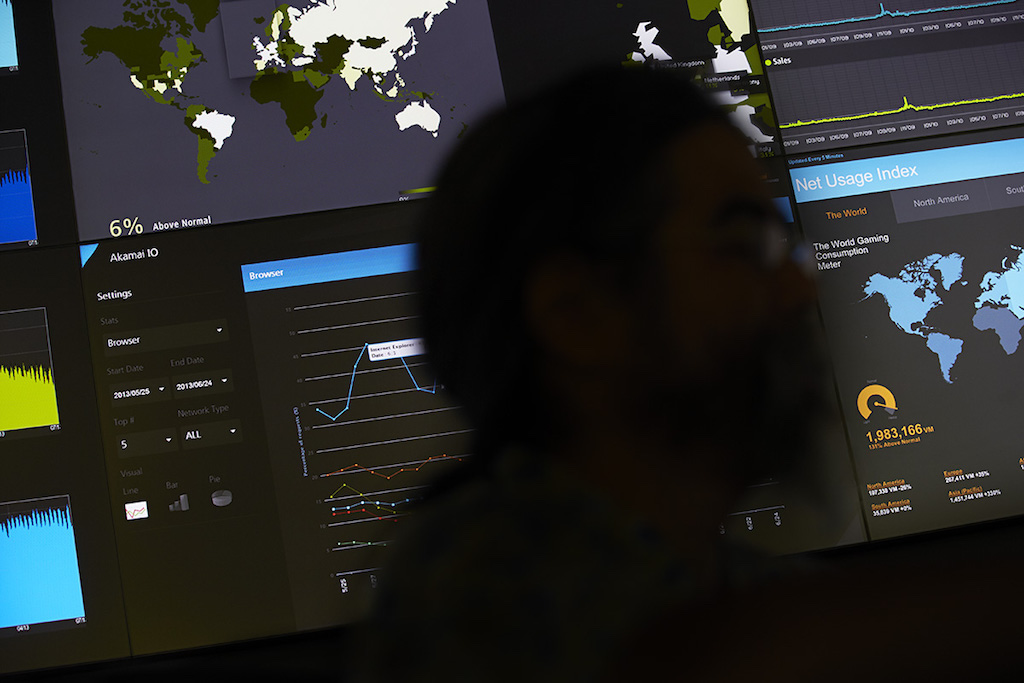
While you can track issues through your workflow, it's important to have access to detailed analytics that measure the quality of viewing experiences. This will also help resolve any issues and provide insight into the accuracy of planning for future events. Additionally, make sure your CDN partner can proactively monitor issues from the encoder to the playback devices and resolve any issues as they occur. When we watch live events on a television broadcast we do not expect or put up with poor quality, it is the same for the online environment.
Conclusion
Just as linear TV has done for many years, the online industry is refining the processes and best practices of delivering high-quality live video to any device on any network. Managing live event workflows using different providers can be complicated and 4K content is going to be a game changer once again. Therefore, we recommend producers work with a technology partner that has experience and technologies in the entire workflow and can offer viewers a better experience than with TV, the first time and every time.
Ian Munford
Director de Marketing de Productos & Media Solution (EMEA)
Akamai

Did you like this article?
Subscribe to our NEWSLETTER and you won't miss anything.
Related articles
 'This excessive ambition': Little Spain's springboard to the world of fiction
 Virtual reality: when will it be a real alternative for the world of entertainment?
 Imagine Aviator: a proposal to deliver multi-screen linear content from the cloud
 AWS launches AWS Elemental MediaConnect to quickly create live video workflows over the cloud
 The future of media companies is in the cloud
 VSN WEDIT: when a cloud editor shakes hands with a MAM
 Unite broadcasts Tomorrowland EDM event to the world with Blackmagic ATEM mixers
 Periscope now allows sending live video from iPhone and GoPro
 Panasonic updates its P2 Cast system to allow video editing and delivery from the cloud
 Emiliano Otegui: “when you become production director, remember that you started from the bottom”
 Tecnológico de Monterrey implements Dalet Media Life to produce, manage and deliver video
 Is the audiovisual industry prepared to work in the cloud?
 Broadcast for Friends, new service to broadcast live video from a smartphone
 When television is not only watched from the living room...