





'This excessive ambition': Little Spain's springboard to the world of fiction
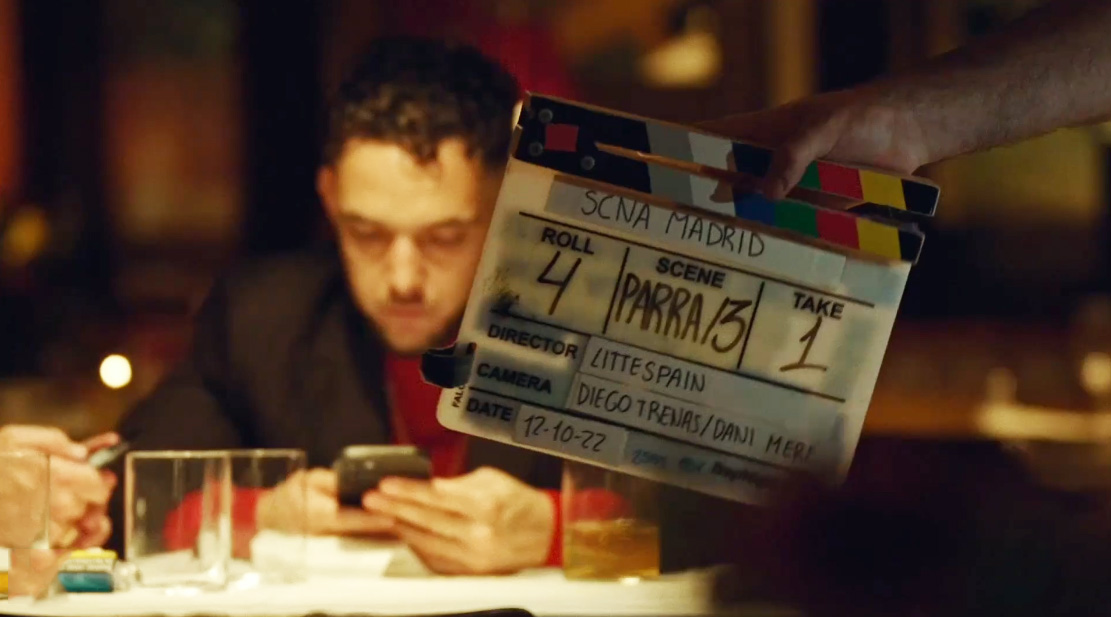

Santos Bacana, Rogelio González and Cris Trenas, founders of Little Spain, detail the operation, vision and future of the production company author of 'This excessive ambition', and detail the creative and technical processes of the documentary about the artist C. Tangana (El Madrileño) nominated for the Goya for Best Documentary Feature.
For several decades now, Spain attend the underground creation of a network of artists with a creative vision that justifies the existence of new agents in the market. Commercial focus, artistic intentions and the need to find a expression platform Beyond the established channels it translates into small initiatives with sometimes limited survival.
Orphans among the Generation Z and the Millenials, embracing codes from a still analog era with the possibilities of the digital world, they seek a space away from traditional structures, often closed to contacts, endless days or traditional processes. Against this transparent barrier, new networks to shape projects that would not have been previously accepted. It is nothing new: the separation between new talent and traditional archetypes in the audiovisual industries is cyclical.
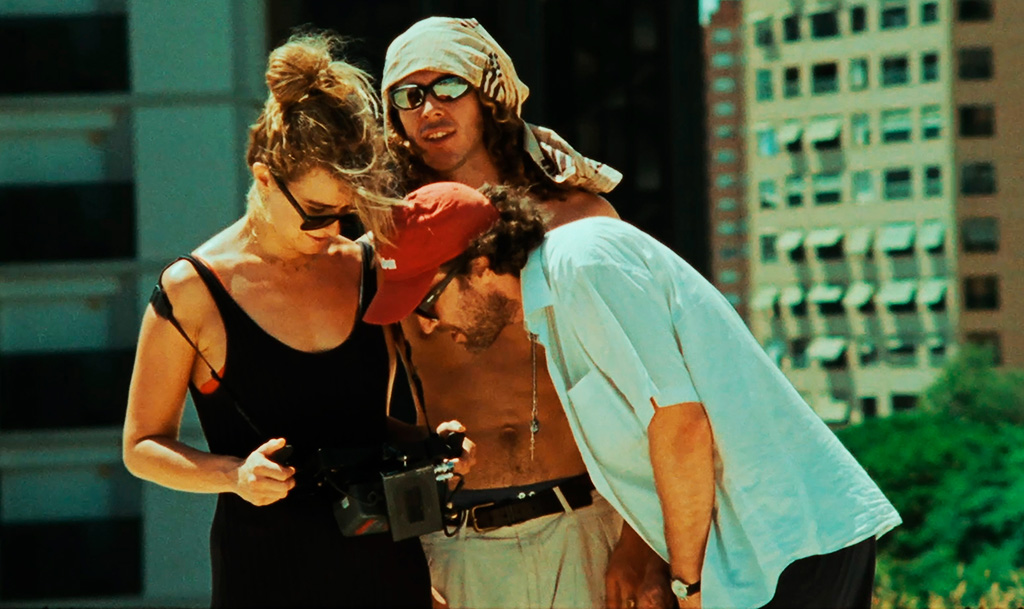 Little Spain, unintentionally referencing 14th Street between Seventh and Eighth Avenues in New York, began to take shape one early morning in Los Angeles, when Rogelio Gonzalez decided to turn his friend's artistic aspirations Santos Cool in a short documentary film called Santos. Shortly after, opportunities arose materialized in video clips, advertising pieces or 'El Madrileño', the reincarnation of C. Tangana who has left his own imaginary defined by some as “cañí tropicalism” in the form of music videos, the Tiny Desk American NPR's most popular homeland and This excessive ambition, a documentary premiered in San Sebastián that faces a new life on January 22 in the form of a series via Movistar Plus+.
Santos Bacana, Rogelio González and Cris Trenas, who alternate management, coordination and production tasks at Little Spain, allow us to learn more details about the operation of the production company, review This excessive ambition and they set their sights on a future inevitably marked by their “great dream”: fiction.
Act 1: The producer
Why does Little Spain exist?
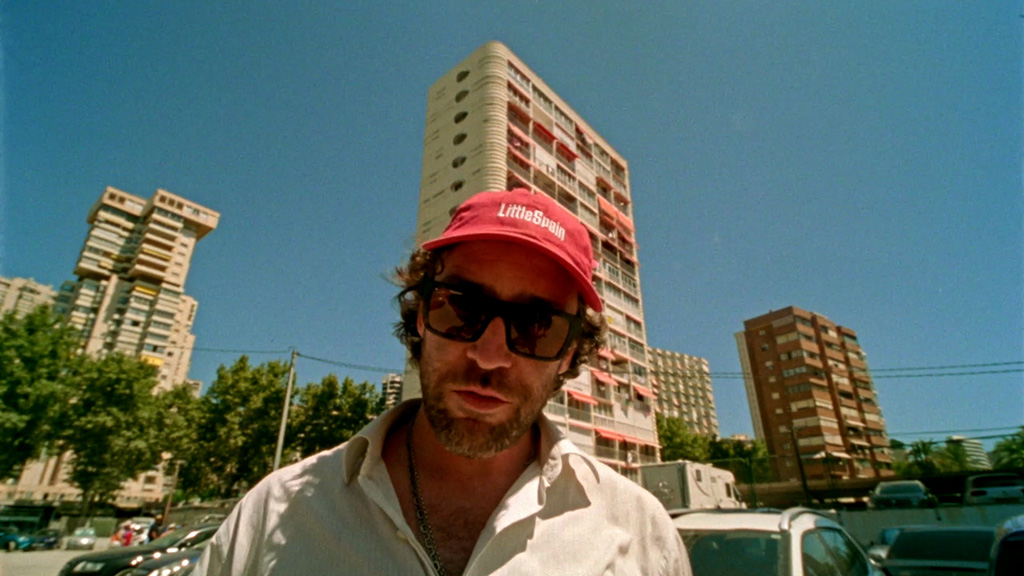
There are business projects that are born from an artistic objective. Others arise from a need and the last from a commercial vision, willing to respond to an unmet market demand. Little Spain is defined as a “creative institution” dedicated to creating “cultural products” based on “popular culture” both high and low. A style sneaks into this description, but also the key word for Cristina Trenas: “Our differentiating element always comes from creativity.”
“We grow with the idea of giving meaning to a creative ecosystem in which all participating members have a strong creative vision.” – Santos Bacana
Little Spain was established in 2021, despite taking its first steps with Santos and form step by step a community of creatives with some shared cultural and artistic principles. Precisely that year it was launched The Madrilenian, full-length by the rapper, singer and composer C. Tangana, and the production company's first major project for Santos Bacana: "We emerged around a creative project with a lot of weight in the audiovisual part. Everyone was already related to the world of production and filming, but this project unites us with a more personal objective, more ours. From there, we grow with the idea of giving meaning to a creative ecosystem in which all the members who participate have a solid creative vision."
The daily life of Little Spain
Beyond The Madrilenian and its culmination in This excessive ambition, Little Spain has taken its first steps in the world of advertising and video clips. He has done so by creating a shocking universe with a marked visual identity and a very defined aesthetic care that has earned it the trust of brands such as Sonora, Celta de Vigo, Telepizza, Bershka, Correos or Netflix, as well as artists such as Nathy Peluso, Alizzz o Feid.
Both aspects are worked on, in the words of Nice, as a “more traditional” advertising producer, although following some “protocols that are non-protocols"His colleague, Rogelio González, sheds light on the internal processes of Little Spain: "When we get a project, we all get it, we see it, we comment and we decide who does it, who is in charge of the direction, who is in charge of the creativity...".
These orders are complemented by “more personal” jobs that arise from their own initiative, Trenas explains, and that are subsequently studied to see “how they would be possible.” “Santos is writing his script, Roge is writing his, Pucho (Ndr: C. Tangana – Anthony Alvarez) is making his documentary… People from outside can also come, since we have formed what we call the “creative ecosystem”, which are people who have been working with us for a long time in different roles. For example, a designer with whom we have worked a lot is now directing a documentary, and a series we are developing came about because Santos had gone to university with the author of the book in which it is inspired.”
Alliances to turn to fiction
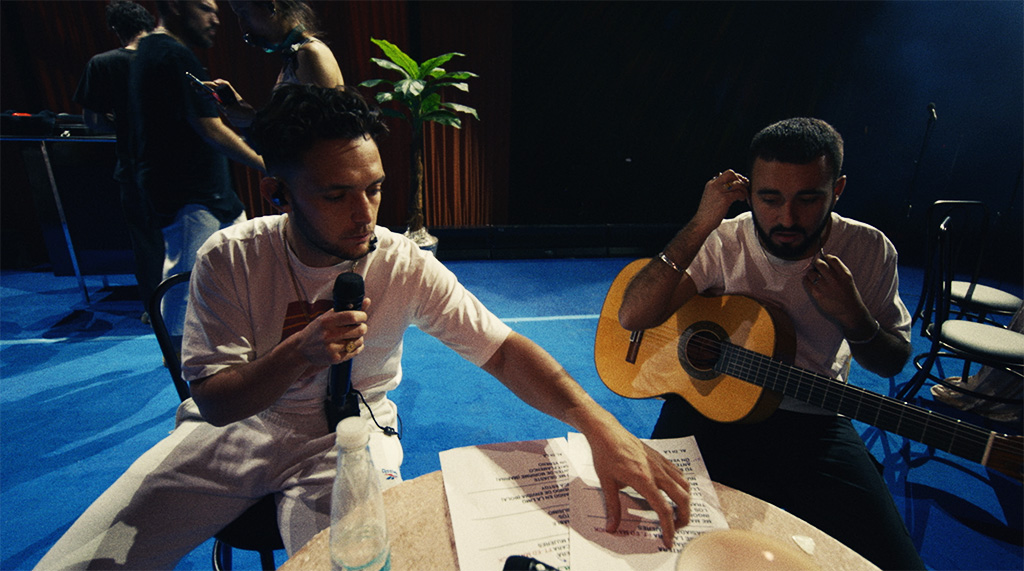
Little Spain It is a creative studio, a production company and, ultimately, a platform so that its members can achieve their personal, business and creative objectives through audiovisual production. Documentaries, video clips and advertisements are the first approaches that will allow the company to launch itself into its main “vocation”, as Trenas explains: “We are ambitious and we want to continue doing everything, but it is true that from the first moment we want to do cinema, series and long documentaries. We have started our content study with This excessive ambition and we already have other projects that we hope will come out in 2024 and 2025.”
At the moment, Little Spain is in pre-production of two advertisements, in the development of several campaigns with other brands, creating a series in collaboration with a platform and in the development of two fiction films.
At the moment, Little Spain is in pre-production of two advertisements, in the development of several campaigns with other brands, creating a series in collaboration with a platform and in the development of two fiction films. “Creating a film has always been our dream, what happens is that we saw it as distant until everything happened. This excessive ambition. Now we have learned everything that is necessary to make it and we have that strength to launch into fiction,” explains González.
Despite having a deeply marked creative vision, Trenas does not give up launching these projects in collaboration with other production companies. Always maintaining the asset that the creative freedom, Little Spain will shape its next productions by “putting together the project” with the “best approach” possible: “It is true that This excessive ambition It has been atypical in the sense that we have financed it with our lungs and we have carried it forward on our own until practically the end, when others have entered players. “We have understood why it is not the way to do it, so we will approach the next ones differently.”
Digital versus romanticism
It is frequently understood that youth in the world of audiovisual production is inevitably linked to a commitment marked by digital and for new communication codes that guarantee, for account managers and executive producers, a face-to-face dialogue with new generations. Little Spain wants to separate themselves from this label, although they are aware of their vital context. Digital is present, but the idea of the big screen continues to be a great motivation: "We all love the ritual of the screen, but we know that we are facing times in which consumption has changed a lot... and we are that type of young people who try, in some way, to adapt," González resigns.
"He screen ritual We all love it, but we know that we are facing some time in which consumption has changed a lot... and we are that kind of young people that deals, in some way, with adapt“ – Rogelio González
Despite being a “hopeless romantic” of cinema, stating that “it will always be the most important window,” Trenas highlights that “we live in a time” in which quality of what is consumed on “other types of screens” is “exceptional”. “Mira The Messiah o Succession… The medium does not determine the content so much, and I think that is very interesting.”
Bacana, for his part, finds a motivation on the border with indefinition, describing it as "contemporary": "I think there is something beautiful in the challenge of transferring the language of cinema to new screens. There is magic within a longer story than what can be consumed digitally, but I don't see a negative that can be extrapolated to your home screen or even to a mobile phone."
Act 2: This excessive ambition
Visual anarchy, shared universe
The genesis of This excessive ambition It is complex, like the very nature of The Madrid native. Since C. Tangana begins to explore the new sounds that make up this long-playing album, until they finally end up evolving into a project that has filled pavilions throughout Spain, Little Spain was capturing images without a completely defined visual focus. The documentary, marked by spontaneity to a large extent, dispensed with extensive camera tests or of a mere script.
Bacana remembers some of the keys to the process from this documentary: “Now, This excessive ambition It reflects a mixture of languages that are consistent with Pucho's project. We had one more part music video from the beginning, but in Cuba a part of reality or even fiction is beginning to be proven. In the end, each subplot or moment has ended up having its own style; one that has been macerating over the years with what we have been doing.”
For his part, González affirms that this creative freedom has allowed them to “respond all the time to our own desires.” “We were deciding What cameras did we use every day?, so that everything arose organically. The most important thing, I would say, was deciding which camera we used with each sequence so as not to lose realism, something that can happen when you mix several types of cameras.”
 A cocktail of cameras and formats
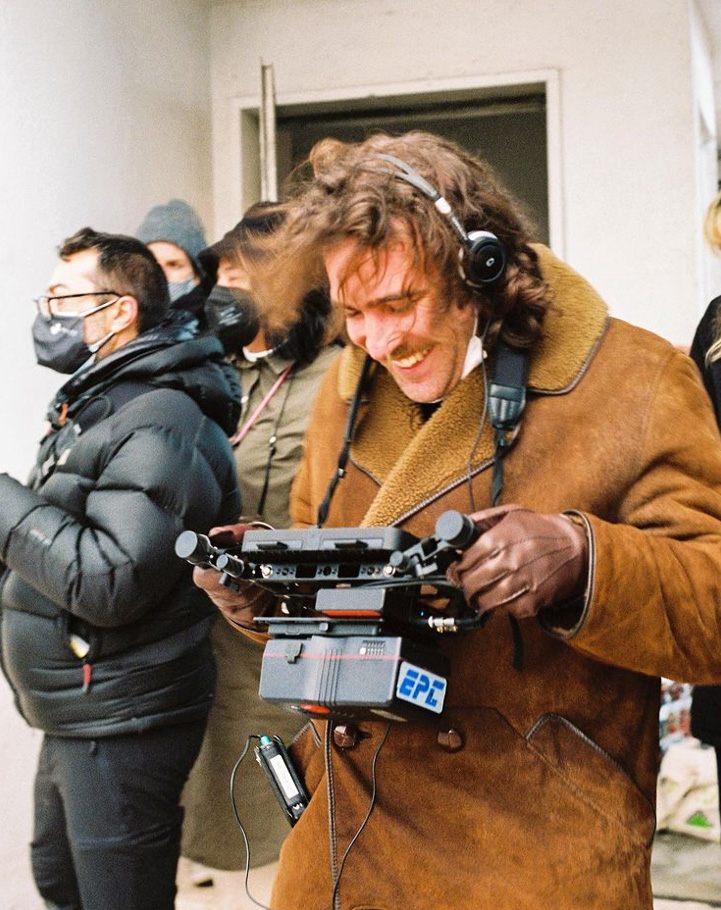
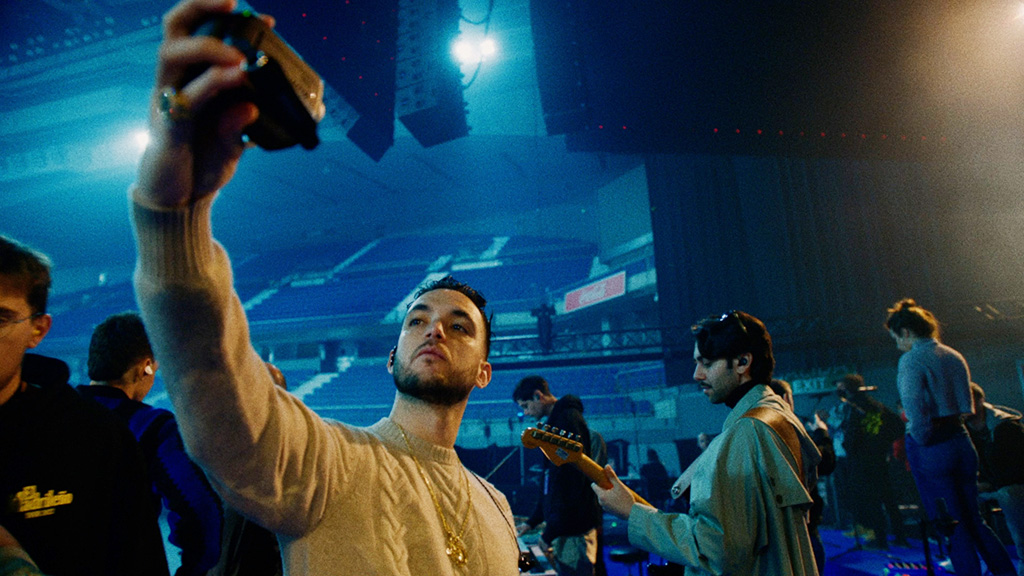
The mixture of languages and audiovisual codes of This excessive ambition It is materialized in the wide choice of cameras that allowed C. Tangana and his surroundings to be followed from the film, whether on tour throughout Spain, in rehearsal venues or beyond the seas. To undertake the project, the team Little Spain used the 16mm camera Arriflex SR3, digital camera ARRI Amira, several units handycam, the Panasonic P2, a camera Bolex H16 for resources, archival material captured by Javi Ruiz (photographer who accompanied C. Tangana for several years) and material with mobile recorded, on occasions, “by Pucho's girlfriend, Rocío,” as Bacana remembers.
The recording standard, defined by the director of photography Diego Trenas, was 3.6K in order to be able to work later in 4K. The challenge came when adapting the rest of the sources to the master, as González relates: "As we had not thought about the big screen, we were not so concerned initially. There were times when we had a VHS at 720 or even 480, but we knew that we were playing that. We did not make a great effort to expand it: the objective was to try to make the story easy to consume." The question of optics It also evolved as the weeks went by: "We saw that the shots worked very well when we went with the optics open and chased Pucho while inside the scene. During editing we saw that we abused this technique a lot, so we decided to start using more zooms and other camera shots."
He sound was not free from this unpredictability that ends up defining This excessive ambition: “Every sound engineer who came to every city was a fucking problem. Suddenly, someone came to us with a Spiderman backpack who had never held a hanger in his life (laughs). When a new technician arrived, we told him that this was a bit meta, a bit crazy and that maybe it would even end up flat. Then they got into this filming formula that we had and it ended up being the bomb." Despite the unforeseen events, Trenas affirms that sound has been an area to which they have dedicated special attention: "One thing that we have learned, and we talk about it a lot, is that resists a bad image better than a bad sound”.
Finding the movie in the editing room
This excessive ambition ended up taking shape in the cutting room. Until then, Little Spain had vague ideas, approaches, subplots and images waiting to be developed. find your meaning: "We started by making pre-edits of all the sequences that we were having with a group of editors. After those edits, we saw how the story of what we wanted to tell was being formed, what was valuable and what was not. Afterwards, we dismantled them, re-assembled them or deleted them entirely because we saw that the story was somewhere else," says González.
The assembly, therefore, It did not initially start from an outline or a script. This is how Bacana tells it: "The editors were setting up and at one point we spoke with one of them and we had a session to organize everything on the board. This moment gave us a certain peace of seeing a path, and shortly after the story was gaining weight and finding a tone. Until then, Nothing had convinced us of what we had”.
This process of searching for the story within the material of This excessive ambition underwent a crucial acceleration with the possibility of releasing the documentary in the Festival of San Sebastian, just as it ended up happening: "The first step," recalls González, "was to make the joke. What if we are going to opportunities and we project it.” “We present it directly, and we use the selection committee's calendar as deadlines. Then they entered Movistar Plus+, Avalon and the rest of partners”Adds Trenas.
A vital grading phase
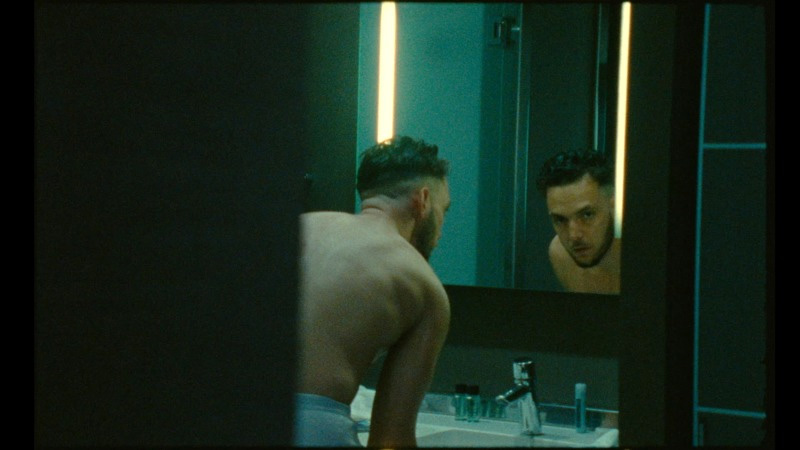
The documentary was finalizing its editing, and in parallel, the Little Spain team trusted the Madrid company The Colorado to approach color correction in a completely different way from his previous experience: "Normally we have the references prepared and everything very marked for our work in video clips and advertising, but here it was completely different. We arrived with our salad clips and the problem of seeing how everything could be put together and what it was going to look like. From there, they asked us the typical question of whether we are more green or magenta, and we began to develop a whole line of color that they presented to us as they got to know us, because the language of color is a language of sensations. Many times you don't know if it lacks green or lacks contrast: you think it lacks drama. They knew how to read this like a motherfucker…”, explains González.
Nice shares his partner's vision, highlighting the difficulty finding keys to find out to what extent “you can force a Handycam to work with an Amira”. Afterwards, creativity continued its course, always using DaVinci Resolve of Blackmagic Design as software to unify fonts and color: “They made it clear that they are more green from day one and they sold it to us, but part of the process was to lower the green in each plane.” (laughs)
From a three-act film to a three-chapter series
On January 22 Movistar Plus+ will premiere the serial adaptation of This excessive ambition, a series of three episodes that will allow the reach of this particular documentary about The Madrilenian. Little Spain has worked on this project based on the three acts of the film: “The first act is the transition of a guy who was a rapper and the universe of Egotrip to open up to a musical universe. The second part is how all this is turned and prepared, and the third is a little more twilight, with a reflection on what this change implies,” says Bacana.
Back in the editing room, each of these blocks have been expanded while maintaining cliffhangers y hooks to form what is possibly the definitive approach to documentary: "We have added elements that we would have liked to have been able to see in the cinema, but that we had a hard time removing in favor of the pace. Each chapter has grown in its own way with this type of additional information."
Act 3: Ellipsis to 2025
After the premiere of the now documentary series, and who knows if with the achievement of the Goya 2024 for Best Documentary Film, the most important chapter in the history of Little Spain will close. In the short term, two years of intense work await that will materialize in hopeful projects for Bacana, González and Trenas.
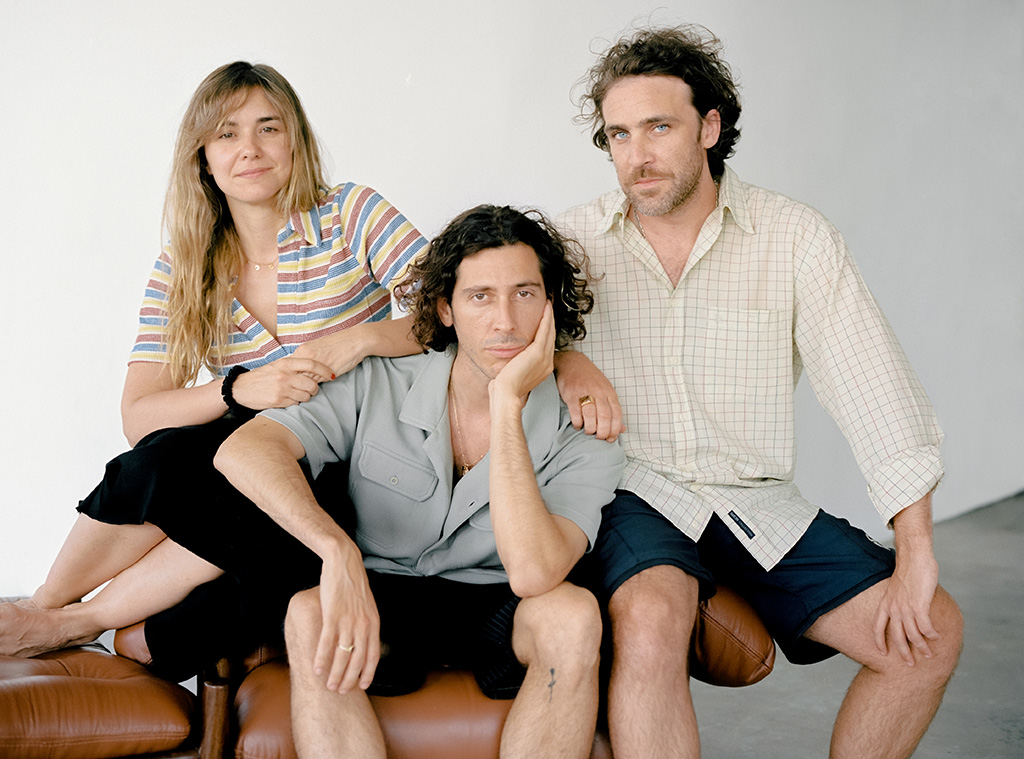 “In 2025 we will be returning to the Goya so that Santos can collect his award,” he says with a big smile. González when questioned about how he imagines his production company within a couple of years. Bacana himself also shows up hopeful for the future: “To say the least, in 2025 we hope to have made a name for ourselves in the film industry, because now we are a bit the New Guys in the Block. The publi It will be able to function on its own and we will be able to concentrate on fiction projects, each of which has a powerful creative value. We don't want to make fiction projects for the sake of making fiction: each project has to tell something and be beautiful, have soul.. That has always been clear in Little.”
Trenas closes this trilogy of hypothetical futures by returning to creativity, the founding pillar of Little Spain, but without forgetting the company survival. Ambition, excessive or not, must have some solid foundations in the always complex world of audiovisual production: “This excessive ambition It has been our letter of intent and our introduction to the film industry. At a structural level, I hope that we have the capacity to scale and be able to cover more projects and manage them better: both those that involve us, and those that we can do with other people who are very aligned with us. So I think that, in addition to the creative challenge, we have the business challenge ahead of us”.
A report by Sergio Julián Gómez
Did you like this article?
Subscribe to our NEWSLETTER and you won't miss anything.
Related articles
 Miguel Ángel Calvo Buttini combines fiction and documentary in 'The world is ANSÍ'
 Risk and ambition, in the new wave of Movistar Plus+ originals
 Aragón TV and HD: a history of avant-garde and ambition
 Penélope Cruz and The Mediapro Studio create Moonlyon, a new fiction and non-fiction production company
 Telefónica and Atresmedia create a joint company for fiction production in Spanish around the world
 Amazon Prime Video will offer 'Caronte', Mediaset's new fiction, worldwide
 Panasonic announces a competition for fiction and non-fiction productions shot with the EVA1
 IP: who is really taking advantage of this technology in broadcast?
 TVE produces for Marca España the official promotional video 'Spain Everywhere, Spain around the world'
 Deliver live video from the cloud when the whole world is watching
 Deluxe Spain creates a unique atmosphere in 'Refugiados' in this series shot with ARRI Alexa and RED Epic
 Webseries find in Tribo TV the springboard for their broadcast on DTT
 Doctor Who enters the Guinness Book as the most viewed fiction simultaneously in the world
 'I+B': Factoría de Ficción premieres its first own fiction project under the branded content model