





¿La producción “no broadcast” revolucionará el “broadcasting”?
El IP, la Ultra Alta Definición, el impacto de la realidad virtual o el auge de nuevos negocios como los eSports centran la decimocuarta edición del Forum Digital Europeo en Lucca (Italia), con Panorama Audiovisual como media partner.
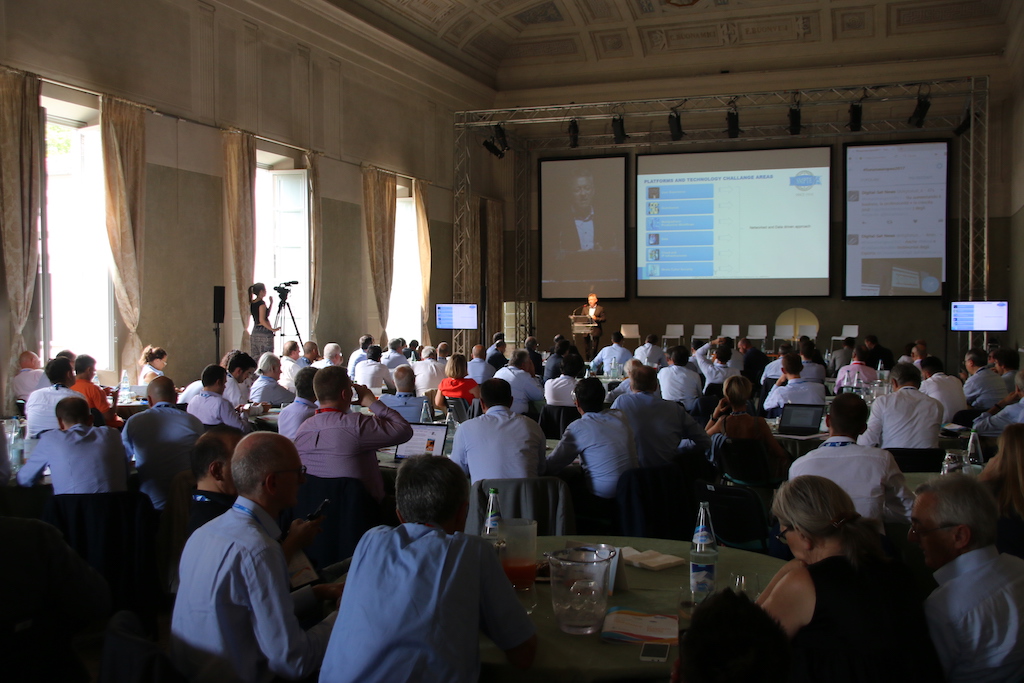
La localidad toscana de Lucca (Italia) vuelve a ser el escenario el 15 y 16 de junio del Forum Digital Europeo en el que numerosos profesionales debaten sobre el futuro de los medios. Esta decimocuarta edición, organizada por Comunicare Digitale y en la que Panorama Audiovisual es media partner, está centrada en aspectos como las nuevas formas de producción y sus consiguientes infraestructuras para entornos basados en IP, la Ultra Alta Definición, el impacto de la realidad virtual o el auge de nuevos negocios como los eSports.
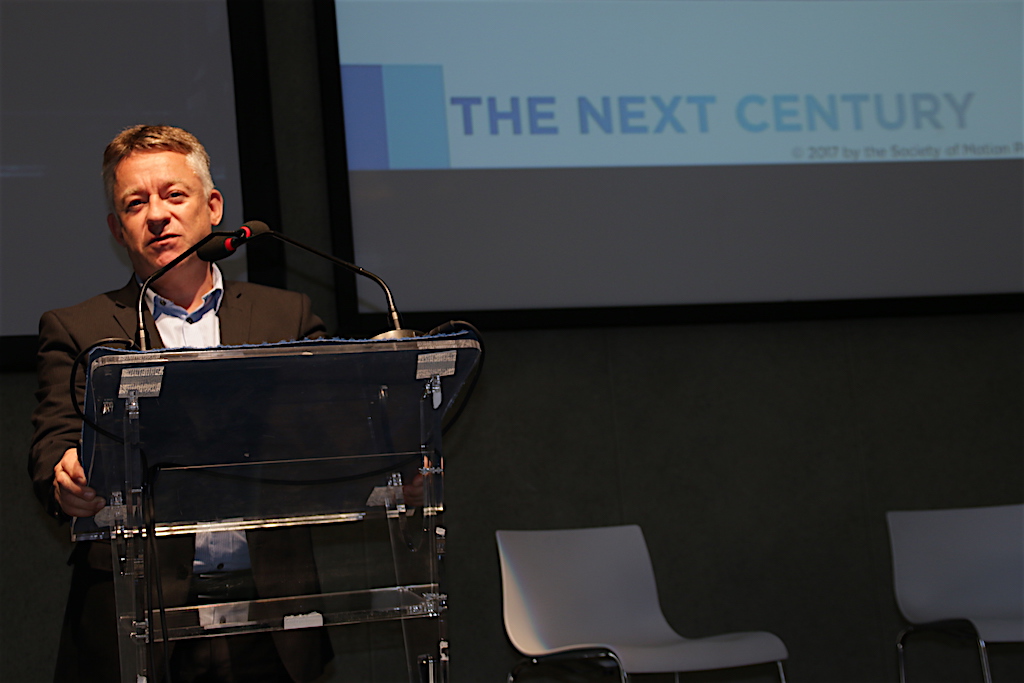
 Mark Harrison, director general de Digital Production Partnership (DPP), ha abierto esta edición del Foro reflexionando sobre si la producción “no broadcast” revolucionará el “broadcasting”. Harrison ha analizado la cada día mayor relación entre el vídeo e Internet y ha subrayado que los nuevos retos como la producción IP o la distribución de contenidos over-the-top (OTT) supondrán cambios en la infraestructura operacional con el objetivo de llevar la máxima calidad a un mayor número de usuarios.
La primacía del vídeo en la Red ha quedado patente al afirmar que en 2019, el 80-90% del tráfico de Internet será vídeo, lo que supondrá un millón de minutos de vídeo por segundo.
Por otro lado, ha resaltado que hablar de media es mucho más que broadcast. “Hoy se producen más contenidos para distribución no broadcast que para broadcast”, ha comentado. Harrison se ha mostrado convencido de que la distancia entre la idea y su ejecución se acortará cada vez más. “El 85% de los productores se sienten ya hoy presionados para producir contenidos más rápido que en el pasado”, ha añadido.
A su juicio, la relación entre proceso y creación será más directo, la producción será bajo un concepto de “service led” facilitada por nuevas relaciones de confianza y la velocidad será esencial con una relación más directa con los datos. “Producción y plataforma estarán cada día más cerca y eso significará nuevas redes y estudios”, ha concluido.
El impacto del vídeo en la Red
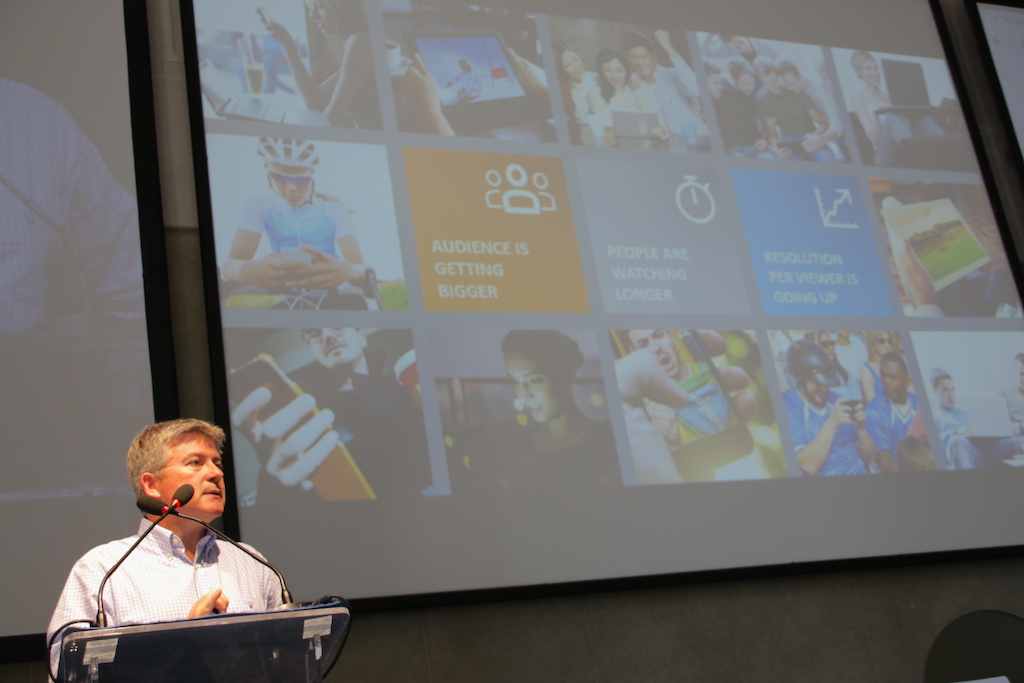
Ian Munford, director of Product Marketing, Media Solutions en Akamai, por su parte, ha centrado su intervención en este Forum Digital Europeo en la revolución que supone la Red para la distribución de contenidos. Munford ha analizado la fragmentación del mercado que está suponiendo, al tiempo que ha señalado que la audiencia está creciendo afirmando que “ada día se consume más contenidos y con mejor calidad de visionado”. También ha destacado la ingenta diversidad de dispositivos y plataformas que dan acceso a contenidos con casos relevantes como la plataforma Roku que ofrece ya más de 3.300 canales.
Es en este último aspecto donde juega un papel crucial el descubrimiento del contenido. Según un estudio de DigitalSmiths, el 53% de los usuarios reconoce que algunas veces encuentra algo que ver, un 22,8 que nunca y un 11.1 que siempre (Fuente DigitalSmiths). “La inteligencia artificial jugará un papel crucial a la hora de mejorar la experiencia de usuario”, ha señalado. Munford ha concluido su intervención parafraseando a Albert Einstein cuando afirmó que no podemos solucionar problemas empleando las mismas herramientas con las que creamos esos mismos problemas.
El auge de los eSports
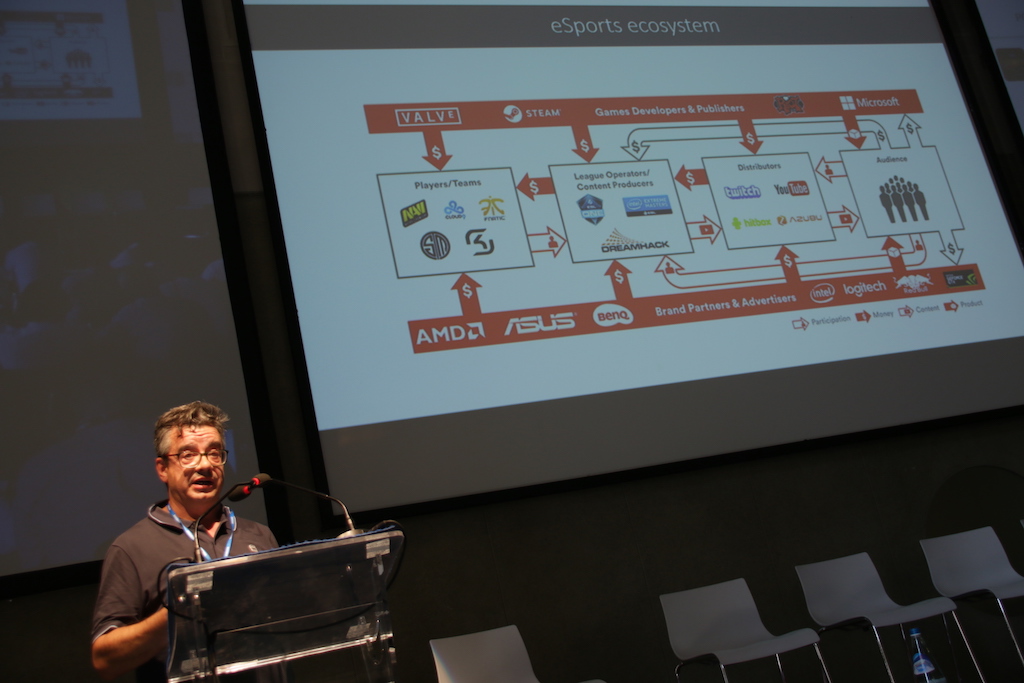
En esta edición de este encuentro profesional se ha incluido por vez primera una sesión dedicada a los emergentes eSports. Francisco Asensi, experto en Innovación en contenidos, negocios digitales y nuevos modelos de entretenimiento digital, OTT y video, ha iniciado su ponencia asegurando que “los eSports no pueden ser considerados como entretenimiento de nicho. Ya es masivo en términos de audiencia y negocio como demuestran los 6.000 millones de euros que se invirtieron en 2016”.
También ha recordado que las Lan Parties como Campus Party o Euskal Encounter abrieron una brecha con la participación de miles de aficionados. Hoy con la popularización de los juegos online y la creación de ligas relativas a los principales videojuegos están apareciendo equipos profesionales que están haciendo de los eSports una fuente de entretenimiento y tirón de audiencias de primer nivel.
Asensi ha puesto como ejemplo del impacto en audiencias masivas el caso de Twitch (adquirida por Amazon por 970 millones) en la que más de cien millones de usuarios al mes siguen en streaming cómo juegan los mejores equipos y usuarios de todo el mundo. Con un consumo del 35% en movilidad, la mitad de los usuarios ve ya más de veinte horas de eSports por semana, lo que significa 1,46 horas diarias.
Asensi ha comentado también el impacto que tendrá en este negocio la entrada de redes sociales como Facebook así como de las telcos. Movistar, Orange o Vodafone son ya algunas de las operadoras que se están tomando muy en serio el despegue de los eSports.
Trazando un roadmap
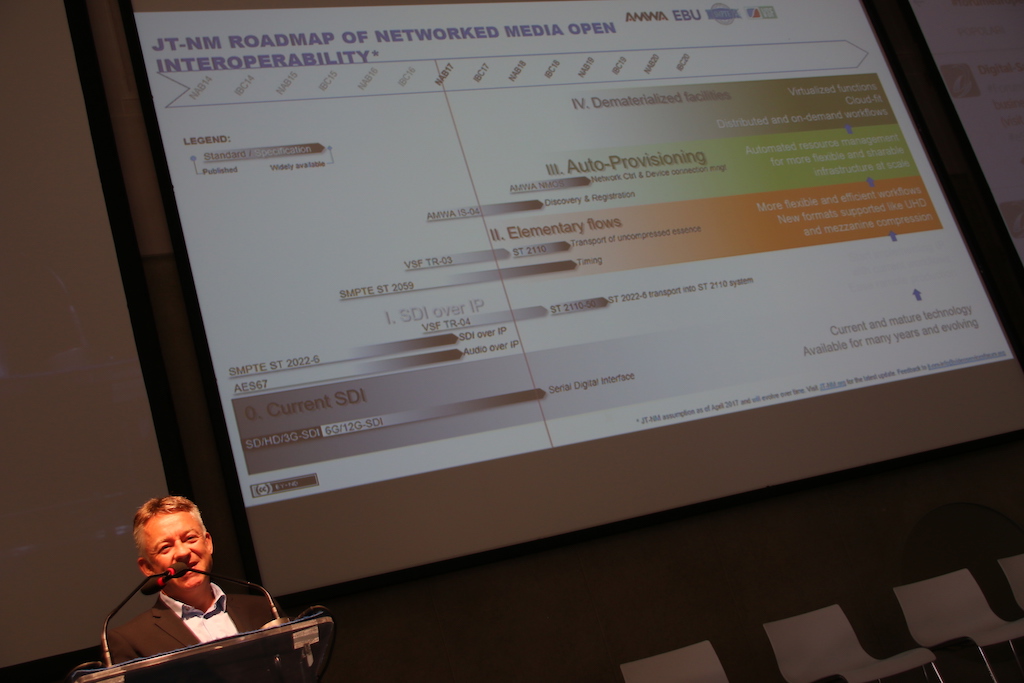
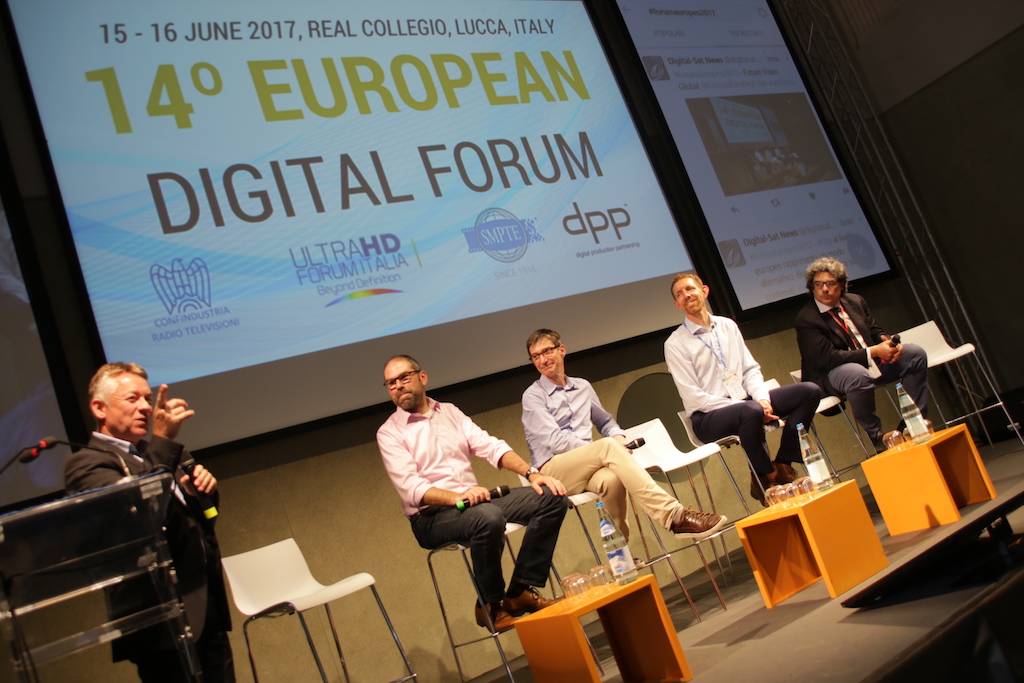
Hans Hoffman (UER y SMPPTE) ha analizado el roadmap de redes y datos en las instalaciones broadcast ante la revolución que se avecina. “Las plataformas y las tecnologías están cambiando en cuanto a la experiencia de usuario, distribución, workflows, datos, cloud, infraestructuras IP y ciberseguridad”, ha comentado. También ha afirmado que “el IP aporta una gran ventaja con respecto a lo visto hasta ahora y es que es agnóstico en cuanto al contenido que transporta. Además, los sistemas abiertos reducen el riesgo de que las infraestructuras se queden prematuramente obsoletas”. “La escalabilidad permite crecer conforme sea necesario, con nuevos workflows”, ha afirmado.
 Hoffman ha puesto en relevancia la normalización destacando el papel que juega la Joint Task Force on Networked Media (JT-NM), una iniciativa que promueven Advanced Media Workflow Association (AMWA), la Unión Europea de Radiodifusión (UER/EBU), Society of Motion Picture and Television Engineers (SMPTE) y Video Services Forum (VSF). La JT-NM ha trazado una hoja de ruta de aquí a 2020 en el que establece los cambios que supondrá el paso del SDI al IP estableciendo las bases para ganar en eficiencia y flexibilidad en los flujos de trabajo y remarcando la gestión automatizada de recursos para una infraestructura más flexible y escalable.
 El director de Fundamentos de Media y Tecnología de producción de la UER ha abordado las ventajas que supondrá la especificación SMPTE ST 2100 (actualmente en desarrollo) para el desarrollo de media sobre redes IP gestionadas. También ha afirmado que “al migrar hacia entornos de Internet la seguridad se convertirá en un factor clave”. Sus consejos para este mundo cambiante son tres: adquirir conocimiento “in house”; experimentar con pilotos sobre IP, UHD, VR…; y crear equipos mixtos de profesionales especializados en broadcast e IT.
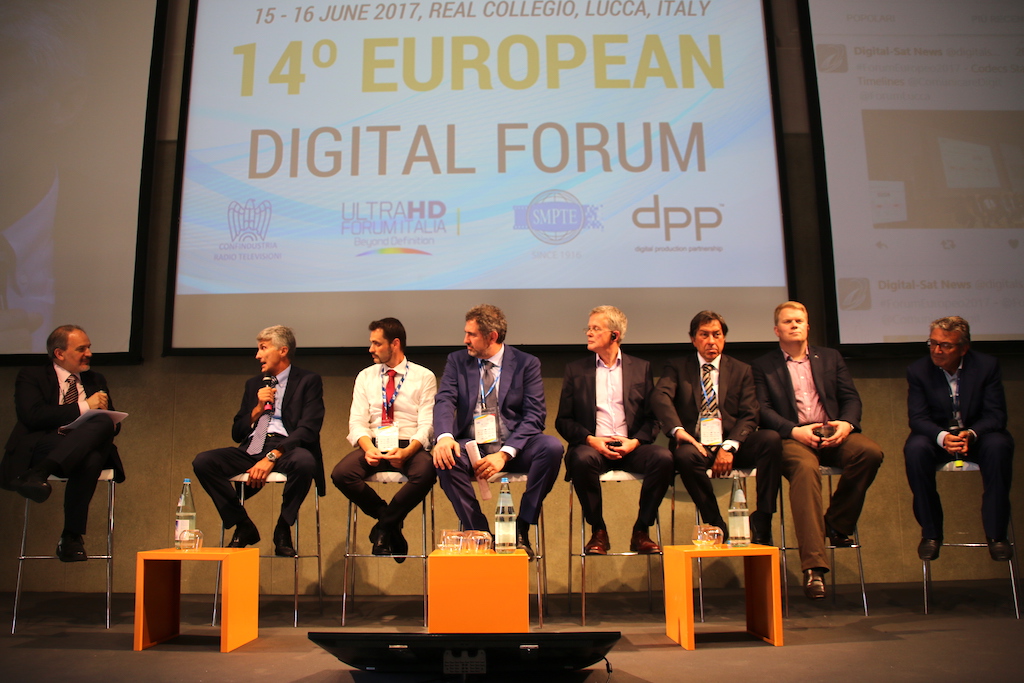
Tras concluir su ponencia, Hoffman ha moderado una mesa redonda que ha debatido sobre todas estas cuestiones y en la que han participado Massimo Bertolotti (Sky Italia), Andy Hickman (Eurofins), Patrick palmer (Adobe), Chris Bobotis (Mettle) y Mark Harrison (DPP).
La primera jornada del Forum Digital Europeo ha concluido con una mesa redonda moderada por Benito Mantio, presidente de Ultra HD Forum Italia, en la que han intervenido representantes de fabricantes como Dolby, Silvel, Samsung, LG y Sony, entre otros.
Did you like this article?
Subscribe to our NEWSLETTER and you won't miss anything.
Related articles
 Finepoint Broadcast expands its fleet of production servers with 25 XT-VIA from EVS
 PRG and the audiovisual production of large musical events: “We are already broadcast”
 Canon: opportunities in virtual production and commitment to broadcast at NAB 2024
 DAZN revolucionará su negocio publicitario con el fichaje de Walker Jacobs (Twitch, Amazon Ads)
 Unreal Engine 5: A new era for virtual production in broadcast?
 Broadcast Pix introduce NewBlue Motion CG en sus centros de producción integrados
 NEP Broadcasting takes positions in the European outdoor production market
 Broadcast Pix y EditShare anuncian un paquete integrado de producción de deportes
 Flint: the new “all-in-one” for production and streaming from Broadcast Pix
 Orad y Quantel demuestran una afinada integración en producción broadcast
 ‘Pulsions’: new co-production by VM Broadcast
 Production and post-production at the highest level with Octopus and VM Broadcast
 Broadcast Pix Vox: producción automatizada partiendo de la voz
 Broadcast Pix lanza el nuevo sistema de producción de video Mica