





After 22 consecutive quarters of growth, consumption on mobile devices remains stable
Según el estudio Video Index de Ooyala del segundo trimestre de 2017 la visualización móvil sigue siendo uno de los principales impulsores del crecimiento de los servicios OTT (Over The Top).

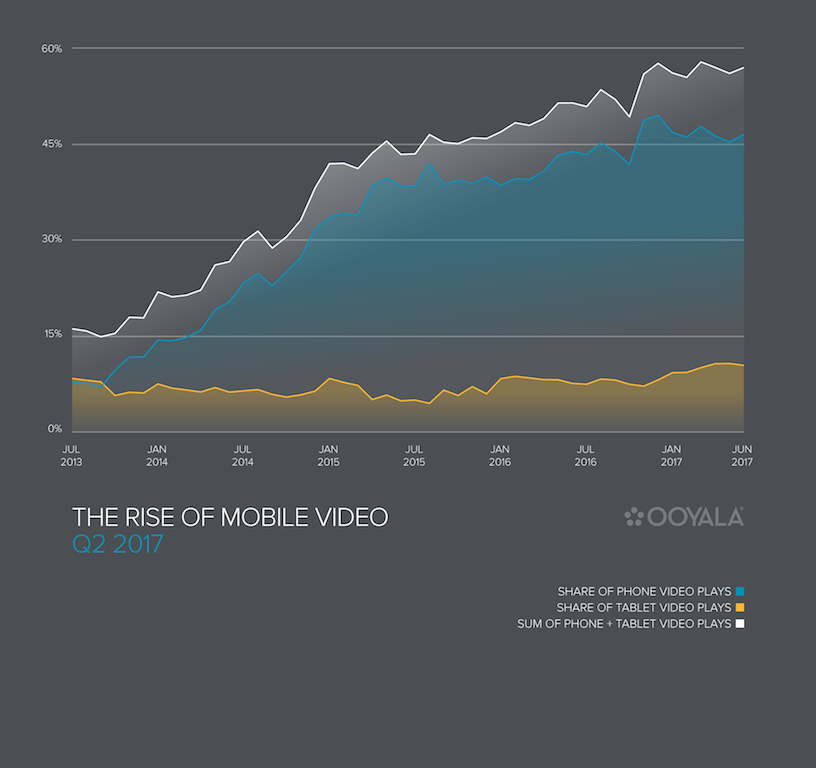
Ooyala ha publicado su informe trimestral, Q2 2017 Global Video Index, que revela como el consumo de video en dispositivos móviles se mantiene durante este segundo trimestre de 2017. El informe de este trimestre también analiza variaciones globales en el consumo de video en tablets, el crecimiento en dispositivos móviles en mercados internacionales y la emergencia de nuevas tendencias en anuncios de vídeo online.
Por segundo trimestre consecutivo, el contenido de larga formación (longitud mayor a 20 minutos) representa el contenido más visto a través de todo tipo de pantallas, siendo los dispositivos móviles la plataforma elegida entre 2.4 y 3.3 veces más que el ordenador.
Este hecho se debe en gran medida a la creciente cantidad de contenido premium que existe ya para todos los dispositivos. A medida que el contenido de larga duración se hace más protagonista, un número creciente de usuarios- en todos los sectores demográficos- se sienten igual de cómodos viendo contenido de larga duración en los dispositivos de pantalla pequeña como en pantallas más grandes. Aumentando simplemente el contenido total que consumen.
Segmentando por dispositivo, el informe refleja que el contenido de larga duración representa: el 96% del total del tiempo destinado a ver vídeo en televisiones conectadas, que ha descendido ligeramente desde el 98% del trimestre anterior; el 82 % en tablets, que ha crecido ligeramente desde el 81% de Q1; el 53% en ordenadores, habiendo decrecido con respecto al 65% del Q1; y el 53% en dispositivos móviles, supone una ligera bajada con respecto al 55 % del Q1.
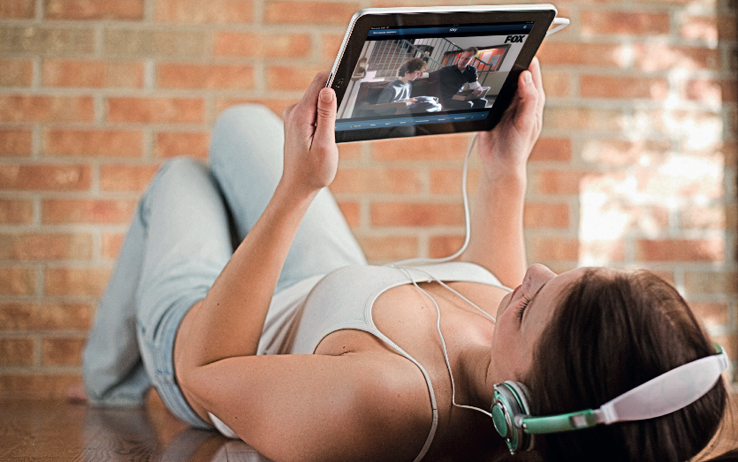 Consumo de vídeo
La visualización móvil sigue siendo uno de los principales impulsores del crecimiento de los servicios OTT (Over The Top), pese al estancamiento en el crecimiento en este segundo trimestre de 2017. Aunque las reproducciones en móviles eran dominantes en todas las regiones, Ooyala ha descubierto que las reproducciones en Asia Pacifico constituyen cerca de tres cuartas partes del total de reproducciones con un 72%, la más alta en el mundo, una diferencia del 21.9% con respecto al consumo de los espectadores de Norte América. Por otra parte EMEA con un 12.6% y Asia Pacifico con un 14.1% son las regiones con porcentajes más altos de consumo de video en tablets.
Diferenciando por regiones el informe concluye que en EMEA, la visualización móvil representa el 57.7 % del total de visualizaciones, creciendo desde el 54.1% del primer trimestre. Por su parte, en Norteamérica, los dispositivos móviles acaparan un poco más de la mitad de las visualizaciones de vídeo, por cuarto trimestre consecutivo. En APAC, el 72 % de las visualizaciones de vídeo se realizaron desde dispositivos móviles, creciendo desde el 61 % del anterior trimestre. Sin embargo, en América Latina, las visualizaciones móviles alcanzaron el 56 %, Tras varios trimestres de crecimiento en el porcentaje de visualizaciones móviles, un 7.5% en el cuarto trimestre de 2016 y un 8.4% en el primer trimestre de 2017, este trimestre las reproducciones móviles solo aumentaron un 0.1%.
Jim O’Neill Ooyala, Principal Analyst and Strategic Media Consultant, ha destacado que “los consumidores de video de hoy buscan completar o sustituir, sus fuentes de video de entretenimiento tradicionales; impulsando el crecimiento de contenido original que ha sido promocionado en servicios over-the-top principalmente entre audiencias que quieren el contenido cuando, donde y en el dispositivo que ellos elijan” Dijo “Ese contenido necesita cada vez más lanzarse de forma global, a mercados que hablan idiomas diferentes, tiene diferentes costumbres sociales, e incluso regulaciones gubernamentales distintas. El sector se está haciendo cada vez más complicado, con apuestas más altas en servicio y contenido, siendo la necesidad de buscar soluciones inteligentes cada día más apremiante”.
Por último, el estudio Video Index Q2 2017 pone de manifiesto que el crecimiento de los dispositivos móviles en los mercados emergentes – Específicamente en APAC y Latinoamérica, donde las reproducciones en dispositivos móviles totales son 72% y 56% respectivamente- sigue ganando acceso a contenido Premium al bajar los precios de los móviles y la banda ancha. En los mercados desarrollados como Norteamérica (50%) y EMEA (57.7%) mantienen una parte importante de las reproducciones en dispositivos móviles ya que los Millennials recurren a estos como primera opción.
Did you like this article?
Subscribe to our NEWSLETTER and you won't miss anything.
Related articles
 74% of sports content consumers access exclusively from mobile devices
 Mobile video consumption skyrockets with year-on-year growth of 9.8%
 Mobile devices attract the most viewers in global AVOD services
 Mobile devices now account for more than half of online video views
 Video consumption from mobile devices continues to rise unstoppably
 The increase in smart devices, mobile video and 4G networks will multiply global mobile data traffic by 8
 Content consumption through mobile devices increases by 25% in summer
 Los dispositivos de consumo podrán incluir el logo HbbTv
 Mobile devices, far from cannibalizing television, complement it
 New technological devices break traditional television consumption patterns
 Increasing video consumption on different devices does not offer benefits
 Content consumption through connected devices in the US now reaches 38% of homes
 RTVE carries out a study on the use of mobile devices in children
 Eight out of ten videos played on mobile media are viewed on Apple devices