





Half of content consumption in Spain could be mobile and on demand in 2020
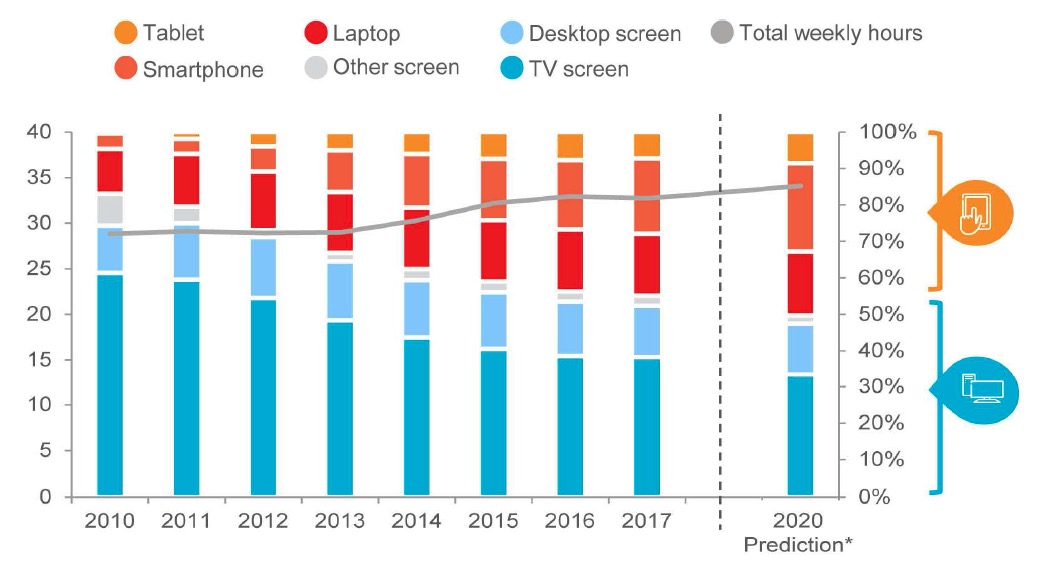
The smartphone, according to the Ericsson ConsumerLab study, will be the preferred device for watching television and video, according to the eighth report on television consumption carried out by Ericsson in 13 countries, including Spain. In 2020, only 9% of “armchair” viewers will remain, those who watch TV exclusively broadcast at the moment and on traditional screens.

In Spain, half of TV and video content will be viewed on a mobile screen in 2020, three times more than in 2010. Almost 50% of viewing will be on demand and the smartphone will be the most common device (20% of the total), according to the eighth annual report on television consumption carried out by Ericsson in 13 countries.
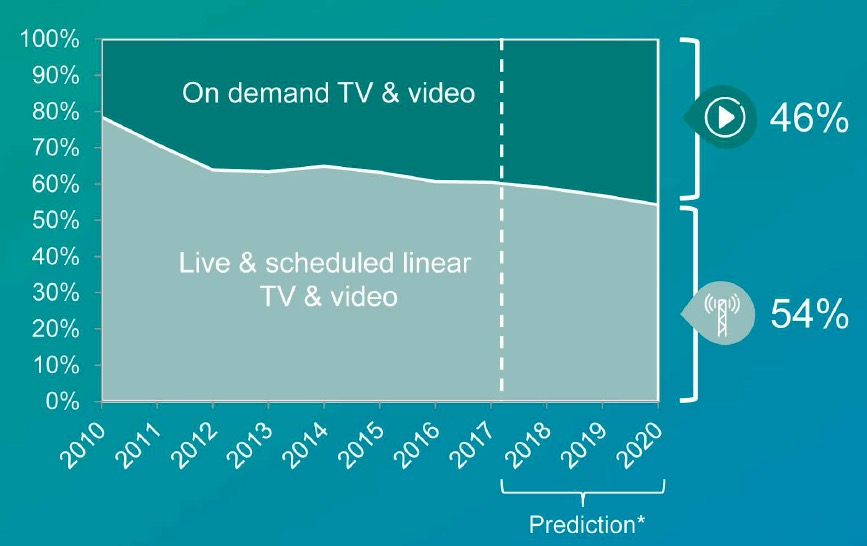
The study predicts that in 2020, on-demand content will account for 46% of total viewing time, while 54% will continue to correspond to linear (traditional) TV.
But although this “traditional” way of watching TV will not disappear, Ericsson predicts that within three years there will only be 9% of so-called “armchair” viewers, those who exclusively watch programs broadcast at the same time and on the entire television set.
life.
Currently, 74% of Spanish consumers already watch TV and video on smartphones, almost triple that of 2012 (27% then). In comparison, on a global scale 70% use their smartphone to watch multimedia content, double the number five years ago. This device is taking over, and will continue to do so, over other screens such as the tablet, laptop or desktop computer.
Por otra parte, el incremento del visionado móvil está cambiando el tiempo dedicado al descubrimiento de contenido. Los millennials (jóvenes de entre 16 y 34 años) españoles pasan 33 minutos de media al día buscando qué ver antes de decidirse, casi el doble de los consumidores de más de 35 años. El tiempo medio que invertimos los españoles buscando algo que ver ha aumentado un 10% desde 2016 (de 50 a 54 minutos diarios), incluyendo tanto televisión tradicional como VOD.
Virtual reality
El estudio revela también que la realidad virtual (VR) irá ganando terreno y en 2020 será utilizada por 3 de cada 10 usuarios españoles. Un 80% de dichos usuarios se iniciaron en la VR hace menos de un año.
La calidad social e inmersiva de la tecnología de VR está añadiendo una dimensión nueva y valiosa a la experiencia de visionado. La previsión de que un tercio de consumidores usen VR en 2020 explica que la tecnología desempeñe un papel esencial en el futuro de la TV y el vídeo.
Sin embargo, si va a aumentar el interés del consumidor en VR, muchas cosas tienen que cambiar. Casi el 55% de los consumidores encuestados a escala global que piensan adquirir dispositivos VR preferirían que los cascos fueran más baratos, y casi la mitad creen que debería haber más contenido disponible. La tercera parte estaría más interesada en VR si pudieran conseguir un paquete de VR de su proveedor de TV y vídeo.
Did you like this article?
Subscribe to our NEWSLETTER and you won't miss anything.
Related articles
 Movistar Plus+ adds 300 hours of content in Catalan to its on-demand offer
 CMM launches PlayPodcast, a free on-demand audio content environment
 TCM Now, TCM's new video on demand service, will arrive in Spain on March 23
 This is rlaxx TV, the new on-demand streaming platform that lands in Spain
 EFE awards Quality the event recording service and on-demand content
 The live and on-demand sports streaming platform, Dazn, lands in Spain
 Sky lands in Spain with twelve pay channels and more than 3,600 hours of on-demand content
 HBO will launch a video on demand service in Spain before the end of the year
 Recorded and downloaded content and streaming already increase television and video on demand consumption to 35%
 Nintendo ends its adventure of competing with TVii for the distribution of on-demand content
 In 2020, the time spent watching on-demand and delayed content will equal the time spent watching conventional TV
 The consumption of video on demand in Spain is now equal to that of conventional TV in Spain
 Canal+ and Rentrak introduce the measurement of video on demand consumption in Spain
 Ono will offer Disney content on video on demand