





Ericsson and Vodafone carry out the first 3D holographic communication over 5G networks
3D holographic communication requires approximately four times more data than continuous streaming 4K video, so only 5G networks will allow these volumetric visualizations.
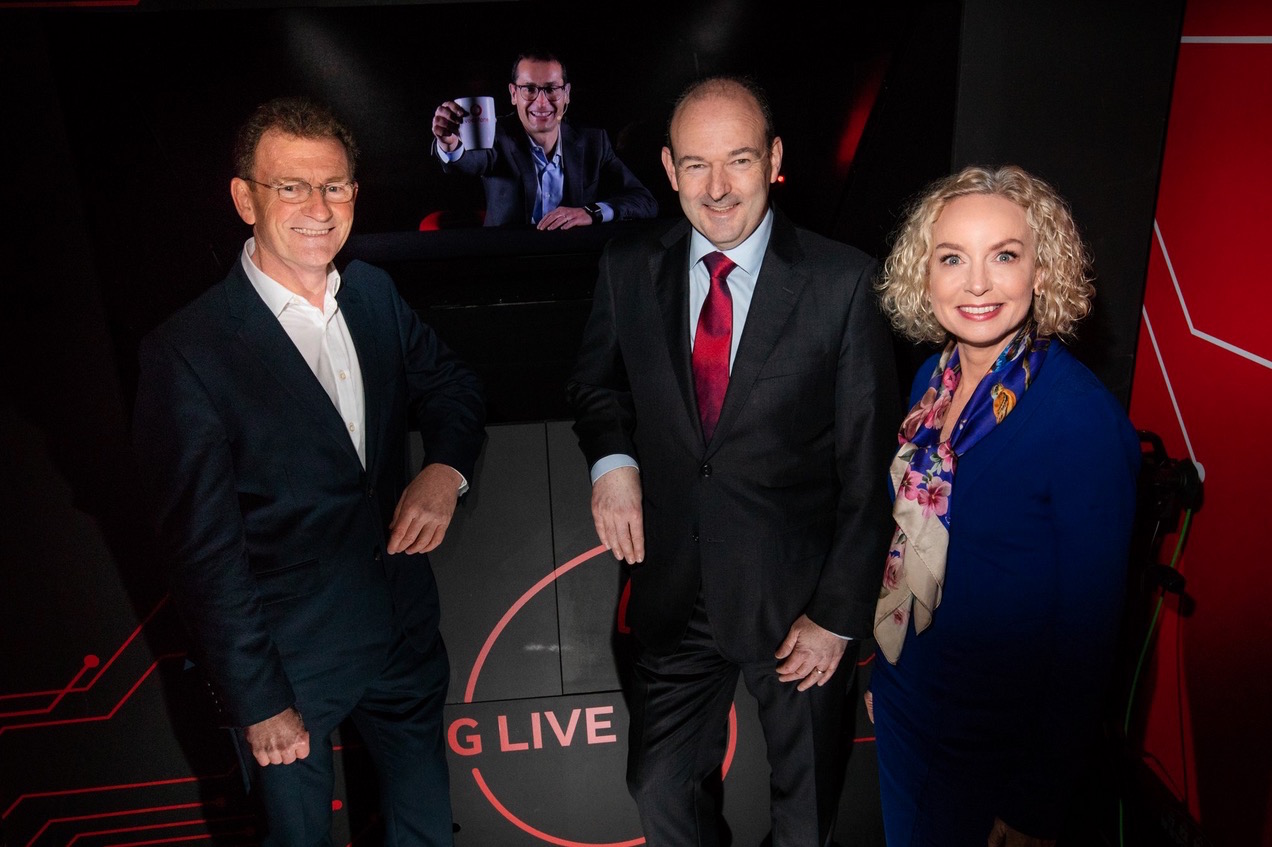
Operators are beginning to explore the limits of ultra-high bandwidth and extremely low latency that provide the talk about 5G. The volumetric visualization, also known as holograms in 3D, is an example of an application that can only be transported over a 5G mobile network.
With potential applications for medical imaging, video conferencing, and gaming, 3D holographic communication requires approximately four times more data than 4K video in continuous flow. This means that only 5G provides sufficient speed and latency to support this type of applications on a mobile network.
In a recent demonstration, Ericsson y Vodafone Germany teamed up to conduct a live holographic interview combining 5G and connected transportation.
Durante una entrevista con el periódico alemán Bild, el CEO de Vodafone Alemania, Hannes Ametsreiter, apareció como un holograma. En la vida real, Ametsreiter estaba en el laboratorio de la empresa en Düsseldorf, a unos 70 km de distancia. La demostración utilizó la licencia de prueba 5G de Vodafone en el espectro de 3,5 GHz y fue apoyada por las soluciones de radio 5G y Cloud Core de Ericsson.
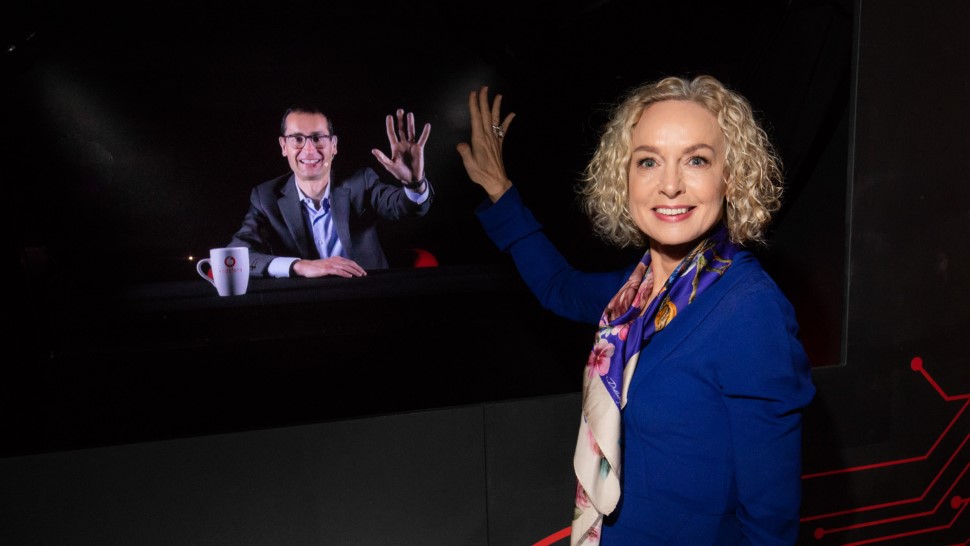
Vodafone Ireland y Ericsson realizaron una demostración similar durante el lanzamiento del primer sitio de la red 5G en vivo del proveedor de servicios. Como parte del lanzamiento, la CEO de Vodafone Ireland, Anne O’Leary, participó en la primera convocatoria holográfica internacional de Irlanda. Ericsson volvió a suministrar la solución 5G para alimentar la llamada.
Otro operador europeo, Cosmote en Grecia, llevó el concepto un paso más allá y demostró un concierto de música holográfica en el que los miembros de la banda en diferentes lugares físicos fueron “holoportados” en el escenario y pudieron tocar juntos, en tiempo real, como una sola banda.
La demostración se llevó a cabo durante la Conferencia Mundial InfoCom, in Athens, Greece, and special cameras capable of capturing in-depth information were used to create a 3D representation of a live person. The latency required for this type of application is approximately one tenth of current 4G technology.
In Greece, Ericsson supplied the 5G test system running on millimeter wave spectrum capable of up to 7 Gbps.
Did you like this article?
Subscribe to our NEWSLETTER and you won't miss anything.
Related articles
 The RTVE-UPM Chair will carry out the first world broadcast in UHD 8K over DVB-T2
 Dejero collaborates with Musion 3D and Vodafone on a spectacular 5G holographic experience during a concert
 BBC and BT deliver first TV contribution using public 5G connection
 Rohde & Schwarz, China Mobile y Mediatek llevan a cabo un piloto con señales mmWave sobre 5G
 SES, Samsung and BBC carry out a pioneering UHDTV experience with HDR over DVB
 Five operators are already carrying out tests with predictive video on cellular networks powered by Akamai
 Streambox cellular network links will allow CNN Indonesia to be on the front line of the news
 Axon successfully carries out a first experience of distributing 4K signals over Ethernet AVB
 Ericsson carries out the first LTE broadcast in the Netherlands
 Vodafone Germany and Ericcsson carry out video distribution tests over LTE networks
 Tesla and Ericsson carry out the first live broadcast over a commercial LTE network
 Globo and NHK carry out 8K demonstrations in Brazil
 Ericsson presents the first solution for video broadcasting over LTE networks
 TeliaSonera and Infinera carry out the first 1 Terabit optical transmission