





The 2019 WTT world tennis tournament in streaming will be held with the JVC mobile studio
TDS Media, la productora encargada de cubrir el WTT 2019, opta por la solución de JVC ya que un único operador para controlar las señales de las distintas cámaras, así como crear las repeticiones y lanzar los contenidos publicitarios.
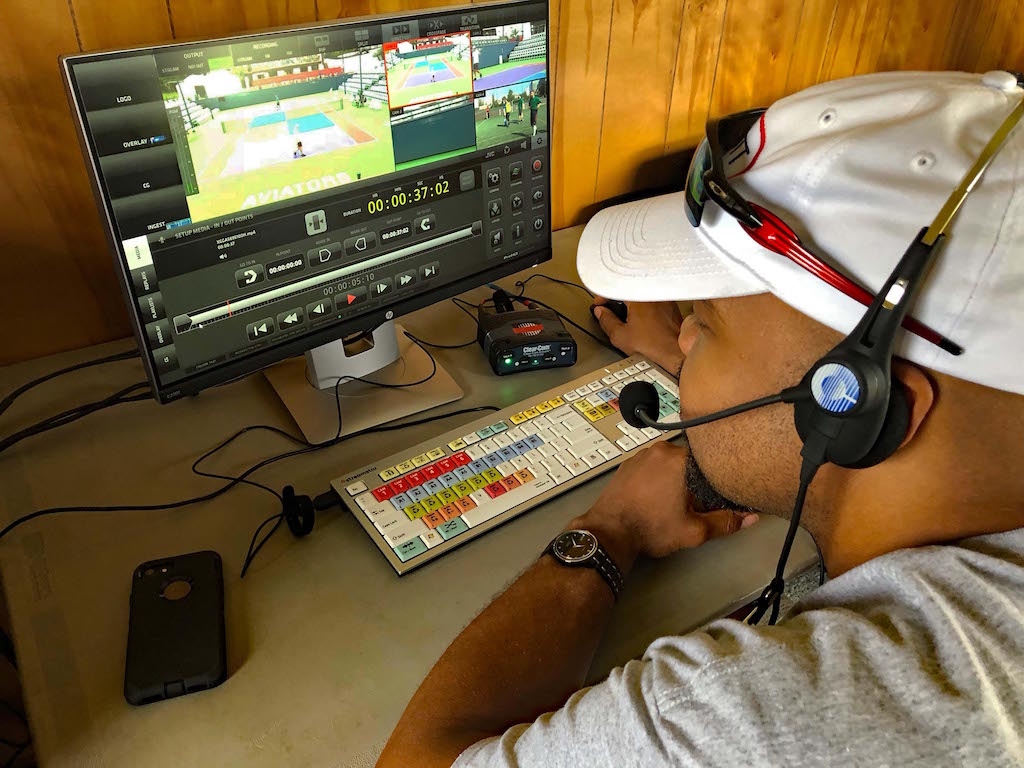
El torneo World Team Tennis de Estados Unidos se retransmitirá en directo por streaming y por segundo año consecutivo con un sistema multicámara de producción móvil based on 4 cámaras GY-HM620 of JVC y el sistema de producción ProHD Studio 4000 de Streamstar.
La temporada 2019 de este torneo empieza el 14 de julio y dura hasta el 3 agosto, disputándose los partidos en 8 ubicaciones a lo largo de los EE. UU. Si existe algún torneo en Estados Unidos que cause furor además del US Open es el World Team Tennis, una liga diferente a lo que estamos habituados a ver fuera de EE.UU. que enfrenta a los mejores jugadores del momento y también de ayer. Este torneo fue creado en 1974 en un formato distinto al que estamos habituados en la distribución de jugadores o el número de sets y partidos. La pista está pintada en varios colores y los jugadores llevan sus nombres en la espalda para identificarlos fácilmente.
En anteriores ediciones, la retransmisión se venía haciendo de forma tradicional recurriendo a una unidad móvil con todo su equipo técnico y humano, con un alto coste total de producción y que en ocasiones limitó el poder proporcionar una cobertura extensiva del torneo al disputarse en distintas sedes. En la edición del año pasado, WTT decidió implementar un equipo de producción propio con capacidad de distribución de las imágenes que permitiría difundir en directo cualquier partido sobre TDT y plataformas en línea.
Una vez aprobado el proyecto, la producción se asignó a la productora TDS Media de Pittsburg, la cual solo tuvo 50 días antes del primer partido para hacer la ingeniería, implementar y entregar los distintos sistemas, además de formar a los distintos equipos que iban a estar sobre el terreno produciendo.
Doug Sicchitano, director de TDS Media, eligió el sistema de producción móvil ProHD Studio 4000 de Streamstar (comercializado en Europa como SX4) porque era la solución ideal que permitía cumplir todos los requisitos exigidos por la WTT y poder además utilizar un único operador para controlar las señales de las distintas cámaras, así como crear las repeticiones y lanzar los contenidos publicitarios. “A partir de lo que nos pidió la WTT, dicha solución de JVC era la mejor solución que encontramos en el mercado”, explicó. “La interfaz de usuario se asemeja a una simple aplicación de teléfono móvil. Es tan intuitiva que gracias a ello pudimos formar en solo un par de horas a todos los operadores”.
La WTT contó con participantes en Nueva York, Philadelphia, San Diego, Washington D.C., Orange County (California), Springfield (Missouri), Orlando (Florida) y Las Vegas (Nevada).
Para este torneo de 2018, WTT cubrió 32 de sus 43 partidos usando estos sistemas de producción móvil; solamente la sede de Springfield y 4 partidos para operadores nacionales de cable utilizaron unidades móviles convencionales. Todos los partidos se emitieron en streaming en WTT.tv y por YouTube, Facebook, Twitter y Twitch. Además de esto, algunos partidos concretos se entregaron a emisoras deportivas regionales para su difusión en diferido. Contando con una ampliación de recursos en Orlando y Las Vegas, el número de partidos a producir con esta solución de JVC permitirá cubrir cerca de 40 del total de 59 partidos de esta edición 2019.
“Estamos encantados de seguir contando con JVC Professional Video en 2019 para proporcionar imágenes espectaculares del torneo WTT a nuestros fans de todo el mundo”, declaró Carlos Silva, CEO de la World Team Tennis. “El sistema de producción móvil nos permite retransmitir en directo con calidad broadcast y por un coste muy atractivo”.
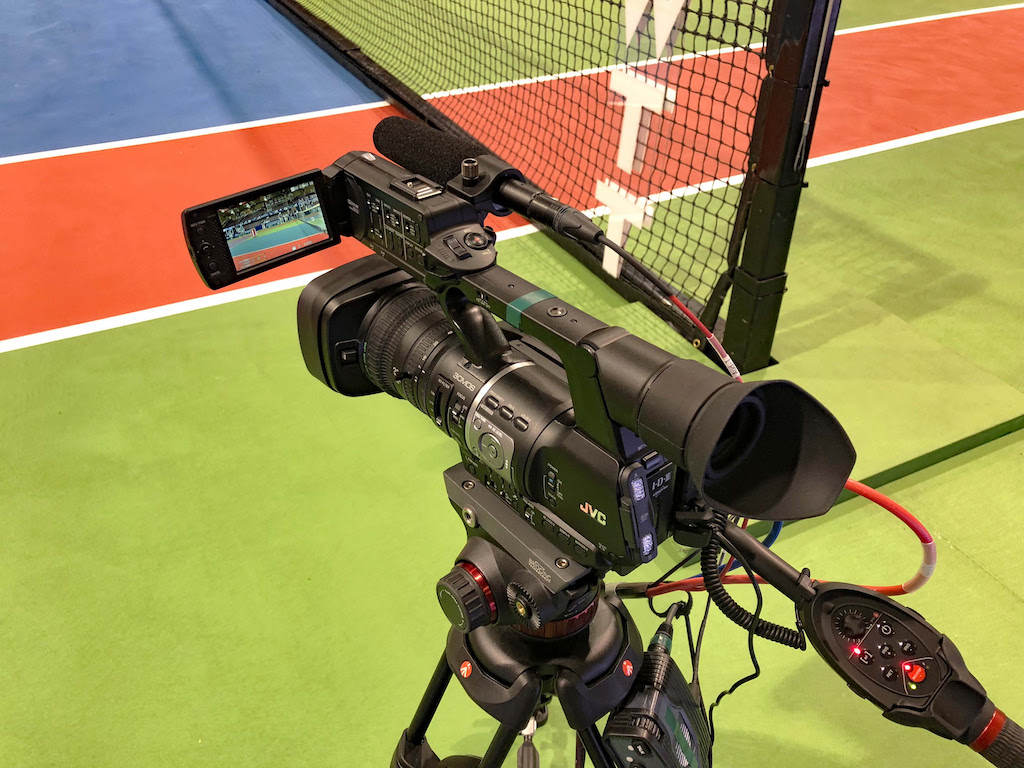
Versatilidad del equipo
Con los nuevos sistemas de producción móvil empleados por la WTT, una producción con 3 cámaras la maneja un equipo de 6 personas y 2 comentaristas. En el control de producción, el realizador selecciona las imágenes en directo y las repeticiones de las jugadas, mientras que un segundo operador se encarga del sonido y de los gráficos. También hay 3 operadores de cámara y más un técnico de apoyo.
Los directores de producción utilizan generalmente el teclado retroiluminado codificado por colores de Streamstar para seleccionar las imágenes y crear las repeticiones, y la pantalla táctil para reproducir y lanzar las repeticiones. Aunque el sistema ProHD Studio 4000 dispone de un mezclador de audio y un generador de caracteres incorporado, Sicchitano decidió utilizar un mezclador Behringer porque permite enviar directamente señal analógica al ProHD Studio 4000 por un puerto USB y un portátil independiente con NewBlueFX Titler Live 3 para el productor Los programas se graban en un Blackmagic Design HyperDeck Studio Mini y el streaming se genera mediante un Teradek VidiU Pro, quedando el ProHD Studio 4000 como equipo de reserva para ambos.
La disposición de las 3 cámaras contempla normalmente una de ellas para tomas desde arriba y otras dos a nivel de pista y en cada lado de la red para las tomas sobre el jugador y del banquillo. La cuarta entrada del ProHD Studio 4000 se utiliza para el sistema de ojo de halcón Hawk-Eye SMART Replay que utiliza la WTT para ayudar a los jueces de línea en las pelotas difíciles y también para proporcionar datos a la producción en directo. WTT inserta anuncios durante las pausas del juego que luego se guardan y organizan en listas de reproducción separadas para luego lanzarse desde el reproductor del ProHD Studio 4000.
Sicchitano se decidió por el modelo de cámara GY-HM620 por su potente óptica integrada Fujinon 23x con anillos de diafragma, zoom y enfoque manuales. “No hay muchas cámaras en el mercado con una óptica zoom de 23X, así que ese fue un factor clave a la hora de decidir”, dijo Sicchitano. “Los perfiles de color que incluye la cámara JVC son excelentes y crea unos colores nítidos y brillantes. Y luego está el factor precio. Una combinación de ventajas que no pudimos obviar”.
Did you like this article?
Subscribe to our NEWSLETTER and you won't miss anything.
Related articles
 MediaKind allows DAZN to offer seamless streaming during the Club World Cup
 Robycam offers frenetic aerial shots at the ESL One Katowice 2019 eSports tournament
 ISE 2019 opens its doors to the global AV integration industry
 Enensys acquires Expway, a company specialized in mobile video streaming optimization software
 The Government ratifies the Barcelona Mobile World Capital Agreement
 TVE apoya la candidatura de Barcelona para organizar el Mundial de Atletismo de 2019
 The World Cup in Brazil breaks the record for peak bandwidth for online video streaming
 Media Networks makes World Cup streaming possible for users of Movistar's 4G LTE network in Peru
 Riedel acquires Code One, specialized in mobile streaming and WAN
 Media Center implements mobile studio multi-camera system based on JVC GY-HM790 cameras
 DT-F9L5U, a new monitor for mobile studio or production from JVC
 La Tv Checa expande su estudio y móvil HD con Kahuna
 Datavideo unveils its new HS-550 mobile studio
 Univision sweeps the World Cup online and mobile