





The Festivalito XR opens cinema to the new creative possibilities offered by virtual reality
“La realidad virtual aplicada al cine permite al espectador ponerse en la piel de los personajes”, explica Edgar Santana, que imparte un taller formativo en el marco del Festivalito.
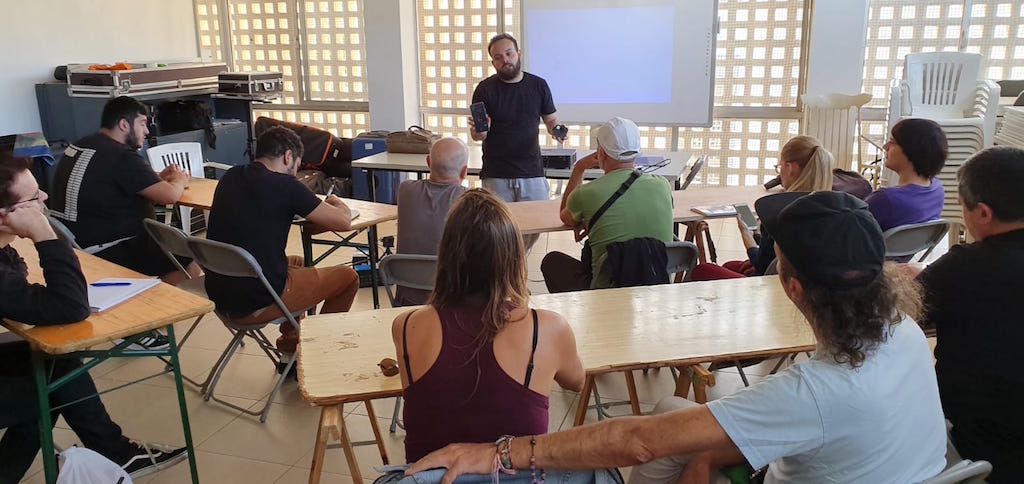
La decimocuarta edición del Festivalito que se celebra estos días en La Palma (Canarias) está dedicando especial atención a la virtual reality, un mundo en continuo desarrollo que cuenta ya con aplicaciones muy avanzadas en ámbitos tan diferentes como la medicina o el sector de los videojuegos, y que abre nuevas posibilidades creativas al séptimo arte.
“La realidad virtual aplicada al cine permite al espectador ponerse en la piel de los personajes, de alguna manera se rompe la barrera entre la pantalla y el patio de butacas”, asegura el diseñador gráfico grancanario Edgar Santana, que en los últimos años se ha especializado en el uso de esta tecnología como nueva forma de comunicación y que imparte durante toda esta semana un taller de nuevas narrativas audiovisuales en el marco del Festivalito.
Santana sostiene que el grado de inmersión que la realidad virtual puede producir en el espectador abre nuevos caminos al arte cinematográfico. “La realidad virtual no está tan alejada del cine tradicional, ni viene a reemplazarlo, sino que ayudará a producir una mayor implicación emocional en quien vea una película, como ya ocurre en el mundo de los videojuegos, donde la tecnología ya está muy desarrollada tanto en cuanto a la creación de contenidos como a su capacidad inmersiva”, explica.
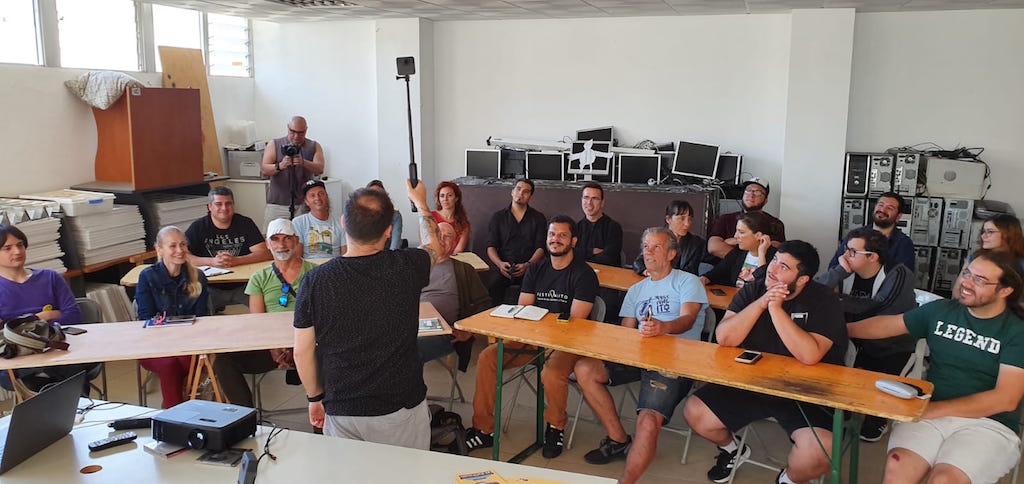 Una veintena de cineastas se han inscrito en el taller Festivalito XR, que se imparte en la Casa de la Cultura de Llanos de Aridane hasta este martes y en la sala La Recova de Santa Cruz de La Palma entre el miércoles y el viernes. La actividad abarca todo el proceso de creación de contenidos virtuales, su rodaje en vídeo 360 y su programación en WebVR para realidad virtual y realidad extendida y ha encontrado “muy buena respuesta por parte de los participantes”, según Santana.
La dinámica del taller se estructura en tres módulos, en el primero de los cuales se aborda la metodología y práctica de grabación y volcado de vídeos 360, el manejo de las gafas de realidad virtual Facebook Oculus Go, y programación para WebVR.
En los otros dos módulos se realizará una pequeña pieza de vídeo en 360, que podrá ser visualizada mediante dispositivos VR y publicada en Youtube y Facebook. Para su desarrollo los alumnos aprenderán las técnicas necesarias de grabación y los nuevos recursos narrativos necesarios para crear vídeos 360, tanto en la parte de rodaje como en la edición posterior.
Paralelamente se ha habilitado, en los Multicines Millenium de Los Llanos de Aridane, el Espacio Festivalito XR, que ofrece al público en general un acercamiento a nuevas experiencias cinematográficas inmersivas. Este espacio ofrece hasta el martes, a las 18:00 horas, contenidos elaborados con esta tecnología que podrán ser visionados a través de las gafas de realidad virtual.
El taller Festivalito XR está subvencionado en un 85% por la Agencia Canaria de Investigación, Innovación y Sociedad de la Información, de la Consejería de Economía, Industria, Comercio y Conocimiento, cofinanciado en un 85% por el Fondo Europeo de Desarrollo Regional (FEDER).
Did you like this article?
Subscribe to our NEWSLETTER and you won't miss anything.
Related articles
 Nits.Lab explores the creative possibilities of HDR with the help of AJA
 4K and 5G: their combined use opens new possibilities in audiovisual production
 TheViewPoint opens new OTT advertising possibilities to Caracol Tv
 Mo-Sys offers a pre-assembled kit for virtual and augmented reality to the market
 The Virtual Reality Observatory announces speakers, advances its agenda and opens registrations
 Sony shows new creative possibilities for cinema at Camerimage 2016
 Adobe launches new creative tools for virtual reality
 Las posibilidades que abre el sonido multidimensional inmersivo en cine y televisión
 AJA increases the creative possibilities of its CION camera
 Adobe Delivers New Creative Tools While Accelerating Your Workflow
 New creative possibilities with the integration between Viz Media Engine and Adobe Premiere Pro CS6
 XDCAM: a world of creative possibilities
 Ovide shows the creative possibilities of the Sony F65
 New creative possibilities with P+S Technik at IBC