





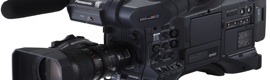
Panasonic will deliver the first units of its new AJ-CX4000 4K/HDR camcorder at the end of the year
The AJ-CX4000 is equipped with a large 4.4K image sensor that delivers ultra-high definition resolution (horizontal, 2000 TV lines), high sensitivity, low noise and wide dynamic range.
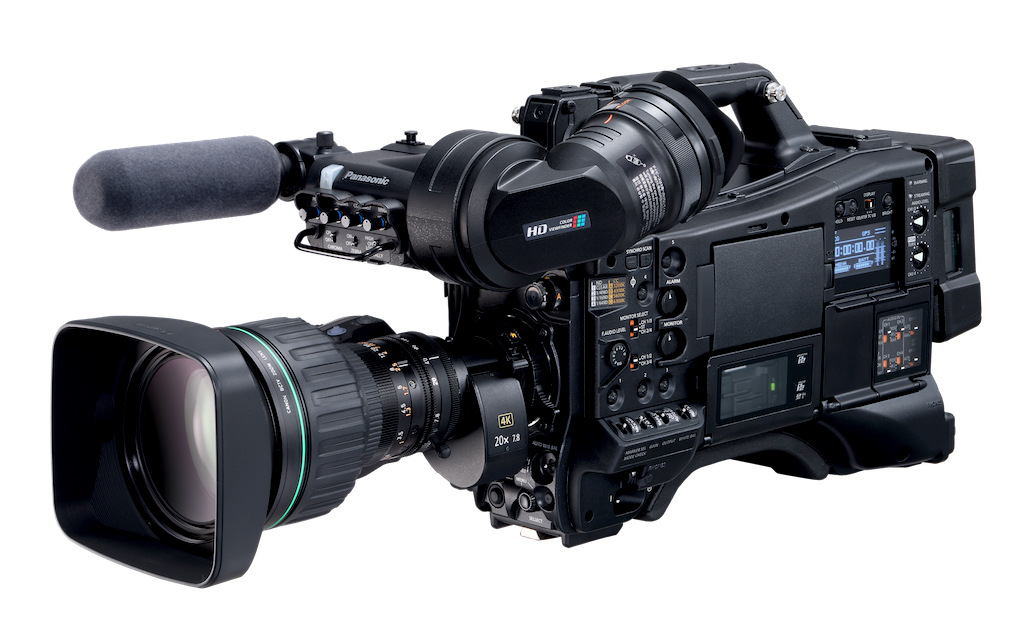
The long-awaited new shoulder camcorder Panasonic AJ-CX4000 (4K/HDR with B4 mount and interchangeable lens), will be available on the market at the end of this month of December. Ideal for high-end news, sports or documentary production, the AJ-CX4000 follows in the footsteps of the AG-CX350 by expanding the CX series of 4K camcorders.
Offering many of the features and formats of the AG-CX350, the shoulder-mount AJ-CX4000 also shares key imaging features with Panasonic's flagship studio camera system AK-UC4000.
Like the AK-UC4000, the AJ-CX4000 is equipped with a 4.4K image sensor large size that provides ultra-high definition resolution (horizontal, 2000 TV lines), high sensitivity, low noise and wide dynamic range. Also common with the studio camera system is the LSSIEL technology, which allows the use of a 2/3 lens without an external adapter, with the internal lens specially designed for large sensors.
Furthermore, it has HLG (Hybrid Log-Gamma) for video recording HDR (High Dynamic Range) in accordance with BT.2100 and BT.2020 standards, and is equipped with HLG recording assist functions such as SDR Monitoring Gamma, HDR/SDR Parallel Output, VF/LCD HDR/SDR Selector and eight gamma mode selection.
The AJ-CX4000 offers a fast, connected workflow, including RTMPS and RTSP for live streaming y NDI HX for live production. Additionally, its HEVC codec offers extended recording with high 4K/10-bit image quality, while keeping bitrate and storage size low. Record MOV files which are highly compatible and easy to use. This file format is the same as that used in the Panasonic AG-CX350 and AU-EVA1 compact cinema cameras, and supports long file names of up to 20 characters, allowing you to easily manage recorded video clips. The AJ-CX4000 also supports the MXF P2 file format for streaming, enabling AVC-Intra or AVC-LongG HD recording with fast and reliable expressP2 cards, cost-effective microP2 cards or low-cost SDXC memory cards.
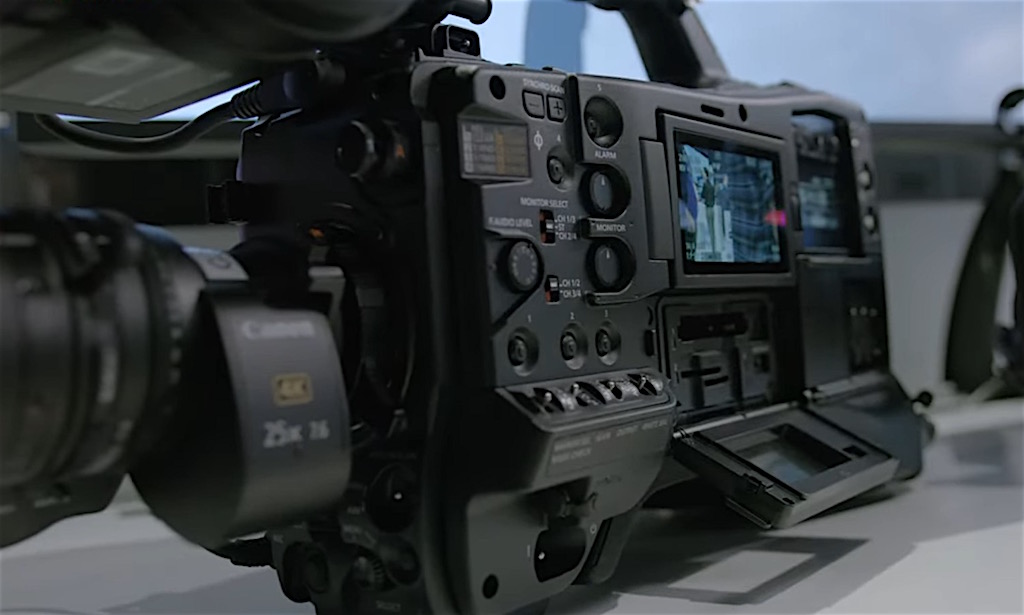 The camera supports recording four-channel 24-bit/48 kHz digital audio high quality. The audio source can be selected for each channel, choosing between microphone input, line input and wireless receiver. A LAN terminal is provided with a locking mechanism that allows IP remote control. The AJ-CX4000's NDI HX mode allows video streaming and camera control over an IP connection, without the need for an external converter. When connected to a system configured with Panasonic's AV-HLC100 Live Production Center and integrated HN/UN series PTZ cameras, the AJ-CX4000 performs end-to-end live video production as well as web distribution.
The standard 12G-SDI output terminal offers high image quality UHD 60p (50p) 10-bit 4:2:2 output. Also included are XLR (2CH) audio input terminals supporting +48V phantom power supply, as well as HDMI OUT, TC IN/TC OUT, GENLOCK IN, USB3.0 (DEVICE) and USB2.0 (HOST, wireless module) terminals.
The AJ-CX4000 can be controlled remotely and wirelessly using the CX ROP application tablet/smartphone (freely downloadable from the App Store or Google Play), which allows the user to view the camera information and change its settings. The CX ROP provides a host of remote functions for output signal selection, USER button adjustment, REC S/S and many others. The app can also be used to select which camera to control from up to eight CX series cameras.
Its 3.5″ LCD display offers 2.76 million pixels, which allows high-definition color monitoring, with a touch panel. The 2.4″ black and white organic EL display offers high brightness and clearly displays status information such as time code and audio input level, even in outdoor environments.
The camera also has two optical filters, ND and CC, with four positions each; chromatic aberration compensation; dynamic range stretching; advanced flash band compensation; 2x/3x/4x digital zoom magnification; Focusing aids: no-impact automatic white balance (AWB); WFM/Vectorscope LCD and VF display; High Gloss Zebra; Y-GET to measure the brightness in the center and display numerical data; lens files to store interchangeable lens settings; configuration files; mode check to display a list of camera settings in VF and LCD; recording verification; and five assignable user buttons.
https://www.youtube.com/watch?v=6EEBLlssy_o
Did you like this article?
Subscribe to our NEWSLETTER and you won't miss anything.
Related articles
 Fujifilm ships the first units of the new Premista 19-45 lens
 Sony begins to deliver the first units of its new CineAlta Venice camera
 Panasonic announces the AG-AC30, its new handheld camcorder with integrated LED torch
 Panasonic unveils its new 4K AG-DVX200 camcorder
 Panasonic will present its new AVC-Ultra AJ-PX5000 camcorder at NAB
 Panasonic launches the new Micro Four Thirds AG-AF101A camcorder
 Panasonic announces the AG-AC90 camcorder, a new model in the AVCCAM family
 2D and 3D recording with the new Panasonic HDC-Z10000 camcorder
 AG-HPX250 P2 HD: new Panasonic camcorder with AVC-Intra codec and 4:2:2 sampling at 10 bits
 Panasonic calls a contest for short videos of its new AG-AF101 camcorder with Filmutea
 IEC and Panasonic present the new Full HD 3D camcorder in Valencia
 Panasonic's new compact 3D camcorder impresses professionals
 Panasonic presents its new Full HD 3D camcorder to the Spanish market
 AG-HPX371 P2 HD, new shoulder camcorder from Panasonic