





The Grammys once again trust Sennheiser microphones
By combining a high-quality digital wireless microphone system and a Dante network as a transport protocol, the show has achieved greatly improved frequency response.

The system of Digital 6000 wireless microphone of Sennheiser was very present in the production of the awards Grammy 2020 of music.
More than 20 radio frequency channels Sennheiser's Digital 6000 were deployed throughout the event, which featured performances by artists such as Lizzo, Brandi Carlile and Blake Shelton. After receiving the microphone signal, each receiving channel was retransmitted through a dual-redundant Dante network which transported multiple identical, multi-channel audio streams to multiple digital mixing consoles located throughout the venue.
Jeff Peterson, PA designer ATK Audiot, emphasizes that “this is the first time that the Grammy Awards have been able to take wireless vocal microphones down a completely digital path to every mixing console.”
"RF in this program is complex, to say the least. Monitoring, control and flexibility are the features that help us the most, and we benefit considerably from the Digital 6000's resistance to interference, as well as its efficient use of bandwidth," he adds.
According to the audio coordinator of the Grammy Awards, Michael Abbott, by combining a high-quality digital wireless microphone system and a Dante network as a transport protocol, the show has achieved greatly improved frequency response. “Mixers have talked about how they are able to do less EQ work in the lower-mid frequencies, and the extended high-frequency response we're getting with wireless microphones is introducing low-pass filtering, which we haven't had to do in the past.”
Abbott, who has used Sennheiser systems at the Grammy Awards for more than 30 years, specified the Digital 6000 system for all production and MC microphones at this year's show. "We appreciate the frequency agility of the Digital 6000 in such an intense RF environment. This allows us to deploy multiple transmitters and receivers with reliable performance," he says.
Stephen Vaughn, Soundtronics Wireless coordinator, made sure that all wireless microphones and in-ear monitors worked in harmony with each other. “The Digital 6000 is impressive,” he admits. "The amount of frequencies I can get on a TV channel is the part that really helps me in today's environment. Even if you don't have a telescope, you can look at the quality meter on the front of the unit and tell whether or not you're picking up interference. Also, the fact that the Digital 6000 transmitters use rechargeable batteries is a key factor for me, as I'm tired of throwing hundreds of batteries in the trash. With the 6000, there's none of that: just the recharges and the "I'm leaving a much greener footprint during these shows and I feel more comfortable using these over disposable batteries."
Did you like this article?
Subscribe to our NEWSLETTER and you won't miss anything.
Related articles
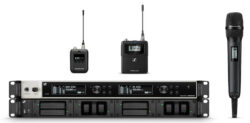 Telemadrid once again chooses Sennheiser Digital wireless microphones
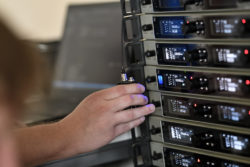 TVE trusts Magnetron and acquires more than 250 Sennheiser wireless microphone channels
 Sennheiser and Neumann exhibit their flagship microphone and monitoring solutions at IBC
 Sennheiser and Neumann microphones shine at the 61st Grammy Awards
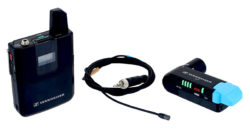 Canal Sur TV once again relies on Sennheiser microphones
 High-profile professionals once again trust BIT Audiovisual to anticipate the future of audiovisual
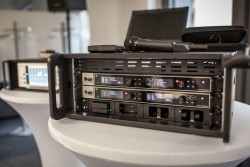 Sennheiser debuts the advanced 6000 digital wireless microphone system
 Sennheiser AVX: wireless microphones ready to use with camcorders
 Beyoncé performed at Super Bowl XLVII with Sennheiser wireless microphones
 Audio-Technica microphones at the Grammys
 Sennheiser XS: wireless microphones…”without worries”
 Antena 3 renews microphones with Sennheiser
 Sennheiser gives voice to the 53rd edition of the Grammy Awards
 Sennheiser Series 2000: new range of wireless microphones