





El aplazamiento de los Juegos de Tokio y la Euro 2020 supondrán un retraso en el lanzamiento de nuevos canales 4K
La Senior Research Director de media y entretenimiento en la consultora OMDIA, Maria Rua Aguete, analiza en la 4K HDR Summit la situación actual de la Ultra Alta Definición y el impacto que el COVID-19 puede suponer.

Maria Rua Aguete, Senior Research Director, Media and Entertainment en OMDIA (nueva marca con la que desde este año operan en conjunto las consultoras Informa Tech: Ovum, IHS Markit Technology, Tractica y Heavy Reading) ha participado en la 4K Summit 2020 para compartir algunas de las principales tendencias que está marcando el despegue de la Ultra High Definition.
 Su intervención ha comenzado asegurando que el impacto económico de la pandemia se sentirá en varias fases, culminando en una recesión. El impacto general en todos los servicios digitales para el consumidor será impulsado principalmente por el comercio electrónico. Mientras que mercados como smart home, música o le televisión de pago apenas se verán perjudicados por la pandemia, el cine, el consumo de móvil y la publicidad en televisión sufrirán un impacto negativo. Por el contrario, el e-commerce, la banda ancha, los juegos online o los servicios OTT se beneficiarán de esta crisis.
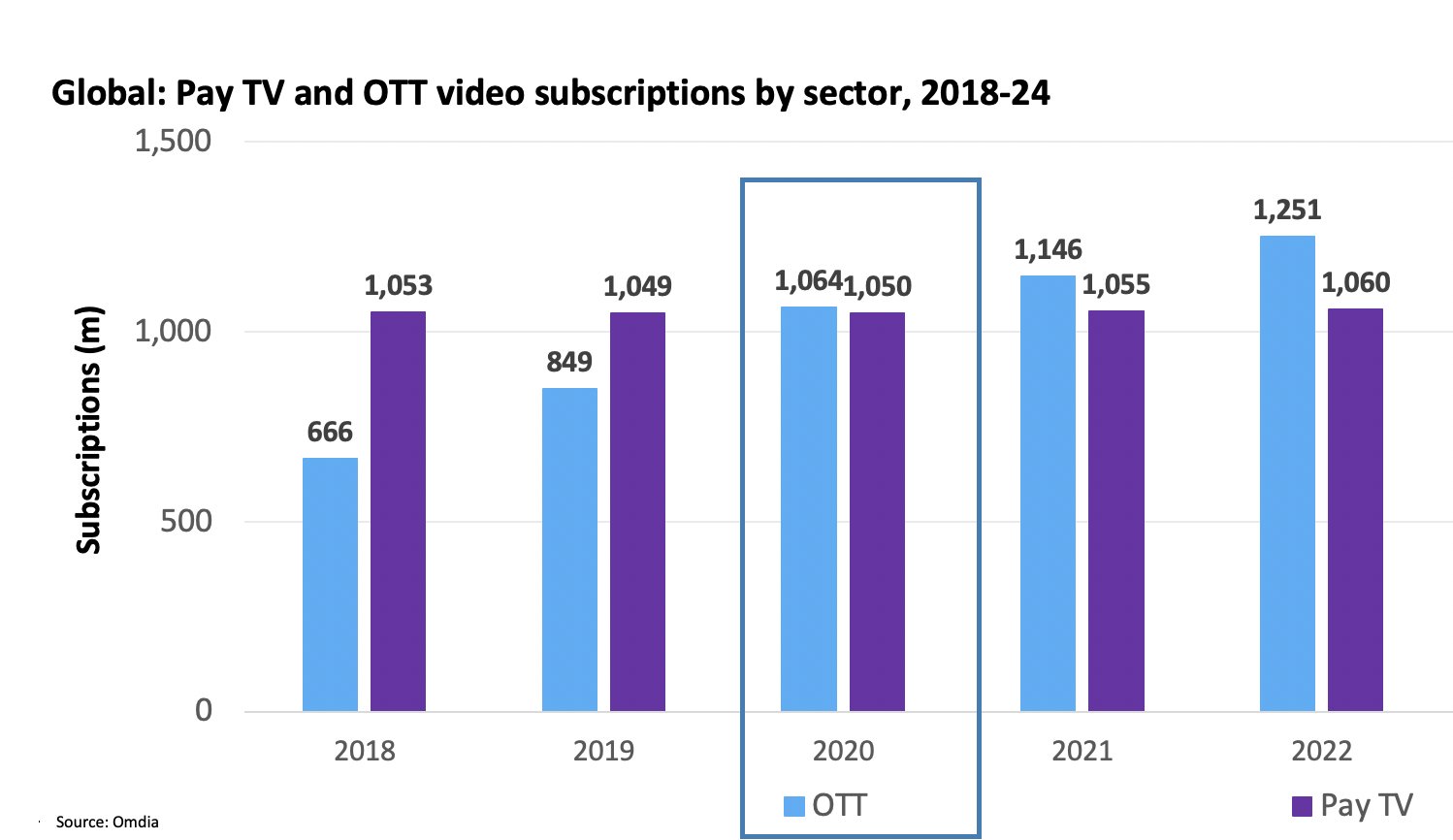
La suscripción a la televisión de pago y OTT convergerán este año en cuanto a número de suscriptores en todo el mundo con alrededor de 1.050 millones en cada una de las dos modalidades. Es de reseñar que en 2022, el número de suscriptores a servicios de televisión de pago alcanzaría los 1.251 millones mientras que los de servicios OTT rondarán los 1.064 millones.
“En 2020, la OTT superó por primera vez las suscripciones a la televisión de pago y esta brecha es probable que se amplíe en los próximos 4 años presentando un cambio importante en el panorama de la televisión”, ha afirmado.
Impacto del COVID-19
María Rua Huete se muestra convencida de que “el COVID-19 está impulsando un cambio de gran alcance en el comportamiento de los consumidores que presenta un gran número de desafíos para los vendedores de dispositivos, tecnología y los medios de comunicación”.
 La pandemia mundial está impulsando un amplio cambio en el comportamiento de los consumidores. Los envíos de unidades (principalmente teléfonos inteligentes) no se recuperarán del impacto del COVID-19 hasta 2022.
Paralelamente, la inteligencia artificial de la voz será primordial para la nueva generación de dispositivos de televisión. En este momento, menos de la mitad de los televisores inteligentes que se usan actualmente pueden usar un asistente de voz, comparado con más del 80% de media streamers.
As for the impacto del 4K en la venta de televisiones, la consultora estima que si bien es un punto clave limita su crecimiento. “Las pantallas 4K simplemente no existen fuera de la televisión”, ha afirmado.
En este momento existen en todo el mundo 557 millones de televisiones 4K, el 21% de todos los televisores en uso en 2020. Por el contrario, el parque de teléfonos inteligentes y tabletas de 4K es de apenas 0,62 millones.
La resolución global de la UHD superó la mitad de la venta de televisores por primera vez en el cuarto trimestre de 2018 y fue de casi el 60% en el cuarto trimestre de 2019.
América del Norte estará a la cabeza de hogares equipados con un televisor UHD alcanzando el 74% en 2024, frente a un tercio de hogares a finales de 2018, y alfo más de la mitad a finales de este año 2020.
La Senior Research Director de OMDIA ha concluido su intervención en la 4k HDR Summit 2020 destacando que “el aplazamiento de los Juegos Olímpicos de Tokio y la Eurocopa de Fútbol 2020 por la pandemia ha supuesto que muchos broadcasters públicos en Europa hayan pospuesto el lanzamiento de nuevos canales en UHD”.
Did you like this article?
Subscribe to our NEWSLETTER and you won't miss anything.
Related articles
 DAZN joins the FAST world with the launch of two channels
 Akamai duplica el tráfico de transmisión de vídeo durante los Juegos de Tokio
 The Tokyo 2020 Olympic Games, the least watched in the history of television in Spain
 940 Panasonic broadcast cameras, at the service of the Tokyo 2020 Olympic Games
 130 EVS XT-VIA and LSM-VIA make Euro 2020 matches possible
130 XT-VIA y LSM-VIA de EVS, al servicio de la Euro 2020
130 EVS XT-VIA and LSM-VIA make Euro 2020 matches possible
130 XT-VIA y LSM-VIA de EVS, al servicio de la Euro 2020
 Ross to bring augmented reality to the Tokyo Olympics with NBC Olympics
 NBC Olympics to use Avid and EVS for Tokyo Olympics coverage
 Los Juegos Olímpicos de Tokio comenzarán el 23 de julio de 2021
 Panasonic heads into the final stretch ahead of the Tokyo 2020 Olympic Games
 Los Juegos Olímpicos de Río supondrán una prueba de fuego para el streaming global de vídeo
 Gearhouse Broadcast adquiere los conversores SAM Alchemist para los Juegos de Río y la UEFA Euro 2016
 NHK confirms its plan to produce the 2020 Tokyo Olympics in 8K
 Harris participa en el lanzamiento de dos nuevos canales de Infinity Tv en Emiratos