





Blackmagic Design updates Video Assist to be recognized as a webcam
Provides support for webcasting platforms or the ability to stream live video to clients via Skype and Zoom.
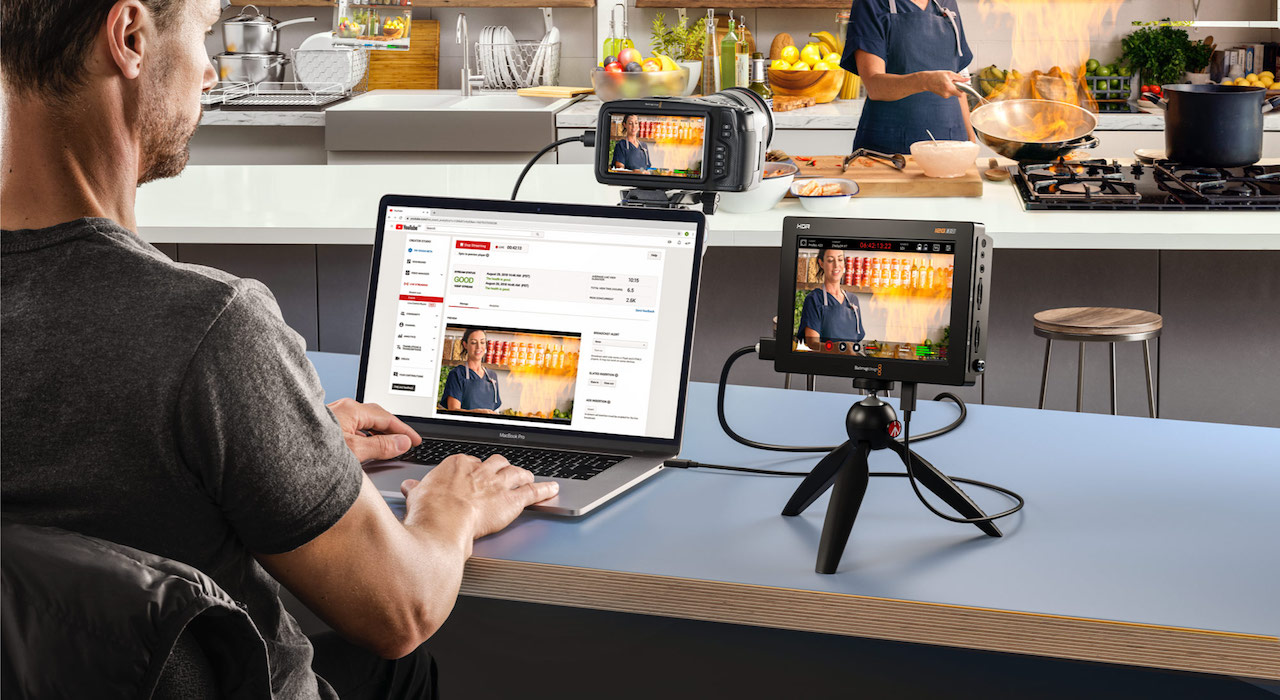
Blackmagic Design has updated his monitor/recorder/viewer Video Assist 3.3 which now allows the models Video Assist 3G y Video Assist 12G HDR sean recognized as webcams via the USB-C port.
Now, users can connect the devices to computers and stream live over the Internet using any of the most popular platforms in 1080p HD quality. Programs such as Open Broadcaster, YouTube Live, Facebook Live, Skype, Zoom and Twitch, among others, will recognize the unit as a webcam. Likewise, the update provides the possibility of selecting the audio channel that you want to monitor on the Blackmagic Video Assist 3G units, and of assigning the audio in the 7-inch version.
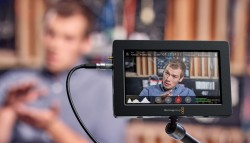
The Blackmagic Video Assist model is a portable monitor, professional recorder and viewfinder for all types of SDI or HDMI cameras, includes a larger screen with various indicators and offers better quality recording codecs. Its new design provides various innovations, such as an optimized focus indicator, pilot light and integrated three-dimensional conversion tables.
3G models support a maximum resolution of 1080p60, or 2160p60 in the case of 12G HDR versions. The latter have a larger screen that allows you to shoot with great dynamic range in broad daylight and provide compatibility with the Blackmagic RAW format. The devices in the Blackmagic Video Assist line are like four products in one.
Blackmagic Video Assist models are so versatile that they can perform hundreds of tasks. When used with a camera, they provide a large viewfinder with modern recording codecs, focusing tools and built-in conversion tables. Likewise, thanks to their various indicators, they provide the possibility of testing various equipment used during live broadcasts to ensure its correct operation. Additionally, like HyperDeck units, they can be used to master or play clips, for the purpose of adding advertisements or promotions to the images broadcast. They even allow the signals coming from each camera to be recorded in isolation.
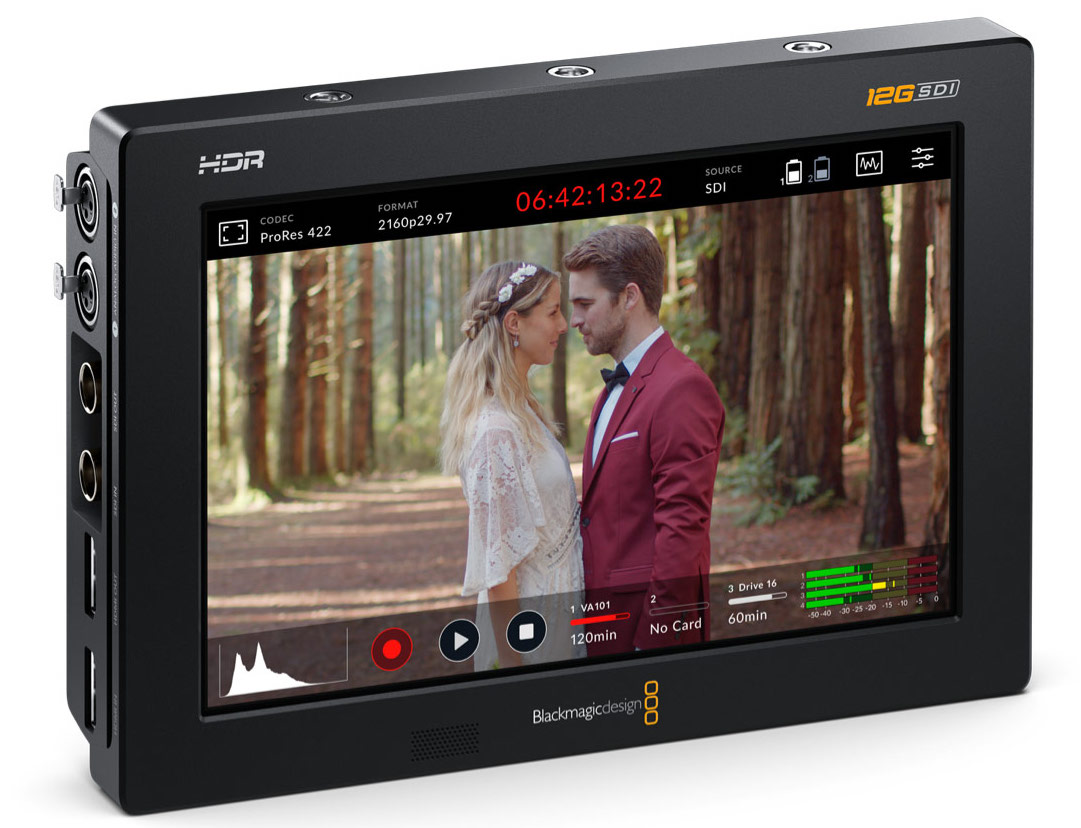
All Video Assist models have a touch screen that allows you to record and play clips, view graphical representations, and adjust focus functions. The 7-inch versions include analog audio inputs and two SD card slots for seamless recording. Likewise, all versions have a pilot light on the back, a speaker on the front panel and a headphone jack. Video Assist devices have two compartments for L-series (Sony) batteries, so batteries can be changed without stopping recording.
Video Assist models feature bright 5- and 7-inch touchscreens that make it easy to frame shots and enable precise focusing. These display important information during shooting, such as time code, playback controls, VU meters, and a histogram for evaluating exposure. You can even customize the screen by adding or removing different options, such as the name of the open file, the focus indicator, the zebra and false color function, framing guides or conversion tables. These tables allow you to monitor shots with the desired appearance and color, and can also be integrated into the file if necessary.
Video Assist line products use common SD cards, simplifying storage on easy-to-purchase media. Additionally, the files generated are small, so longer recording times are possible on such drives or UHS-II versions. On the other hand, the 7-inch models have two slots that make it easy to replace the cards, even during recording, in order to avoid interruptions. These storage media offer great speed at an affordable price.
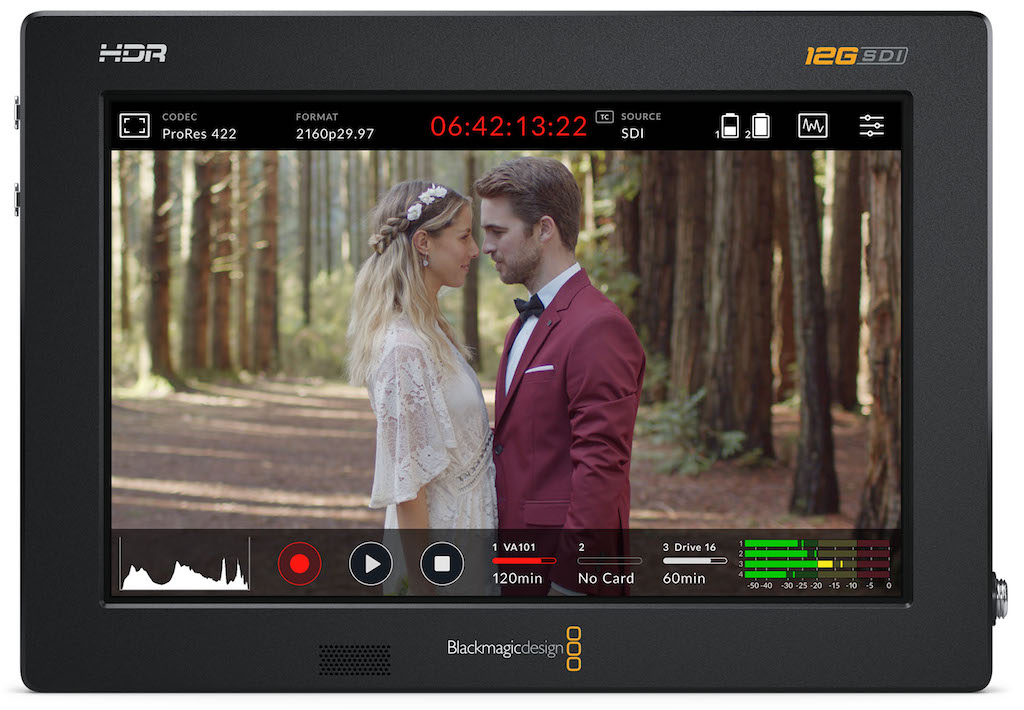
Camera Plugin
Blackmagic Video Assist models They are ideal as a complement to any common camera, since they offer a large bright 2500 nits screen and professional features that make it easier to focus, as well as better quality formats. Additionally, they are a great solution for older professional cameras, as they allow burn in modern file formats, such as ProRes and DNx, in order to use them with the most innovative editing programs, thus facilitating recording in ProRes and DNx. On the other hand, the HDMI and 12G SDI inputs of these devices offer the possibility of connecting them to all types of cameras, whether common, professional or even DSLR.
In addition, they generate open format files, which avoids carrying out the transcoding process. In addition, they can be used in all post-production programs available on the market, so you can work with your favorite software, for example, DaVinci Resolve Studio. On the other hand, these devices allow you to record in 10-bit ProRes or DNx format or 12-bit Blackmagic RAW (SDI 12G HDR models) on compatible cameras. Blackmagic RAW is the fastest growing codec in the audiovisual industry, and it is also possible to download and use free development tools to provide compatibility with this format in different applications. It should be noted that the files are compatible with all operating systems.
He USB-C port on Video Assist 12G models allows you to connect external drives large capacity that do not have space limitations. Plus, you can use the same unit for recording and editing, so you don't have to waste time copying files before starting post-production. Because these storage media are extremely fast, they provide support for formats that require high data transfer speeds. In this sense, the Blackmagic MultiDock 10G device offers the flexibility of using multiple external drives during recording, while on-screen menus make it easy to manage these drives.
Now it is possible broadcast live on the Internet con los modelos Blackmagic Video Assist 3G y 12G HDR, ya que el puerto USB permite que sean reconocidos como una cámara web al conectarlos a un equipo informático, lo cual brinda la posibilidad de emitir en directo a través de cualquier programa destinado a tal fin. Además, estos dispositivos ofrecen imágenes de alta definición con calidad 1080p. Los usuarios pueden elegir cualquier aplicación, por ejemplo, Open Broadcaster, o realizar una videollamada a través de Skype y transmitir las imágenes del rodaje en vivo. Los productos de la línea Video Assist admiten el uso de los principales programas y plataformas, tales como Open Broadcaster, XSplit Broadcaster, YouTube Live, Facebook Live, Skype, Zoom, Twitch TV, Periscope, Livestream y Wirecast, entre otros.
Estos dispositivos incluyen representaciones gráficas de la señal que permiten lograr un nivel de exposición preciso en las cámaras y, asimismo, garantizan el cumplimiento con las normas broadcast. En este sentido, funcionan como un monitor de forma de onda portátil que brinda la posibilidad de ver el nivel de luminancia de la fuente o la señal reproducida. Por otro lado, el vectorscopio displays color intensity at a 100% SDI reference level. In turn, the RGB graph is ideal for establishing appropriate chromatic levels, while the histogram provides information about the loss of details or the distribution of lights and shadows in the image. It should be noted that these indicators can be superimposed on the image, and in turn it can be displayed in a small window in the upper right part of each of them.
When recording, digital film cameras use a logarithmic color space a fin de preservar el rango dinámico, lo cual es ideal para el proceso de posproducción. Sin embargo, cuando estas imágenes se ven en un monitor, pueden tener un aspecto apagado, sin demasiado contraste. En este sentido, las tablas de conversión tridimensionales son la solución ideal, dado que permiten atribuir cierta apariencia durante el rodaje para tener una mejor idea de cómo lucirá el material al editarlo. Estas se pueden aplicar temporalmente al supervisar la calidad de las imágenes o integrar a los archivos Blackmagic RAW para utilizarlas al editar. Los distintos modelos Video Assist son compatibles con tablas de conversión tridimensionales (.cube) de 17 y 33 puntos. Asimismo, es posible usar las integradas en los dispositivos, por ejemplo, Extended Video o Film to Video.
Los dispositivos Video Assist registran el sonido con una calidad muy superior a la de la mayoría de las cámaras, por lo cual no es preciso acarrear equipos de audio adicionales. En formatos SDI, es posible grabar 2, 4, 8 o 16 canales de audio. Por su parte, a fin de conectar micrófonos, las versiones de 7 pulgadas disponen de dos entradas XLR con alimentación fantasma que admiten una frecuencia de muestreo de 192 kHz en 16 y 24 bits por muestra. A su vez, es posible cambiar la balística de los medidores de audio (VU o PPM).
Grant Petty, CEO de Blackmagic Design, destaca que “esta actualización es excelente, ya que brinda la posibilidad de que los dispositivos Video Assist sean reconocidos como cámaras web, por lo que los usuarios podrán transmitir en directo por Internet a sus clientes mediante plataformas como Skype o Zoom desde cualquier lugar del mundo. Además, los modelos Blackmagic Video Assist ahora ofrecen una interfaz de transmisión por Internet al conectarlos a equipos informáticos mediante los puertos SDI y HDMI, así como opciones de monitorización integradas en las imágenes y la forma de onda. Es una actualización gratuita excepcional”.
Main features
- Compatibilidad con producciones en directo, cartelería digital y material de archivo.
- Modern design with quick-to-use touch controls.
- Customization of on-screen options.
- Support for common SD/USH-II cards.
- Optimized monitoring and better recording codecs on different types of cameras.
- Open formats compatible with the most popular editing programs.
- Puerto USB que permite que el dispositivo sea reconocido como cámara web, brindando así compatibilidad con distintas plataformas de video.
- Integrated indicators display waveform, vectorscope, RGB graph or histogram of the signal.
- Three-dimensional LUTs that can be applied when recording and monitoring images.
- Multiple channels for digital and analog audio.
- Professional multi channel digital and analog audio.
Did you like this article?
Subscribe to our NEWSLETTER and you won't miss anything.
Related articles
 Ruina Video Art trusted Blackmagic Design solutions to produce the Festival de Sol Maspalomas Costa Canaria
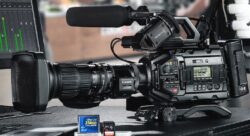 Blackmagic Design introduces notable improvements to its URSA Broadcast G2 camera
 Vis-A-Vis Video designs a workflow based on Blackmagic Design solutions for Hella Mega Tour
 Blackmagic Design updates DaVinci Resolve to version 17.3
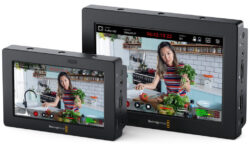 Blackmagic launches an economical version of its popular Video Assist 3G
 Blackmagic Design updates the operating system of its HyperDeck Studio recorders to incorporate new functions
 Blackmagic Design updates DaVinci Resolve with new Fairlight tools
 Blackmagic Design now offers Blackmagic RAW recording on its Video Assist 12G
 Blackmagic Video Assist 12G: Record and monitor images in HD, UHD, DCI 2K and 4K formats from SDI or HDMI cameras
 Blackmagic updates its Video Assist with new features
 Blackmagic updates its popular Video Assist
 Ovide actualiza su sistema de vídeo asistencia Smart Assist
 Blackmagic Video Assist allows you to record and monitor content with superior quality
 Blackmagic Design updates ATEM software