





ARRI enters the live camera market with the new Amira Live
Amira Live streamlines ARRI's Multicam system with direct, cable-free connection between the camera body and fiber backend. The clean, uncluttered camera setup is ideal for live broadcasts.
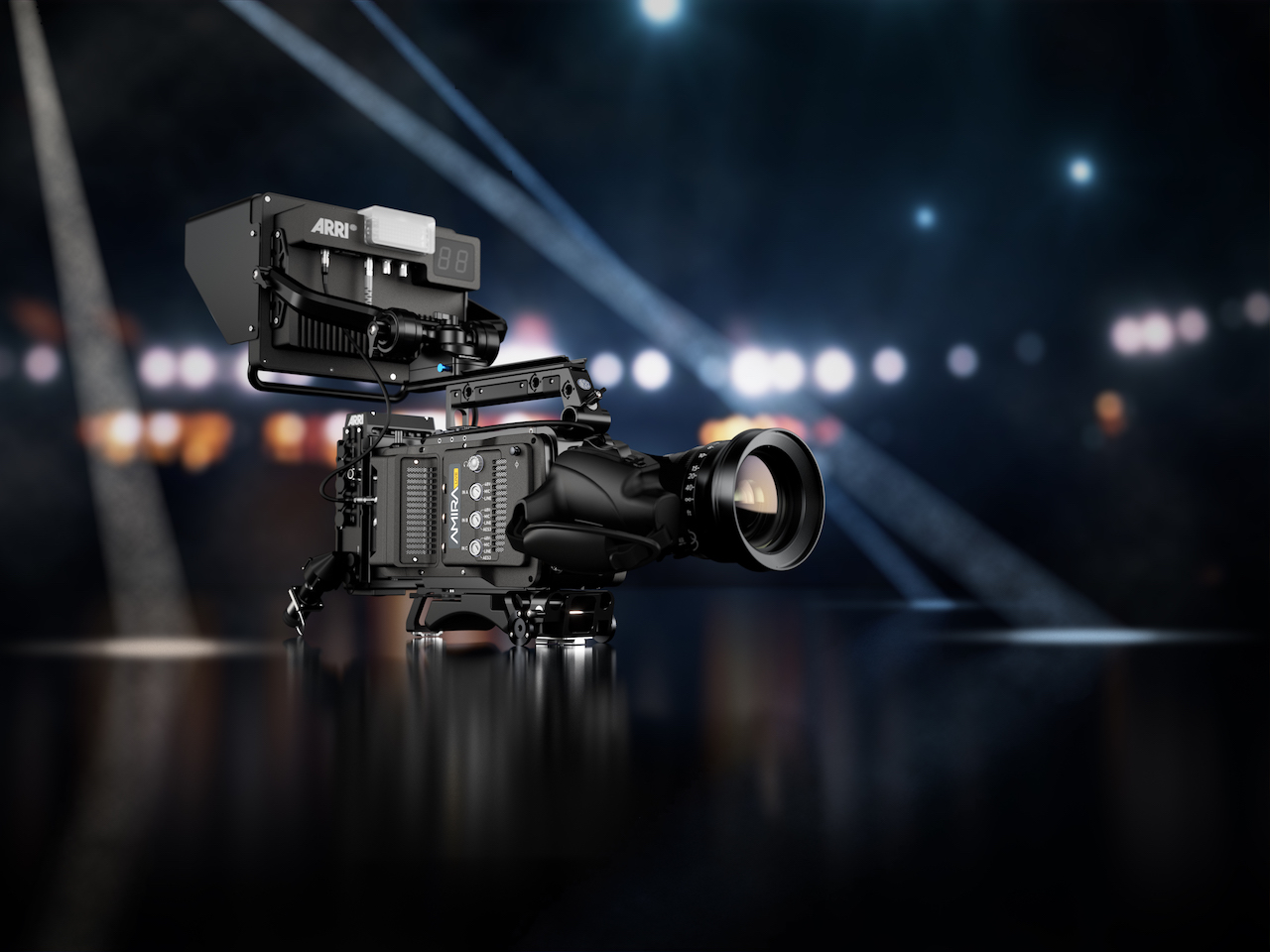
Thinking about live multi-camera broadcasts, ARRI launches a new version of its popular Amira camera. The new Amira Live eliminates external wiring between the camera body and fiber adapter, resulting in a cleaner, more reliable setup for live productions. Coupled with a new, feature-rich software update and the VMM-1 on-board monitor, the Amira Live offers a unique combination of system camera efficiencies and truly cinematic images.
Like other Super 35 format film cameras adapted for multi-camera broadcast, the Amira previously required several external cables to conconnect camera to fiber backend for the transmission of the SMPTE 311M signal. In live broadcasts, these cables add an additional unwanted risk of disconnection or accidental damage. Now, Amira Live not only eliminates these risks, but the cleaner camera settings are also easier for camera operators to work with.
Unlike the usual live cameras that use a 2/3″ sensor, ARRI's new proposal integrates a sensor ALEV III Super 35 developed by the German manufacturer, with the same sensor design used in all Alexa cameras. ARRI's sophisticated color science will allow Amira Live users to stream live images alongside high-end films, TV series and OTT productions.
Reflecting ARRI's system approach and commitment to continually improving feature sets, ARRI is also launching a new update to the software SUP 6.1. Among its many refinements are better noise reduction, a greater range of sharpness adjustments, better correction of bad pixels, and faster startup. The update adds a green tally display to the viewfinder image and enables intercom talkback via the VTR or user button, facilitating communications when operating the camera from the shoulder.
SUP 6.1 also now means that no additional device is needed when using RF cforce motors to control the iris with the RCP (Remote Control Panel). This increases creative flexibility, opening up new looks by allowing the use of prime and zoom lenses designed for film productions with the same ease and workflow as traditional system camera lenses.
The last component of the new Amira Live package is the monitor VMM-1 from ARRI. This versatile 10″ monitor connects directly to the camera viewfinder interface or can be daisy-chained to the CCP-1 Camera Control Panel. It includes contrast, color, backlight and peaking controls (including peaking on/off switch), a physical on/off switch for the front tally and two camera user buttons. Accompanying the monitor is the adjustable, quick-release MYS-1 mount, designed specifically for the VMM-1 and multi-camera setups.
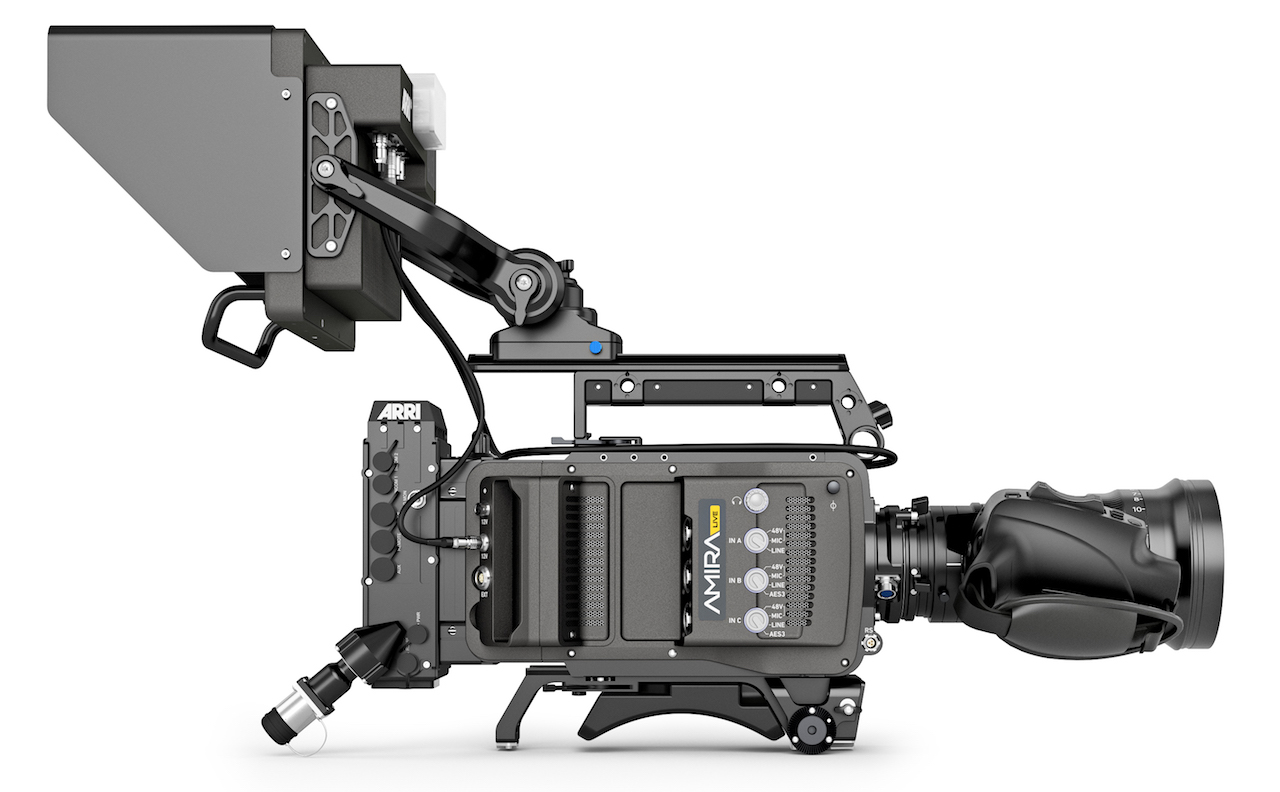
fiber transmission
ARRI Multicam includes a SMPTE 311M fiber transmission easy to integrate, developed in collaboration with the specialized company DTS. The combination of ARRI cameras and fiber system offers a cinematic look with the efficiency of a live broadcast system. Customers can record in-camera for post-production, finishing or slow-motion effects, while simultaneously transmitting live HD or UHD signals to a broadcast facility, stage or social media channel using standard production environments such as OB vans or studios.
ARRI Multicam cameras can be controlled with industry-standard Sony RCPs (Remote Control Panels), allowing technicians to continue using the tools they are comfortable with. The system allows control of the image and iris parameters of the CPR Sony for PL and B4 ENG style lenses, including box lenses, EF lenses and also cinema style lenses commonly used in high-end film and television productions. Even more flexible and advanced RCP operation is offered with the fully configurable Skaarhoj RCP V2, which supports access to all relevant camera parameters, including LUTs and configuration files, via the ARRI Camera Protocol CAP. This represents a next-generation CPR operation, far beyond standard CPR, but maintaining a traditional CPR workflow.
Did you like this article?
Subscribe to our NEWSLETTER and you won't miss anything.
Related articles
 ARRI enables remote control of its cameras with the new Camera Companion app
 ARRI takes multi-camera live production a step further with Alexa 35 Live – Multicam
 Altair enters the matrix intercom market with its new IPCom
 Movistar+ enters the OTT market with Lite, its platform for non-customers for 8 euros
 This is the new generation of 4K live cameras from Sony
 Verimatrix enters the IoT market with a cloud-based platform to protect connected devices and services
 Kodak Pixpro enters the 360º video market with the new 4KVR360
 Ross Video enters the capture market with a camera specially designed for chroma production
 ARRI Amira upgrade unlocks 4K recording
 Ovide shows all the creative possibilities of Amira, ARRI's new documentary-style camera
 Ovide presents the new ARRI Amira in Madrid and Barcelona
 Amira, ARRI's new bet for high-end acquisition, at BIT Broadcast
 ARRI unveils new Amira camera
 Zeiss enters the compact camera market with new Touit lenses