





Mixed reality: the true revolution of virtual production environments
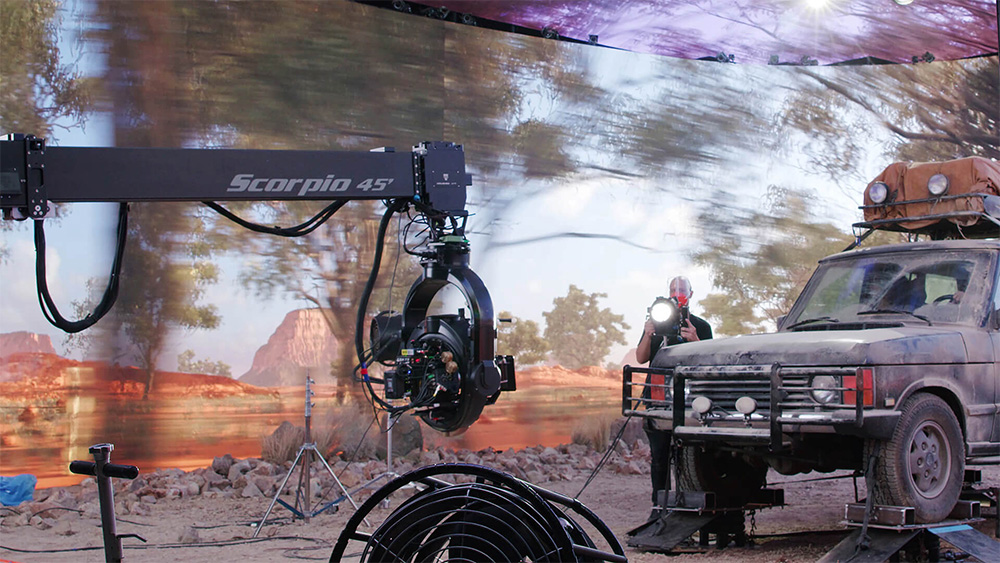

El director de fotografía Juan Luis Cabellos, AEC profundiza en los entornos de producción virtuales o de realidad mixta (entendida así por integrar realidad virtual y elementos reales), cada vez más comunes en la industria audiovisual.
Los “forillos” electrónicos hechos con grandes pantallas LED donde se proyectan fondos rodados en 2D no son ninguna novedad y ya hace algún tiempo que se vienen utilizando. La realidad mixta, sin embargo, sí que introduce importantes novedades que suponen una mejora de esta técnica e implica cambios en la manera de entender el diseño de producción.
Técnicamente, consiste en una enorme pantalla LED en la que se proyectan escenarios virtuales creados en 3D y un sistema que ubica la posición de la cámara frente a la pantalla. La clave está en la recolección y gestión de determinada información de la cámara: posición, altura, ángulo de visión y ajustes de la lente entre otros. Con estos datos, el sistema Unreal Engine of Epic Games es capaz modificar el escenario 3D y adaptar la perspectiva de la proyección para que sea coherente desde el punto de vista óptico. El escenario se mueve siguiendo a la cámara, dando así la sensación de que los actores están realmente insertos en esos entornos.
Desde el punto de vista de la cinematografía son varias las ventajas que aporta el sistema. En primer lugar, la luz es interactiva. Esto seguramente es uno de sus principales atractivos. Todo aquello que no aparece en cuadro es una fuente de luz, tanto en las paredes como en el techo. Esto encaja con la lógica lumínica de un espacio creado en 360º. Tenemos, además, opciones para trabajar con ello: desde modular su intensidad, hasta crear ventanas de cualquier color para iluminar o utilizar franjas negras. Todo ello se modifica con independencia de la exposición del fondo que aparece en el plano.
Otra gran ventaja es la posibilidad de congelar el tiempo. Hay situaciones en las que, rodando en exteriores, sabemos que va a ser muy complejo mantener el racord de luz. Atardeceres o amaneceres son los grandes retos. Ahora se puede rodar en hora bruja a jornada completa.
 Recuperando el control total
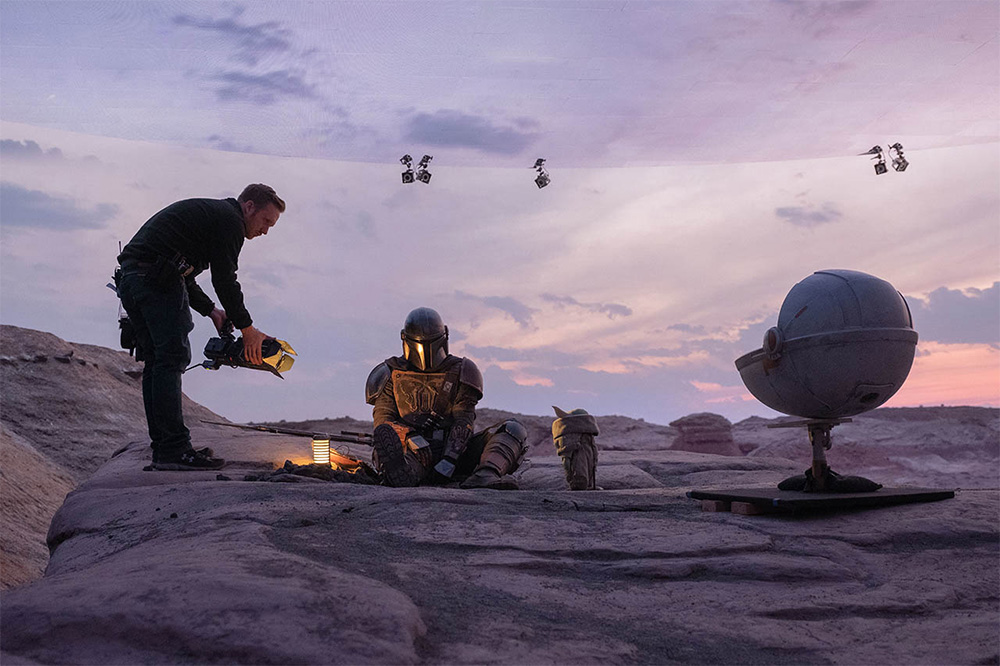
Para los y las directoras de fotografía, un aspecto no menos importante es la recuperación del control total de la estética de lo que se rueda: tanto del primer término como de los fondos. Cuando se trabaja con cromas puede pasar que los fondos no estén listos antes de rodar o, simplemente, que se haya decidido cambiarlos o modificarlos en el proceso de montaje. Esta siempre es una situación temida. Ahora lo que ves e iluminas es lo que te llevas. Sin sorpresas posteriores.
A nivel técnico, las pantallas LED reúnen unas determinadas características. Como mínimo, han de ser capaces de reproducir el gamut de la norma DCI para tener la mayor cantidad de matices de color posibles. Por otro lado, es necesario que la distancia entre píxeles sea lo más cercana posible para evitar ver la trama. Por ejemplo, las pantallas LED que se han utilizado para la serie The Mandalorian de Disney+ tienen una separación entre píxeles de 2,84mm. Del mismo modo, su alto nivel de brillo máximo, entre 1000 y 4000 nits, garantiza la posibilidad de tener altas luces en el fondo.
Otra clave es la resolución con la que trabajan las pantallas, y es que el hecho de ofrecer una definición por encima de 4K garantiza un nivel de detalle satisfactorio en los fondos. Es muy interesante como trabaja el sistema para optimizar el procesamiento de la imagen proyectada. El compromiso consiste en renderizar a máxima calidad solo lo que se ve en el cuadro más un cierto margen de seguridad -esto es lo que se denomina frustrum-. El resto se visualiza a una calidad inferior para aliviar dichos procesos de procesado de imagen. Que el fuera de campo tenga menor resolución no es relevante, porque sigue cumpliendo perfectamente la función de iluminar.
 Producciones en realidad mixta
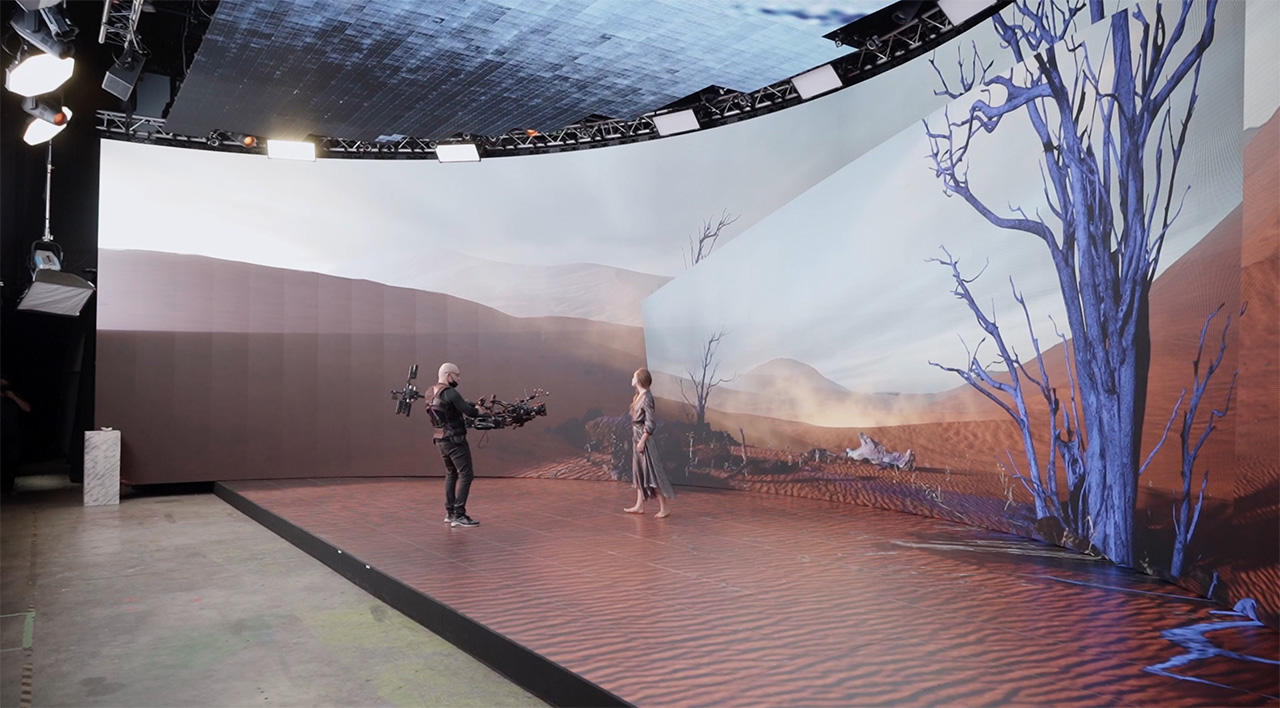
A nivel organizativo, las producciones con realidad mixta requieren que el diseño de producción de adapte a sus necesidades concretas. Los fondos han de estar terminados para el inicio del rodaje de modo que el equipo de VFX ha de incorporarse al principio. La ventaja respecto al sistema de trabajo tradicional es que los efectos digitales se ruedan en cámara lo que hace que el flujo de trabajo de postproducción más eficiente.
Es fácil suponer que esta nueva técnica de rodaje en entornos de producción virtual será cada vez más común. Si bien es cierto que no es la respuesta a todo -no se va a dejar de rodar en localizaciones naturales o decorados-, sí que es una excelente herramienta para rodar situaciones imposibles para una producción convencional. Sin ninguna duda, la realidad mixta amplia y aumenta las posibilidades narrativas y mejora el acabado de los productos audiovisuales.
Enlaces de interés:
https://ascmag.com/articles/the-mandalorian
https://www.fxguide.com/fxfeatured/disgusing-virtual-production-rendering/
https://www.fxguide.com/fxfeatured/improvements-to-virtual-prodn-in-ue4/
Juan Luis Cabellos, AEC
Director de fotografía (El Desafío: ETA, Bajo la red, La Sala…)
Did you like this article?
Subscribe to our NEWSLETTER and you won't miss anything.
Related articles
 The Canon EOS C400, put to the test in virtual environments and multi-camera setups
 3Cat acerca la realidad mixta al gran público en ISE 2024
 Brainstorm celebrates 30 years at IBC on the world front line in graphics, virtual studies and augmented reality
 Apple desvela sus Vision Pro: gafas de realidad mixta con aplicaciones VOD dedicadas
 Alhurra TV chooses Zero Density virtual environments for its latest electoral format
 The new Ultimatte 12 improve Kolrom Multimedia's virtual environments
 TV3 increases its production potential in virtual spaces and augmented reality
 Disguise highlights its milestones within the AdMiRe mixed reality project
 ARRI and Plazamedia shape a new 360 m2 mixed reality studio
 ARRI inaugurates a new mixed reality studio in the United Kingdom
 ARRI will create broadcast infrastructures and mixed reality environments with ARRI Solutions Group
 'Judge Jerry' is recorded in virtual environments with Blackmagic Design technology
 Pytch creates virtual environments with the help of Blackmagic
 Los mezcladores ATEM de Blackmagic permiten crear entornos de realidad mixta en ‘Circle of Saviors’