





20th anniversary of 'Tell me how it happened': the technological intra-history of RTVE's flagship
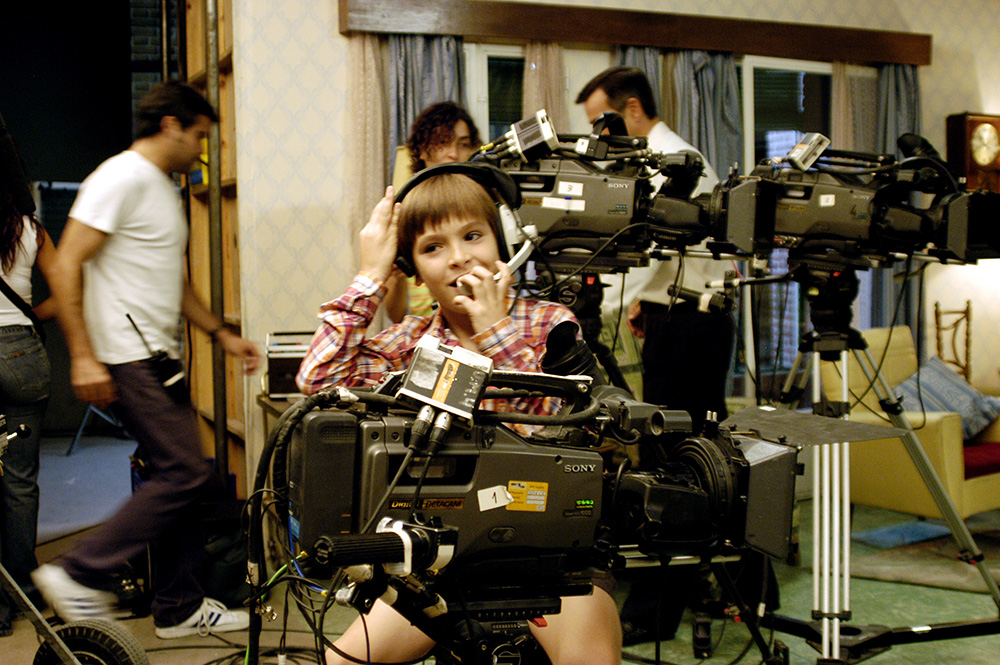

Since its birth in that distant 2001, Tell me how it happened has narrated the history of Spain with the help of the Alcántara family. On its 20th anniversary, Tote Trenas, historic cinematographer of fiction, addresses the technological and creative keys of a fiction that dared to break all the molds seen in the Spanish industry.
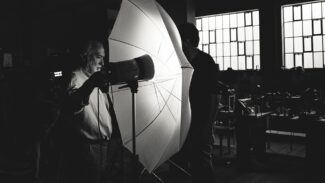
Year 2000. Total Drag attend a presentation in the now defunct laboratory Photofilm from Madrid, from where all types of work in the world of technology were carried out. photography, film and television. There, it coincides with Michelangelo Bernardeau, who tells him that he is preparing a new series. Weeks later, the director of photography attends a meeting at the producer's offices in which he would also be Agustín Crespi, its director. At the meeting, they talk about a different fiction, which will try to remember, just at the gates of the new millennium, past eras. Trenas joins the project, possibly without being aware that Tell me how it happened It would mark an era, becoming the longest-running series on the air in Spain and receiving adaptations in Portugal, Italy, Chile and Argentina.
At that time, different names were considered for this fiction, which would tell the story of an average Spanish family since 1968. The first one that reached the media was Our yesterday. After several meetings with production teams and publishers, the final title chosen by a still emerging Ganga Group, the extinct Cartel y RTVE would evolve to Tell me, to finally become the Tell me how it happened.
drags, even before the parade of names, was already working intensely with the series' technical team to achieve an ambitious goal: that the viewer, at the moment when he was browsing and came across Tell me, I knew without a doubt what I was seeing Tell me.
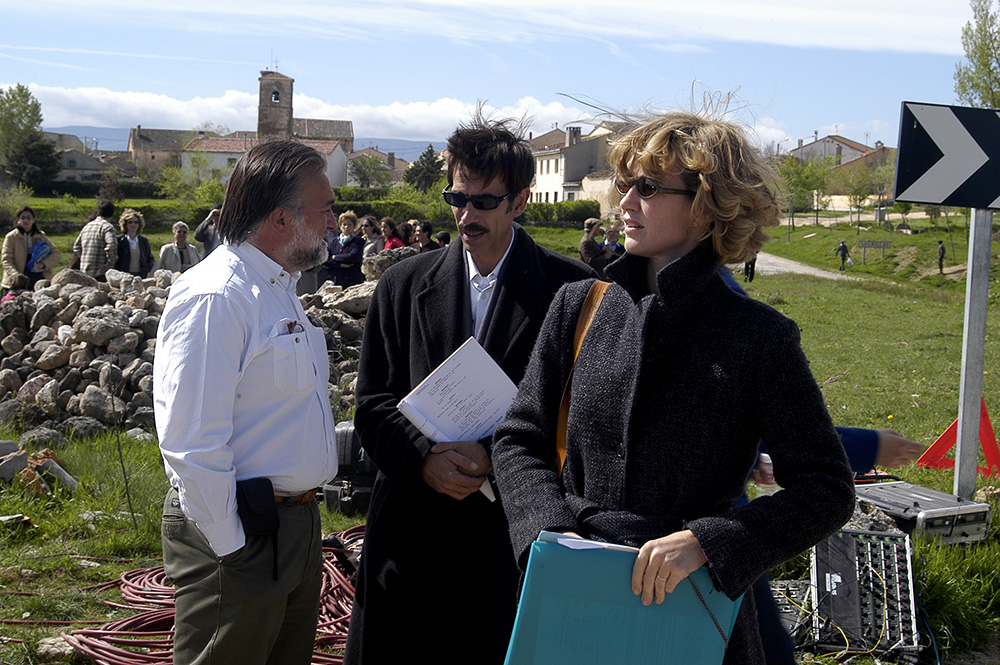
Creating the visual universe of Tell me
Once the order has been received, drags was soaked in audiovisual references of the time. The first chapter would recount the singer's victory Massiel in Eurovision, so the visual section and the small screen They would be very important: “At that time, I saw many films of the time, I read many books, I rediscovered many album covers,” recalls the director of photography. From that research process, Trenas remembers several keys, such as the importance of pastel shades or the influence of the film The man who wanted to kill by Rafael Gil (although he would arrive in 1970), among others.
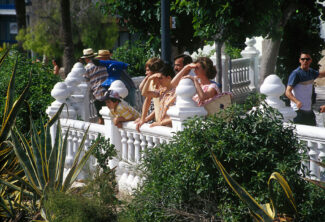
Once created the visual map, the time would come to make it a reality. To do this, Trenas promoted “a casting” by “all” the grading companies of Madrid “and some from Barcelona.” After shooting some tests of what it would be Tell me how it happened, the director of photography himself went through different installations to evaluate how the color of that material would be approached. Finally, Trenas agreed Molinares (from where the digital effects would be managed) with Robin Castle, a British grader with whom he had already worked on previous projects. Castle did all the testing from the lab. Line Image and the result was completely satisfactory.
From the beginning, we tried to address an image treatment far from conventional, as Trenas relates: "We played a lot with masks and accessories. The shine of the hair could be green, a coat could vary in color... It was a very daring, but very good color grading."
Both Michelangelo Bernardeau like the director Tito Fernandez They trusted this particular staging that was not without problems... and that did not pass the RTVE filter: "Once the first episode was delivered, the head of broadcasting at Televisión Española called me. He told me that it was wrong: that the colors were not real, that I don't know what, I don't know how much. So I told him: "If you get over what it costs the producer to do it so badly...", Trenas recalls with a laugh.
The person responsible for Spanish Television He just did his job. After confirming that this product was the one the production company wanted to show, everything moved forward: "We broadcast it like this and it seems that people accepted it. The series had a brutal success on the first day. I already told you that now we are much more modest, but then we were much braver."
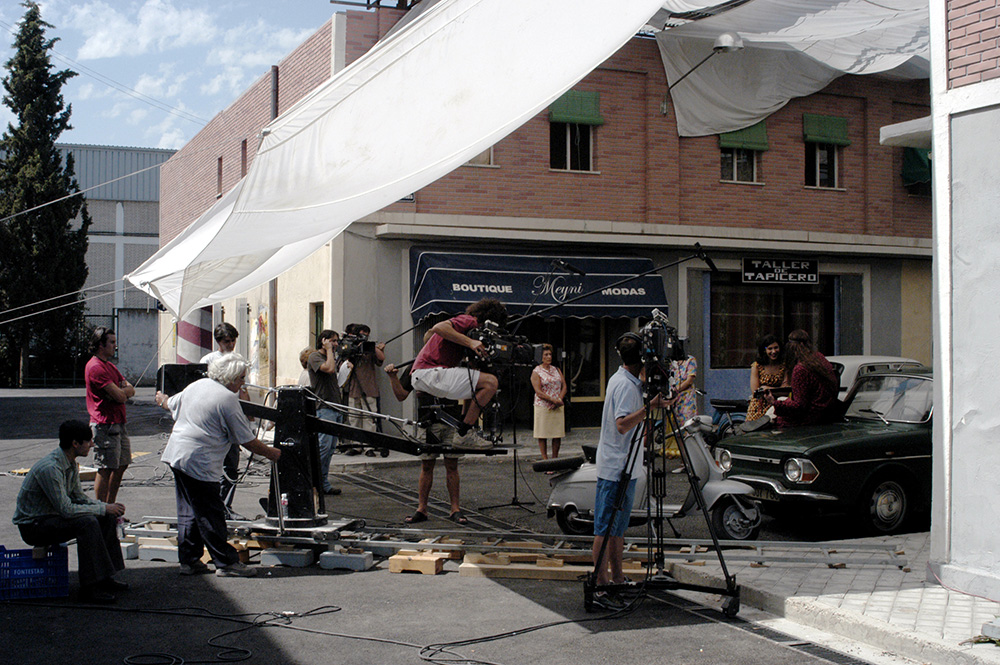
The odyssey of the first camera
The choice of the camera that would capture this new format would be fundamental. Trenas wanted to escape the conventions of the time to provide a distinctive tone, marked by the quality and visual fidelity. After a visit to the fair BSC Expo London, it was clear that the system Betacam Digital of Sony would accompany them in the first stage of the series. However, it would not be an easy task to get the cameras.
The first step was to request the use of the cameras Spanish Television. However, that door closed quickly: at that time, the public corporation had reserved them for another format. Videoreport, a technical supplier, purchased three systems, which were added to those that were acquired by the production company itself under pressure from the technical production managers. The Betacam Digital would be the main unit, although it would be accompanied by the model SP. The satisfaction on the part of Trenas and the entire creative team was total: "The systems were very good. For their time, they were wonderful."
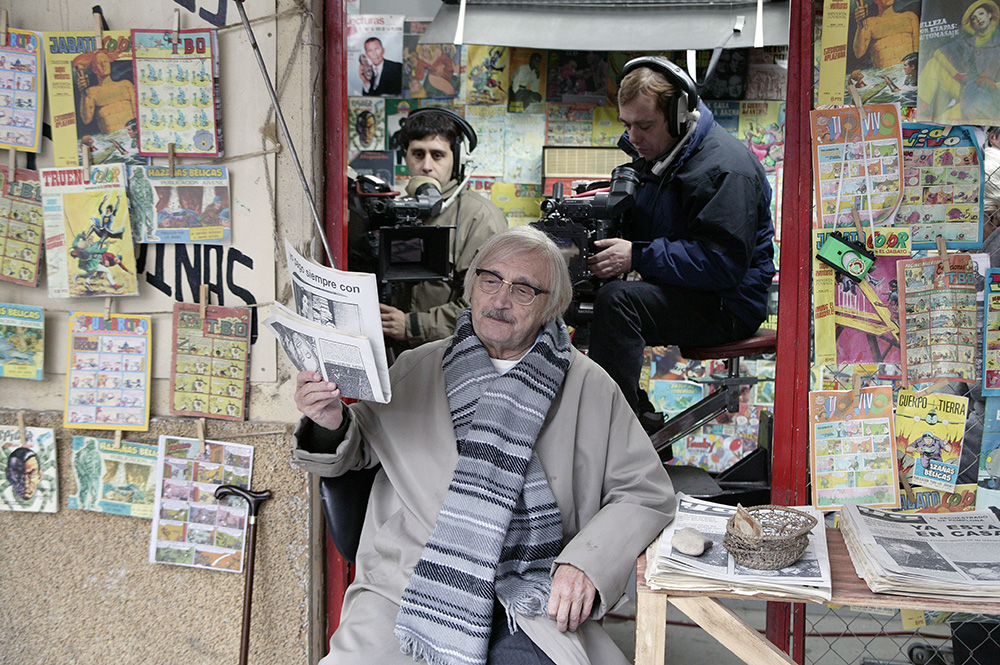
Betacam Digital… and 35mm, 16mm and Super-8
The first episodes were filmed in 16:9 format, something that only a few series like I, a woman (Antena 3), also photographed by himself drags, they had dared to carry out. Initially, there were 39 chapters. One after another. The filming gave no room for rest. Trenas defines that rhythm as “brutalEvery Monday, Robin Castle flew from England to Madrid to grade the chapter, do some editing checks if necessary, and pass the tape to TVE, who "had so much confidence in us that they didn't even check the chapters."
The production, which alternated zooms like the Canon 20x or fixed optics Digiprime Zeiss, was progressively evolving within the system Betacam Digital and accompanied by other technical resources used with a creative prism: “We alternated the Betacam with 35 mm, 16 mm and Super-8, especially for the dreamlike scenes in which the director Antonio Cano intervened a lot.”
In fact, the camera Super-8 It belonged to Trenas himself. What was recorded in this format was developed in Switzerland, subsequently recorded on video, projected and, immediately afterwards, filmed so that it could be edited. In this way, the current events of 1968, the RTVE archive and those memories and dreams merged. Tell me how it happened I was making history.
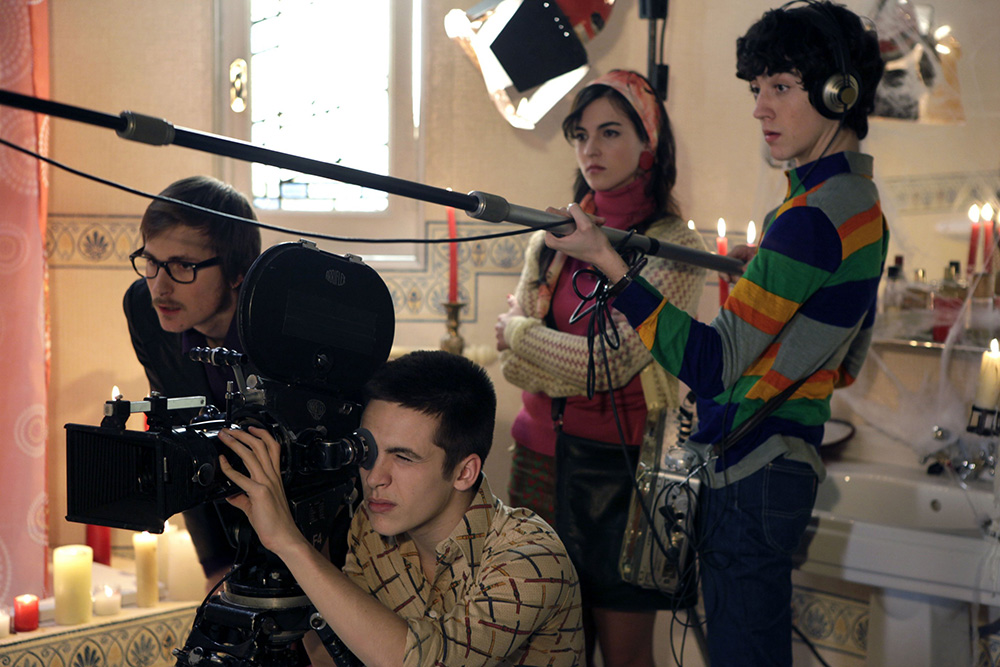
2007: The arrival of high definition
The team of Tell me how it happened He did not hesitate for a single moment to make the leap to HD. However, the fact that there were no doubts does not mean that the process is not full of small obstacles. The transformation was led, of course, by the equipment renewal: “The only thing that still worked for us were the tripods we had before.” Production was reinforced with a selection of HDCAM of Sony, “starting from the 750 until continuing to evolve to the 900.” In this way, Tell me how it happened It became the first television series in Spain to make the leap to this format. Of course, this change in processes also extended to all post-production tasks.
The operational change, since “the focus was much more important and the treatment of depth was different,” coincided with a fundamental event in the development of the fiction plot: the death of Franco, in 1975.
Spain changed, as did the way Trenas and his colleagues visually told this new stage. He definitely opted for purer and saturated colors, as well as for a greater shiny feeling.
Shortly after, this new stage of production would be accompanied by an aspect ratio 2:1. TVEInitially, she was not in favor of this change, but ended up trusting the good production work, which he achieved big audience data every week: "It was thought that the audience was going to be lost because many people were not used to the black bands, but it worked very well. Furthermore, during filming it was much better, since we could create much better frames."
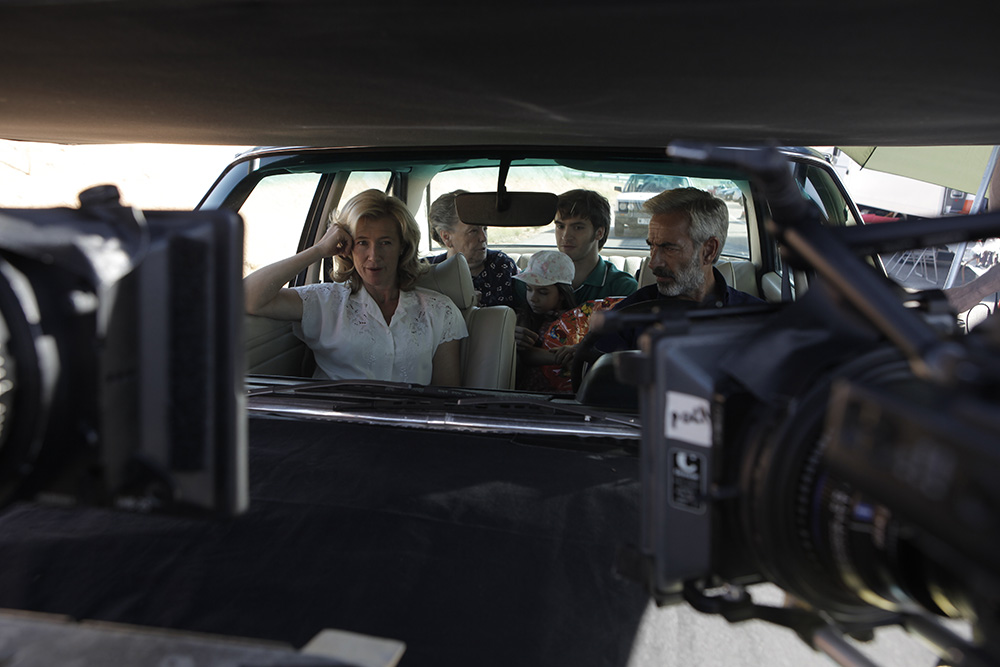
Imanol Arias, “guilty” of the jump to Alexa
In 2013, the actor Imanol Arias, who plays Antonio Alcántara in Tell me, returned from the filming of the Argentine film Fierce tango: the legend of Tanguito “excited" for having filmed with a "wonderful" camera: the Alexa. In Trenas's words, Imanol was "the driving force behind the change to Alexa", even offering to put up his own money to make the transition. And so it happened.
Production changed, since the figure of the focus puller would become essential and optics would multiply, with the use of compact prime or the ultraprime. Even so, in the opinion of the director of photography, the change was worth it: "The arrival of Alexa was a giant leap for digital; it was when it began to be able to compete with the cinema image."
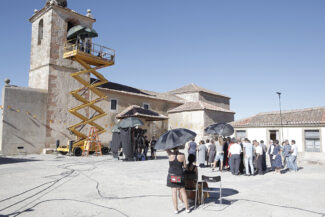
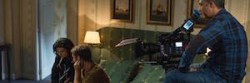
The number of cameramen on set was reduced: from the usual four cameras in the Betacam Digital or the HDCAM went to a three-chamber model ARRI Alexa Classic y Alexa Plus, to the “great joy” of Tote Trenas: “The fewer cameras, the more you can take care of photography.” Everything worked perfectly: "The cameras were wonderful, post-production ended up being easy and the equipment, which was practically film, worked well. The only difference was that our 'movies' were very long (laughs)."
The system ARRI remains in force today, with the inclusion of cameras since 2017 Alexa Mini y Alexa Amira, who operate with new job profiles such as camera assistants o IT. In 2020, an experiment was carried out to try to integrate cameras DSLR Lumix in production, following the excellent results they brought to HIT, production of Ganga Group to RTVE. The result was not satisfactory, so in the filming of the current 22nd season has once again worked exclusively with ARRI: “I think those cameras are wonderful for HIT. However, the aesthetics and the public of Tell me how it happened It's different. (…) Each camera and each piece of equipment depends on the project.”
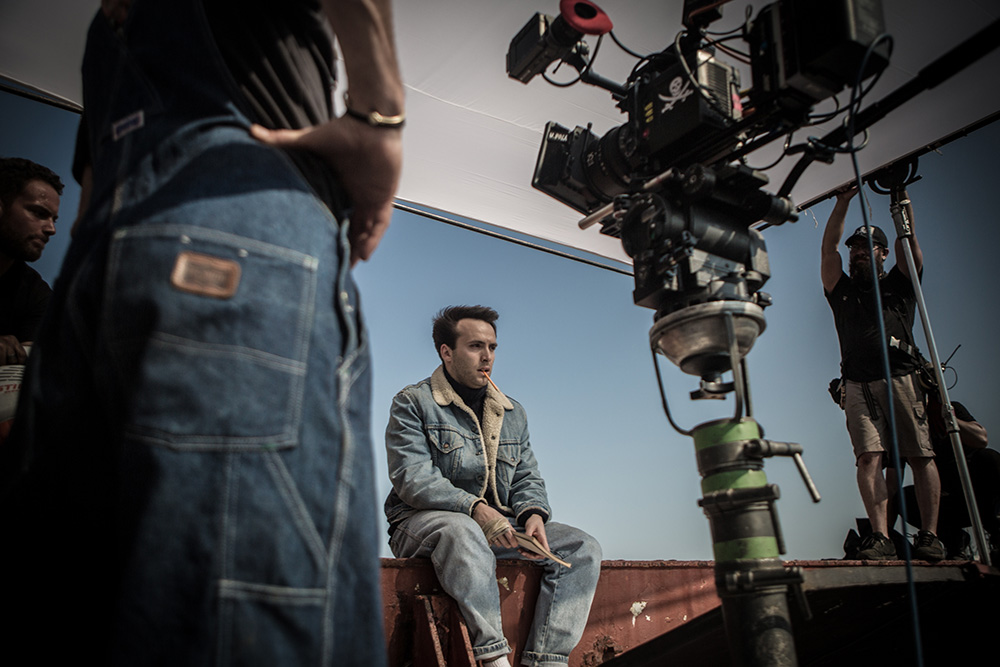
Grading from Grupo Ganga
Currently, each production process is done by Grupo Ganga itself. It has been a progressive transition, which began with the sound, siguió con los visual effects y finalizó con la inclusión de un área de postproducción. Para abordar la corrección de color, se decidió implementar un sistema Baselight que, a octubre de 2021, ha sido renovado tres veces, la última en septiembre del mismo año: “Ahora, tenemos la mejor máquina de etalonaje en España. ¡Esperamos que los nuevos capítulos salgan muy bien!”. En la actualidad, Raúl Lavado es el responsable de firmar el color de la producción.
Con el paso de los años, diferentes tendencias visuales han permeabilizado en la ficción española. Trenas relata con orgullo la pervivencia de un estilo que se muestra “al servicio de la historia”. Si bien reconoce el valor de propuestas visuales como Toy Boy o Anti-disturbances, no considera que la serie necesite cambiar su forma de afrontar el color: “Seguimos en los años noventa y creo que, sobre todo, tenemos que ser fieles a la historia. Contamos la vida de unos personajes que viven en un barrio. Hay zonas más modernas, pero el eje siguen siendo ellos”.
Trenas reivindica que la ficción no ha dejado de evolucionar en ningún momento, adoptando diferentes metodologías y recursos técnicos. Aun así, la trama sigue condicionando cada decisión: “La luz y el emplazamiento puede ser muy diferente dependiendo del contenido dramático de la secuencia. La luz, más que de fuera a dentro, va de dentro a fuera. La situación es la que nos obliga o nos dirige en el momento de iluminar. No es lo mismo una secuencia leve que triste, ni el punto de vista de Herminia que de María, la niña”.
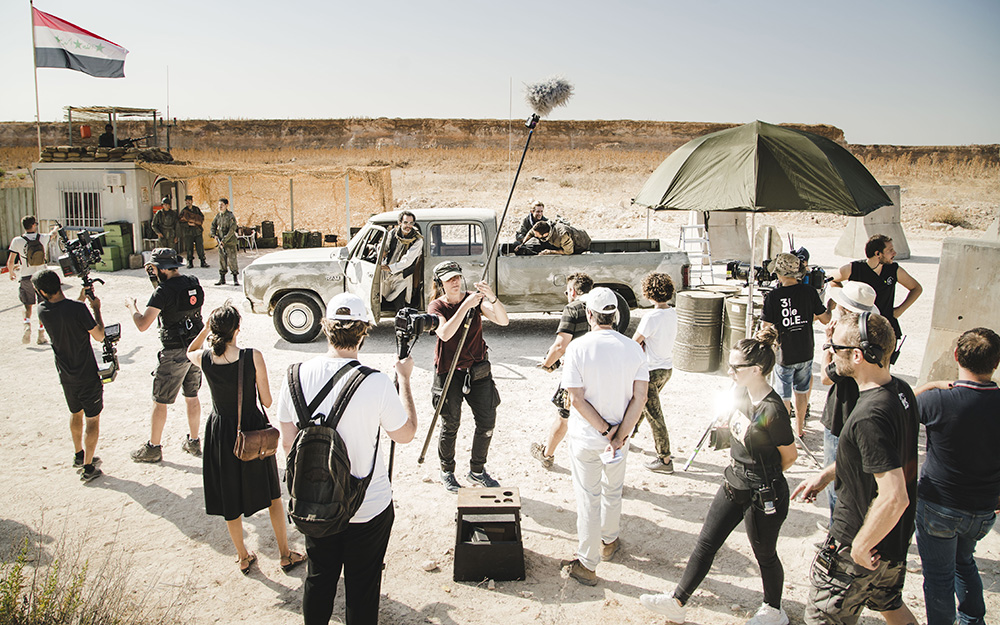
La llegada del LED a Tell me
“El iPad y el LED son maravillosos”, afirma Trenas, introduciendo su dupla de trabajo ideal en el día a día de Cuéntame cómo pasó. El director de fotografía considera que la llegada y consolidación de este tipo de iluminación, acompañado de los recursos de control remoto para recrear diferentes ambientes, ha marcado un antes y un después para la producción.
Entre sus equipos predilectos figuran los A week, definidos como “autónomos, con batería controlada y batería gestionable vía iPad”, los Skypanel of ARRI and the HMI Cinepar, de los que Trenas aprecia especialmente sus “preciosas sombras”. Las luces cálidas, así como las pantallas de fluorescentes, prácticamente han desaparecido de la producción.
En la actualidad, el 80% de la producción se ilumina con los Astera: “Ha habido un gran cambio durante los dos últimos años. Ha sido una gran evolución. Empezamos con esta dinámica el año pasado y este año seguimos. Tenemos aparatos muy modernos y estamos encantados con ellos”.
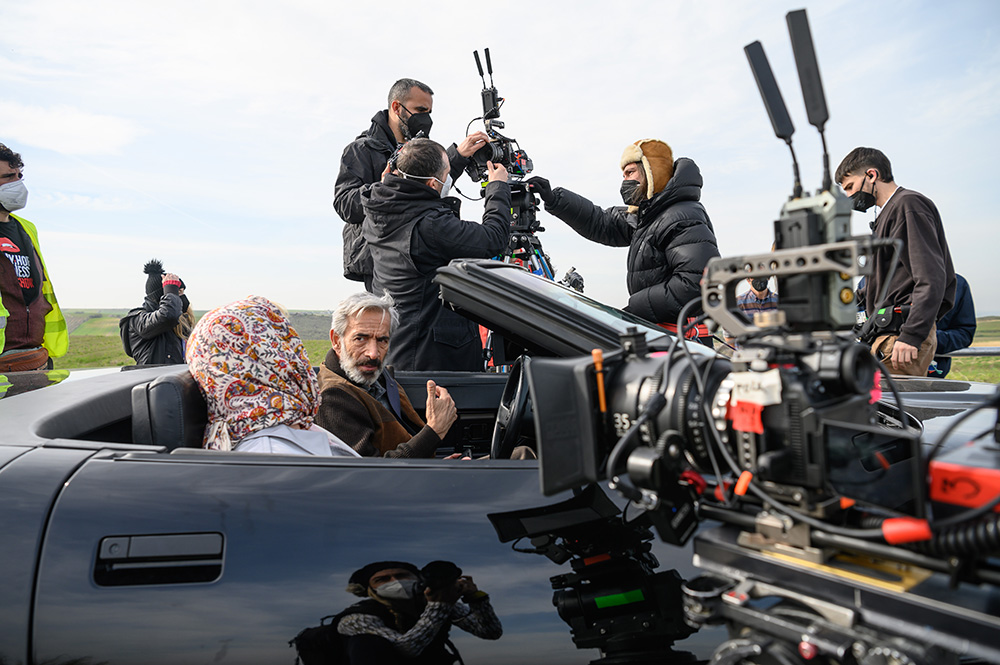
De 1968 a 1993
Tell me how it happened afronta inminentemente el estreno de su vigésimo segunda temporada, ambientada en el año 1993. A día de hoy, la serie se rueda en resolución 2K, con algunas escenas adicionales grabadas en 4K con fines de postproducción o reencuadre. Es difícil prever la evolución de la tecnología, pero Trenas tiene claro que la evolución al UHD acabará llegando. Sin embargo, todavía no es el momento: “En la actualidad, el mayor problema es la cuestión de postproducción. Rodar en 4K requeriría aumentar drásticamente nuestra capacidad. Generamos mucha cantidad de información. Ahora estamos rodando todos los días con cuatro cámaras, nueve horas y a mucho ritmo, y generamos una gran cantidad de información durante seis u ocho meses”.
Independientemente de la resolución, Tell me how it happened trazará su propio camino. La acción dramática seguirá siendo el eje de cada decisión técnica, y la creatividad irá emparejada por un absoluto respeto al momento que se está narrando. Han pasado veinte años, pero nada parece indicar que el particular relato al que han dado forma desde la fotografía Miguel Ángel Mora, Manuel Velasco, Teo Delgado, Ángel Villarías, Lucas Chelós and his own Total Drag vaya a interrumpirse.
Todavía quedan muchas historias que contar.
A report by Sergio Julián Gómez
Gallery
(click on any photo to start the carousel - scroll right and left by clicking on the arrow)
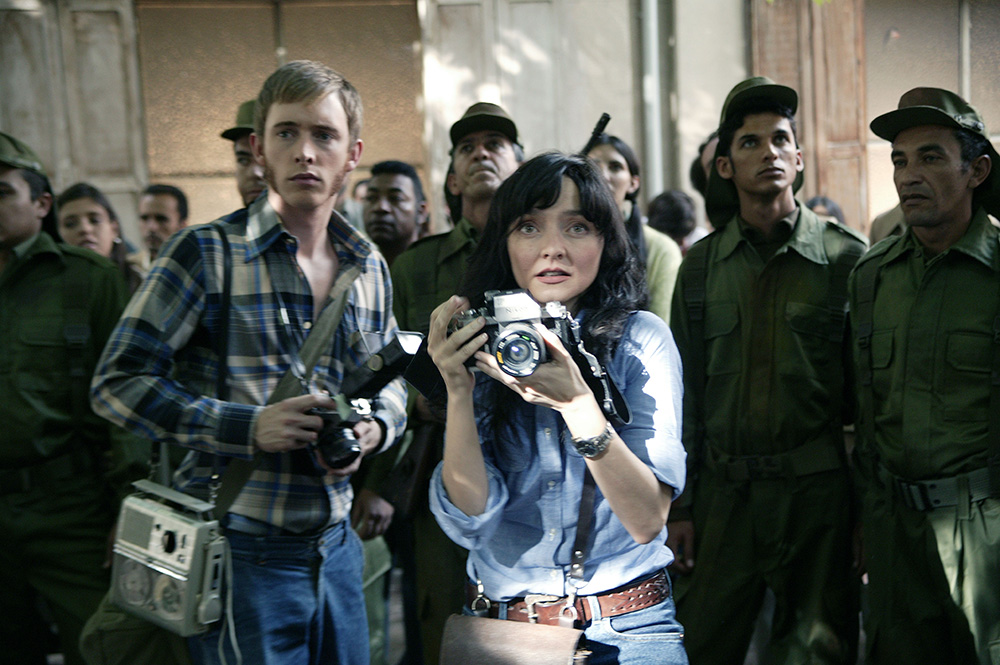
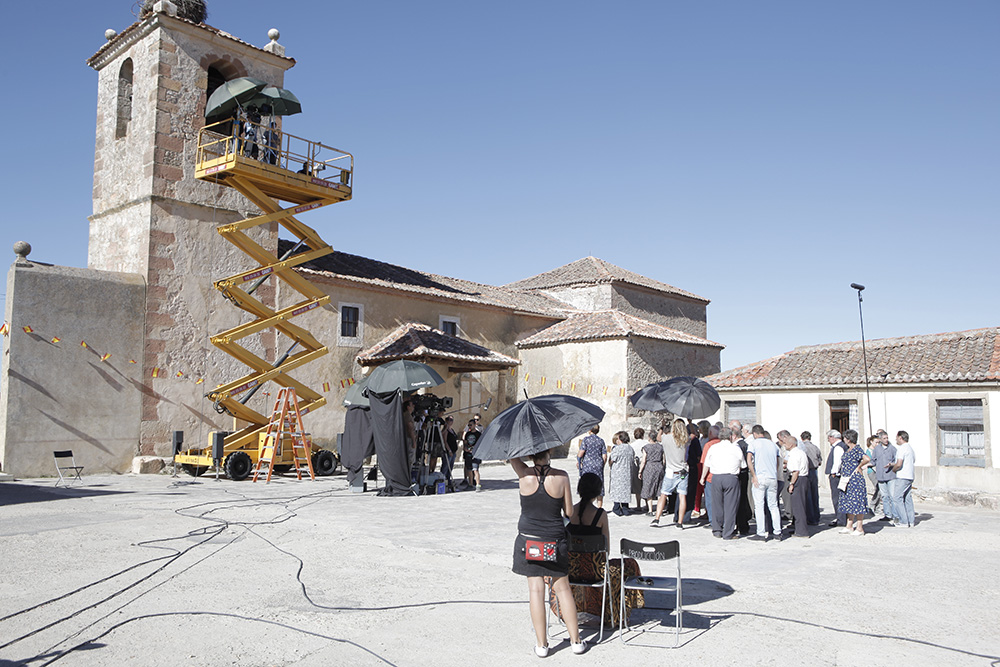
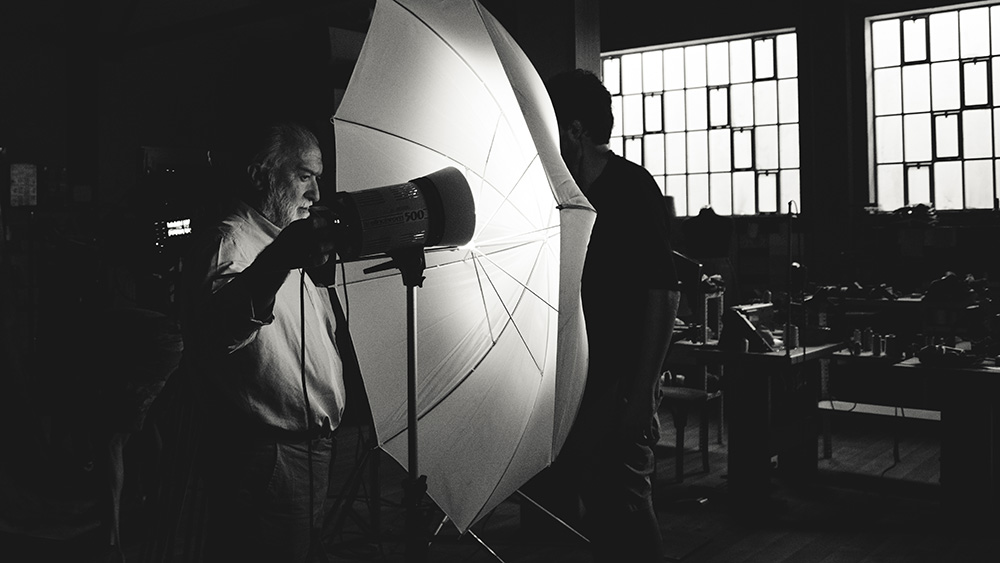
Did you like this article?
Subscribe to our NEWSLETTER and you won't miss anything.
Related articles
 RTVE previews the first episode of the last season of 'Cuéntame como vivir' in San Sebastián
 Filming of the 23rd and final season of 'Tell me how it happened' begins
 RTVE will put an end to 'Tell me how it happened' with a seven-episode season
 'Tell me how it happened' opens the 90s as leader with more than 2.1 million viewers
 'Tell me how it happened' launches its 19th season with the best premiere of the last three years
 'Tell me how it happened' begins filming its 19th season
 'Tell me how it happened' ends the recording of its 18th season
 'Tell me how it happened' begins recording its 18th season in Brussels
 Grupo Ganga will begin filming the new chapters of 'Cuéntame how it happened' in September
 TVE renews the series 'Tell me how it happened' for another two seasons
 'Tell me how it happened' returns with 2,000 square meters of new sets
 'Tell me how it happened' begins filming its 16th season with ARRI Alexa
 'Tell me how it happened' reaches its 15th season
 'Tell me how it happened', National Television Award