





UHD Spain analiza el impacto del IMF en su primer encuentro del 2022
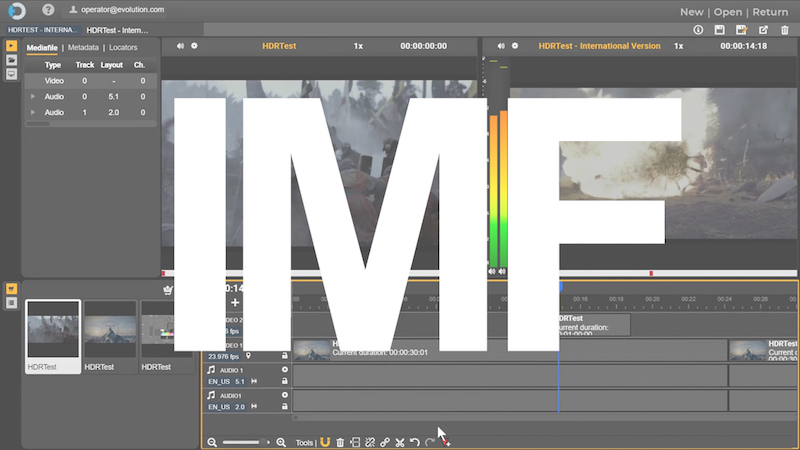
El primer encuentro organizado por la asociación UHD Spain en este 2022 ha abordado diferentes cuestiones relacionadas con el IMF (Interoperable Master Format) y ahondar un poco más sobre su alcance, cuándo usarlo, cómo funciona y los estándares asociados en los que se basa.
 El encuentro, en formato virtual, ha sido liderado Julian Fernandez-Campon, CTO of Tedial, empresa de referencia en soluciones de gestión de contenidos diseñadas para maximizar la eficiencia y la interoperabilidad, sobre IMF (Interoperable Master Format). El objetivo principal del encuentro fue compartir sus conocimientos con el resto de los asistentes acerca de este estándar.
El evento privado bajo el título IMF (Interoperable Master Format): Visión General y Aplicaciones, tuvo una duración de hora y media en formato virtual y contó con una audiencia aproximada de 30 personas, entre miembros de UHD Spain y medios de comunicación.
Pere Vila, director de Estrategia Tecnológica e Innovación Digital en RTVE y presidente de la asociación UHD Spain, realizó una breve introducción de bienvenida al encuentro donde señaló la importancia del IMF, ya que “empresas como Netflix han comenzado a exigir los trabajos en estos estándares”. Además expresó como estos tipos de encuentros consolidan el espíritu de la asociación “por tocar temas conjuntamente desde el plano de la colaboración y la profesionalidad, con empresas que pertenecen a la en asociación y llevan años trabajando en el estándar IMF, como es en este caso Tedial”, que colabora activamente con las asociaciones SMPTE e IMF Users Group a nivel internacional.
Entre los temas tratados por Fernández-Campón durante el encuentro, en un principio se aclaró qué el “IMF es una especificación para ficheros de media” y se trata de una “familia de estándares agrupados dentro de la norma ST2067 del SMPTE (Society of Motion Picture and Television Engineers) que se apoya de otros estándares como el MXF, DCP y el XML”.
En estas líneas, Fernández-Campón señalaba que el objetivo del IMF es facilitar la distribución de contenidos centrado en la definición de una composición y enfocado en cualquier contenido finalizado de distinta tipología, principalmente películas, series, anuncios y materiales de corta duración. En lugar de un único archivo de media que es lo que tradicionalmente ha constituido una versión particular de un programa, un paquete IMF contiene todas las esencias (video, audio y opcionalmente subtítulos) como un conjunto de ficheros individuales y los metadatos asociados a un contenido específico.
Por qué el IMF
Después de la explicación del CTO de Tedial sobre qué es y qué no es el IMF, durante el encuentro, se ha expuesto las razones para usarlo y sus beneficios. Así, se indica que el IMF simplifica los flujos de trabajo de distribución y reduce tanto los costes de almacenamiento como el tiempo de distribución. “Uno de los puntos clave del IMF es que las versiones de los diferentes títulos solamente contienen las diferencias referenciando a la versión original, lo que reduce drásticamente el espacio de almacenamiento y los tiempos de envío”.
Como consecuencia del punto anterior, se pueden crear nuevas versiones en un tiempo significativamente menor reduciendo los procesos involucrados, los recursos dentro del equipo y el número de archivos que se deben crear.
To Netflix, una de las principales plataformas que han apostado por el IMF, un beneficio clave es reducir varios de sus problemas de recepción de contenidos, ya que otra de las ventajas del IMF es que permite definir exactamente los codecs en los que se van a recibir los contenidos, reduciendo así las complejidades de gestionar las diferentes versiones en los mercados globales.
Hay otros beneficios al incorporar IMF en la cadena productiva de contenidos. El IMF ofrece una mejor calidad de vídeo, ya que el consumidor tiene acceso directo a las versiones originales en alta calidad. También es una manera de reducir el error humano, dado que los ficheros de media originales solamente se referencian y mantienen intactos a la hora de crear nuevas versiones, alterando solamente los ficheros auxiliares que definen la composición (XMLs). El IMF también ofrece un enfoque simplificado para realizar cambios incrementales, como inserciones de texto, gráficos y revisiones de contenido.
Al finalizar el encuentro se ha pasado a la ronda de preguntas dónde el profesor Jose Manuel Menendez, catedrático de la Universidad Politécnica de Madrid (UPM), encargado de la edición del Libro Blanco sobre la UHD en España e impulsor de una nueva iniciativa con la creación de un curso dentro del marco de UHD Spain, abarcando diferentes elementos de toda la cadena y le ha propuesto a Fernández Campón su participación con la creación de un capítulo dentro del temario de uno de los temas sobre sistemas de intercambio de información.
También se ha comentado la posibilidad de la creación de un capítulo especial dedicado a sistemas de intercambios de información e incluir información práctica sobre IMF dentro de la segunda edición del Libro Blanco sobre la UHD en España.
Did you like this article?
Subscribe to our NEWSLETTER and you won't miss anything.
Related articles
 Animayo Gran Canaria will hold the 'Invest in Spain Animation Network' meeting
 1,406 filmings leave an economic impact of 141 million euros in Andalusia in 2022
 UHD Spain analyzes NGA audio capture and playback at sporting events
 UHD Spain analyzes distribution networks
 Mike Blackman predicts that ISE 2022 will reach 50,000 visitors with an impact on Barcelona of 215 million
 The 5th meeting of UHD Spain addresses the keys to New Generation Audio (NGA)
 UHD Spain analyzes the main challenges of streaming in Ultra High Definition
 UHD Spain celebrates its milestones on the occasion of its first anniversary
 UHD Spain analiza el impacto del HDR en iluminación y rodaje en su encuentro con directores y coloristas
 Madrid will host the first World Meeting of Film Academies
 This was the 5GForum, the first multidisciplinary meeting on 5G held in Spain
 Samsung Dev Spain will focus its annual meeting with developers on artificial intelligence and virtual reality
 Madrid will host the first meeting on Big Media
 First Meeting of the Cinematographies of Spain and India