





Canon updates its EOS VR system for virtual reality production

En respuesta al feedback recibido por parte de usuarios, Canon ha mejorado significativamente el rendimiento y la funcionalidad de su sistema EOS VR con la versión 1.2.
Both EOS VR Utility as EOS VR Plug-in para Adobe Premiere se han actualizado para mejorar la eficiencia en los flujos de trabajo de postproducción y, lo que es más importante, permitir ahora a EOS VR Utility la conversión de archivos RAW compatibles hasta 60P, lo que ayudará a más creadores a grabar como ellos deseen.
Con la misma interfaz de usuario sencilla e intuitiva que el software inicial, EOS VR Utility incorpora una nueva pestaña de compatibilidad con vídeos RAW. Esta actualización permitirá a los creadores trabajar con archivos RAW compatibles y realizar ajustes en ellos, incluso a la mayor velocidad de fotogramas de 8K/60p, como los que genera la cámara EOS R5 C.
The combinación de 60fps, 8K y el alto rango dinámico de los archivos RAW garantiza una calidad de imagen excepcional y grabaciones de imágenes en movimiento fluidas.
Para facilitar a los creadores de contenidos VR el trabajo con archivos VR tan grandes, tanto EOS VR Utility como el plug-in EOS VR se pueden utilizar con las tarjetas GPU (tarjetas gráficas) compatibles para mejorar los tiempos de procesamiento y conversión, lo que supone una aceleración de los flujos de trabajo de postproducción.
Además de estas mejoras, ahora es compatible de forma nativa con los procesadores Apple Silicon, lo que permitirá a los usuarios aprovechar todas las ventajas de los procesadores Apple más recientes y, así, acelerar aún más los flujos de trabajo con los dispositivos Mac.
El plug-in EOS VR también cuenta con la ventaja de un modo de prioridad de velocidad, mediante el cual los creadores de contenidos puedan aplicar la conversión VR después del trabajo de edición y así acortar el tiempo de postproducción.
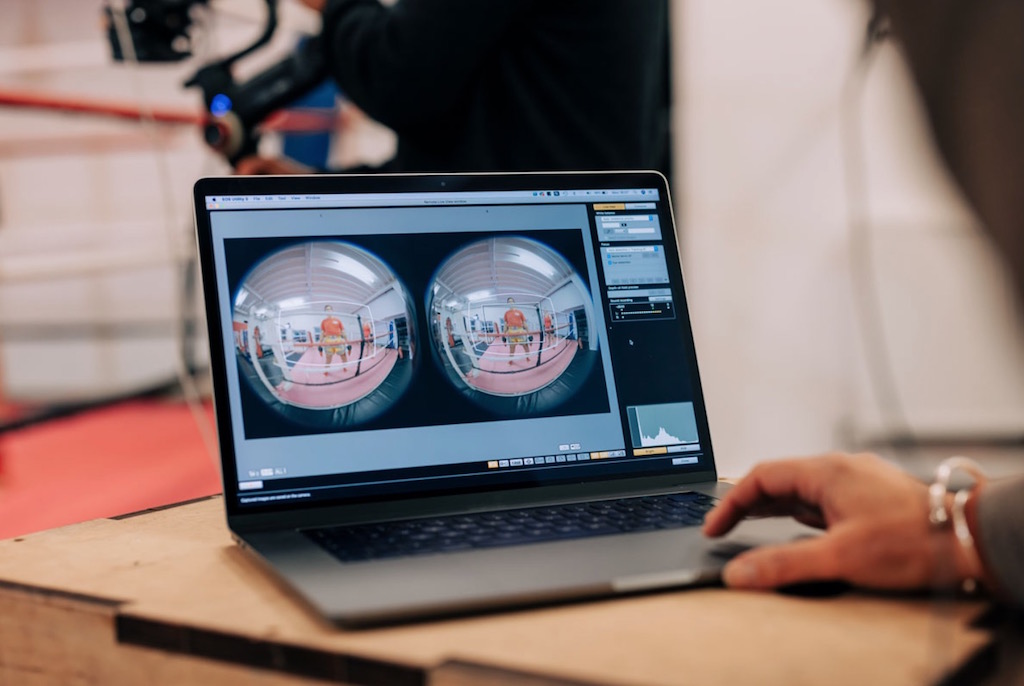
Mayor flexibilidad
La versión1.2 del software EOS VR Utility también proporciona a los creadores de contenidos VR mayor flexibilidad y una gama de herramientas compatibles con sus flujos de trabajo.
La nueva opción de formato de archivo de alta calidad HEVC 4:4:4, de 10 bits, disponible en el software EOS VR Utility para Windows ofrece más opciones de códecs a la hora de exportar contenidos, pero, además, una función de máscara del objetivo muy demandada por los usuarios (Windows y Mac) elimina la vista de la lente contigua, al tiempo que suaviza los bordes del fotograma, eliminando otro paso en la edición final.
Did you like this article?
Subscribe to our NEWSLETTER and you won't miss anything.
Related articles
 Brainstorm will present its native support for Canon's virtual production system at IBC 2025
 Lightcraft updates its virtual production app for iPhone with 12 new features
 Magewell upgrades its Director Mini all-in-one streaming and production system
 Canon: oportunidades en la producción virtual y compromiso con el broadcast en NAB 2024
 Canon demonstrates at IBC its entire ecosystem for real or virtual production
 INFiLED returns to ISE 2023 with a virtual production and extended reality studio
 Ross Video updates Voyager and Lucid Studio, solutions for virtual production and XR
 Canon seeks to revolutionize virtual reality with EOS VR and the RF 5.2 mm f/2.8L Dual Fisheye lens
 Telefónica Servicios Audiovisuales updates the editing and production system of À Punt
 Canon develops Free Viewpoint Video, an immersive virtual camera system
 Virtual reality, real or virtual for European public media?
 Tedial updates all its solutions to support 4K, virtual reality and 360 video
 Televisa updates its sQ Enterprise news system and chooses Pablo Rio for the promos
 NewTek and InterSense create the first 3D virtual production system for the general public