





RTPA: countdown to the first 100% IP regional TV
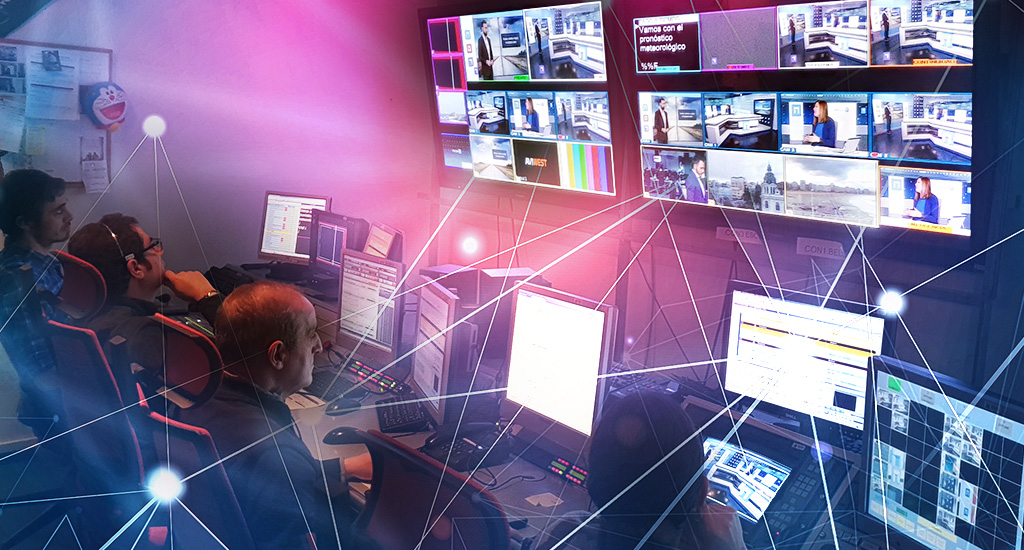

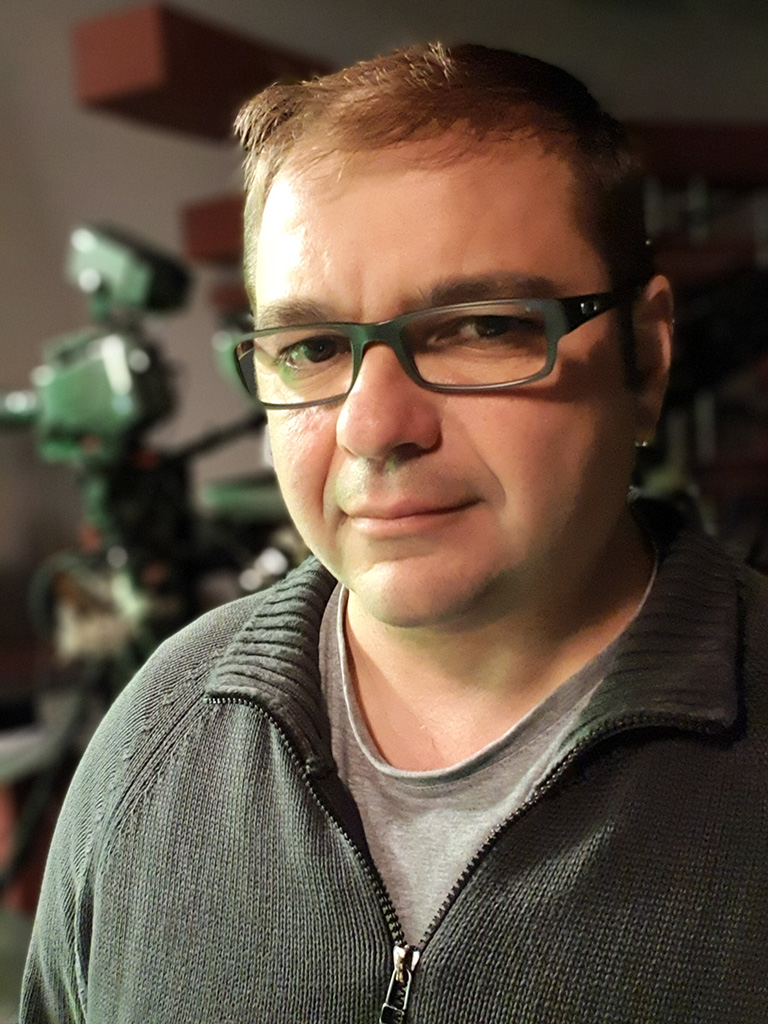
Enrique Mondelo, head of the audiovisual area of RTPA, details the keys to the imminent transition to IP for Asturian television and radio.
He language evolves constantly and inevitably. Some believe that it is the great academies that should bring order to the maelstrom of terms that cross our daily lives. Others point out that the true birth and acceptance of terms comes from the own society, which will anticipate future revolutions through a disruptive use of concepts. It's hard to know what marks true change; that before and after. However, it happens, and suddenly everything changes.
 Something similar has happened with the meanings associated with IP infrastructures. “An expensive solution,” it was said. “It is not reliable,” others added. “He still has a lot to consolidate!”, contributed a third. However, as soon as we wanted to realize it, the IP has gone from represent uncertainty to become a future project. Perhaps due to the impulse on the part of European reference chains, or perhaps for the proliferation of its solutions in forums such as the large fairs of the broadcast mundial, he IP has become a solution versatile, profitable and, above all, tangible.
The IP utopia seems to be comes to stay with large projects, such as the studies of Sant Cugat of RTVE (a project that has not yet fully materialized), and with more humble initiatives in entities such as Telemadrid, TV3 o RTPA, half Asturian who in just four months It will operate entirely under this new infrastructure. Enrique Mondelo, head of RTPA's audiovisual area, details the pillars of a transformation that also extends to studies, continuity or control.
Why did you decide to make the leap to IP?
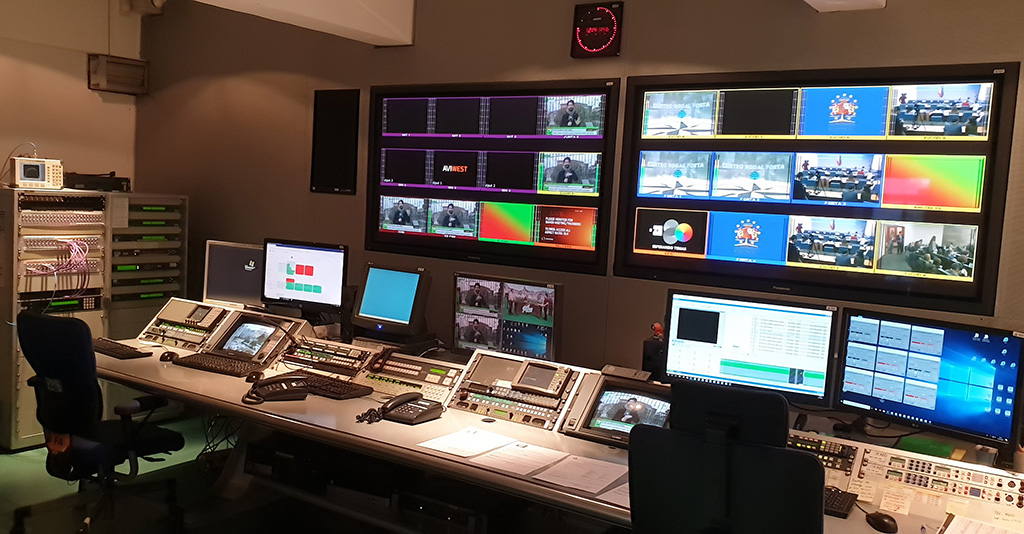
RTPA, radio and television born in 2005, has not experienced one technological renewal after another. On the contrary, his need to make each of his technological investments profitable has led him to plan carefully each technical leap, always seeking to go one step further. This is how it was done in initial approach and thus he undertakes what is his first great revolution after 17 years.
The obsolescence of solutions from its production center in Gijón and the need to make the leap to high definition before 2023 (and, after the pandemic, before 2024) have been the driving forces of this renewal. But it was not enough: RTPA This was a perfect opportunity to plan a transversal and lasting intervention. And it is at that point that the IP, reports world him.
He head of audiovisuals of regional television has been an exceptional witness of model change of the industry. Broadcast solutions increasingly opt for business models from the IT world; the evolution of processes, with the virtualization of resources, the automation and the extended reality as champions, they come to contribute versatility to televisions, and manufacturers now shamelessly display hybrid equipment o 100 IP% to usher in a new era that has already been adopted by televisions such as BBC (United Kingdom), SIC (Portugal) or CBC (Canada). It is easy to see on the horizon the path to follow, or at least, the one that the great references are passing.
Is IP on television already profitable?
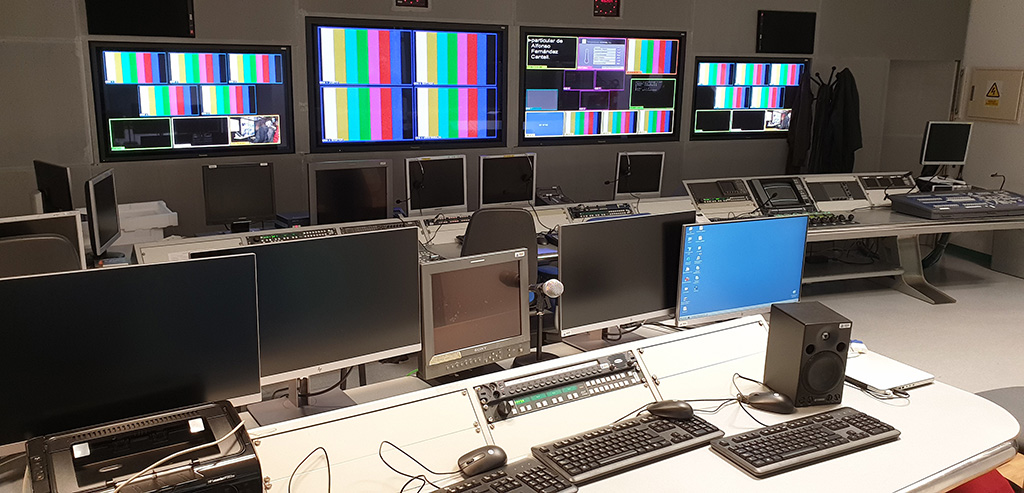
Any technological advance requires a important investment if it is adopted in its initial phases. This phenomenon can be explained by the cost of trend, for him improvement value that the technology implies, or as a consequence of the mere limitation of production volume by equipment suppliers. The infrastructures IP carry this particular condemnation, but In no case, today, are they prohibitive solutions within the reach of a few. Furthermore, according to world him, are a completely profitable option: “In the short term you may think that it may be cheaper to maintain a SDI infrastructure to work with HD, but what about when you go to 4K or 8K? In the long term, IP infrastructure is much more versatile. You can easily adapt the wiring or integrate switchers with greater capacity,” says the RTPA technological chief.
The arrival of the IP will also favor the proliferation of virtualization processes in RTPA: "We have chosen to set up a virtualization system and introduce many of the servers that manage functions of the new infrastructure. The investment in equipment is similar, but, at the level of energy consumption, the difference is abysmal. In addition, it gives you numerous options to adapt your infrastructure according to your needs or to update your capabilities according to new needs. They are all advantages, although we will have to see how the experience goes.” Another benefit, Mondelo specifies, are the cost savings on television cabling infrastructure.
Of course, like any avant-garde project, it has its drawbacks. Among them, Mondelo cites the poor preparation of technical staff, who will have to face a conversion to better understand the IT aspect of broadcast; or the inescapable adaptation of SDI equipment to this new context.
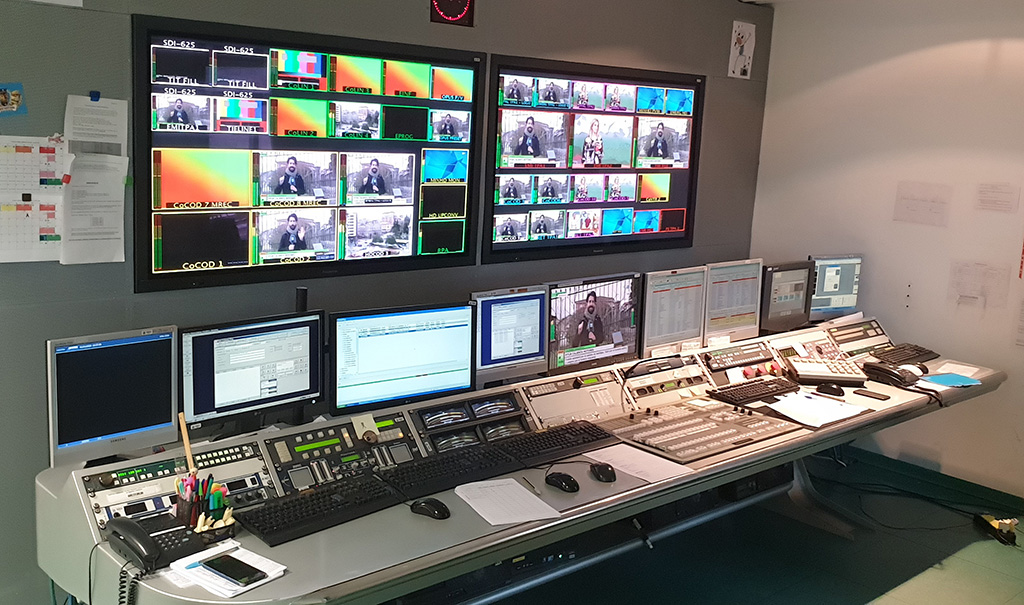
As RTPA planned to renew much of its infrastructure, it has been decided to choose equipment that is 100% compatible with IP. Even so, today, there are some solutions, such as video monitoring, whose cost skyrockets if you decide to adopt native IP solutions. For these cases, Mondelo and his team have opted for use traditional SDI solutions with their respective gateways to be able to integrate them into your new infrastructure.
The jump from SD to HD… and to 4K?
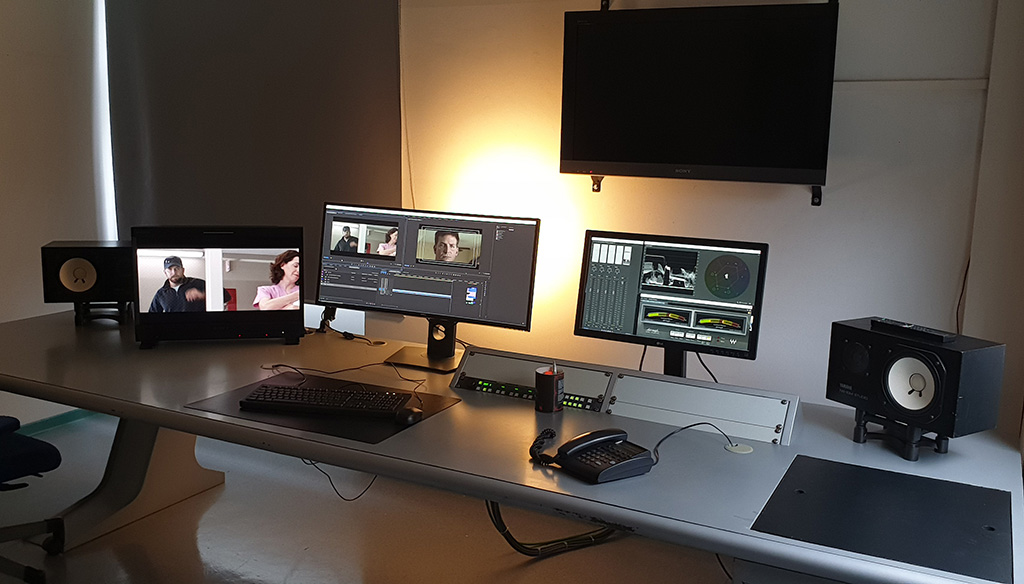
The RTPA renewal project, beyond being carried out by the brave leap to IP infrastructures, serves to complete the long-awaited transition to HD of Asturian television. To undertake this project, much of the television's technological equipment has been renewed: cameras, mixers and technical monitoring solutions have been renovated, betting this time on solutions of Sony. Likewise, continuity has been updated with teams of Imagine Communications and the satellite reception and contribution system has been renovated with Sapec.
In parallel, RTPA has opted to have the maximum possible equipment ready to 4K resolutions. Mondelo gives more details: "The studio cameras are native in 4K, although we have decided not to pay for the license. In the future, just by obtaining that license and expanding the capacity of the core network to support 4K traffic and add a card to the mixers, we could make a smooth and fast transition to the ultra high definition. (…) It is a much smaller investment than what it would be to change all the equipment from scratch.”
Although Mondelo recognizes that the UHD is not the panacea to allow linear television to recover the technical relevance often displaced by el universo OTT, it is clear that the market “is going to push” the jump to 4K: “That idea has also had an important weight in the assembly of the new IP infrastructure”.
What are the technological axes of this project?
For this project, whose tender was obtained after the corresponding public tender by Telefónica Audiovisual Services (TSA), RTPA has opted for a fully redundant IP infrastructure based on standard SMPTE 2110 with a network typology spine/leaf that will extend not only to your two television studios, but also to his radio.
For this high demand system, it has been chosen IP Fabric for Media of Cisco as network electronics, a solution with wide versatility when it comes to integration with third-party equipment. Infrastructure is managed with software VSM of Theirs and with the solution Cisco Network Dashboard Fabric Controller, which allow real-time management of all devices connected to a network through a control panel.
Theirs, likewise, has a prominent role in this infrastructure, since its teams are responsible for the data processing systems. signal, multiscreen y gateways, all of them supported on the platform V_matrix.
How does RTPA make sure everything runs smoothly?
RTPA and the team TSA They are not deploying an IP network that serves as hybrid support, so that the jump will be completed in a few years. The project has been designed to start it immediately with the aim of starting benefit from its benefits as soon as possible. In this way, the coexistence of hybrid infrastructures in different areas to proceed to forget the network SDI so soon as training and testing of the system have been completed.
world him explains the approach taken by RTPA to undertake this transition: “We are going to have two facilities working simultaneously during the period in which we carry out the training for technicians. We will also be doing validation tests, as well as resilience tests, causing failures to see how the system responds. We trust that it is a small period of time, since the work philosophy and workflows will continue to be very similar. As soon as the staff is trained, and we see that they have the confidence and everything works well, we will begin our IP production immediately”.
Automation and the virtual era come to RTPA
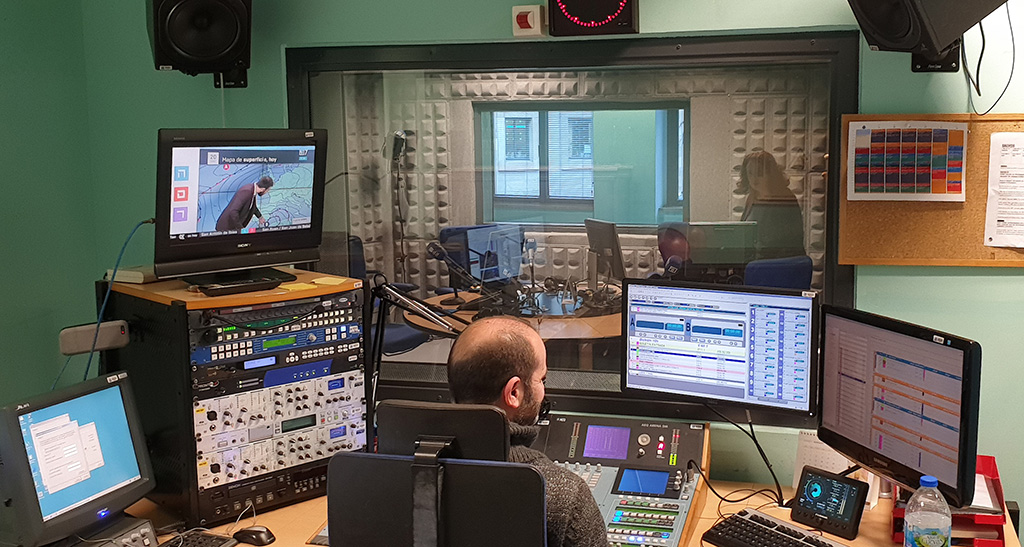
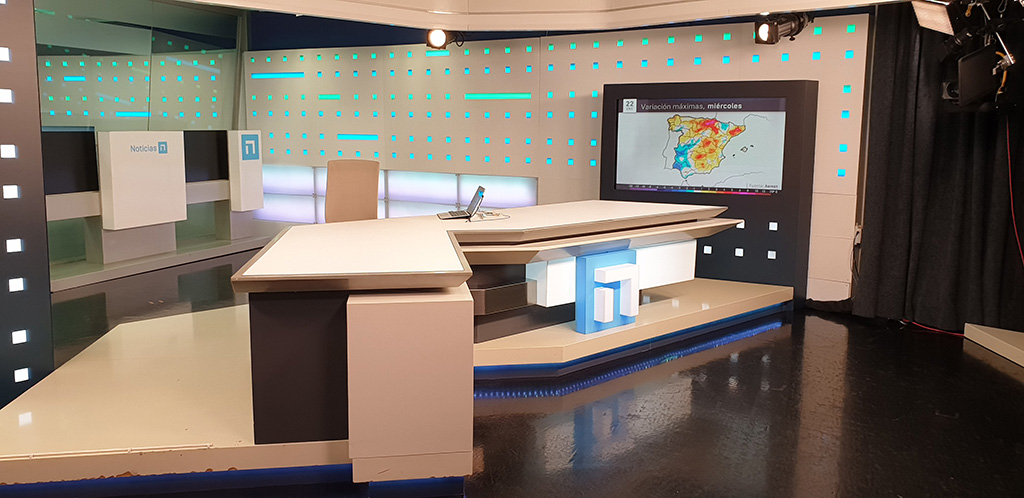
Another of the pillars of the great renovation project of RTPA goes through the transformation of its two studios.
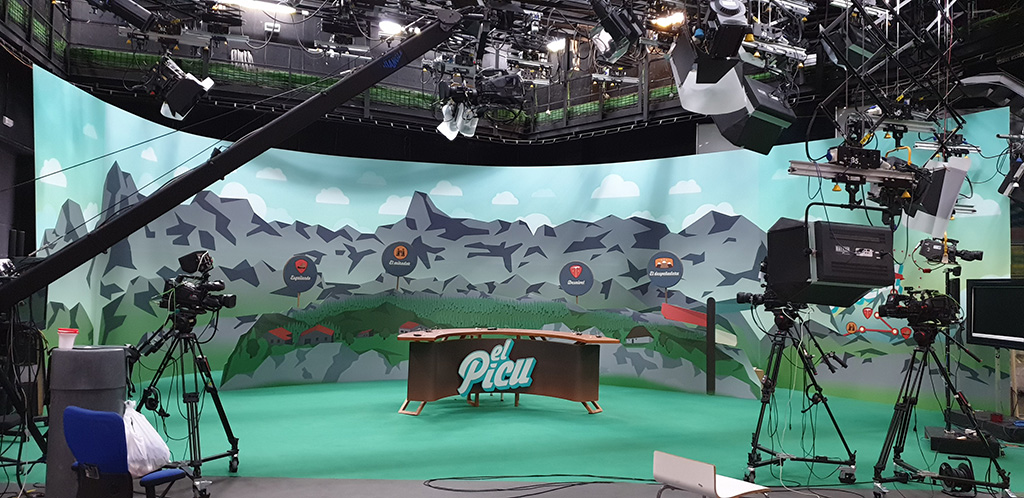
The set that until now had been reserved for the making of entertainment formats will become the new news study from the Asturian environment. This large space will allow the news broadcasters to multiply your resources to make “programs more similar to those seen on general television,” with more camera shots y visual possibilities. Very soon a new public tender will be presented that will raise the bases of a visual renovation of the space, presumably starring a large screen.
This study will also have an important novelty in terms of realization: “Our idea is automate the execution of the news as much as possible. We want to eliminate all repetitive tasks and for the operators to be there to prepare the program, adjust plans and equipment, and, ultimately, be more aware of creative tasks," explains Mondelo about this project, which will be executed with the system. OnePlay of The valley.
He second study (initially planned for news purposes) will become a virtual set powered by Vizrt that will allow television to “multiply by infinity” its number of sets y contain your costs: "We are going to start with a very simple system with a set with three PTZ cameras that will be fixed. The system that we have chosen also allows us to generate virtual cameras from these static cameras, so in theory we can make tracking shots or virtual cranes based on these resources.”
When will IP be ready in RTPA?
April 2023. On that date, if there are no “installation delays” or problems with the “supply of any equipment,” RTPA will become the first regional television in Spain to have a 100% IP infrastructure: a network open, prepared for evolve with the sign of the times, which will benefit from all the advantages that the system virtualization and that today has the necessary solutions to be monitored in time real with the aim of detecting or anticipating any possible failure, thus ensuring continuity on the antenna. The Radio and television of the Principality of Asturias, By the way, approach this deployment with a maintenance and upgrade support for five years.
The jump is big, but it is not a jump into the void. RTPA, despite anticipating what will possibly be a standard in just a few years, feels that the technology is mature enough to power operate with it with all the guarantees.
“I understand that each television must operate with the budgetary capabilities it has, but, today, The logical thing is to forget about SDI and opt for this type of infrastructure", concludes Mondelo with the certainty of having made the right decision.
A report by Sergio Julián Gómez
Did you like this article?
Subscribe to our NEWSLETTER and you won't miss anything.
Related articles
 The Iris 2025 TV Academy Awards begin their countdown with their first nominees dinner
 Countdown to the first edition of the AVL Summit in Madrid
 Countdown to the return to DTT of Veo 7, Unidad Editorial channel
 BBC Player: countdown to its arrival in Spain with Movistar Plus+
 Countdown to version 2.0 of the Sony Burano, which adds more recording modes or SDI support
 Ibermedia Next: countdown for the presentation of animation projects
 The countdown begins for the celebration of ISE 2022 in Barcelona
 Countdown to the second Hispasat 4K International Festival
 Countdown to the Movistar+ Series festival
 Countdown to the great cinema event in San Sebastián
 Countdown to the release of the Digital Dividend
 Countdown to an even more international NAB
 Panasonic: countdown at IBC for the first 3D Olympic Games
 V ProTDT Congress: countdown to the final blackout