





Can I use a public domain character in my audiovisual work?
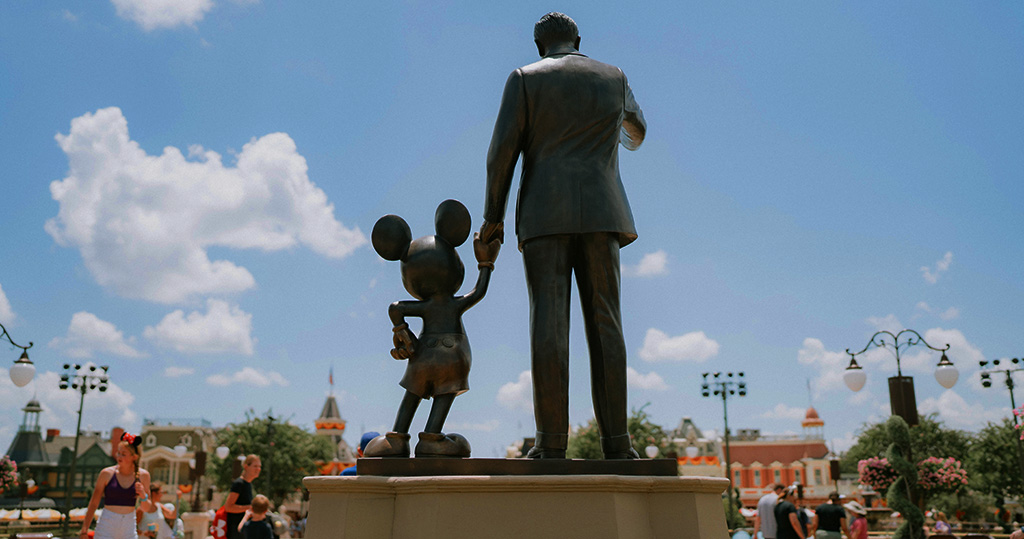

In this Tribune, Julia Martínez Zaragoza, lawyer in Bardají&Honrado, clarifies how the possible use of characters that are already part of the public domain can affect audiovisual creators and producers.
The great characters of literature and cinema are those who they survive the work that gave them life and remain in the cultural heritage for generations through multiple manifestations. Dracula, Frankenstein, Sherlock Holmes, Asterix and Obelix, or, why deny it, any protagonist of the multiple disney animated movies starting with the mythical Mickey Mouse, are a clear example of this.
Years go by and these characters continue to be used, either to integrate them into the plots of other works, to make derivative productions, or simply as references to something that is already considered public domain. But these characters can be used by any person, for any purpose, and with total freedom if the original work from which they came has already fallen into the public domain?
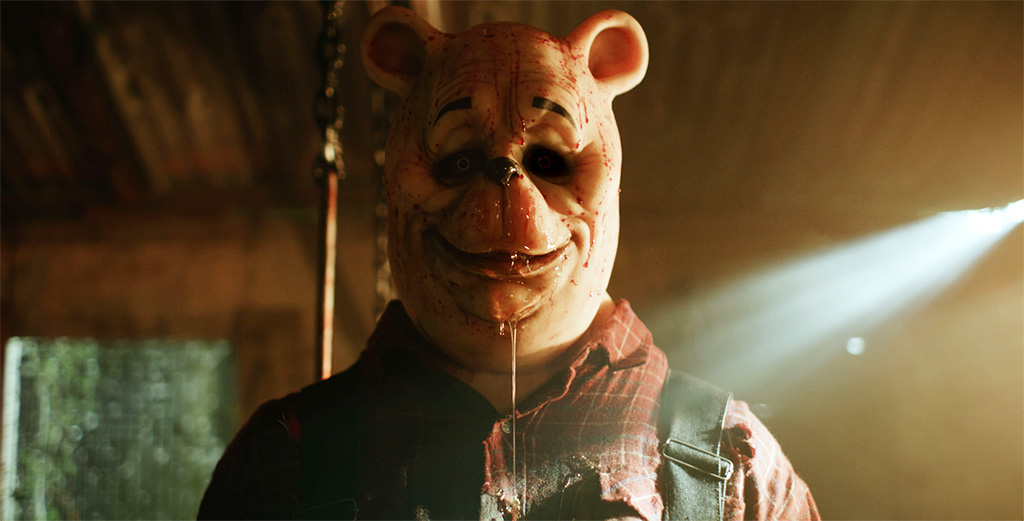
Still from 'Winnie the Pooh: Honey and Blood', which takes the character of Alan Alexander Milne once it has entered the public domain without interfering with the identifying features of the Disney version.
Public domain: more complex than it seems
To answer the previously mentioned question, we must take into account, at least, the following aspects:
- First of all, from the perspective of Copyright, it is necessary to start from the premise that fictional characters such as those described above are considered “works” in the eyes of intellectual property legislation beyond and regardless of the protection received by the work (literary, audiovisual, dramatic) in which they were originally included. In other words, the characters constitute a work on themselves and they will enjoy autonomous protection as long as they are sufficiently original and have a minimum creative height. Therefore, the use of these characters in isolation It also requires the authorization of the respective owners, even when no other element (plot, plot, setting, etc.) of the work from which they emerged was being used.
- Secondly, we must take into account the duration of copyright, which in Spain is generally regulated in article 26 of Royal Legislative Decree 1/1996, of April 12, which approves the consolidated text of the Intellectual Property Law (“LPI"). The precept establishes that "Exploitation rights of the work will last the entire life of the author and seventy years after his death or declaration of death", although the fourth transitional provision of the Law establishes a duration of eighty years after the death or declaration of death of the author for authors who died before December 7, 1987. There are also special assumptions for the calculation of the duration in the case of collective works, collaborative works, posthumous, pseudonymous or anonymous works, and others published in parts.
If the exploitation rights of the character you want to use are, according to the applicable regulations, in the public domain, we have already overcome an important obstacle. However, we cannot forget that copyright has a double aspect (patrimonial and moral) and that there are certain moral rights, such as paternity and respect for the integrity of the work, for which the Law does not establish a term duration, and which can be exercised once the author dies by a designated person, by the heirs and, ultimately, by the State.
This implies that, even if the rights to a character are in the public domain, it will still be necessary respect his paternity (referring to the author) and his integrity, avoiding any deformation, modification, alteration or attack that represents damage to the legitimate interests of the author or damage to his reputation. However, once the author has died, the moral rights over the character will “lose strength” with the passage of time and, above all, with the disappearance of heirs and designated persons or institutions that are expressly responsible for its safeguarding.
The character as a brand
On the other hand, we cannot lose sight of the fact that, in addition to enjoying copyright protection, the name and graphic representation of a character can also be registered as a trademark and, this time yes, for a potentially unlimited period of time, since article 31 of Law 17/2001, of December 7, on Trademarks, provides for initial protection of ten years from the date of submission of the registration application that may be renewed for successive periods of the same duration. This registry grants its owner, as indicated in article 40 of said Law, the possibility of exercising before the jurisdictional bodies the civil or criminal actions that it deems appropriate against injuries to your right (for example, the action to stop the illegitimate use of the trademark, or compensation for damages), as well as demand measures to safeguard it.
Many holders of trademark rights over characters that have already fallen into the public domain are being very belligerent in this sense, which has motivated some production companies, chains and content distribution platforms to adopt the policy of not using third-party brands under any circumstances.
Keep in mind that the registration as a trademark of the name of a character or even its graphic representation They do not prevent its use for purely reference purposes., that is, without the objective of promoting its own goods and services. This would allow, for example, to verbal reference to name of a character in an audiovisual work, or even play your image if it does not have intellectual property rights in force, since it would not be a use as a trademark. However, many holders of trademark rights over characters that have already fallen into the public domain are being very belligerent in this sense, which has motivated some production companies, chains and content distribution platforms to have adopted the policy of not using third-party brands under any circumstances, whether the use is legitimate or not.
After all, not everything is about being right.
Julia Martínez Zaragoza
Lawyer at Bardají&Honrado
Did you like this article?
Subscribe to our NEWSLETTER and you won't miss anything.
Related articles
 Can a foreign work that enters the public domain from Spain be freely exploited?
 Javier Sánchez takes charge of the audiovisual policy and public service area of RTVE
 Santiago Requejo will explore “nomophobia” in the film 'I can't live without you'
 A conference in Madrid will analyze the future of the public audiovisual service
 Canal Sur will invest 2,800,000 euros in financing Andalusian audiovisual work
 The First Hispano-Arab Audiovisual Public Service Forum begins, an initiative of RTVE
 RTVE and ATEI organize the I Ibero-American Forum on Public Audiovisual Service
 'Público' renews its audiovisual commitment with a daily news program and a late night program
 Radio 3 joins the 80th anniversary of Picasso's masterpiece with the audiovisual project 'Suena Guernica'
 The audiovisual sector celebrates the arrival of the .video domain
 Galician audiovisual professionals participate in a seminar on financing audiovisual work
 In which bar can I watch the World Cup? Augmented reality offers the answer
 'I can't live without you', by Leon Dai, post-produced on Edius
 New iVAC character from Activa Multimèdia