





ART: The future of the European cultural platform passes through Spain

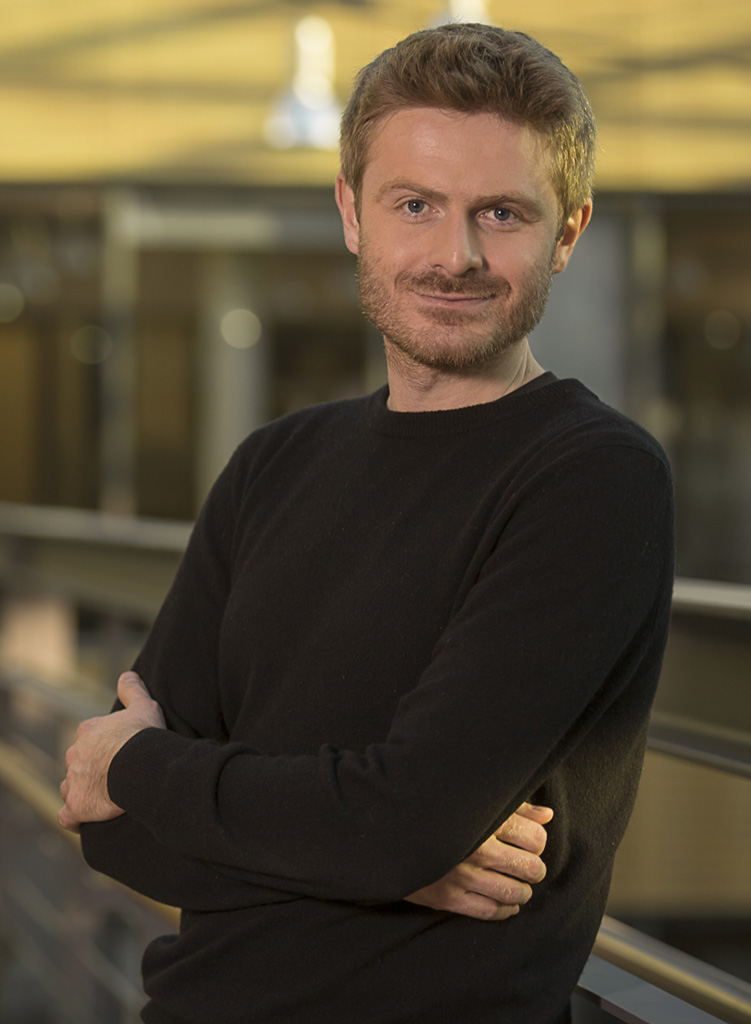
Alexander Knetig, head of the digital area of ART, addresses all the current affairs of the European public channel, its recent re-approach to the Spanish market, the current coexistence in a market marked by the large VOD platforms, its relationships with gatekeepers to maintain its relevance in the market or its commitment to UX to position itself as an alternative in the leisure of European viewers.
Born in 1992 with the mission of uniting the European population through culture, ART It could be considered a survivor of the hyperactive on-demand consumption market, given its particular nature in a context of extreme competitiveness. The European public channel was born as a linear television more focused on the area of documentaries and, in fact, today it continues to issue in many markets through this modality with a share discreet. However, it is the digital world where the initiative finds its maximum capacity for expression, as well as the real growth opportunities despite the limitations (independence, public focus, European values) self-imposed by its leadership team.
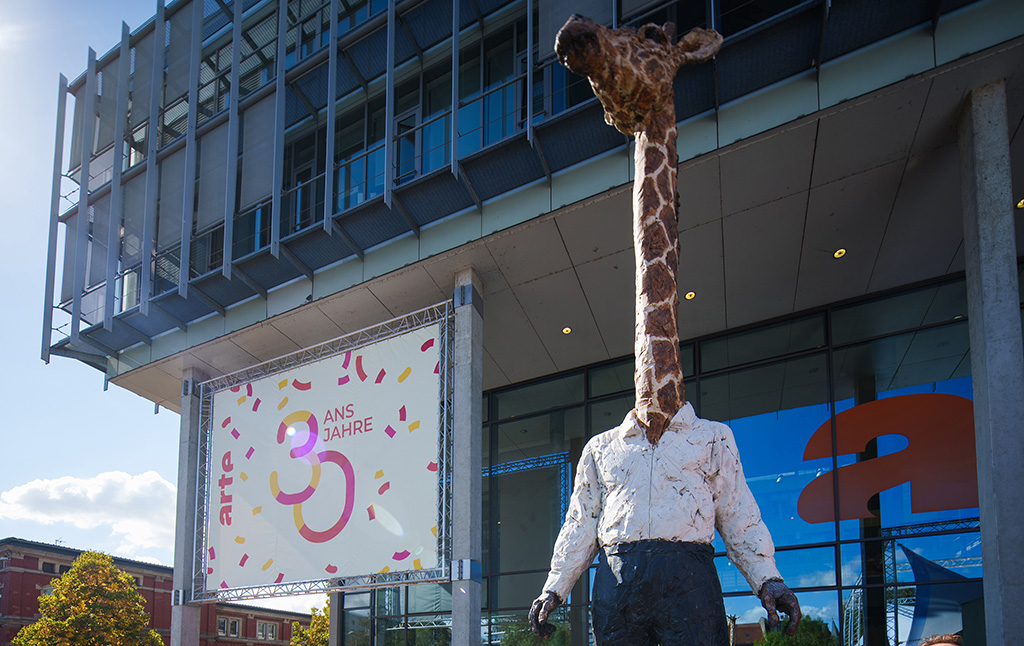
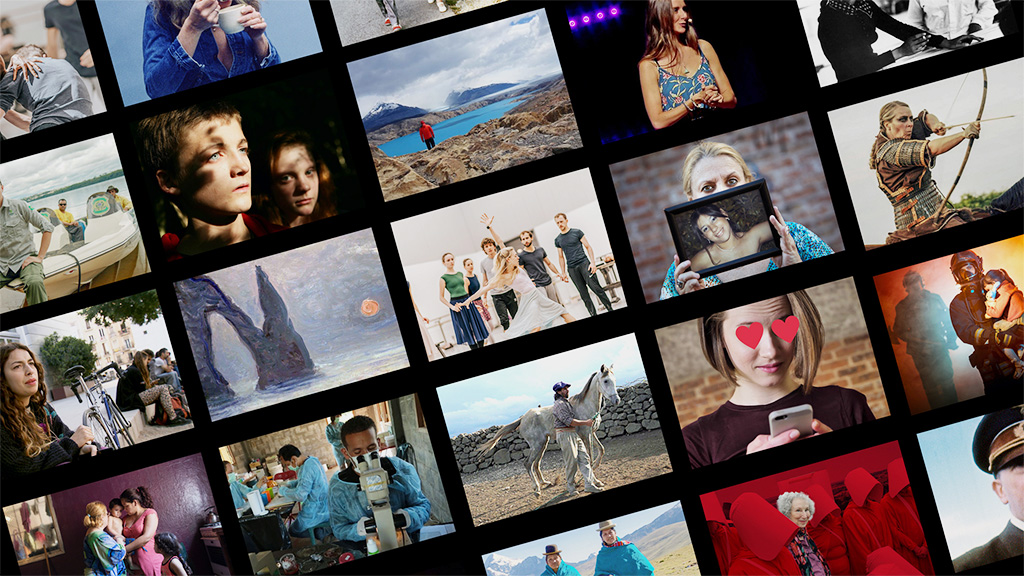
 ART, financed with the television canon of France and Germany, offers from Strasbourg thousands of formats ranging from documentaries around science, travel, nature, history or video games, even independent films and series, going through an approach to the informative news in the form of analysis and reports. The non-linearity and transversality of its contents have allowed the chain significantly multiply your reach in its most consolidated territories (French and German speaking countries), as well as beginning a new stage in its trajectory marked by expansion into new European markets, such as Spain o Poland.
The person in charge of the digital area of ART, Alexander Knetig, reviews the recent evolution of the European initiative and relates it closely to the evolution of the video on demand market. Likewise, aware of its role as David against the great Goliaths of the European audiovisual ecosystem, defends the technology and innovation in issues such as UX o to UI as weapons to support a proposal that could not be viable without its public service nature. In short, the person responsible for the digital area of ART allows us to understand the miracle that is the existence and resilience of such a concrete and particular proposal for more than 30 years.
ART: evolution and content to adapt to a new context
On its 32nd anniversary, in what ways do you think ARTE has evolved to adapt to the new needs of the industry?
ART was born as a emanation of the French and German creative industries, which they had with a very specific organization with their support for independent cinema and documentaries. Since our beginnings, we have always wanted to evolve together with that creative industry, as well as with the large French public services, such as France Télévisions or Germany with ARD. We have played an important role as a facilitator of the industry and we have been adapting to different directives, either as content producers or as content distributors.
By being small, we have to move fast to be able to continue existing. That's ours paradigm.
We have been the second public service in Germany and the first in France to have a catch-up TV, and over the last ten years we have explored new narratives, we have participated in a lot of initiatives web documentaries, we have delved into the virtual reality and now we address the distribution and creation of content by artificial intelligence. Being small, we have to move quickly to continue existing. That is our paradigm; which has led us to gradually transform from a Franco-German cultural television channel into a European cultural content platform.
How would you define the types of content that ART currently encompasses? Is news increasingly important for the platform?
In its early years, ARTE was clearly a channel of documentaries y arthouse films. Some of Amenábar's films were ARTE co-productions, and the same with many other European independent film directors such as Lars von Trier o Michael Haneke. Little by little, we have gone from being a channel that broadcast its content on television between five in the afternoon and twelve at night in Germany and France, to being a platform that brings together many contents.
We have improved our editorial reach to expand the themes of our documentaries and bring them closer to science, history and current events. For us, being a public service platform means not only having fiction content or fun documentaries, since that is what the large international platforms are already there for; also, offer current relevant content.
If only we were a linear television channel, right now we couldn't have content linked to the present.
If you produced or bought content aimed at the linear television audience, which is generally quite older, you would have a problem with relevance. For example, we have a slot on the grid about pop culture, but pop culture for the people who see us on television is Abba or the Bee Gees. It is super important to buy or co-produce content that speaks at least about Amy Winehouse, I'm not talking to you anymore BTS or of Lil Nas X. For all this, if we were only a television channel, right now we would not be able to have content linked to current events. Therefore, we try to expand our reach so that the content of our social networks, platforms or television itself is relevant, which also implies addressing current scientific, cultural or geopolitical events.
Coexistence (and differences) with the large VOD platforms
How does ARTE, a veteran in the world of platforms, confront the wide variety of OTT services available to users?
We have gone through several phases. The first occurred between 2014 y 2017, when everyone was talking about series like House of Cards with actors like Kevin Spacey. The whole industry was very focused on these new agents, and the first few years we were just watching what happened. From the year 2018 There was a questioning phase, because Netflix or Amazon started talking to us, too. Disney+ starting in 2020, because they were interested in our content. Obviously, they didn't want to put them in their home page with their great productions, but they seemed very interesting for their catalogue. Above all, Netflix, which supported documentaries like My Octopus Teacher who were very close to what we did, and with whom we even produced some very edgy.
What the platforms seek to create catalogs similar to that of grandes broadcasters It is a good thing, because it allows us coexist with these large platforms just as we have coexisted with the greats national public services.
Now we find ourselves in a third phase which we have been in for two years. Little by little, we realized that these platforms have been opening up to advertising formats and seeking to have more and more consumers, which has made the type of content they produce it looks less and less like ours. That they seek to create catalogs similar to those of large broadcasters is a good thing, because it allows us coexist with these large platforms just as we have coexisted with the large national public services to propose a very specific offer in the field of documentary, science, history, culture or auteur cinema.
The big platforms have become more mainstream and more tele during the last few years. Amazon buys sports rights, Netflix begins to co-produce reality television... We already know all of this and we know how to react. It was much harder in the early years when it wasn't like that.
Is technology, let's talk about resolution, HDR capabilities, immersiveness, interactivity or UX, a fundamental pillar of the ART proposal?
Technology is very important for us, but of course, we are a small company and, compared to the big ones players public and private, we have to prioritize. We have part of our catalog in 4K, but in a super experimental way because we know that that is not why people come to ARTE. We also have many documentaries with animals in 4K, but we know that we are not going to compete with Disney+ in that domain, where they have much more marketing possibilities or an established family audience.
Furthermore, we are very aware that 4K does not benefit the environment and we have a commitment in that area, since streaming consumes much more than broadcast and we want to use as few servers as possible. In fact, we have artificial intelligence initiatives to compress our files so that they generate less contamination.
We take into account that the 4K It does not benefit the environment and we have a commitment in that area (...). In fact, we have artificial intelligence initiatives for the compression of our files so that they precisely generate less pollution.
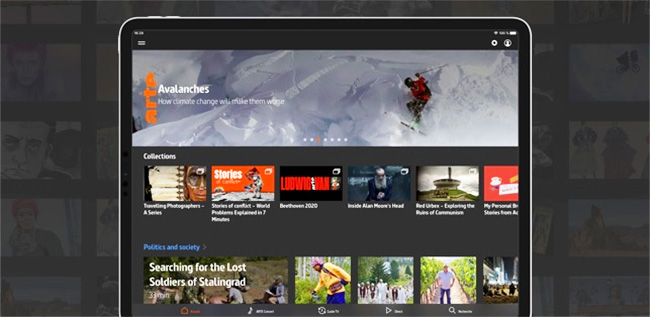
What we do trust precisely is the UX, user experience. We know that we have to offer something different from others or we are going to disappear little by little, especially in the mobile field and connected television, which represent 75% of our users. On mobile we have developed from modes offline, like other platforms, even a notification system push to truly personalize the experience. Looking ahead to summer, we want to develop a functionality of search through a conversational chatbot with artificial intelligence to help the user search within our content.
On television we also want to create other very specific experiences. In Spain we can count on 3,000 contents, while in France or Germany, 8,000. It's nothing if you compare it with RTVE Play or the big ones players international. Therefore, it is super important to offer a specific interface to improve the user experience and ensure that people continue downloading our products specifically.
How does public funding condition ARTE? Do you consider it beneficial to carry out the company's mission?
ARTE is financed in a 98% for taxes in France and Germany, although we also have an additional percentage related to the distribution of our linear channel in Belgium or Portugal via satellite, as well as the sale of our co-productions to others partners or international platforms. Now, in view of our European development, we also have a small funding from the European Union.
We trust the UX, user experience. We know that we have to offer something different from others or we are going to disappear little by little, especially in the mobile field and that of the connected television.
European financing is an element that defines our identity. We are not a public-private mix that needs to be financed by advertising as is the case with many public services in Europe. Our contents, except for some small ones sponsorships in France, they are advertising free and free. Obviously, this nature does not allow us to buy the great international fiction productions, but others already do that: you don't need ART for that. We can, however, shape the films, documentaries and series that we like.
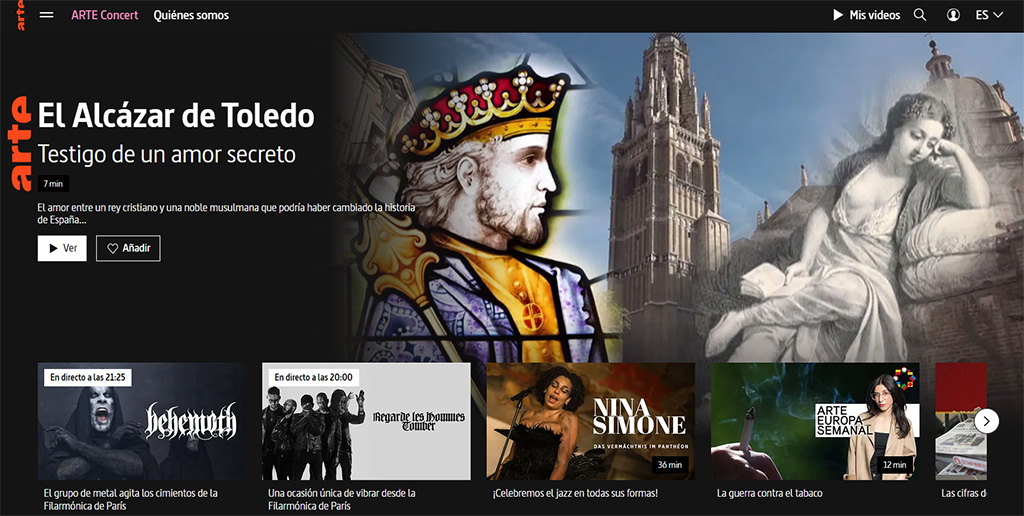
Spain and Poland: the key markets for ARTE
ARTE has begun a new stage by redoubling its efforts in Spanish, although they already had a window in Spanish since 2015. What is the reason for this commitment to our market?
From 2022, and reinforced in 2023, ARTE proposed to bet more on the Spanish and Polish markets, which are our two priority markets in Europe beyond those we have in all French- and German-speaking markets; not only France and Germany, but also Austria, Belgium and Switzerland. Also small Francophile regions in the Basque Country and Catalonia that receive us by satellite.
ARTE was not created as a Franco-German cultural channel. In the 90s, in that totally crazy time when the Berlin Wall fell, Germany was reunified and suddenly we thought that we had defeated Russia and that we were going to live in the best possible world, a channel was created called European Cultural Channel. Shortly afterwards it was given the name ARTE, which is a French acronym for European Television Association. That is, from the beginning, ARTE wanted to be European. What happened during our first 20 years is that making television was very expensive, and extending this channel to another country was even more difficult. We had conversations during the time of former president José Luis Rodríguez Zapatero and vice president María Teresa Fernández de la Vega, but it could not be carried out due to the cost.
We had conversations during the time of the former president José Luis Rodríguez Zapatero and Vice President María Teresa Fernández de la Vega to take ART a Spain in linear format, but it could not be carried out due to the cost.
Now, with digital, it is much easier to try to recover this vision. The thing is that we cannot do it at the same time throughout Europe; It would be very pretentious being so small. Therefore, we have opted for open up to markets that are spatially relevant to us, and Spain is one of them. This involves an extra marketing effort, having more programs available or having more dubbed formats.
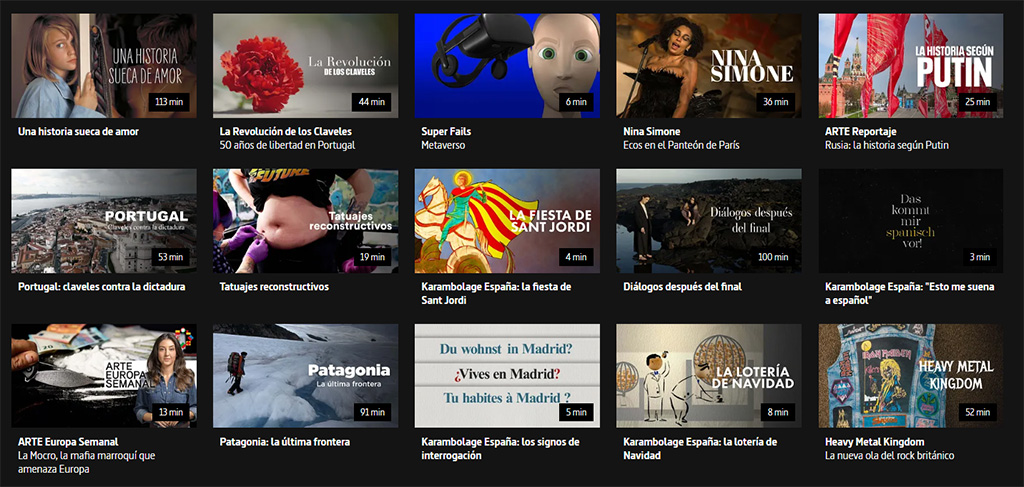 Is Spain a door to bring ART to all Spanish-speaking countries in the world?
Obviously, we chose Spanish nine years ago before Italian because it is an international language. However, for us priority is the European market, and more particularly Spain. Even so, we can see very well how the contents of our YouTube channel, for example, also reach the Ibero-American world.
From the local to the pan-European: strategies and alliances in ARTE
How important is the development of local content (or adapted to local vicissitudes) for the present of ARTE?
To ART It is very important, but for the moment the European ART project is a distribution project. We have had conversations several times at DocumentaMadrid, the San Sebastián Festival or Málaga that were a little frustrating because we spoke with production companies that want to sell us their content, but that is not our current objective in Spain. Our current priority is to improve the distribution of our content with the gatekeepers and, two years from now, change our catalog to have more and more dubbed content, which is what this market especially demands. Obviously we have the ambition to co-produce more for the Spanish market. Today we already have an agreement with RTVE and we produce 10 programs a year, but the idea is to be able to do more.
Our current priority in Spain is improve distribution of our content with the gatekeepers and, two years from now, change our catalog to have every time more dubbed content, which is what this market especially demands.
The problem is not only a question of money, but also of independence. When ARTE produces something we want it to be financed completely independently so that no one intervenes from a political point of view. In that sense, we are very germans. Public financing in Germany is public financing, and someone from politics is not expected to interact with it; It is a quite different model from the French, Spanish or Italian one.
What alliances have you currently established with the Spanish audiovisual industry, whether public broadcasters or private production companies?
First of all, we have agreements with public channels in different European countries. In Spain we clearly work with RTVE, but for example TVP (Poland) was directly controlled by the country's ultra-conservative government and, although the government has changed today, control continues, which means that we still do not have guarantees of independence and the partnership be much more difficult. We have many other agreements with television networks such as RAI in Italy, RTBF in Belgium, ORF in Austria, Česká televize in the Czech Republic and we have been negotiating for years with BBC, SVT, NRK or YLE.
The second type of alliances would be with distributors, who work at European level. We have continued to strengthen our alliances over the past few years and meet them at industry events. The third, the own production companies, with which we work directly in some markets such as Belgium, Switzerland or Austria.
The fourth typology, very important for the future, is the platforms. We have signed small agreements on specific content up to two times with of the movie in Spain, since it is the brand identity which is more like us, although we are still much smaller than them here. At the European level, we also extend these agreements to other Filmin-type platforms and to the large gatekeepers global companies, such as Samsung, so that in the future we can also coexist on the large screens that are in our living rooms.
The growth of ARTE: Gatekeepers, localization and a voice-based UX
How do you seek to continue growing in Spain in the short and medium term?
For us, a first very tangible way to grow will be through collaborate better with the interfaces of the gatekeepers who already distribute ART. In Spain, beyond consumption through Movistar or Vodafone STBs, there is increasingly more consumption through television interfaces directly. Furthermore, as we have already mentioned, it will be very important better adapt our content to the market with multilingual versions and translations. we want little by little change people's mentality not only so that Spaniards become interested in the productions of France and Germany, but also so that it is the opposite.
At European level, what transversal improvements will ARTE promote?
Beyond televisions, we are also interested in other screens such as those in the car. When we talk to Google TV, For example, we are not only talking about the Google TV operating system on Sony televisions or the sticks of Android, but of the screens in cars, whether Tesla or other manufacturers. They are going to be very interesting.
In the area of UX, we deeply think that the next horizon will be the voice. The first interface were metaphors: the trash can, the desk... They were useful, but difficult for older people to understand. The second step was touch screens, much easier for older people. The next interface will be what we communicate with the rest of the planet in general: voice. We believe that it will be the new frontier and that is going to confront us with an enormous challenge. We don't know what players there are going to be, what type of screens they are going to have or what type of metadata and content We are going to have to offer so that it makes sense for the users.
In it UX area, we deeply think that the The next horizon will be the voice.
Over the last five years, we have grown 400% on our platform and 1000% on our social networks. There is a real growth on the European horizon, and the digital horizon allows us to do things that we could never have done as a small channel with a share of 3% in France and 1.3% in Germany. The idea is to continue with that growth; precisely less in our historical countries, but perhaps much more in other European countries.
An interview by Sergio Julián Gómez
Did you like this article?
Subscribe to our NEWSLETTER and you won't miss anything.
Related articles
 ARTE unites horror and art in 'Haunted Places' with solutions from Blackmagic Design
 Cartoon Springboard: the future of European animation meets in Madrid
 Present and future of Mediaset Infinity, the new platform with AVOD spirit from Mediaset España
 Dailymotion seeks to consolidate itself as a European social video platform with the purchase of Mojo
 The 2nd edition of Animar BCN draws conclusions to ensure the future of European animation
 The San Sebastián Festival is already the fourth most important cultural initiative in Spain
 The present and future of televisions goes through IP
 Mediapro will promote the transformation of the European cultural and creative industry
 Does the future of film festivals involve reaching viewers' homes?
 Inside El País Video: Does the future of journalism lie in audiovisual entertainment?
 European Commission places Lightspeed and Telestream's Vantage at the heart of its contribution platform
 NEM, the European technology platform dedicated to Digital Creative Industries, appoints the new Board of Directors
The European Commission opens a public consultation to determine the future of the 700 megahertz band
NEM, the European technology platform dedicated to Digital Creative Industries, appoints the new Board of Directors
The European Commission opens a public consultation to determine the future of the 700 megahertz band
 Creative Europe: the European Union presents a plan to promote the cultural and creative sectors