





La realización y técnica de ‘La Revuelta’ (RTVE): el mayor “caos ordenado” de la televisión
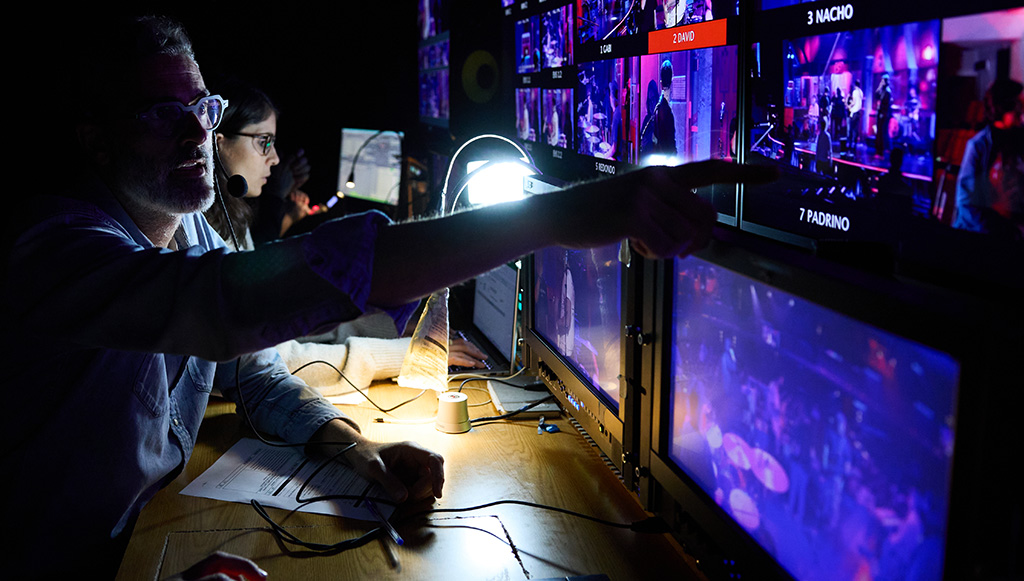
David Olivares y Antonio Trilla, realizador y jefe técnico de ‘La Revuelta’ (Encofrados Encofrasa, The Terrace (The Mediapro Studio)), abren la puerta a la gran revelación de la temporada televisiva, un formato de entrevistas, humor y entretenimiento que ha permitido a RTVE reformular su access prime time y mirar a los ojos a un formato tan consolidado como ‘El Hormiguero’.
Pocos podrían haber imaginado que aquel formato diseñado por The Terrace para servir como dupla rupturista con el ya extinto Late motiv of Andreu Buenafuente pudiera haberle sobrevivido, multiplicando su alcance y consolidándose como un fenómeno cultural en apenas 100 programas en la televisión pública española. La Resistencia, presentado en su génesis como el primer late late show de España, permitía a David Broncano seguir haciéndose hueco en el panorama del humor con la que sería su segundo proyecto en solitario tras LocoMundo, acompañado de una figura consolidada del mundo del humor como Ricardo Castella y la acidez habitual del beatboxer Grison, quienes ejercen de apuntadores como unos Statler y Waldorf modernos.
El programa se emitió en Movistar Plus+ desde febrero de 2018 hasta julio de 2024 con una estética completamente trash y el objetivo de hacer de la escasez, virtud. Los primeros pasos del programa, grabados en el pequeño Teatro Arlequín de Madrid, permitieron definir una identidad irreverente, con la personalidad aparentemente dejada del cómico jienense como hilo conductor, siempre rodeado por cómicos como Jorge Ponce, también guionista y director, y un elenco de colaboradores de la talla de Ernesto Sevilla, Antonio Resines, Ignatius Farray, Pablo Ibarburu, Sergio Bezos o Valeria Ros, entre otros.
La llegada de The Resistance a Spanish Television, transformada en esta nueva etapa con el nombre de La Revuelta, ha supuesto todo un fenómeno cultural. Poniendo el foco en el público y aunando la esencia del formato con una nueva aproximación cercana a los valores de public service de RTVE, el formato de Encofrados Encofrasa y El Terrat (The Mediapro Studio) presume de haber devuelto a varias generaciones a la televisión lineal, al tiempo que cuenta por cientos de miles las reproducciones de sus clips en los canales digitales.
David Olivares, realizador, y Antonio Trilla, jefe técnico, se ponen al servicio de la particular naturaleza del programa para derribar los principios establecidos de la realización televisiva. Operando desde un teatro sin la preparación tecnológica para la creación de un formato de esta magnitud, y replanteando el esquema de realización para crear una sensación de inmediatez, improvisación y sorpresa, ambos representan la esencia de un medio en transformación que, para agrado de unos y lamentos de otros, enfoca la técnica desde un prisma inimaginable hace apenas una década
El caos ordenado de La Revuelta
Si un espectador de televisión de los albores de la televisión comercial en España saliera de su máquina del tiempo y se encontrara de frente con La Revuelta, ciertamente quedaría desconcertado. Frente a aquellas escenografías cuidadas, la importancia de la fidelidad visual y la certeza de estar asistiendo a un entretenimiento cuidado al milímetro, el formato de RTVE hace virtud de la imprevisibilidad, la improvisación o incluso el fallo técnico.
David Olivares: “La forma de trabajar del equipo de dirección parece en un principio caótica, pero tiene las cosas muy claras y esto también nos lo transmiten a nosotros”.
Es cierto que detrás de esta fachada de dejadez existe un camino claro marcado desde dirección, pero Olivares reconoce que este “caos ordenado” es uno de los pilares del formato: “La forma de trabajar del equipo de dirección parece en un principio caótica, pero tiene las cosas muy claras y esto también nos lo transmiten a nosotros”. Según explica el realizador, es frecuente que en el día a día la escaleta varíe, que sucedan interacciones no planeadas y que haya reacciones del público imprevistas, pero el equipo de La Revuelta ya está “acostumbrado” y se involucra al máximo en esta visión: “Todo el mundo sabe lo que tiene que hacer. Aunque parezca un caos por la música, el guion y el público, al final todo va encaminado a un fin: el contenido”.
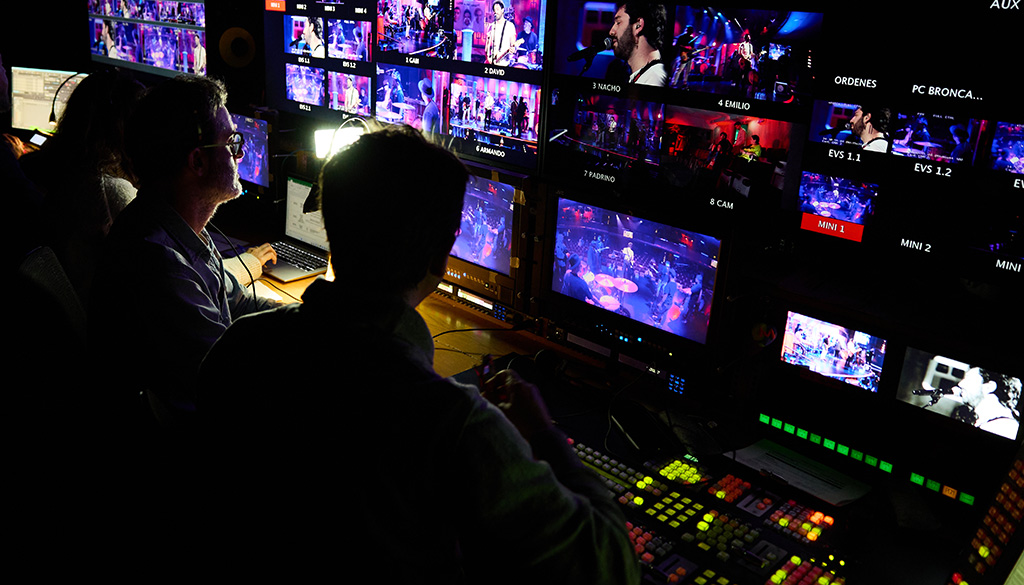
Esta imprevisibilidad se traslada a las soluciones técnicas empleadas. El equipo liderado por Trilla sienta las bases técnicas sobre herramientas broadcast tradicionales, pero en la realización se cuelan imágenes procedentes de un iPad, minicámaras emplazadas en posiciones estratégicas, videollamadas con software de consumo o incluso el PC del cómico Miguel Campos, desde el cual lanza memes, de nuevo, comentando el devenir del programa. “Cuando entré por primera vez me dijeron que era un programa vivo, y es verdad. Tan pronto tienes algo preparado, como te dicen de utilizar un tipo de cámara concreto o de salir a la calle”, explica el jefe técnico.
Unos códigos visuales en redefinición
He lenguaje visual y narrativo of La Revuelta se ha construido acompañando el día a día de la interacción de las nuevas generaciones con la tecnología. La naturalización del píxel, of the fallo, de los formatos verticales o de la imagen estática se cuela en un formato sin miedo a experimentar, probar, desechar e integrar. Olivares apunta que este enfoque se construyó por la “necesidad” de ser inmediatos y frescos partiendo de un punto de partida con recursos limitados: “Personalmente, me explotaba la cabeza, igual que a muchísima gente del equipo, romper con cosas establecidas de otros programas”, explica tomando como ejemplo cuando David Broncano pidió tener en su escritorio el control del EVS desde su PC en vez de desde control.
David Olivares: “Es posible acostumbrarse a romper los cánones de la televisión convencional para establecer otras cosas que pueden estar, valen perfectamente y, de hecho, se están viendo que funcionan”.
“La Revuelta rompe esas estructuras, pero luego te das cuenta de que no pasa nada. El lenguaje está vivo, y es posible acostumbrarse a romper los cánones de la televisión convencional para establecer otras cosas que pueden estar, valen perfectamente y, de hecho, se están viendo que funcionan”, concreta el realizador, añadiendo que perfiles de todas las generaciones están conectando con esta visión: “Ahora que hemos entrado en Televisión Española se está viendo que un target de gente mayor también está aceptando este tipo de lenguaje audiovisual. Para mí es fantástico saber que se pueden hacer otras cosas y estar todo el día pensando en tecnologías nuevas y cómo adaptarlas al lenguaje televisivo”.
RTVE, los no-profesionalismos y la oportunidad para el humor
En la etapa de La Revuelta en Movistar Plus+, el equipo de dirección del formato siempre destacó la libertad de trabajo y guion que ofrecía la plataforma de Telefónica, que apostó por formatos de entretenimiento disruptivos que miraban propuestas europeas en su redefinición de hace ya más de una década. Se podría pensar que Televisión Española, por su posición como valedor del servicio público and the altos estándares de calidad que históricamente han acompañado a la radiotelevisión, podría aconsejar, guiar o limitar la expresión visual y de contenidos del formato de Encofrados Encofrasa. Según confirma Olivares, nada más lejos de la realidad: “Televisión Española nos está respetando totalmente, tanto el programa, como el formato y la forma de contar las cosas”.3
Antonio Trilla: “Evidentemente no se quieren fallos, pero de ellos se hace virtud to give versatilidad y humor.
Esta aceptación por parte del ente público no solo se traslada a la línea de contenidos del programa, sino también a los fallos tecnológicos que han acompañado algunos de sus programas. Un ejemplo fue el programa en el que se realizó una conexión con el Museo Nacional y Centro de Investigación de Altamira, cuya conexión estuvo repleta de cortes de sonido y congelaciones.
Given this situation, David Broncano, Ricardo Castella, Grison y Sergio Bezos no perdieron la oportunidad para hacer humor de la situación, introduciendo todo tipo de chistes: “Lo bueno de este programa es que se aprovechan estos fallos técnicos para crear situaciones. Grison mete un chiste, se crea otro tipo de ambiente y el fallo se convierte en algo positivo. Desde ahí, tanto la dirección como Televisión Española no nos da problemas en ese aspecto y nos animan muchísimo”. Trilla comparte la visión de su compañero: “Evidentemente no se quieren fallos, pero de ellos se hace virtud para dar versatilidad y humor. También es una manera de profesionalizar lo amateur y de crear familiaridad con el público al utilizar señales que todo el mundo conoce”.
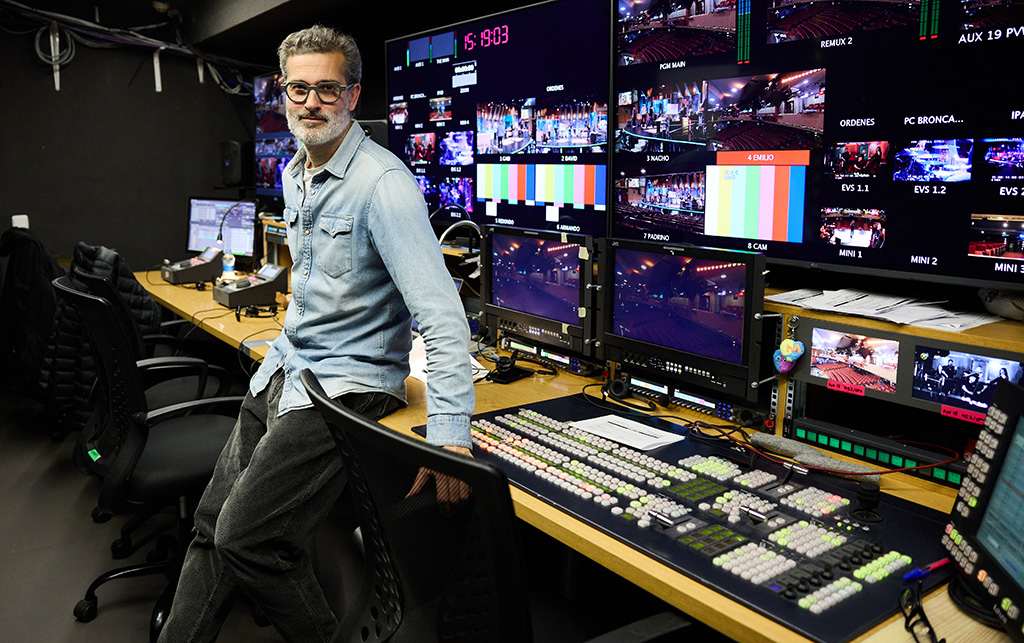
David Olivares, realizador de ‘La Revuelta’
Una realización construida con nuevos referentes
Mientras que David Fernández, realizador de El Hormiguero y heredero de la realización primigenia del formato de 7 and Action, reconocía como máximo referente el ritmo y el uso de la música de Crónicas Marcianas, Olivares encuentra la construcción de la realización de La Revuelta en todo tipo de ventanas. El lenguaje del podcast and of Internet se mezclan con los códigos del late show para construir un referente único en la televisión mundial: “No nos hemos fijado tanto en un programa concreto, sino en muchísimos formatos y referencias diferentes”.
David Olivares: “¿Me gustaría tener más cámaras o moverlas mucho más? Evidentemente, pero es lo que tenemos y jugamos con ello”.
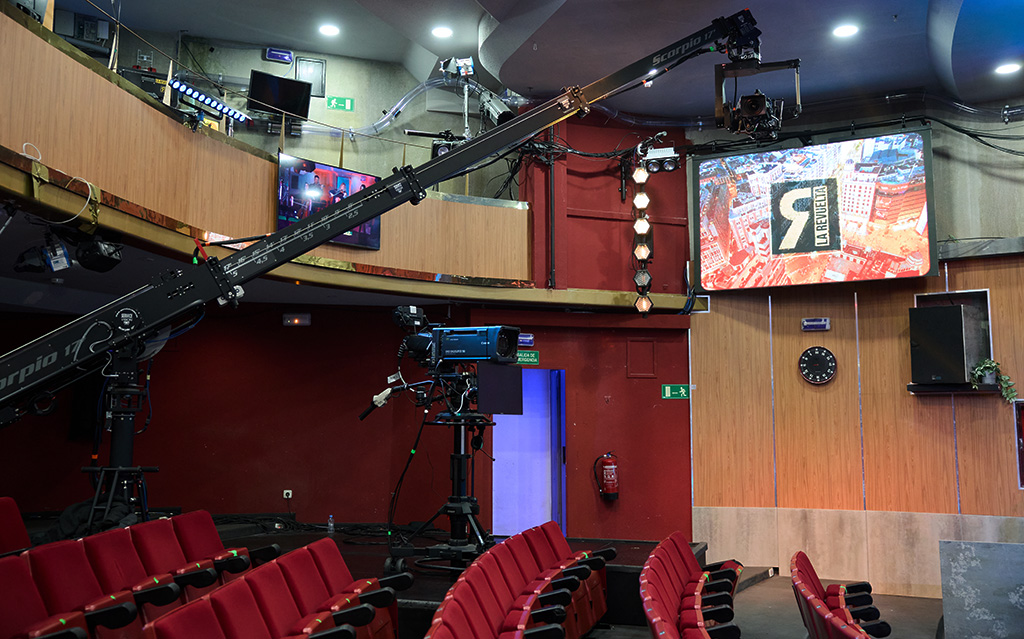
Aun así, Olivares cree que la realización de La Revuelta no ha sido construida conscientemente, sino que ha crecido fruto de un particular hándicap: que se priorice más el espectáculo del público que asiste a la grabación que el propio esquema televisivo. En sus propias palabras: “Es un espectáculo televisado. 350 personas vienen todas las noches a disfrutar de un preshow y luego el programa”. Esto hace que la colocación de las cámaras sea distinta al esquema tradicional del plató de televisión para no restringir la visión del público, que la PA tenga que estar alta para que el público oiga cada chiste y que las pantallas laterales con las que el público puede ver el contenido audiovisual queden fuera del esquema para evitar la retroalimentación.
“¿Me gustaría tener más cámaras o moverlas mucho más? Evidentemente, pero es lo que tenemos y jugamos con ello. De esta situación hemos hecho una virtud. A lo mejor no muevo las cámaras, pero sí que hago muchos más movimientos y reacciones entre personajes para que la realización sea más dinámica”, remarca el realizador.
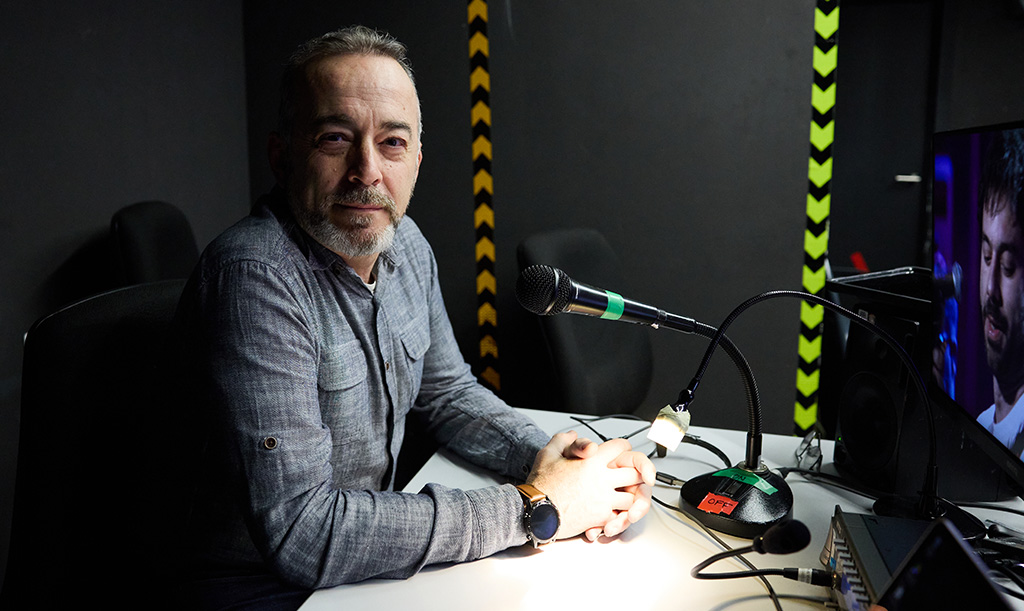
Antonio Trilla, jefe técnico de ‘La Revuelta’
El teatro, condicionante y oportunidad
La Revuelta se rueda en las tardes de lunes a jueves en el Teatro Príncipe Gran Vía, ubicado a apenas unos metros del epicentro comercial de Madrid. Esta decisión, heredada de The Resistance, ha obligado al equipo de tecnología de La Revuelta a desplegar cableados, racks y redes en un entorno que no está preparado en absoluto para un despliegue de televisión. Y es que, a nivel de tecnología, Trilla considera el despliegue como una “pequeña unidad móvil”: “Hay que hacer tiradas por cableado y fibras por todas las plantas del edificio. Además, hay que tener en cuenta que el espacio tiene sus propias actuaciones los fines de semana, por lo que todo hay que desplegarlo de manera que no moleste”.
Con el GLU, la electrónica y el control con puestos en exclusiva fijos para el programa, el resto de los elementos del despliegue se recogen y se habilitan al comienzo de cada semana. “La PA se echa hacia atrás, las cámaras se recogen y se dejan guardadas… El montaje es el lunes por la mañana y no nos lleva más que una hora u hora y media”, explica el jefe técnico.

Una técnica preparada para dar el salto al 4K
A pesar de la particularidad de este despliegue, el jefe técnico de La Revuelta reivindica la tecnología puntera con la que se realiza el formato. Concretamente, se utilizan ocho cadenas de cámara Sony con tres ópticas grandes de 90, 40, 22 y 14 mm, y una acoplada a una grúa escorpio. Este despliegue se completa con las minicámaras Marshall CV360 no remotables.
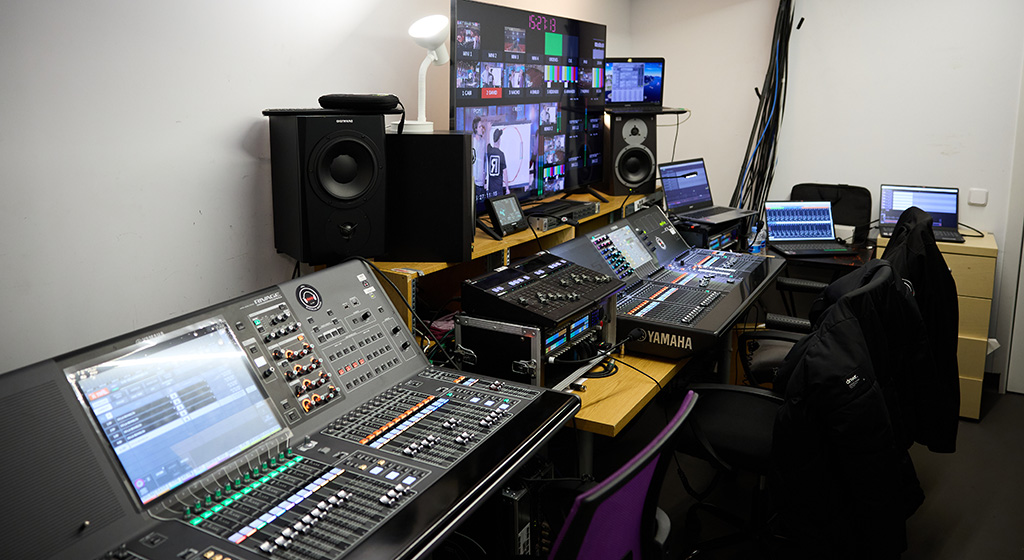 Toda la cadena de cámaras podría adaptarse para emitir en 4K, pero Trilla confirma que el resto del flujo de trabajo no está diseñado para estas resoluciones. No obstante, acometer la transformación “no sería un salto muy grande”: “La matriz que tenemos es una 72×72. Habría que adecuarla a 4K tanto ella como el mezclador. El resto de los elementos, como la EVS o la inmensa mayoría de las cámaras ya están preparadas para el 4K.
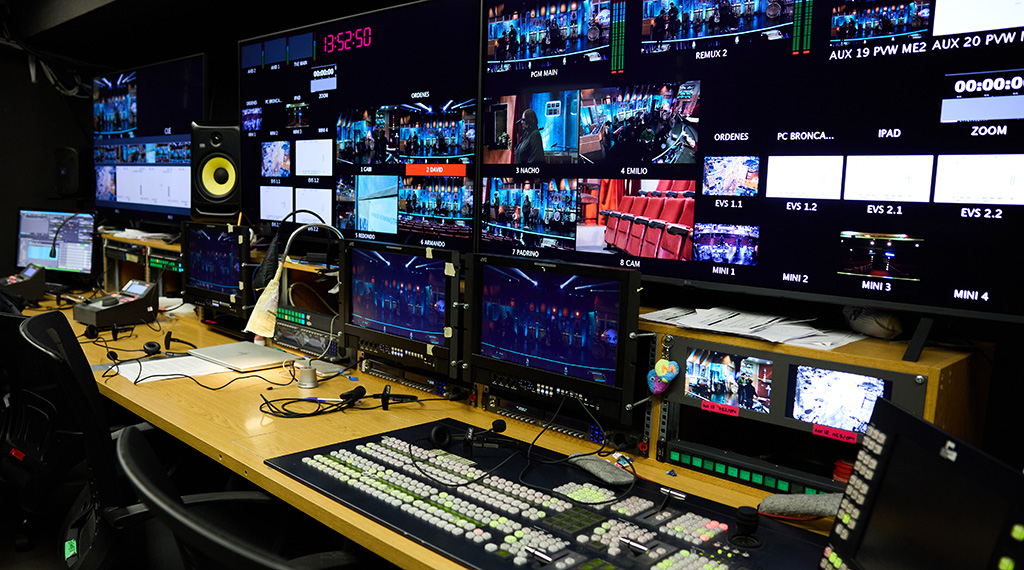
En la sala de realización se opera con una mesa Kahuna 9600 acompañado del sistema multipantalla Kaleido X of Grass Valley, mientras que la intercomunicación se acomete con un sistema RTS con una matriz ODIN de 64 canales y Riedel Bolero para los inalámbricos. Mención aparte merece el tratamiento del audio en el teatro, una labor externalizada que permite capturar con solvencia reacciones del público, el día a día del programa y actuaciones musicales.
Una realización y postproducción express
El día a día de La Revuelta comienza con el mencionado preshow en el que Sergio Bezos ameniza al público mientras se seleccionan los protagonistas que podrán tener su minuto de gloria en la introducción del programa. Alrededor de las 17:45 se graba el programa del tirón con una prerrealización en directo liderada por Olivares con apenas un parón antes del bloque de entrevistas.
Este premontaje, que se complementa con seis cámaras masterizadas vía EVS, se envía al equipo de postproducción del programa, ubicado en la parte superior del teatro, para realizar la edición. En el día a día, esta consistirá en recortar 15 o 20 minutos, adecuando el formato a los tiempos de Televisión Española: “Antonio Trashorras se encarga de minutar el contenido en directo, indicando temáticas, bromas y sucesos en un Excel. Al finalizar la grabación, alrededor de las 19:30, se reúne el equipo de dirección para definir los cortes del programa”, explica Olivares.
El montaje final, realizado con Avid Media Composer, tendrá que hacerse en apenas media hora, dado que el formato comienza su emisión a las 21:45 y el envío a Televisión Española se realiza por play y vía FTP: “Vamos bastantes apurados y algún día se nota algún corte un poco más atropellado. No obstante, la gente de edición está acostumbrada y hacen un trabajo excepcional todos los días”.
Improvisación controlada: la esencia de La Revuelta
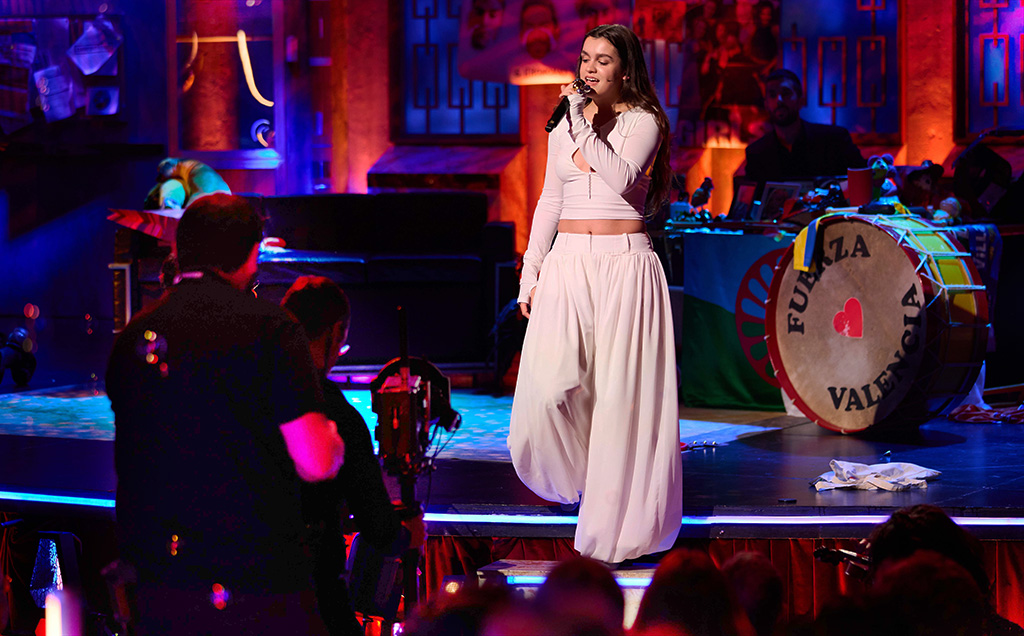
Uno de los momentos que más ha dado que hablar en los 100 primeros episodios de La Revuelta, más allá de La berrea del ciervo como respuesta a las presiones externas por parte de El Hormiguero sobre la planificación de invitados, fue el plano secuencia con el que la artista pamplonesa Amaia presentó el single “Tengo un pensamiento”. Olivares, sin restar mérito al alcance de esta actuación, considera que hay “retos mucho más difíciles todos los días” que son la verdadera expresión del formato. “La improvisación constante que tenemos y la alerta máxima que tenemos que seguir con las locuras de David, Bezos o Grison hacen que todo el equipo permanezca en alerta. Si no estamos al 100%, esta maquinaria no funcionaría”, explica el realizador, reivindicando que todos los días surgen desafíos que superar.
Es caos ordenado, improvisación controlada y entretenimiento casi imprevisible. Algo inimaginable hace unas décadas, pero palpable y difícilmente descriptible en nuestros días: “Todos los días doy gracias porque me lo paso genial. Muchas veces le tengo que decir a los cámaras que tengan cuidado, porque se ríen y se nota el temblor en las cámaras, y pasa lo mismo en control, donde a veces tengo que pedir silencio. Todo da muy buen rollo y hace que veas que las cosas se están haciendo bien”.
A report by Sergio Julián Gómez
Did you like this article?
Subscribe to our NEWSLETTER and you won't miss anything.
Related articles
 ‘La Revuelta’ cierra el año con un plano secuencia protagonizado por Amaia y rodado con steady-cam
 Premios Ondas 2024: prematura victoria de ‘La Revuelta’ y triunfo de RTVE y 3Cat
 RTVE retransmite en 5G, multicámara y realización cloud un evento del Parlamento Europeo
 RTVE and Telefónica make the first remote production without a mobile unit thanks to edge computing
 Kanal 2, la mayor televisión privada de Estonia, invierte en un mezclador Dyvi de EVS
 Atlantis Television sitúa a Telestream en el corazón del mayor flujo de trabajo de postproducción virtualizado de Europa
 IB3 adjudica a Videoreport la gestión técnica de la radio y televisión balear
 RTVE lanza la mayor web de documentales en castellano del mundo, con más de 5.000 títulos digitalizados
 Cost reduction and greater flexibility, keys in the review of the collective agreement at RTVE
 RTVE y Filmoteca Española lanzan en Internet el mayor fondo histórico audiovisual de España
 RTVE will offer the greatest coverage of the Paralympic Games in London 2012
Mayor flexibilidad y rapidez en los informativos de RTVE con Avid
RTVE will offer the greatest coverage of the Paralympic Games in London 2012
Mayor flexibilidad y rapidez en los informativos de RTVE con Avid
 ‘Contenidos y formatos de calidad en la nueva televisión’: el Instituto RTVE analiza la televisión digital
 RTVE lanza el mayor proyecto ‘A la carta’ del mundo hispano