





Shooting a feature film entirely with virtual production: the feat of 'Parenostre'
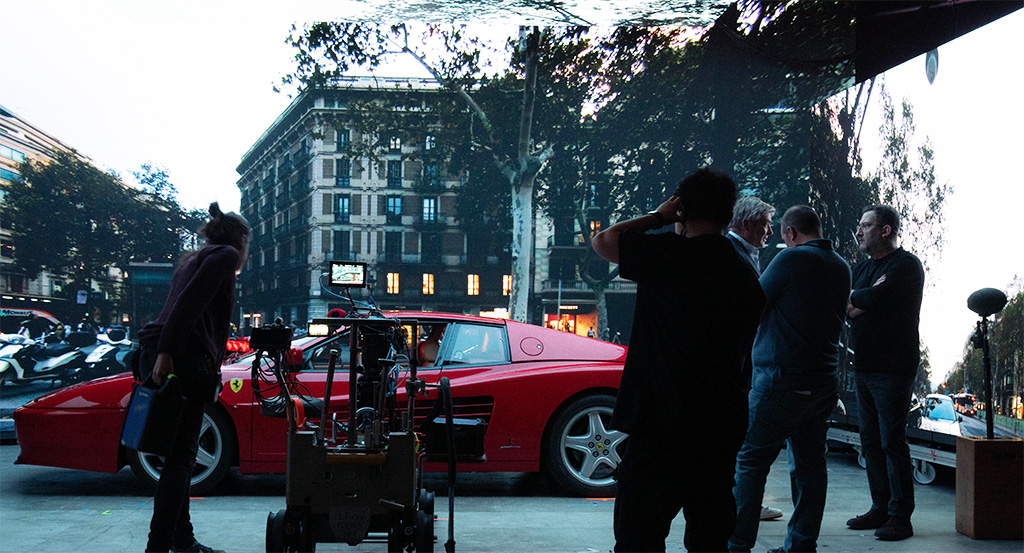

‘Parenostre’ se estrenó el día 16 de abril cargando sobre sus espaldas el hito de haber sido la primera película europea rodada al completo con técnicas de producción virtual, ya sea en entornos inmersivos Simulcam con croma o con el uso de paneles LED. Mario Montero, director de fotografía, e Isaac Bergada, responsable del área de producción virtual de Mediapro Group, abordan los desafíos y aprendizajes de una película rupturista en la factura visual y valiente en sus planteamientos tecnológicos.
Manuel Huerga, director of our father, y David Felani, executive producer of Absolute Minority, visitaron en los inicios de las localizaciones del largometraje los platós de Mediapro en la Ciudad Condal. Posiblemente interesado en las posibilidades de la recreación de interiores, en su paseo llegaron a un plató con una pantalla repleta de paneles LED. “¿Esto qué es?”, preguntaron, sin saber que encontrarían en el proceso una solución a muchos de los desafíos argumentales, creativos y presupuestarios de la película.
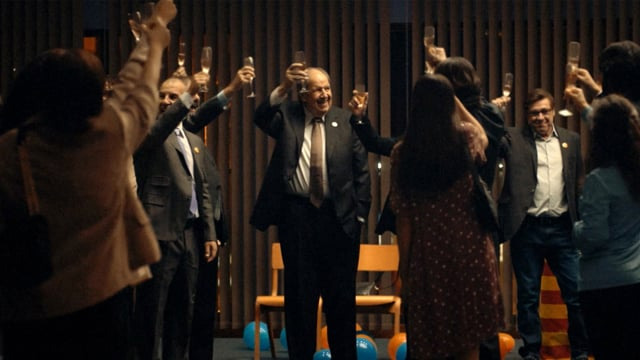
our father se presenta como un particular biopic de la figura de Jordi Pujol padre que sucede, en gran medida, en su propia cabeza. Presente y pasado se entrecruzan con escenas y tiempos que se superponen, con alternaciones de la realidad y representaciones visuales de los fantasmas que acompañaban al que fue president de la Generalitat de Catalunya de 1980 a 2003.
Tras recibir, como Bergada confiesa, un “workshop en caliente”, Huerga encuentra en estos virtual environments las herramientas necesarias para hacer realidad su visión creativa. Felani, por su parte, encontró una alternativa a las exigencias argumentales de la obra: más de 40 escenarios y localizaciones diferentes, lo que hubiera sido un importante esfuerzo presupuestario con desplazamientos y trámites asociados.
En ese momento, la maquinaria comenzó: Grup Mediapro se preparaba para dar un salto al vacío (con red, eso sí) para dar soporte tecnológico al primer largometraje rodado íntegramente con técnicas de producción virtual en Europa, mientras que Huerga, acompañado de Bergada, se disponía a enfrentarse a una manera de trabajar diferente, marcada por una fase de preproducción mucho más exigente de lo habitual.
Una preproducción más exigente
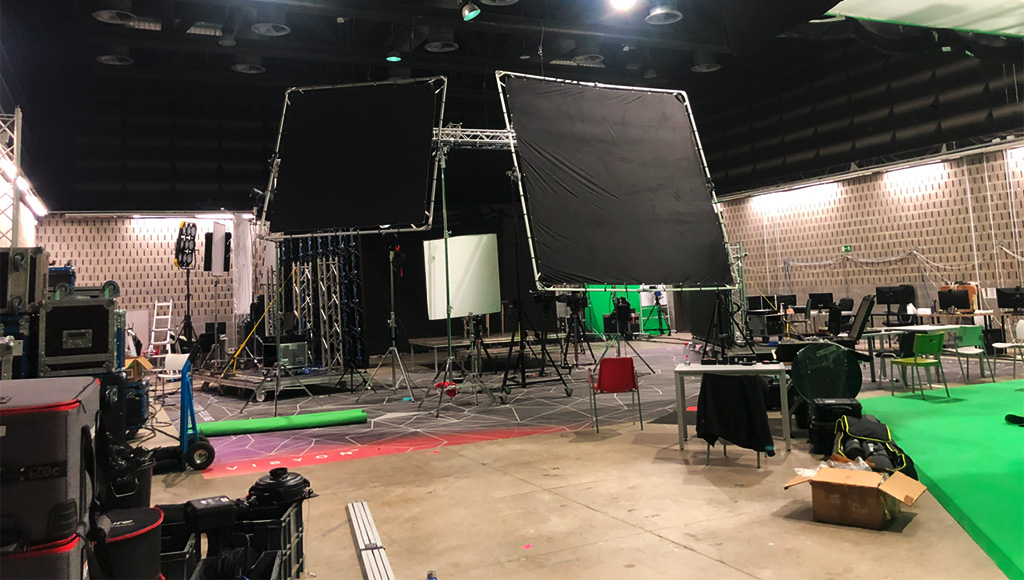
Al optar por las técnicas de producción virtual, y dejando de lado las oportunidades creativas que esta decisión pueda aportar, todo se concentra en un único espacio. Cuatro paredes negras delimitarán los límites de un estudio permitiendo generar mundos y espacios en su interior, en muchas ocasiones maleables y personalizables. No obstante, todos los entornos de rodaje, así como las particulares retroproyecciones de esta modalidad, deben estar creadas de antemano.
Isaac Bergada: “El proceso sirvió para entender los peligros y beneficios en cada uno de los aspectos. Fue un aprendizaje muy intenso”.
The team of our father dedicó cerca de dos meses para crear todos los entornos que acabarían dando vida a los escenarios y localizaciones del largometraje, siempre asesorados por Grup Mediapro para que estos pudieran ser adaptados a los requisitos de esta tecnología. De esta forma, para las conversaciones y trayectos en coche, se grabaron los escenarios reales con un rig de cuatro cámaras para así dar forma a una composición de 360 grados; en otras ocasiones se optó por la photogrammetry, una técnica consistente en realizar miles de fotografías a entornos y reconstruirlo en un entorno 3D, tal y como se hizo con las iglesias o con el interior del piso de los Pujol, recreado a partir de fotografías de prensa. Este trabajo, liderado por el equipo de arte de Mariona Omedes, se completó con una creación de entornos en 3D de exteriores, con recreación de tráfico y multitudes, como el que acompaña el “vuelo” por Barcelona tras los títulos de crédito.
Durante las tres semanas previas al rodaje, que se extendió durante un mes, Montero y Bergada realizaron tests de iluminación para que todo el equipo técnico estuviera preparado para operar en estos entornos de producción virtual. “Fue un salto al vacío, porque normalmente no estás acostumbrado a proyectos tan grandes, sino que haces alguna escena de camera car o alguna campaña publicitaria. El proceso sirvió para entender los peligros y beneficios en cada uno de los aspectos. Fue un aprendizaje muy intenso”, remarca el responsable de producción virtual de Grup Mediapro.
Pantallas verdes o LED Wall
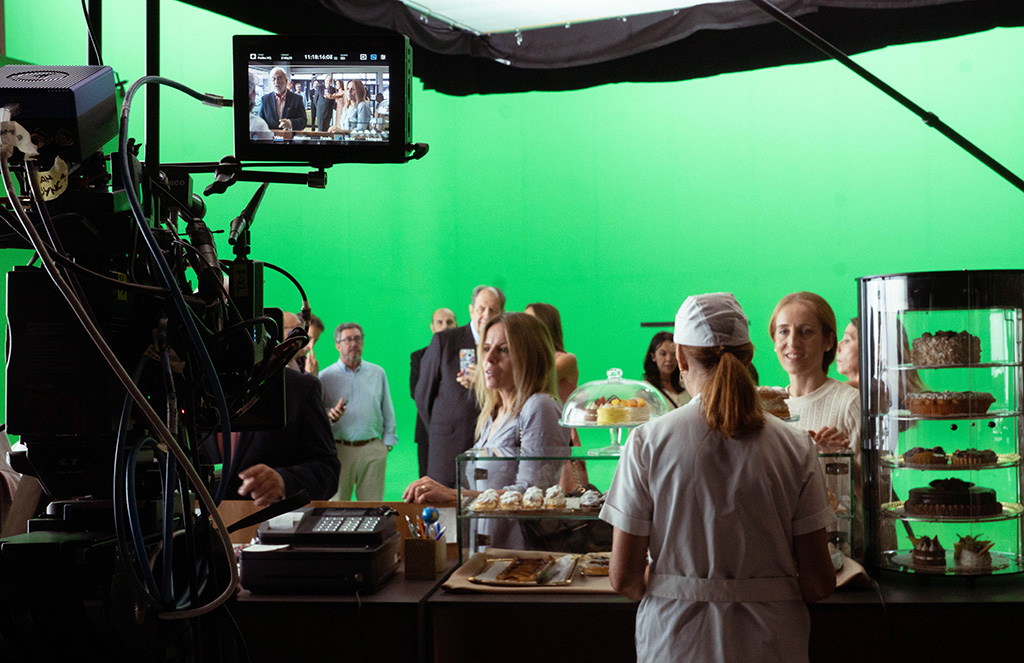
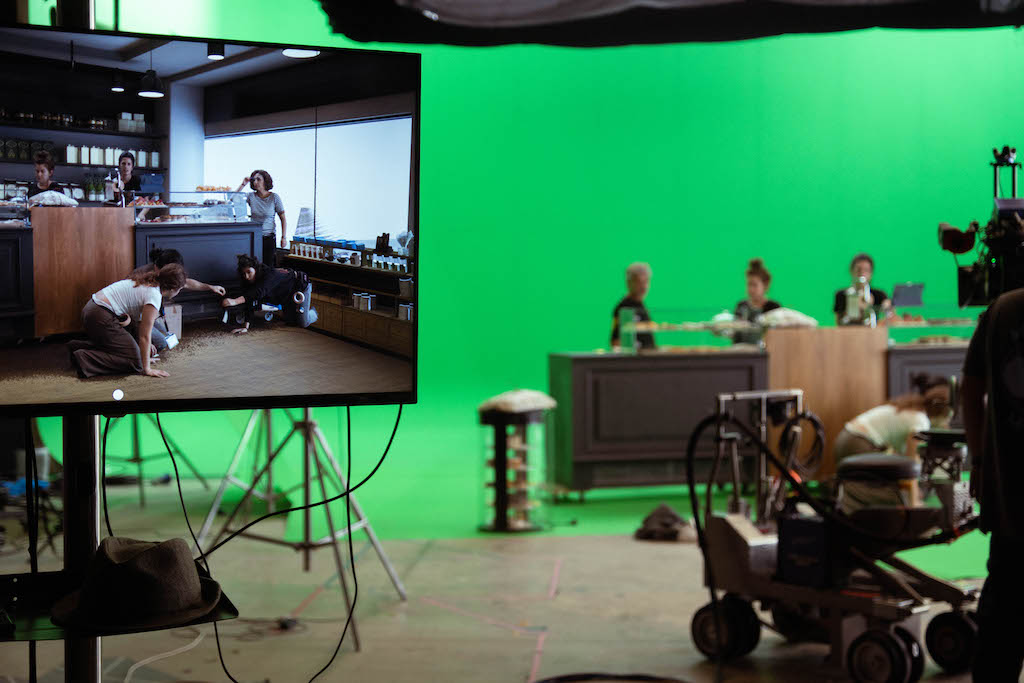
Una de las decisiones clave que tuvo que tomar el equipo creativo y tecnológico de our father fue decidirse por una de las dos modalidades de producción virtual según los requerimientos de cada escena. El 3D virtual, realizado en green screens, permite crear un entorno completamente virtual permitiendo modificar todas las condiciones lumínicas y de entornos, si bien suponía un esfuerzo de creación y producción más intenso que el ofrecido por las LED screens, un recurso más directo, pero con problemáticas asociadas para el guion de este largometraje.
Mario Montero: "He LED está muy bien, pero es más limitado para ciertas cosas. Por ejemplo, no tienes tanto control para la luz que emana la propia pantalla”.
“El LED está muy bien, pero es más limitado para ciertas cosas. Por ejemplo, no tienes tanto control para la luz que emana la propia pantalla, ni puedes diseñar la luz con tanta precisión”, comenta Montero, si bien considera que estos soportes son una “delicia” para la presentación de ciertos paisajes o para los trayectos en coche. Bergada, reflexionando sobre ambas vertientes, considera que, si bien el LED Wall es una “ventana” que permite asomarse al mundo virtual, el croma es “100% inmersivo”. Por estos motivos, se optó por rodar los interiors of our father con la opción del 3D virtual, mientras que, para los exteriores y espacios más amplios, se decidió optar por los volúmenes LED, independientemente de si estos espacios iban acompañados de elementos escenográficos adicionales.
La producción virtual para el director de fotografía
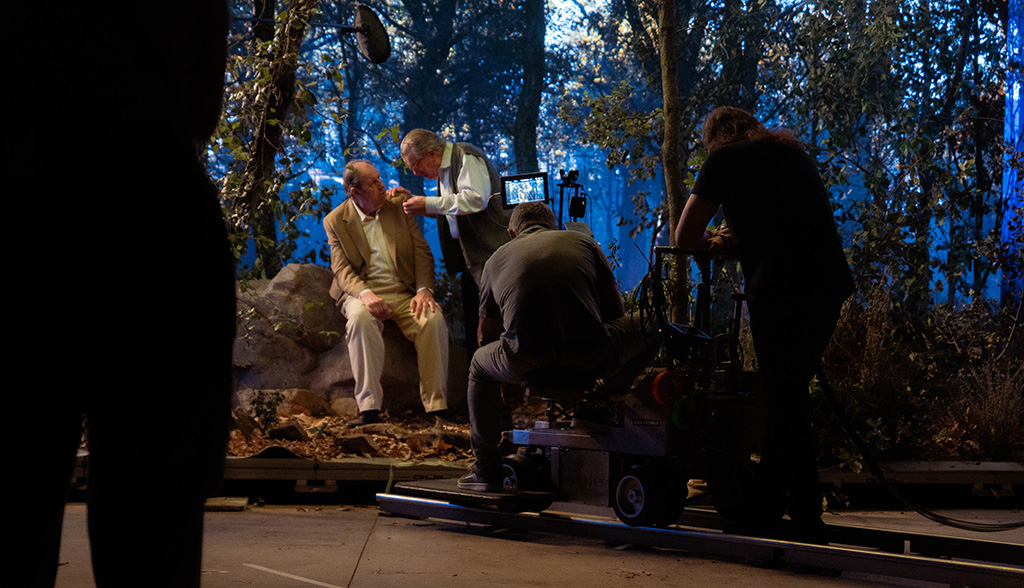
Los dos primeros días de rodaje en este entorno de producción virtual fueron especialmente complejos para Montero. Superó todos los desafíos con solvencia y se mostró encantado con las capacidades de iluminación y adaptabilidad de este tipo de entornos para sus necesidades, ya sea añadiendo puntos de iluminación en los entornos 3D o jugando con los tótems laterales y las pantallas cenitales del entorno LED de Mediapro. El problema llegó al terminar cada jornada de grabación: “El primer día de rodaje ves la escena sin ver nada. Pero, por el sistema, pegas el ojo en la lupa y lo ves todo decorado. Recuerdo que, al terminar de rodar, salía del estudio caminaba por la calle como flotando, preguntándome: “¿Será real todo esto?”. Es como subirte a un barco durante el día y bajarte manteniendo esa sensación sobre tierra”.
Mario Montero: “Recuerdo que, al terminar de rodar, salía del estudio caminaba por la calle como flotando, preguntándome: “¿Será real todo esto?”. Es como subirte a un barco durante el día, y bajarte manteniendo esa sensación sobre tierra”.
Al margen de estas sensaciones, Montero transmite fascinación por todos los procesos descubiertos durante la realización de our father: “Aprovechaba todo lo que veía y funcionaba”. El director de fotografía define la iluminación de escenas íntimas, como la del cuarto de Jordi Pujol y su mujer, Marta Ferrusola, como “superfácil y rápida”, permitiéndole crear ambientes instantáneamente que le evocan a la obra de Edward Hopper: “Me dio muchísima agilidad. Partiendo de una estructura de un diseño de luz y de unos límites arquitectónicos, podía seguir creando sobre lo preconcebido”.
En ocasiones, los virtual environments permitieron a la dupla de Huerga y Montero redefinir los planos inicialmente planteados, lo que les hizo replantarse la forma de encarar sucesivas escenas de la producción. Así recuerda Bergada el descubrimiento: “Puedes mover la cámara en cualquier dirección, por la continuidad del set digital. Hubo momentos en que estábamos rodando el comedor donde la familia se sienta a comer, Mario puso la cámara a 90º sin mirar y, de golpe, por el monitor se vio una estantería con unas fotografías. En ese momento, Mario dice: “¿Qué es esto?” “¿Dónde está?”, porque no era consciente de todo lo que incluía ese entorno virtual. Hizo el movimiento de cámara y Manuel lo compró al momento”.
Adaptando la técnica cinematográfica a los entornos virtuales
Inicialmente, Montero abordó la elección de la cámara para rodar our father con absoluta libertad. El guion y el planteamiento de Huerga lo empujaban a buscar una cámara orgánica, que le recordara al trabajo “con emulsión, con película”. El director de fotografía escogió la ARRI Alexa 35, una solución óptima por el lenguaje de la óptica o la distancia focal en relación al tamaño del sensor. A continuación, el equipo de Grup Mediapro ratificó su decisión tras comprobar que las opciones de genlock, sistema utilizado para sincronizar señales de vídeo entre múltiples dispositivos, se adaptaban a la perfección a los entornos virtuales en los que iban a operar. En lo que respecta a las ópticas, Montero se decantó por las Leica Summilux, especialmente por las gradaciones tonales aplicadas a las pieles que aportarían el tono orgánico del largometraje.
Bergada, como coordinador de producción virtual de Grup Mediapro, aportó dos entornos de producción. Por un lado, el plató de producción virtual ICVFX apoyado en soluciones de Unilumin; un entorno de producción cuyas dimensiones y capacidades han ido mejorando con el paso de los meses hasta contar en la actualidad con una superficie de 18,5 x 6 metros, a lo que se suman varios paneles cenitales móviles y tótems laterales. Este entorno se complementa con sistemas de traqueo de Mon-Sys y EZtrack, si bien, para esta producción, se optó por un sistema de infrarrojos en vez de marcadores para favorecer la agilidad en montajes y desmontajes. Mientras que para la gestión de las imágenes se optó por un desarrollo propio de Mediapro llamado HRC, el entorno de croma, de 16 metros, se apoyó en los motores gráficos Unreal Engine, coordinados con los mismos sistemas de seguimiento del plató LED.

El aprendizaje de una tecnología todavía emergente
Partiendo de que en los procesos creativos la perfección es tan subjetiva como inalcanzable, las características técnicas del rodaje de our father han llevado a producir una cinta imperfecta, propia de las dificultades de una tecnología palpable y real, pero todavía en sus primeras fases de implementación. Para Montero, el proceso de aprendizaje en estos entornos es “infinito”, al igual que lo ha sido su labor como director de fotografía durante los últimos 30 años en un contexto de evolución tecnológica.
Sin embargo, la mayor lección que extrae de este proceso ha sido la elección entre LED y croma según las necesidades de cada escena, una labor en la que ha estado acompañado de Xes Vilà, supervisor de producción virtual en Grup Mediapro. Como ejemplo, una escena que ha llegado al montaje final en la que Jordi Pujol se queda mirando la montaña Pedraforca en un atardecer y, al haber escogido la opción LED frente al croma, acaba resultando en un light treatment que no acaba de convencer al director de fotografía: “Hay que levantar la mano y decir: “Esto hubiera funcionado de una manera brutal si se hubiera hecho con el croma”. Hubiera dado distancia a la luz en exterior. Es necesario contar este error, porque también aporta para el aprendizaje”.
Desde la perspectiva del proveedor de servicios, Bergada considera que ha sido fundamental el advice desde las primeras fases del proyecto. El responsable de producción virtual en Mediapro considera imprescindible esa “confianza mutua”, así como haber marcado unos límites “muy estrictos” en la producción, que luego se fueron desdibujando en tanto que extraían el máximo posible de una tecnología cuya potencialidad completa todavía está inexplorada.
Postproducción con producción virtual
A la hora de enfrentar el montaje, VFX y etalonaje del film, el equipo de our father solo se ha encontrado con facilidades, hasta el punto de que Absolute Minority ha certificado una mejora significativa de los tiempos de postproducción. Más allá del montaje, realizado diariamente por Manuel Huerga con el apoyo de Gus Alcocer, los visual effects se pudieron aplicar de forma muy rápida gracias al flujo de trabajo sincrónico para entornos croma de Grup Mediapro: “Guardamos todas las capas por separado, incluyendo mate o movimiento de cámara, lo que da libertad a los creadores de poder hacer modificaciones hasta el infinito, hablemos de la decoración del comedor o el tamaño del marco de una ventana. Si hubieras rodado con un croma tradicional, hubieras tenido que multiplicar por más de dos todo el proceso de postproducción”.
Isaac Bergada: “Con esta técnica, los creadores vienen, ruedan su película y se tienen que olvidar de que estén disparando en LED o en croma. Únicamente se deben preocupar de que la cámara transmita lo que ellos quieren”.
Las partes rodadas con entornos LED sí que llevaron un proceso de postproducción más tradicional, pero no más complicado que un rodaje tradicional. Como traslada Montero: “Se me hizo muy orgánico. No sentí límite alguno y, a nivel de temperatura, lo sentí como una película normal. (…) Trabajé con Pepín (Ndr: José Pedraza), que es un crack y con quien ya he hecho otras películas. El color entró como una seda”.
Bergada y el equipo de Grup Mediapro consideran necesario evangelizar y derribar mitos sobre este tipo de producción. El objetivo de la compañía es eliminar “la capa tecnológica” al artista o creador, para que se despreocupe de conceptos tecnológicos y pueda desplegar su creatividad. “Con esta técnica, los creadores vienen, ruedan su película y se tienen que olvidar de que estén disparando en LED o en croma. Únicamente se deben preocupar de que la cámara transmita lo que ellos quieren”.
¿Pueden derribarse los límites?
El rodaje de un largometraje íntegramente con técnicas de producción virtual está más cerca de convertirse en una alternative para equipos de producción que buscan reducir costes a la hora de realizar grandes localizaciones y desplazamientos por todo el mundo, o para favorecer la comodidad de los equipos de producción centralizando la mayoría de los esfuerzos en una única localización. Hay que tener en cuenta, aun así, que la industria se encuentra frente a una tecnología que, aún con grandes ejemplos de su aplicación, como la serie The Mandalorian o varias escenas de películas como Poor Things, has important limitations propias de su naturaleza o de la evolución tecnológica de los componentes técnicos que lo rodean.
Mario Montero: “Vivimos en un mundo en el que el espectador está muy entrenado visualmente. Mi hija hace virguerías con los móviles. Pero lo importante es que lo que nos salga de dentro tenga un sentido narrativo real; que puedas explicarlo narrativamente y con transparencia”.
“Hay que saber adaptar las limitaciones para tu creatividad y para tu manipulación”, considera Montero, apuntando que, mientras que los entornos de croma sí que le ofrecen todas las posibilidades creativas que pueda imaginar, las pantallas LED podrían seguir avanzando en la reproducción exacta de las temperaturas de color, con sus respectivas consecuencias en procesos como la iluminación. Por su parte, Bergada considera naturales estas restricciones y las relaciona con la naturaleza propia del progreso tecnológico: “Desde que rodamos la película, hemos ampliado nuestros sistemas de tracking; hemos mejorado nuestras instalaciones y tenemos más de 200 metros cuadrados de LED; los técnicos también han evolucionado y han adquirido y entrenado habilidades nuevas. Nuestra tarea es intentar que el equipo esté siempre preparado para cuando vengan personas como Mario y nos pongan retos por delante”.
“Vivimos en un mundo en el que el espectador está muy entrenado visualmente. Mi hija hace virguerías con los móviles. Pero lo importante es que lo que nos salga de dentro tenga un sentido narrativo real; que puedas explicarlo narrativamente y con transparencia. Esa es una forma de trabajar más madura”, sentencia Montero, confiando en que el progreso de las técnicas de virtual production pueda seguir acompañándole en todos sus procesos creativos.
A report by Sergio Julián Gómez
Did you like this article?
Subscribe to our NEWSLETTER and you won't miss anything.
Related articles
 Filming begins on 'In Vitro', the new series from Moiré Films and Rodar y Rodar with the participation of 3Cat
 TRG Multimedia enters virtual production with Disguise Studio Pro
 Grup Mediapro's virtual production set in Barcelona debuts a 210 m2 LED screen
 90% of the feature film 'Daddio' by Dakota Johnson and Sean Penn, shot with virtual production and technology from Disguise
 Mo-Sys will bet at IBC to revolutionize virtual multi-camera production
 Multiple sclerosis sufferer Joe Ramsden broadcasts his London Marathon feat live with LiveU
 'Parenostre', the first European film shot entirely with virtual production, concludes its filming at the Grup Mediapro facilities
 Rodar y Rodar begins production of 'Mala persona', directed by Fer García-Ruiz
 Absen exhibits its Led Digital Virtual Studio for virtual production at IBC 2022
 Mo-Sys technology allows Papertown to fly from a virtual plane
 Mediapro produces the Classic for the first time entirely in 4K-HDR quality
 “The most complicated thing was filming in Puerta del Sol,” acknowledges Carlos Bernases, production director of ‘Las Brujas…’
 NewTek brought Nik Wallenda's feat over the Grand Canyon to the whole world
 Guillermo del Toro once again partners with Rodar y Rodar