





The MKH 8018 stereo shotgun microphone, Sennheiser's latest addition to its MKH 8000 series
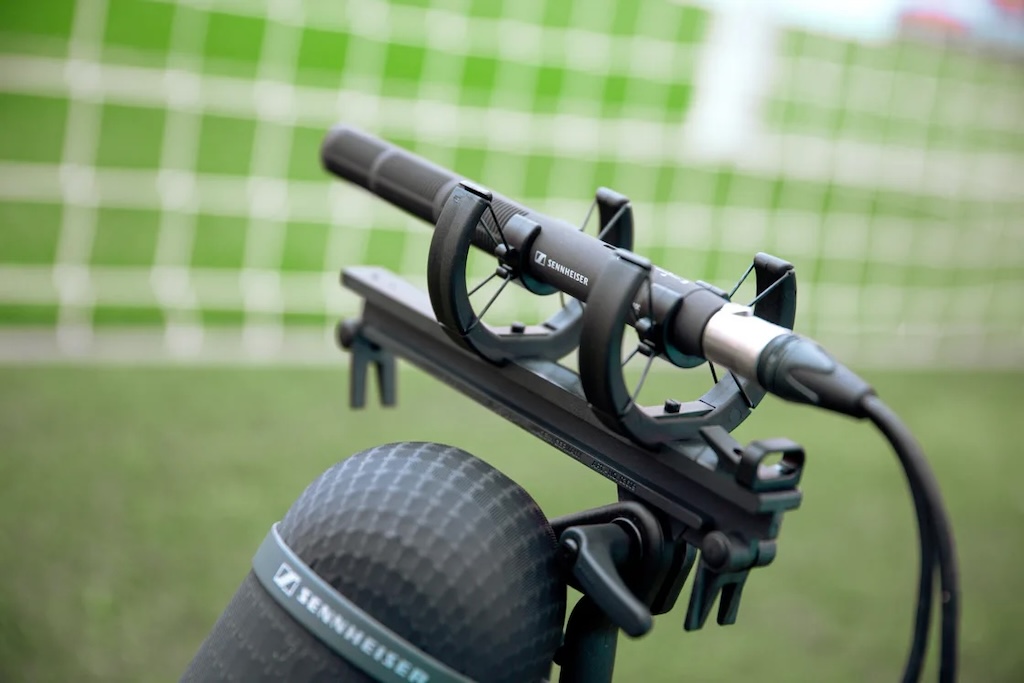
An IBC 2025, Sennheiser will present its audio solutions for the creation of professional multimedia content and entertainment experiences. Among the new features, the MKH 8018 shotgun microphone stands out.
Following Sennheiser's MKH 8030 figure-eight microphone, broadcasters and filmmakers can now discover the latest addition to Sennheiser's MKH series of RF condenser microphones, the MKH 8018 stereo shotgun microphone. This rugged, weatherproof shotgun microphone offers audio engineers flexibility and features three switchable stereo modes: MS stereo, for continuous adjustment of the spatial image, and wide or narrow XY stereo, which come pre-mixed into the MKH 8018 with settings that have been refined and verified in multiple user field tests. An integrated -10 dB attenuator, a Broadcast frequency response of 40-20,000 Hz and a compact, lightweight aluminum housing complete this exceptional professional microphone.
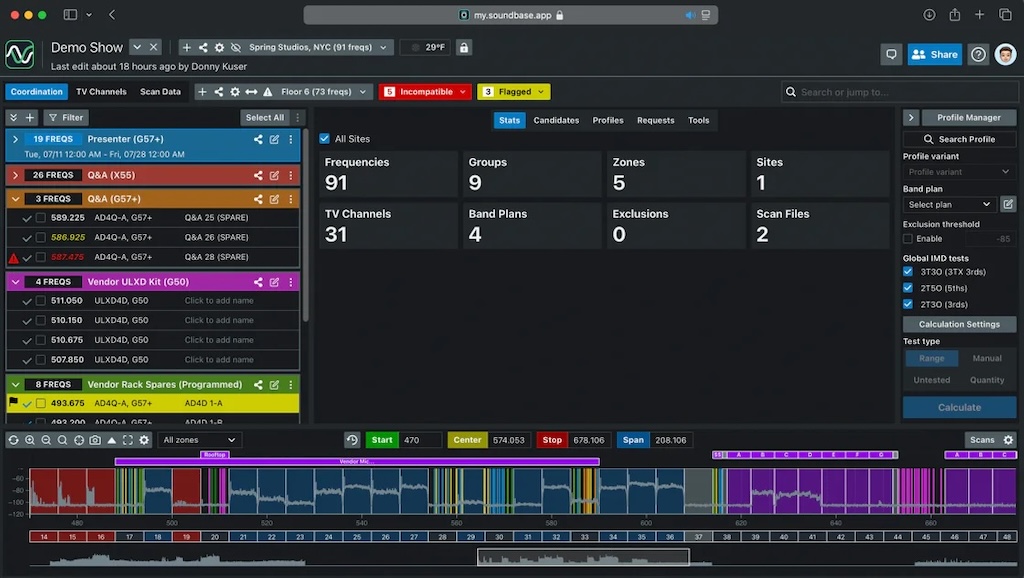
SoundBase
The Sennheiser team will show SoundBase, its new wireless audio management software, in Amsterdam. To coordinate wireless microphones and monitors on a production today, RF managers and monitoring engineers still have to navigate multiple software tools to configure wireless technology brand by brand.
Developed by audio veterans Matt Dale y Donny Kuser, the app integrates with equipment from leading manufacturers, eliminating the need to switch between multiple apps, especially during critical moments in production. Optimizes wireless coordination, centralizes communication and enables seamless remote collaboration.
The planning tool RF SoundBase y Spectera, the world's first two-way wireless broadband ecosystem, will be presented on Friday, Saturday and Sunday of the show.
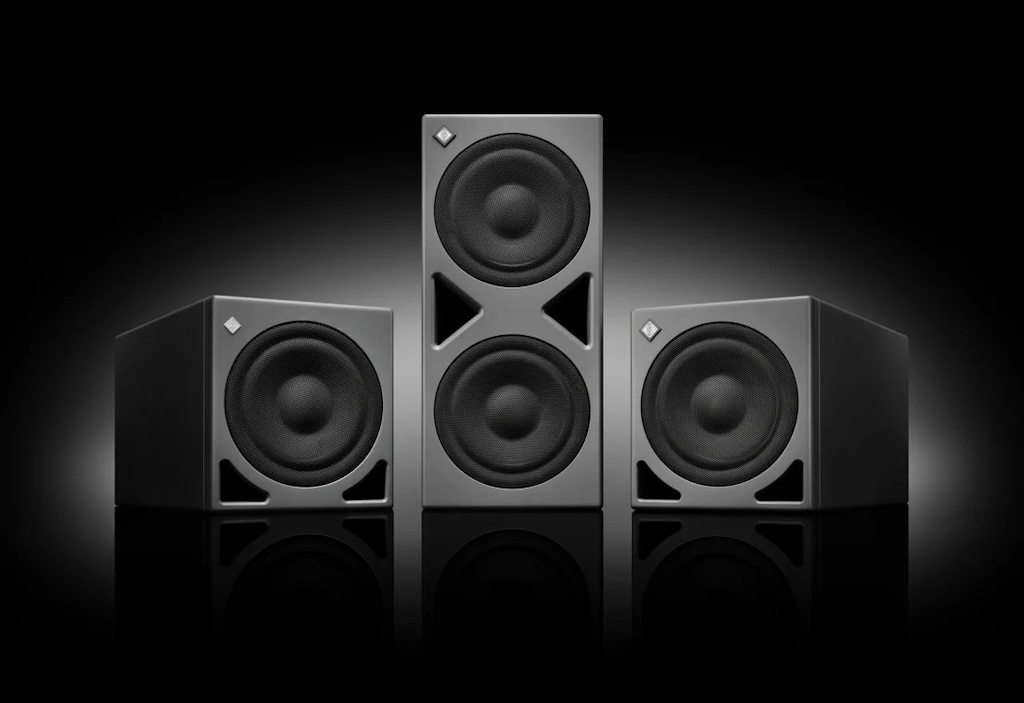
Neumann’s presence in IBC
As for the Neumann brand, it will present its range of studio monitors in a dedicated area with an immersive configuration 7.1.4. This includes a new subwoofer with multi-channel bass management, which will be launched at IBC.
Of course, Neumann will also present a wide variety of its microphones, including the broadcast microphone BCM 104, capsules for wireless systems, MCM miniature clip-on microphones, TLM 102 and TLM 107, as well as a selection of their legendary classics, such as the U 87 Ai, U 67, U 47 fet and M 49 V. And they will also show the KU 100 binaural head, now 34 years old and still the easiest way to produce incredibly realistic immersive audio.
Como parte del área de estudio inmersivo/unidad móvil, Merging Technologies, parte de Neumann, presentará el DAW Pyramix 15, junto con la interfaz de audio modular Hapi Mk III. También se mostrarán las interfaces de audio de escritorio Merging Anubis y Neumann MT 48, que incluyen las funciones de control OSC recientemente añadidas, lo que permite controlar de forma remota los movimientos de los faders y otros cambios de parámetros a través de controladores de hardware de terceros.
El área de estudio, que funciona con una red Ravenna AES 67, está conectada a una segunda área de demostración de Neumann/Merging, que cuenta con una red Dante AES 67. Aquí, los visitantes podrán probar el nuevo plug-in RIME de Neumann, que permite una monitorización inmersiva con los auriculares NDH 20 y NDH 30.
También se mostrará el sistema de reproducción y secuenciador Ovation of Merging, of last generation. The recently released version 11 features a bold new design with a refined dark mode interface and optimized usability. The updated and fully customizable mixer, panner and renderer allow users to adapt busses, strips and aux channels to any workflow, whether for stereo, multi-zone or immersive formats.
AMBEO 2-Channel Spatial Audio
Delivering immersive audio experiences without segmenting the audience or complicating the signal chain remains a key challenge for live broadcasters. The AMBEO 2-Channel Spatial Audio live renderer solves this problem by enabling real-time rendering of immersive content in a stereo-compatible AMBEO format. The two-channel output preserves spatial depth and location signals, optimized for playback in any stereo system, and improves speech intelligibility, without the need for decoding or additional hardware.
Using its proprietary immersive audio algorithms, AMBEO generates a hardware-independent, downstream-compatible signal that preserves the creative intent and immersive quality of the original mix. Broadcasters and streaming providers can maintain the stereo delivery path while offering a significantly improved listening experience.
Did you like this article?
Subscribe to our NEWSLETTER and you won't miss anything.
Related articles
 The MKH 8018 stereo shotgun microphone, a great novelty from Sennheiser at NAB 2025
 Eva Tovar, latest addition to the unscripted area of Secuoya Studios
 Sennheiser delivers pristine sound with new MKH 8030 RF condenser microphone
 Sennheiser strengthens the MKH 8000 condenser microphone series with a filter module
 This is Beyond Sports, Sony's latest addition to the sports world
 MBM uses the Sennheiser MKH 8000 series in its daily operations
 Sennheiser redesigns its popular MKE 400 shotgun microphone
 RTS presents the DBP (Digital Beltpack), latest addition to its Omneo IP line
 Sennheiser MD 435: the famous sound of the MD 9235 capsule now in a cable microphone
 Simplylive launches ViBox Micro, the latest addition to its range of ViBox production solutions
 Sennheiser launches a waterproof microphone for GoPros
 Sennheiser MKE 440: a DSLR microphone designed for focused stereo sound capture of the filmed object
 HXR-NX100, the latest addition to Sony's NXCAM range of professional camcorders
 Pure sound with the Sennheiser filter for MKH 8000 microphones