





Hitomi expands sync challenges with MatchBox
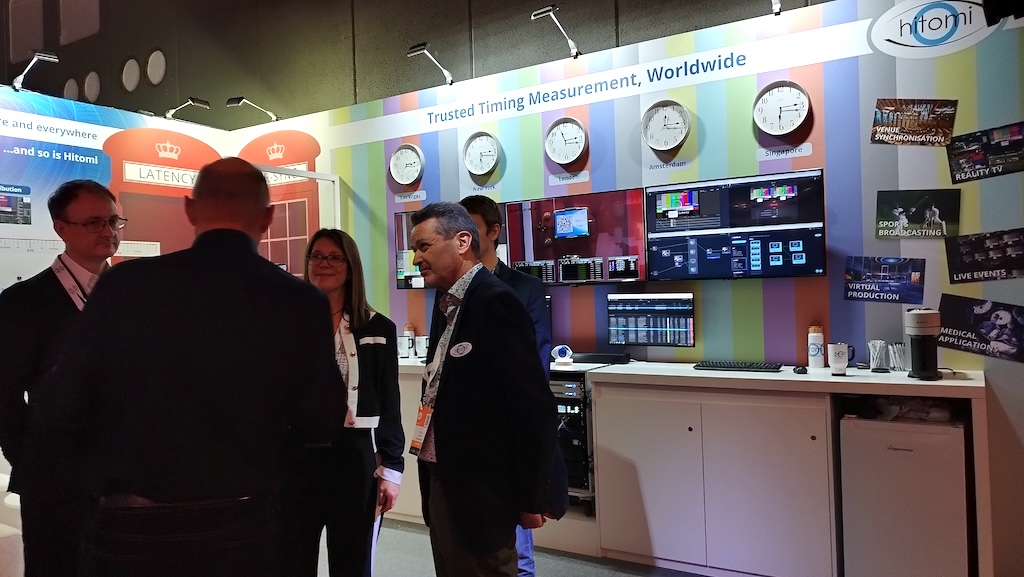
La migración a la producción basada en software ha introducido un problema fundamental: ¿cómo se mide con precisión la sincronización en entornos virtualizados? Hitomi ha ofrecido respuesta a este reto en IBC 2025 con su nueva solución MatchBox.
Los flujos de trabajo tradicionales requieren que las señales de vídeo se envíen fuera de las plataformas en la nube y se conviertan de nuevo a SDI para su análisis, un proceso que puede introducir los mismos errores de sincronización que se intentan detectar.
La colaboración de Hitomi con Grass Valley Alliance representa un gran avance en este reto. Las soluciones de MatchBox Software ahora se integran de forma nativa en los ecosistemas AMPP, lo que permite la medición de la sincronización in situ directamente en la infraestructura de software. Sin conversión de señales, sin enrutamiento externo, sin comprometer la precisión.
Matthew Yates, director de Alianzas Estratégicas de Grass Valley, afirma que “la gestión de la sincronización y la latencia es una de las principales preocupaciones de la migración a la producción en la nube. Las soluciones MatchBox de Hitomi demuestran exactamente el tipo de integración para el que se ha creado la Alianza: ofrecer la medición de sincronización precisa que necesitan las emisoras, al tiempo que funcionan a la perfección dentro de los flujos de trabajo AMPP”.
ORF y BBC
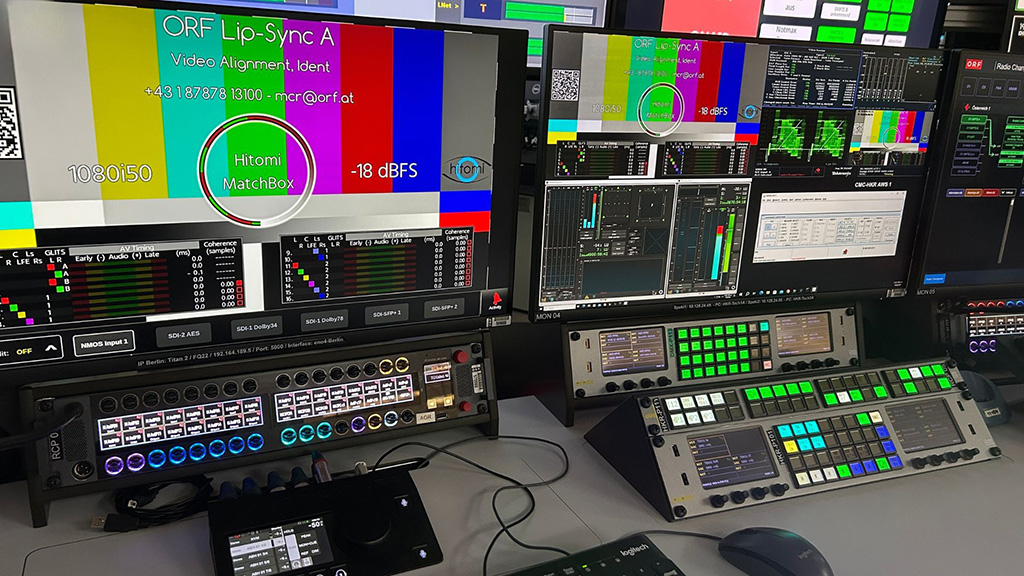
Uno de los primeros usos de MatchBox lo ha llevado a cabo el broadcaster público austricaco ORF que está llevando a cabo muna transformación integral de los sistemas tradicionales de banda base a SMPTE ST 2110. La escala abarca estudios regionales en toda Austria, el moderno Centro de Gestión de Contenidos de Viena, operaciones de radio, instalaciones de reproducción y salas de redacción multimedia. ORF ha sido pionera en aplicaciones que traspasan los límites, como la medición de las diferencias de sincronización entre ocho televisores diferentes para eventos como el Concierto de Año Nuevo de Viena, visto por audiencias de 160 países, lo que garantiza una sincronización perfecta tanto si los espectadores lo ven en Viena como en Tokio.
Alexander Frank, responsable de planificación de proyectos y planificación técnica para tecnología de radiodifusión en ORF, explica que “estamos llevando a cabo una transformación completa de la infraestructura, pasando de los sistemas tradicionales de banda base a una red ST 2110 integral. La diferencia entre el funcionamiento de la banda base y el de ST 2110 es mínima con MatchBox: es el mismo funcionamiento, el mismo uso. Podemos utilizarlo en ambos entornos, lo que fue esencial durante nuestro periodo de transición”.
Por otro lado, la reciente migración de las operaciones del canal de noticias de la BBC de Broadcasting House a Red Bee Media demuestra cómo la tecnología MatchBox agiliza el complejo análisis de sincronización. Lo que antes requería métodos engorrosos que implicaban relojes sincronizados por GPS y pilas de monitores, ahora se realiza con precisión y eficiencia.
Oliver Rook, de la BBC, reconoce que “antes de que se concibiera el sistema MatchBox Glass, habíamos realizado estas pruebas utilizando métodos rudimentarios y engorrosos que implicaban relojes sincronizados por GPS en la visión y pilas de monitores delante de las cámaras. El uso del sistema Hitomi fue una forma mucho más fácil de obtener mediciones generales del retraso que los métodos que habíamos empleado anteriormente y permitió recopilar una serie de puntos de datos más granulares”
Desde Hitomi destacan que a medida que los flujos de trabajo de radiodifusión se definen cada vez más por el software, la verificación de la sincronización debe evolucionar en consecuencia. Nuestras soluciones de software representan esta evolución, aportando la precisión y la fiabilidad del hardware MatchBox a entornos en los que la medición tradicional simplemente no es posible. El resultado es la medición en todas partes: desde los centros de radiodifusión tradicionales hasta las plataformas en la nube. Porque cuando la sincronización lo es todo, no hay lugar para las concesiones.
Did you like this article?
Subscribe to our NEWSLETTER and you won't miss anything.
Related articles
 ORF entrusts the synchronization of its new ST 2110 infrastructure to Matchbox (Hitomi)
 Hitomi to debut MatchBox compatibility with SMPTE ST 2110 at IBC 2024
 Australian Matchbox Pictures opts for Avid Edit On Demand cloud solutions
 MatchBox lip sync solution (Hitomi) will preview its future at NAB 2024
 Hitomi Broadcast refuerza la medición de sincronización labial basada en la nube
 MatchBox Latency, the solution that Hitomi will present at IBC, allows you to measure latency with millisecond precision
 Voxx Studio uses Blackmagic's Pocket Cinema Camera 4K to synchronize dubbing projects
 NEP Connect adds a Hitomi MatchBox to its MediaCity Network Operations Center
 Viacom synchronized the audio and video of the 2019 MTV Europe Music Awards with Hitomi's MatchBox
 UltraSync Blue lleva la potencia de la multicámara profesional y la sincronización de audio al iPhone
 AJA solves frame conversion and synchronization for HDR and WCG
 Timecode will present new tools for synchronization on ISM sub GHz bands at IBC 2015
 JVC's GY-HMQ10 4K camera in a 360-degree vision system for Matchbox Twenty
 IBE360º o cómo rentabilizar la sincronización entre televisión, Internet y móvil