





Ikegami takes a step in SDI and IP integration with the IPX-100 mini base station
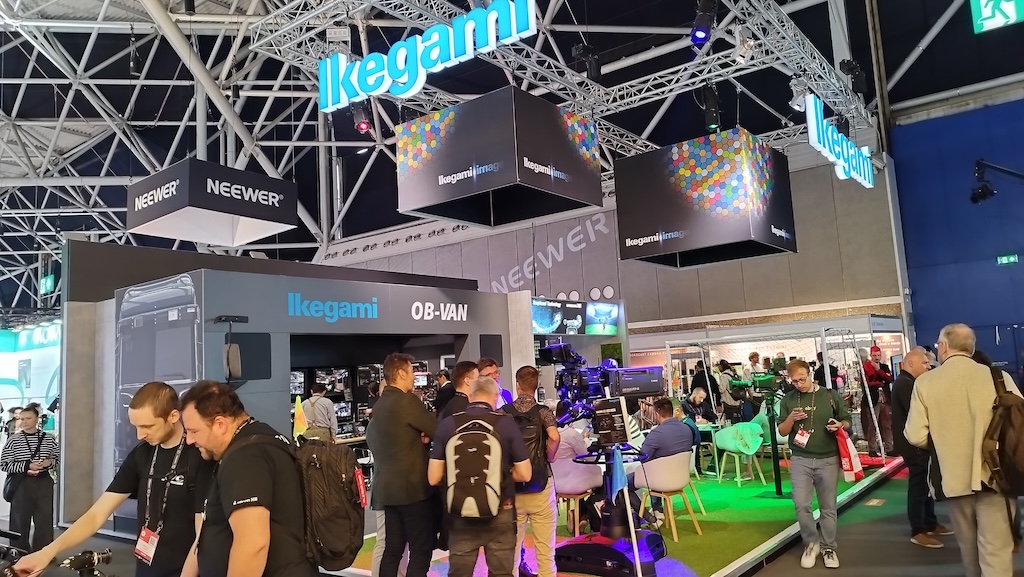
The IPX-100 mini base station Ikegami has made its debut at IBC 2025 as an efficient bridge between SDI and IP production infrastructure.
Michael Laetzsch, director of the broadcast and professional video division at Ikegami Europe, highlights that it combines the main features of the industry-proven BSX-100 base station with support for media over IP. At just 2U tall and half the width of a 19-inch rack, the IPX-100 is one-third smaller than the BSX-100 and is ideal for use in mobile production vehicles, REMI control rooms, studios in the city center or anywhere where space is limited.
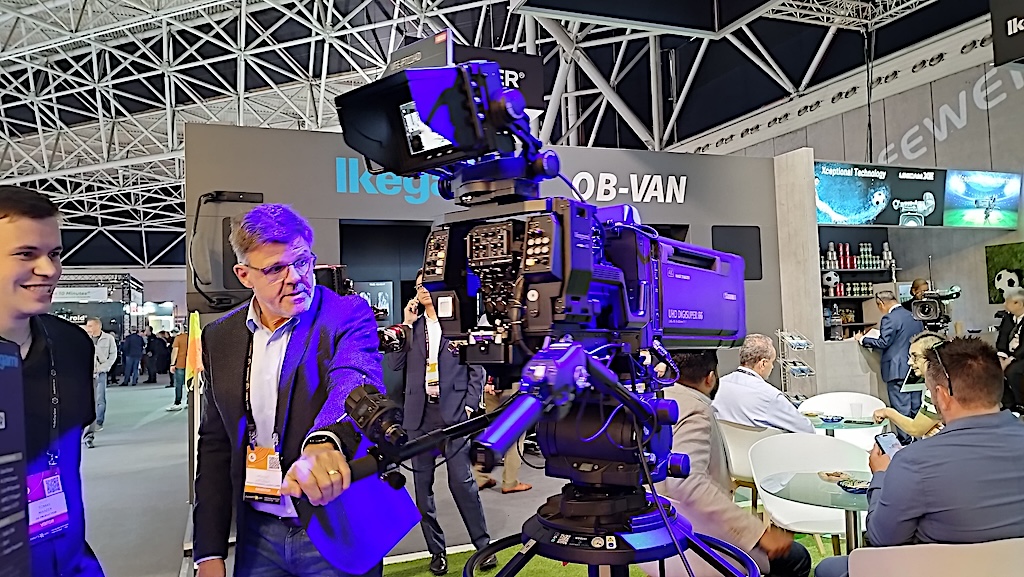 A UNICAM camera can power an IPX-100 over a conventional SMPTE hybrid fiber cable of up to 3.5 km. The camera head is powered by IPX-100. A built-in test signal generator allows you to configure the system before connecting a camera or other SDI source. Support for ancillary data to and from the camera is also included. An HD-SDI video monitoring output allows direct connection of a field monitor to the IPX-100, making initial setup easy.
The connection of a panel Ikegami OCP-300 u OCP-500 via Ethernet to the IPX-100 allows you to easily control the zoom and focus of a remote camera, even if an IP connection to the broader ST 2110 infrastructure has not yet been established. A personal computer running the Google Chrome web browser can be simultaneously connected to the network hub, allowing system monitoring through the Ikegami XE Web View service provided by an optional protocol gateway. Automated configuration can be performed using an IS-04/IS-05 NMOS feed from the IPX-100 to a local or remote central automation system.
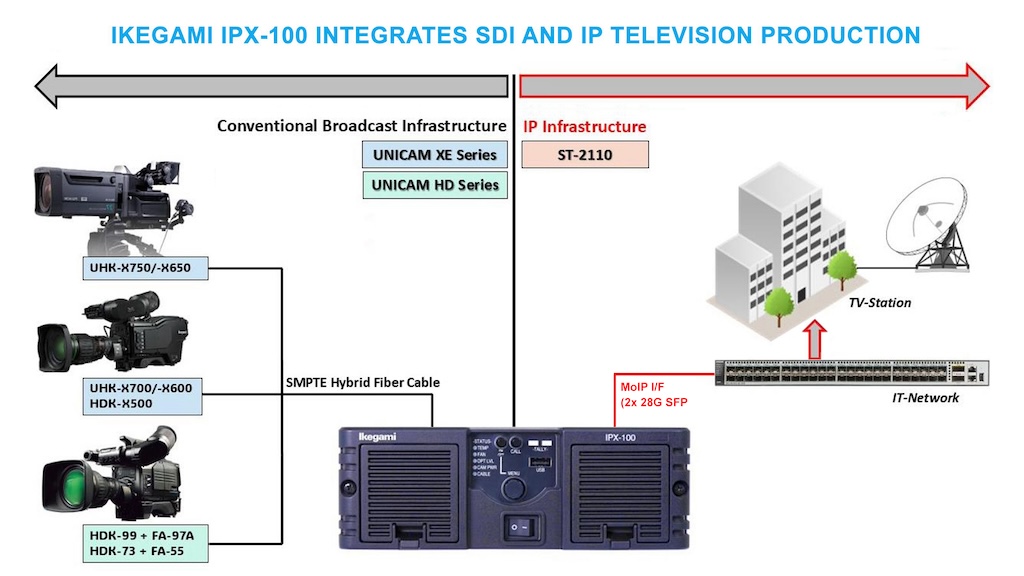
Three versions
There are three versions of the IPX-100 available: IPX-100H for HDK-X500 cameras and the latest UNICAM HD cameras, IPX-100U for UNICAM-XE 4K/UHD cameras and IPX-100M for UNICAM-HD and UNICAM-XE models.
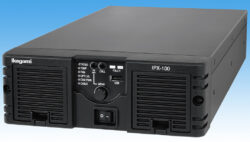
The front panel of the IPX-100 provides access to the control menu. This includes LED indicators that show the current status of the unit, as well as a call button and a red/yellow status indicator. Ikegami allows you to add options per license through the USB connector:
• The option IPXOP-130 includes a 12G/QTV video trunk channel. The IPXOP-131 option is mandatory for this feature.
• The option IPXOP-131 provides support for JPEG-XS compression (SMPTE ST2110-22 compliant), allowing the signal transmission bandwidth to be adapted to the available bandwidth of the IT infrastructure. The compression ratio can be selected from high (1/6), medium (1/8), low (1/16) or minimum (1/32). JPEG-XS performs visually lossless compression with ultra-low encoding/decoding latency and is more power efficient than other compression schemes.
• The option IPXOP-132 allows upscaling from 1080p HD to 2160p UHD.
• The option IPXOP-133 Provides simultaneous HD output including 3D LUT, supporting 33 x 33 x 33 or 65 x 65 x 65 cubic files.
• The option IPXOP-134 allows the IPX-100 to perform SDI to IP and IP to SDI conversions.
UHK-X700RF
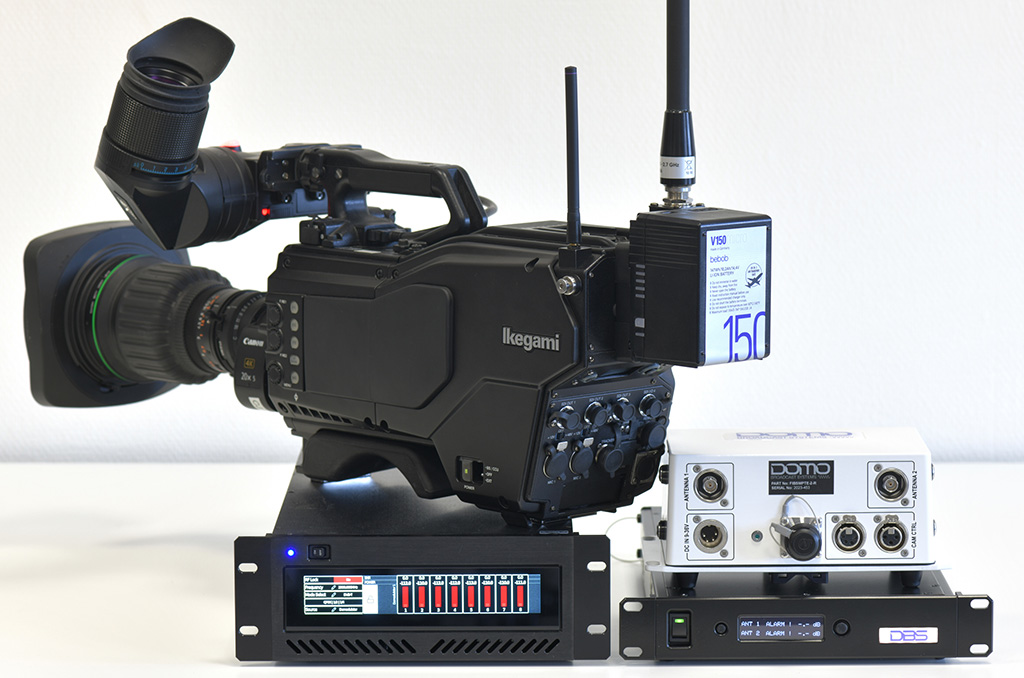
For the first time at IBC, Ikegami has showcased the latest addition to its UNICAM-XE product range with the introduction of the UHK-X700RF wireless handheld camera. It has the same features, operational ergonomics, compact size and light weight as its UHK-X700 cable counterpart.
It is equipped with a native UHD sensor (3840 x 2160 pixels) with a global shutter architecture designed to capture natural images even in difficult situations. The wireless camera supports UHD (2160@50p/59.94p) and HD (1080@50p/i, 59.94p/i) frame rates as a standard feature. Like all other cameras in the UNICAM-XE family, the UHK-X700RF features a double filter wheel which allows separate control of incoming light and color temperature. Space is included to mount any desired effect filter or an optical low-pass filter to further reduce aliasing and moiré artifacts. Additionally, it supports automatic optical vignetting correction when using OVC-compatible B4 bayonet mount zoom lenses.
He The UHK-X700RF transmitter operates in the 2 to 2.7 GHz band, accessible in 250 kHz tuning steps, with a 100mW output power. The two antennas mounted on the rear of the camera comprise one for the main video signal and a smaller one for telemetry data. Multi-channel antenna diversity is a standard feature that provides robust signal transmission in a wide range of transmission environments. Encoding is fast, typically just 40ms from input to output at UHD or HD resolution. Transmission range in a standard configuration is approximately 550 yards. If the receiving antennas are located far from the base unit, it is possible to cascade several IP-Mesh data transceivers. In this way, up to 22 transceivers can be used in a single system.
Did you like this article?
Subscribe to our NEWSLETTER and you won't miss anything.
Related articles
 DJI launches Mini 5 Pro drone: UHD recording and one-inch CMOS sensor in mini size
 The VFE-P711AD joins the Ikegami family of multi-format monitors
 Ikegami once again bets on the IPX-100 mini base station for IBC 2025
 TED upgrades its intercom system with Clear-Com's Arcadia central station
 Clear-Com integrates HelixNet into its Arcadia station, which now supports more than 100 beltpacks
 AJA boosts its Mini-Converter line with Mini-Config v2.26.3 update
AJA powers its Mini-Converter through the Mini-Config v2.26.3 update
AJA boosts its Mini-Converter line with Mini-Config v2.26.3 update
AJA powers its Mini-Converter through the Mini-Config v2.26.3 update
 How to make a Time Lapse, step by step
 Ikegami launches BSX-100 3G fiber base station
 Eutelsat takes another step in satellite integration within the IP ecosystem with the launch of Cirrus
 How to view 32 computers from a single individual workstation?
 TVU expands TVUPack Mini integration to more professional cameras
 New EF-204 4-channel Master station for the Altair E-200 Series
 Techex and Tecnon give life to the Chamberí station 40 years later