





NHK surprises at the 4K HDR Summit with an immersive experience in 30K and 360º
Durante la tercera jornada de la 4K HDR Summit, primera en formato virtual, se habló de sostenibilidad, audio inmersivo, nuevas experiencias de producción y retransmisión e inteligencia artificial, tecnología esta última por la que apuestan la gran mayoría de las compañías como técnica que marcará el futuro de la Ultra Alta Definición.
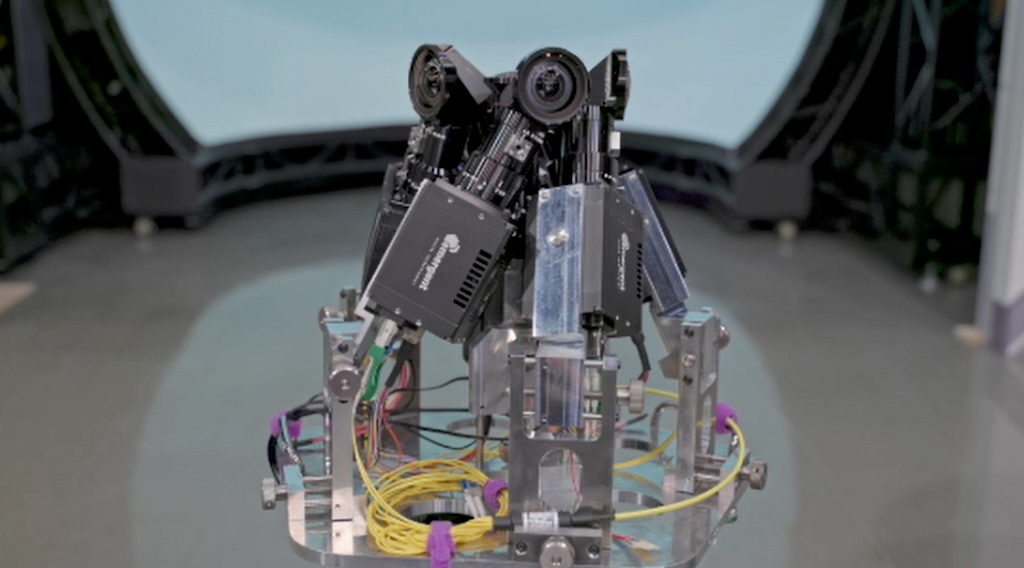
Mientras en Europa y la mayor parte del mundo aún se implanta progresivamente el 4K, en Japón ya realizan pruebas con una resolución que multiplica por siete esta tecnología. Tetsuya Hayashida, Principal Research Engineer de la NHK, presenta en la 4K HDR Summit 2025 un innovador sistema de vídeo 30K y 360° capaz de ofrecer una experiencia inmersiva sin precedentes.
El proyecto combina una cámara omnidireccional basada en un prisma pentagonal y pantallas hemisféricas y curvas formadas por 16 paneles OLED. “Nuestro objetivo es lograr vídeo 360° en tiempo real y Ultra Alta Definición”, explicó, señalando que la inteligencia artificial es esencial para el ensamblaje y la mejora de la imagen. Esta tecnología, exhibida en el IBC 2025, apunta hacia “la próxima generación de retransmisiones inmersivas”.
For its part, Canon presentó su nueva cámara cinematográfica EOS C50, la más pequeña y ligera hasta la fecha”, según Aron Randhawa, Senior Product Marketing Specialist de Canon. Este modelo incorpora un sensor 7K con grabación RAW Open Gate, fotografías de 32 MP, más de 15 pasos de rango dinámico e ISO dual, ofreciendo una “calidad de imagen excepcional” tanto para producciones profesionales como para creadores de contenido digital. Además, su grabación simultánea en formato panorámico y vertical la convierte en una herramienta híbrida entre el cine y las redes sociales. Randhawa destacó que con la C50 buscan “combinar potencia cinematográfica y versatilidad digital” para responder a las nuevas demandas del mercado.
Desde Brasil, Carlos Cosme, Technology Innovation Specialist de Globo, presentó los avances del proyecto TV+ (TV Place), el nuevo estándar de televisión digital abierta del país, que fusiona la transmisión tradicional con el ecosistema digital. “Queremos ofrecer una televisión más interactiva, personalizada y de mayor calidad”, afirmó. El sistema integra 4K HDR, audio inmersivo y conectividad híbrida (over the air y over the top). Cosme anunció que el lanzamiento comercial está previsto para junio de 2026, coincidiendo con la Copa Mundial de la FIFA, y destacó que el nuevo estándar “ya es compatible con 8K”, aunque su implementación será progresiva.
Jan de Cock, Director of Development, Video Network en Synamedia, presentó los desarrollos de la compañía en la medición y optimización de la calidad de vídeo UHD, con herramientas que aplican inteligencia artificial y aprendizaje automático. Introdujo el PVMAF, una versión predictiva del algoritmo VMAF “hasta 100 veces más rápida”, diseñada para vídeo en directo. También presentó el sistema Live Video Quality Agent, que permite comparar y supervisar señales en tiempo real. “Estas herramientas permiten optimizar costes, mejorar flujos de trabajo y tomar decisiones basadas en datos”, afirmó, destacando que la inteligencia artificial “ya está integrada en todos nuestros procesos”.
Immersive audio
Nuno Duarte, Sound Designer and Audio Manager de Olympic Broadcasting Services (OBS), expuso los avances en audio inmersivo 5.1.4, consolidado en los Juegos Olímpicos de París 2024. De cara a Milán 2026, anunció que OBS se encamina hacia “una producción completamente IP” e incorporará inteligencia artificial para “mejorar la gestión, el control de calidad y la eficiencia en la mezcla de sonido”. Duarte puntualizó que “la IA no sustituye al personal, sino que libera tiempo para centrarse en los detalles”, destacando que la industria se dirige hacia “un futuro más virtual, flexible y sostenible”.
Jorge Rodríguez, Head of Product and Marketing de Hispasat, abrió la jornada destacando el papel del satélite como “medio eficiente y sostenible para la distribución de contenidos en Ultra Alta Definición”. Presentó un estudio que sitúa al satélite como “la segunda opción más eficiente en consumo energético, solo detrás de la TDT”. Además, recordó que la compañía ya alcanza más de 1,4 millones de usuarios en Latinoamérica y apuntó que “aunque la adopción de televisores 4K crece rápidamente, el número de canales UHD sigue siendo bajo”. De este modo, propuso impulsar la transición de la TDT hacia la UHD y mejorar la comunicación con los usuarios para “fomentar su comprensión y adopción”.
Xavi Redon, Product Manager de Cellnex, ofreció un recorrido histórico sobre la evolución de la Televisión Digital Terrestre (TDT) en España hasta la llegada de la Ultra Alta Definición, cuya “adopción total” estima “entre 2027 y 2030”. Destacó que España lidera mundialmente las emisiones UHD por TDT y abogó por que “una normativa que exige televisores de más de 40 pulgadas compatibles con 4K facilitará esta transición”. Tomando datos de una encuesta realizada por UHD Spain, resaltó que “el 66 % de los hogares españoles tienen condiciones adecuadas para el 4K, aunque menos de la mitad están preparados”. Sobre Cellnex, indicó que la mayor compañía de infraestructuras de España emplea inteligencia artificial para optimizar la gestión de redes, automatizar procesos y planificar futuras infraestructuras.
En el ámbito de la radiodifusión técnica, Manuel Ángel Álvarez, Technical Sales Area Manager en LATAM y Europa de Gsertel, presentó las soluciones de la empresa para la medición y monitorización de señales UHD, destacando las pruebas de conducción (drive tests) con su analizador portátil Hexilon. “Estas pruebas permiten medir parámetros reales de señal e identificar zonas sin cobertura”, explicó el técnico, que subrayó la importancia de ofrecer servicios fiables y continuos y reafirmó la apuesta de la compañía por “la innovación práctica, la diversificación hacia redes móviles e IoT y la eficiencia energética como compromiso de futuro”.
For its part, Ian Nock, Chair Interoperability Working Group del Ultra HD Forum y Managing Consultant de Fairmile West Consulting, recordó que la organización lleva una década trabajando por la interoperabilidad y las buenas prácticas en Ultra HD. En su intervención, señaló que “el valor real del Ultra HD no está solo en la resolución, sino en el HDR, la amplia gama de color y el audio de nueva generación”. Nock reconoció que la transición hacia estas tecnologías es “una evolución gradual”, con desafíos en la integración entre contenido HDR y SDR, y destacó la necesidad de “educar al consumidor sobre la importancia de las pantallas adecuadas”.
El experto Benjamin Schwarz, COO de Greening of Streaming, centró su intervención en la sostenibilidad del streaming, destacando la urgencia de medir el consumo energético del sector audiovisual “con precisión y datos reales”. Desde su organización en París, lidera proyectos como REM (Remote Energy Measurement), que analiza en tiempo real el gasto energético de dispositivos y redes. Schwarz advirtió que “muchos equipos domésticos siguen consumiendo energía incluso cuando no se usan” y que reducir la resolución de los contenidos “puede incrementar el consumo total por el reescalado automático de los televisores 4K”. Subrayó, además, que “la sostenibilidad solo avanzará si se integra en la estrategia empresarial y se apoya en protocolos comunes”.
Finally, Frans de Jong, Media Fundamentals & Production Technology de la European Broadcasting Union (EBU), presentó las últimas pruebas de la organización en HDR y UHD, centradas en la mejora del color, la coherencia visual y la compresión. Explicó que las nuevas recomendaciones de la EBU buscan “estandarizar los modos de monitor HDR” y abordar el fenómeno del metamerismo, que altera la percepción del color. Las pruebas determinaron que “la compresión óptima en transmisiones UHD se sitúa entre 6:1 y 8:1” y que la compensación de movimiento “ofrece los mejores resultados en la conversión de fotogramas”. De Jong insistió en la importancia de “mantener el diálogo entre tecnología y producción” y en el papel de la nube y la inteligencia artificial como base de los flujos audiovisuales del futuro.
Did you like this article?
Subscribe to our NEWSLETTER and you won't miss anything.
Related articles
 Pentangle Studio in Tokyo offers an immersive experience with Genelec
 3Cat premieres 'Flors de Veu' at ISE 2025, an immersive and multisensory experience
 Boost Graphics delivers an immersive virtual experience to the English football league
 El Teatro Real crea una experiencia inmersiva de audio entre el público con la infraestructura IP de Lawo
 V-Nova presents 'Weightless', a 6DoF “immersive music experience” based on its PresenZ
 Christie offers an immersive cinematic experience at Apollo Kinas in Vilnius, Lithuania
 Mediapro designs an immersive experience for Canadian Premier League matches
 ViVIM tells the story of TV3 through a 360º immersive experience
 Shivver desarrolla una experiencia inmersiva para los espectadores de ‘OT 2018’
 Intel technology makes an immersive experience possible for 'Dunkirke'
 360º interactive video: a unique immersive experience
 The immersive audio experience, up for debate at IBC 2012
 3D Media: a unique immersive audiovisual experience
 Dolby Digital Plus: immersive audio experience at CES 2012