





“La tercera dimensión del deporte”: así transforman los drones la inmersión visual de los JJ. OO. de Milán-Cortina 2026
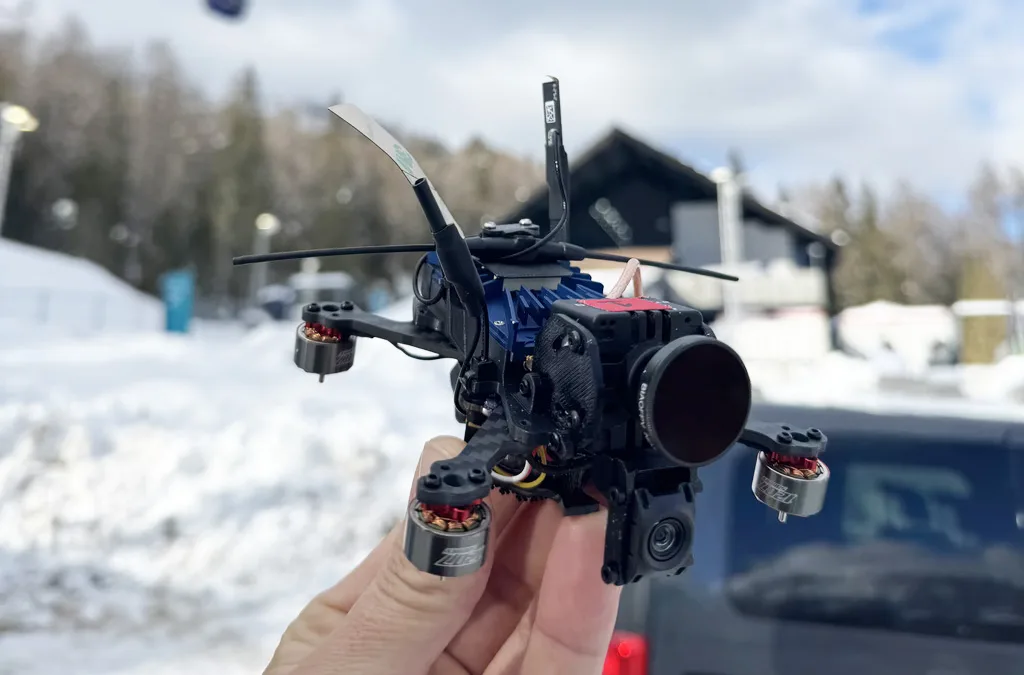
Tras realizar diversas pruebas en anteriores certámenes olímpicos, los drones adquieren su máxima expresión narrativa y visual en el marco de los JJ. OO. de Invierno de Milán-Cortina 2026, un despliegue sin precedentes que aporta a las retransmisiones en directo señales HD HDR enviadas en tiempo real a más de 100 kilómetros por hora.
El equipo de producción de OBS ha querido estructurar su cobertura de los Juegos Olímpicos de Invierno en torno al concepto “El movimiento en el deporte”. De acuerdo con Mark Wallace, director de contenidos de la compañía, su objetivo ha pasado por permitir que los espectadores sientan “el dinamismo de los deportes de invierno, pero no solo a través del rendimiento de los atletas, sino también a través de la forma en que lo capturamos y presentamos”.
Los drones desempeñan un papel central en esta visión. De hecho, ya se han viralizado planos de seguimiento de los atletas en distintas disciplinas, en los que se puede comprobar una calidad prístina en la retransmisión, con telemetría añadida y unos planos marcados por la espectacularidad visual.
“La cobertura tradicional se ha basado en dos dimensiones principales: cámaras fijas o semifijas que proporcionan perspectivas estables a nivel de suelo, y cámaras con cable, grúas o helicópteros que ofrecen tomas de seguimiento lineales y fluidas. Los drones FPV aportan una verdadera ‘tercera dimensión’”, explican desde OBS.
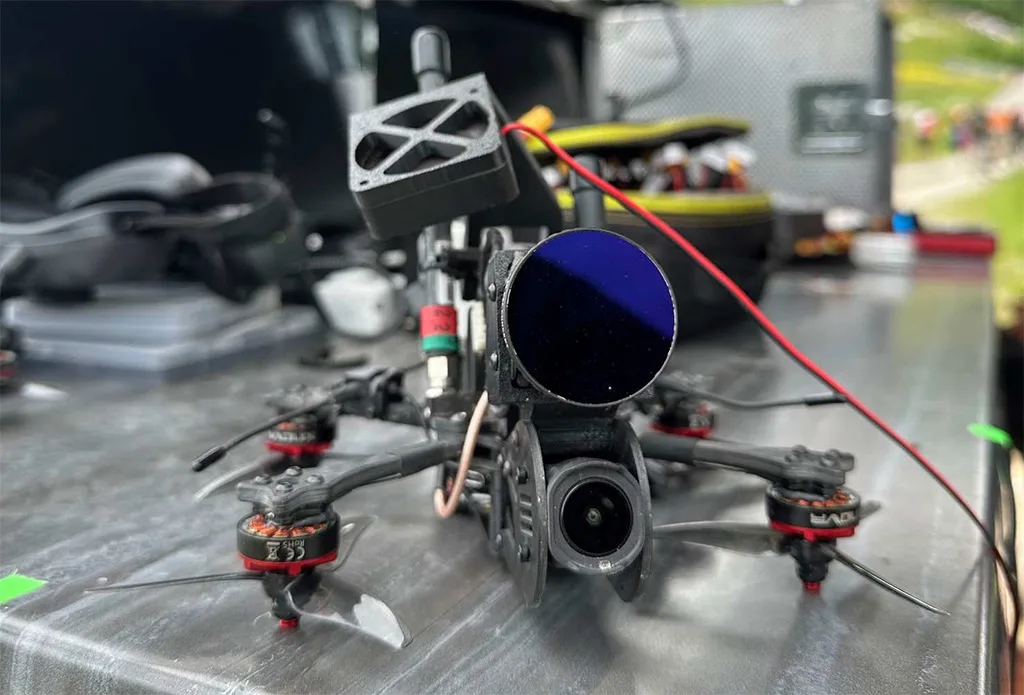
Los drones de los JJ. OO. de Milán-Cortina 2026
Se están desplegando dos tipos de drones en los JJ. OO. de Invierno 2026. Diez unidades de drones tradicionales aportan las clásicas tomas panorámicas para proporcionar un contexto visual a la retransmisión, un despliegue ya habitual en todo tipo de disciplinas deportivas y en las ceremonias de apertura y clausura de los Juegos.
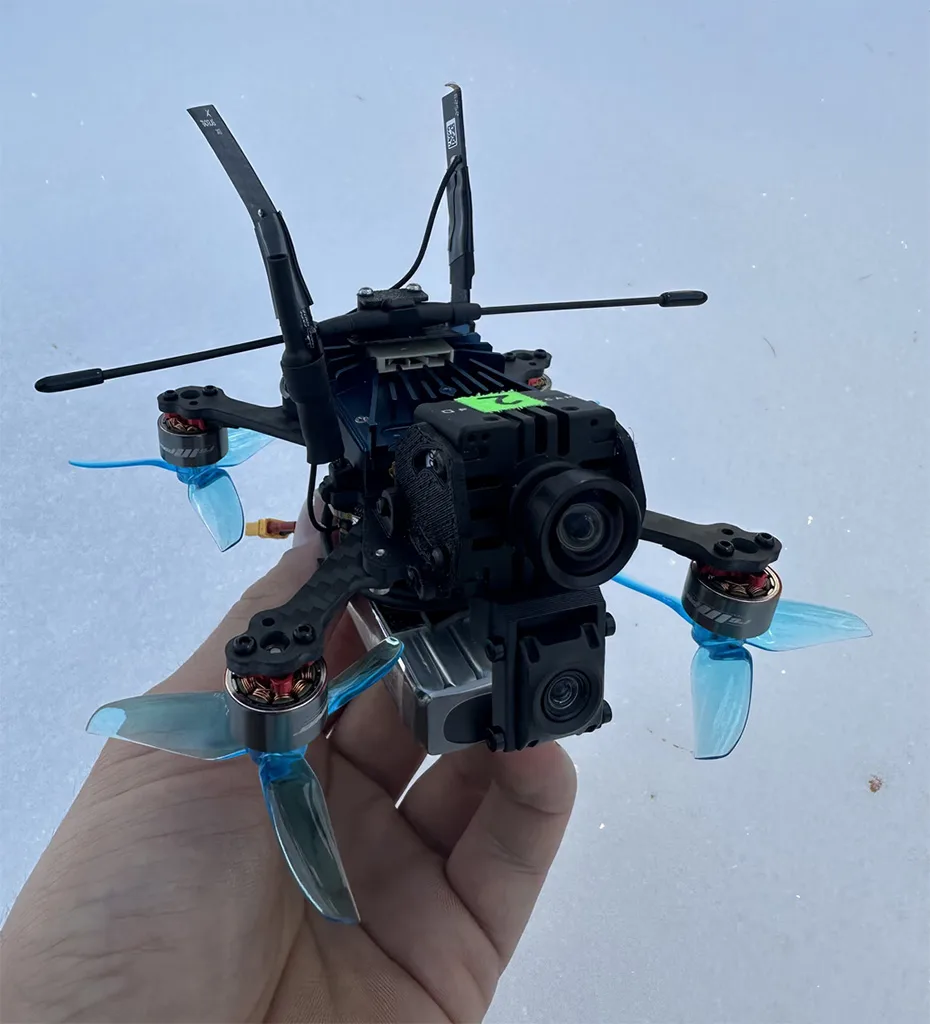 No obstante, la verdadera disrupción tecnológica llega en la categoría de los drones FPV: quince unidades que se usan para seguir a los atletas a altas velocidades, tanto en sedes al aire libre como cerradas, ofreciendo una perspectiva inmersiva a los espectadores.
Con un diseño personalizado a cargo de la empresa Dutch Drone Gods, estos equipos cuentan con innovaciones como hélices invertidas, que mejoran la aerodinámica y permiten giros más suaves; baterías diseñadas para una sustitución rápida con una autonomía de aproximadamente dos carreras o cinco minutos, y un sistema de transmisión COFDM capaz de enviar vídeo HD HDR tanto en progresivo como entrelazado a las unidades móviles. Todo, encapsulado en apenas 243 gramos y alcanzando una velocidad máxima de 100 kilómetros por hora.
VENI, VIDI, VICI 🥇
Franjo Von Allmen se cuelga el PRIMER ORO de los Juegos Olímpicos de @milanocortina26 en descenso masculino en su primera participación olímpica.
💢 Marco Odermatt, líder de la Copa del Mundo, fuera del podio. #MilanoCortina2026 pic.twitter.com/13fGyQqMMb
— Eurosport.es (@Eurosport_ES) February 7, 2026
Las disciplinas de Milán-Cortina con el despliegue de drones
Sin limitaciones de cables y con la conectividad asegurada a través de los transmisores COFDM, los drones FPV se están utilizando en múltiples disciplinas. En el esquí alpino, aportan un acompañamiento total por las pistas, capturando detalles técnicos anteriormente inapreciables en giros y análisis de trazados, así como telemetría en tiempo real; en el esquí acrobático y snowboard, permiten un tiro cercano para mostrar en detalle la altura, rotación y amplitud de los saltos; en el salto de esquí, acompañan al atleta a lo largo de la pista de salida hasta el despegue; en el biatlón, se despliegan en la línea de salida para mostrar la lucha por las posiciones iniciales, y en los deportes de deslizamiento, como Bobsleigh y Luge, demuestran su máximo potencial al alcanzar velocidades de hasta 100 km/h, entrando y saliendo de las curvas para transmitir la sensación de velocidad que viven los participantes.
Tras complejas negociaciones con la Federación Internacional, también se ha dado luz verde apenas unas semanas antes de la celebración de los Juegos a ofrecer planos en la prueba de patinaje de velocidad en pista cubierta, lo que podrá abrir la puerta a la aplicación de este tipo de herramientas en nuevas disciplinas en futuras ediciones de los Juegos Olímpicos.
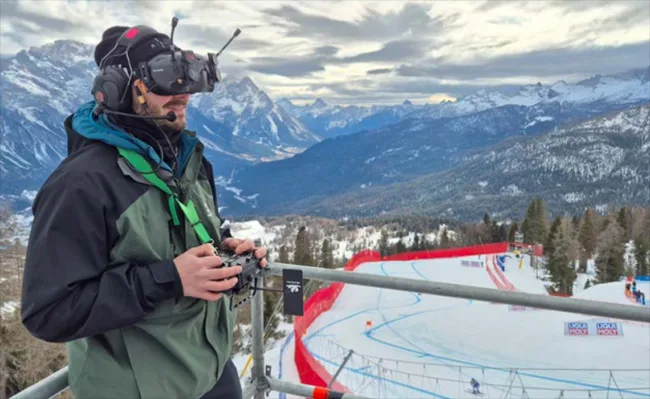
Atletas digitales, a los mandos de los drones FPV
Para obtener las tomas aéreas en los JJ. OO. de Invierno de Milán – Cortina, los pilotos de los drones ocupan una ubicación estratégica en cada disciplina desde zonas elevadas. El resto es que, independientemente de que utilicen dispositivos inmersivos para disponer de la visión FPV, puedan mantener la línea de visión con los atletas.
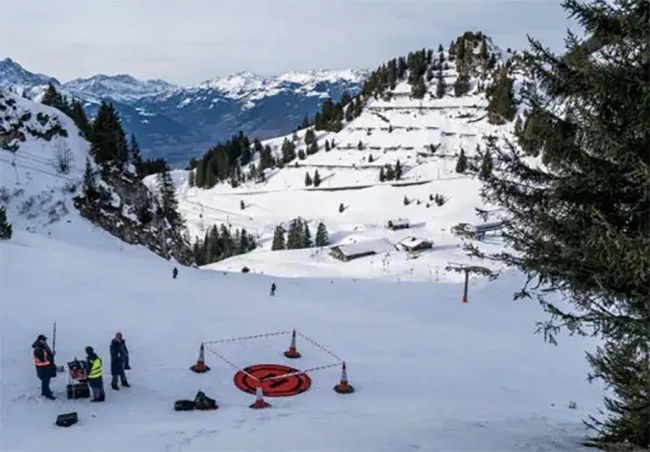 Cerca de esta posición, se ubica una cabina de apoyo con calefacción que sirve como base de operaciones. Equipada con una estación de carga de baterías, un dron de repuesto, un receptor y dos monitores, la configuración permite supervisar tanto la integridad de la señal como el desarrollo de la carrera en tiempo real.
En total, los equipos de producción de drones se componen de de tres especialistas: piloto, director y técnico. Juntos, coordinan rutas de vuelo, tiempos y ajustes técnicos, siempre en continua comunicación con los realizadores de las unidades móviles, quienes gestionarán en tiempo real los diferentes filtros de vídeo para adaptarse a las cambiantes condiciones meteorológicas y de luz.
Un nuevo capítulo en la cobertura olímpica
Para el equipo de OBS, la integración de los drones en las disciplinas de los JJ. OO. de Milán-Cortina 2026 marca un antes y un después en la producción deportiva a todos los niveles: “Proporcionan una inmersión sin precedentes en la experiencia de los atletas, profundizan la visión narrativa y transforman la experiencia visual en algo más dinámico, atractivo y visualmente cautivador, atrayendo al público al núcleo mismo de los Juegos”.
Una vez obtenida la aprobación de las distintas federaciones y realizadas las pertinentes pruebas técnicas y logísticas, se espera que los drones puedan ocupar un nuevo papel protagonista en los JJ. OO. de Verano de Los Ángeles 2028. El potencial de esta solución, ya sea desde la perspectiva de la mejora de las resoluciones, la autonomía o incluso su manejo remoto, permitirá seguir desarrollando la narrativa de la cobertura deportiva, una misión que ha acompañado a la propia OBS desde sus inicios.
Así funciona el manejo de los drones en #MilanoCortina2026. pic.twitter.com/qvD9CVGU2Z
— Eurosport.es (@Eurosport_ES) February 10, 2026
¿Te gustó este artículo?
Suscríbete a nuestro NEWSLETTER y no te perderás nada.
Artículos relacionados
 Grass Valley aportará conversión, enrutamiento y orquestación a NBC Sports en Milán-Cortina 2026
 Los complementos OFX de DaVinci Resolve transforman la experiencia del secuestro extraterrestre de ‘Descendent’
 MediorNet y MicroN (Riedel) transforman las operaciones de las unidades móviles de Rec4Box
 Artist y Bolero de Riedel transforman las comunicaciones de Miyagi Television
 TV3 y Catalunya Ràdio se transforman en 3Cat, nueva marca audiovisual de CCMA
 La renovación visual del 24 Horas, anticipo de la nueva etapa visual de RTVE
 Riedel and Skyroads will combine drones with gyro cameras to bring a new dimension to SailGP
Riedel y Skyroads combinarán drones con cámaras giroscópicas para dar una nueva dimensión a SailGP
Riedel and Skyroads will combine drones with gyro cameras to bring a new dimension to SailGP
Riedel y Skyroads combinarán drones con cámaras giroscópicas para dar una nueva dimensión a SailGP
 Los pilotos de drones harán oír su voz ante la Agencia Europea de Seguridad Aérea (EASA) mediante la Red de Entusiastas de Drones (NODE)
 El Festival de San Sebastián arranca con el estreno de ‘Inmersión’, de Win Wenders
 Llega a España el rodaje de ‘Inmersión’, dirigida por Wim Wenders
 Jornadas demo con cortina de LED en IEC
 Tandberg Telepresence T3, inmersión total mejorada
 Wututu Scr3end: inmersión autoestereoscópica