





‘Blindsided’: a horror experience powered by Blackmagic audio and solutions
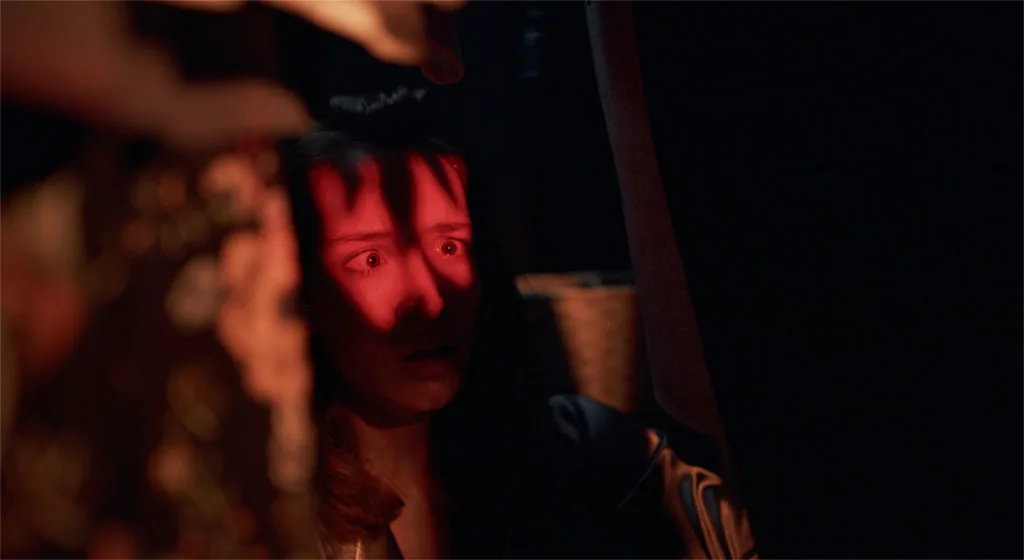
Cinema Camera 6K and DaVinci Resolve post-production software Blackmagic have been the technical basis for the creation of the award-winning short film 'Blindsided', defined as a “horror experience” that builds its narrative through sound.
Blindsided, the new short film by Patrick Hogan, follows a blind teacher, Maria (Crystal Loverro), as she tries to survive a nightmarish night that follows the crash of a spaceship and the subsequent release of a monstrous predator. He department It is made up exclusively of people with visual disabilities and places the viewer in the subjective plane of a blind protagonist, who can only perceive what is happening around her through sounds.
He short film adopt a unique narrative approach, by involving the audience in an immersive way in Maria's disturbing situation. The horror remains invisible, both for her and for the spectators. To create this experience, Hogan used Blackmagic Design products to support every stage of the process.
Specifically, it was decided to use the model Blackmagic Cinema Camera 6K for filming, and the program DaVinci Resolve for editing, grading and creating visual effects. Acclaimed sound designer Patrick Hogan is a ten-time Emmy nominee, and this short film has already received seven film awards, including “Best Sci-Fi or Horror Film” at the Chicago Horror Film Festival, as well as the prestigious FilmQuest Award for Best Sound. Hogan completed the film in collaboration with colorist Alexander Schwab and visual effects (VFX) artist Christopher Vincelette, while the design of the monster was in charge of Dustin Washburne.
Building an “invisible” monster
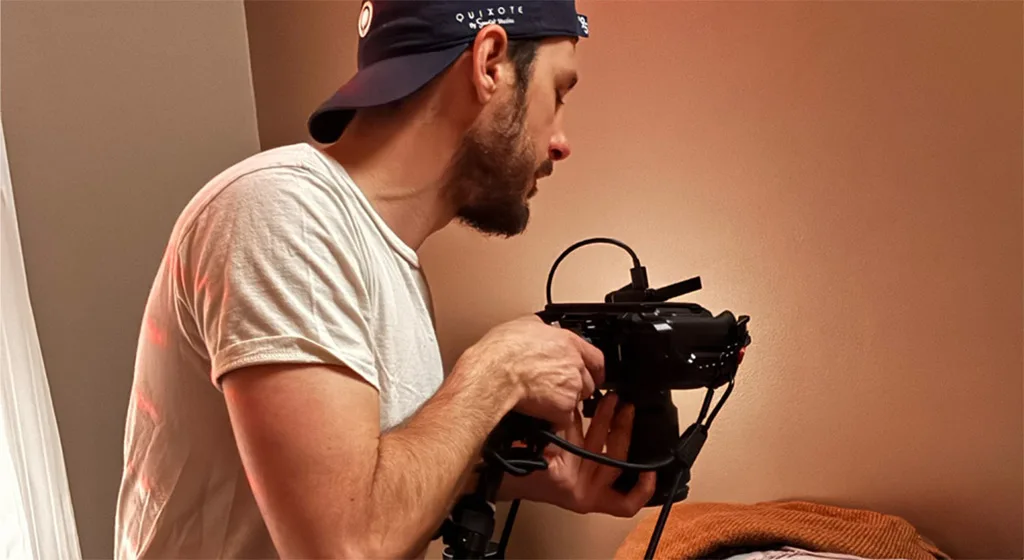
The entire short film is made up of just six shots and develops in real time. The longest and most complicated scene required the actress who played the lead role, Crystal, to wear a Snorricam device as she moved through every room in the apartment. “When she's not wearing her glasses, she's legally blind, so we had to do a lot of rehearsal,” Hogan explains.
"Having a very close-up of Maria's face was essential to the story. Being so close to her face allows you to see in her eyes her reactions to the sounds, chaos and panic of other people. The level of detail that the Cinema Camera 6K managed to capture is the central pillar of the entire film: "You can see the fear in her eyes. The compact design and full-frame sensor were essential for the Cinema Camera 6K to give us what we needed. The actress was literally wearing the camera, so the compact design, lightness and the ability to create images with a high level of detail were essential, as was being able to focus directly on the face while having an extremely shallow depth of field so that the background behind her was out of focus; The latter was something that also helped create a feeling of blindness in the audience,” he adds.
At the same time, the team Blindsided chose the relationship 2.4:1 panoramic camera aspect, which meant that, even if the image was very close to the protagonist, it was still possible to see what was happening behind her: "The look and feel it creates would have been completely different if we had shot with another compact camera. There is no comparison to that detailed and delicate cinematic look that the Blackmagic Cinema models give you."
The scene in which the monster is revealed, which required 24 tomas, was shot with a Cinema Camera 6K mounted on a stabilizer, allowing Hogan to perform a complex moving shot of Crystal and the monster. The director explains how he was able to successfully execute this important scene using the Cinema Camera 6K and the Blackmagic RAW format: "It only worked because we were able to use the stabilizer to make the camera movements smooth and subtle, without taking the attention. This was another reason why having a small, compact camera like this made a significant difference."
Post-production with DaVinci
Following production, Hogan used DaVinci Resolve to edit and grade, as well as Fusion to create visual effects. In his own words: “Resolve played a huge role, not only did I edit the tape in Resolve (as I did with my two previous short films), but I also used this program and some of the other new tools to do rotoscoping with Magic Mask 2 for VFX shots and detailed grading to support several low-light shots where the image was very dark.”
"Blackmagic RAW is a fantastic codec, as it allows you to adjust the extremes considerably in post-production and manipulate the material to achieve the look you want. We also add a bit of grain, to give it that cinematic look," he concludes.
https://youtu.be/iRsRpHxlo98
Did you like this article?
Subscribe to our NEWSLETTER and you won't miss anything.
Related articles
 ARTE unites horror and art in 'Haunted Places' with solutions from Blackmagic Design
 Joseph Kahn's new horror film 'Ick' was shot and finished with Blackmagic Design solutions
 Blackmagic, tested against the darkness of the horror film 'Creeping Death'
 The 11 pillars of Sonora, a platform dedicated to creating a cinematographic experience through audio
 Blackmagic Design Solutions Bring Horror Movie 'Alone With You' to Life
 Rubin Stein rueda su ópera prima ‘Tin&Tina’, obra de terror psicológico impulsada por La Claqueta
 The horror film 'The Cleansing Hour' used Blackmagic cameras, ATEM mixers, converters and DaVinci Resolve
 Broadcast Solutions will bring its experience in integration and future-proof solutions to IBC
 Genelec and IDA Audio develop an interesting immersive audio experience
 Sennheiser presents its “HD Audio” and “Immersive Audio” solutions
 NexStreaming and DTS join forces to improve the mobile audio and video experience
 Yamaha makes the new Dolby Atmos surround audio experience a reality
 The immersive audio experience, up for debate at IBC 2012
 Dolby Digital Plus: immersive audio experience at CES 2012