





Joseph Kahn's new horror film 'Ick' was shot and finished with Blackmagic Design solutions
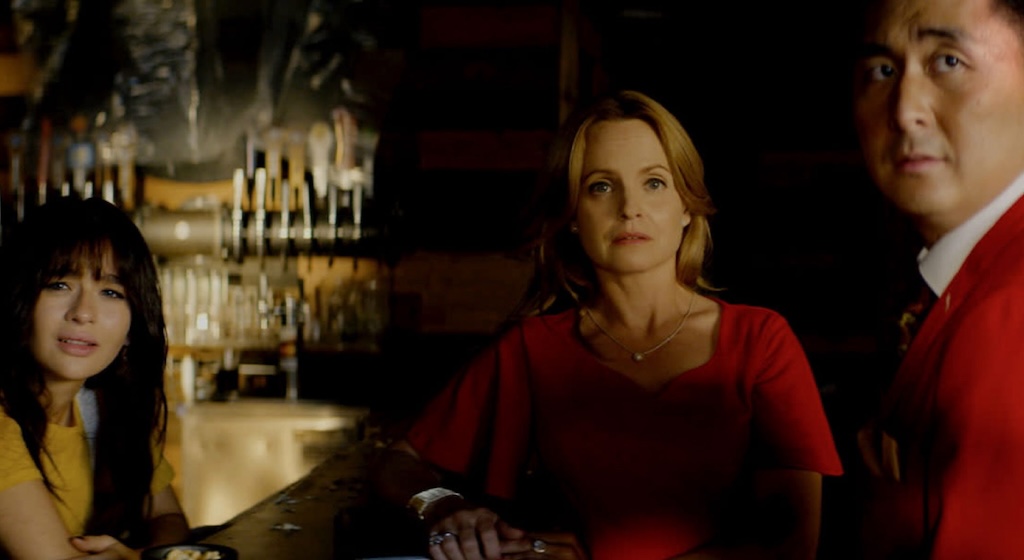
'Ick' was shot with solutions Blackmagic Design such as the URSA Mini Pro 12K OLPF camera and a Pocket Cinema Camera 6K, while editing and grading was carried out in DaVinci Resolve Studio, using Blackmagic Cloud and a Blackmagic Cloud Store Mini 8TB device.
Ick It is a film that combines extremely scary elements along with features of comedy, an alien invasion and satire. The film is written and directed by Grammy Award-winning Kahn, who is known for his dazzling visuals, fast-paced plots, and for filming some of the most iconic music videos of the last decade.
This film, which will premiere at the Toronto Film Festival, tells the story of the American town of Eastbrook, which for 20 years has ignored the growth of a vine, which ends up evolving and attacking. Starring Brandon Routh and Mena Suvari, the film brings together special and visual effects (VFX) that provide exceptional, often funny, and exaggerated images.
The film was shot in Houston (Texas) by the director of photography David Weldon. Post-production was carried out by both the editor Chancler Haynes, who worked from Houston during the recording of the main images and from Los Angeles, as of the deputy editors Edward Schroer and Sam Cook, who worked from different locations in Los Angeles. Walter Volpatto, of Picture Shop, was responsible for the chromatic correction.
On this occasion, remote collaboration and fluidity between the production and post-production stages was essential for the film's success. For this, both the program DaVinci Resolve Studio, such as Blackmagic Cloud and Blackmagic Cloud Pod network storage solutions were essential.
Weldon shares what it was like working with Kahn in the creative process between production and post-production: "It was similar to filming a music video in the fast pace of the set, and Joseph had a specific vision for each part of the film. It could have been a classic feature film where a town is in danger and people don't pay attention to the signs that lead to destruction. But we turned it into a unique production, using Blackmagic camera design to find ways to capture creative images and placing the units in tight spaces; plus, we use the dual native ISO value to work quickly on set.”
Ick It was the first time Haynes edited a feature film entirely in DaVinci Resolve Studio. To do this, I work directly with Kahn in Houston. "Joseph is an organized, forward-thinking filmmaker. As an editor, you have to be able to figure out how to achieve what you want to achieve, and the ability to collaborate with him through Resolve and Blackmagic Cloud was a huge help in the creative work," Haynes notes.
Use of AI
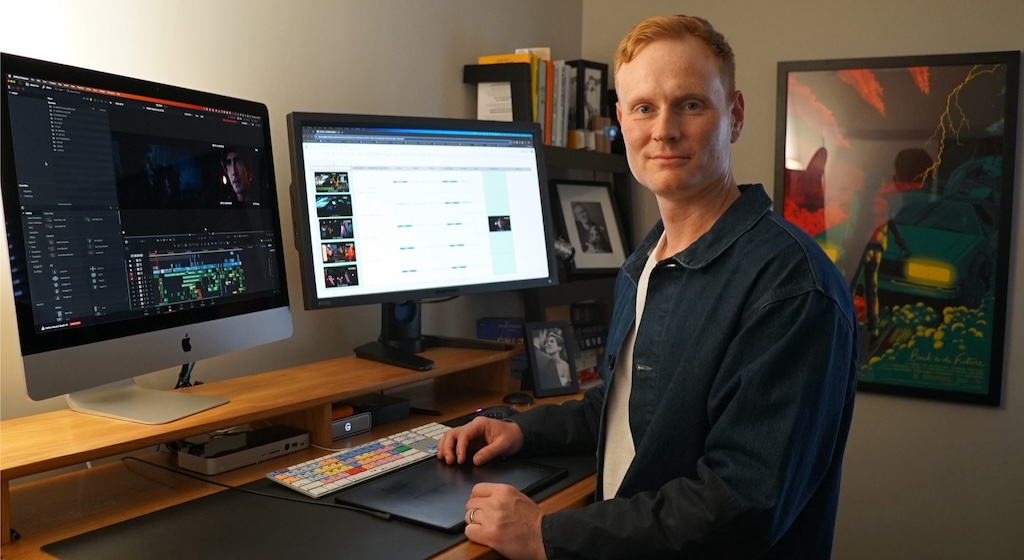
Kahn often used the module Fusion of DaVinci Resolve and artificial intelligence assisted tools of DaVinci's Neural Engine in order to create preliminary versions of the visual effects he had envisioned. Later, he shared them with the editing team through Blackmagic Cloud and a Blackmagic Cloud Pod device.
Haynes adds, "The collaborative workflow was effective. It's simple, but helpful, and we didn't need to have IT technicians on set. The Cloud Pod device allowed Joseph to do test edits himself. This gave him the ability to duplicate footage and send it to me with ease."
"From an associate editor's perspective, Resolve and Blackmagic Cloud made it easy for Chancler to work and Sam and I to collaborate immediately. There were no interruptions in the creative aspects," explains Schroer.
One of the benefits of using a workflow around DaVinci Resolve Studio and Blackmagic Cloud is being able to help Haynes organize the visual effects shots, which exceeded a thousand. In this regard, he comments that "I tracked a lot of visual effects shots and being able to access these sequences through Cloud Store Mini units was amazing. I would receive these types of images from five different people and I could simply upload them to Dropbox through the Cloud Store Mini unit."
Blackmagic Cameras
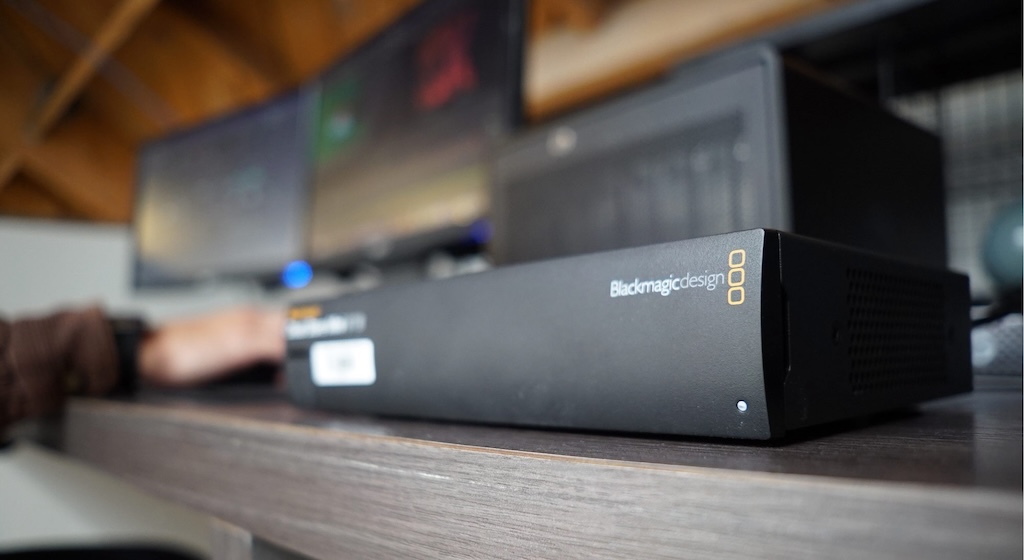
The film was completed in 4K resolution and it was filmed with cameras URSA Mini Pro 12K OLPF y Pocket Cinema Camera 6K to achieve a wide variety of scenes, including all shots captured at a higher frequency.
Weldon explains why he loved working with Blackmagic cameras on the film. "The URSA Mini Pro 12K OLPF allowed me to do everything. First, I knew it would allow me to adhere to 4K streaming guidelines, which is extremely important for an independent film. Even though we had a limited budget, the URSA Mini Pro 12K and Pocket 6K gave us the flexibility to combine with other cameras and match the look between various scenes. On an independent film, you constantly have to find ways "This was actually a one-camera job, but we needed other units ready to shoot either with the Ronin 2 gimbal and the smallest underwater housing we have or also at high speed, among other things, so we could start shooting right away."
"We shot the entire movie in anamorphic format, so being able to shoot in 8K also gave us the flexibility to crop and adjust the footage if we needed it for visual effects. Many of the shots were created in a 3D environment, from footage we captured on a green background and then delivered to the visual effects team in 8K. This gave us the ability to re-incorporate a lot of detail into those shots," concludes Weldon.
Did you like this article?
Subscribe to our NEWSLETTER and you won't miss anything.
Related articles
 ‘Blindsided’: a horror experience powered by Blackmagic audio and solutions
 ARTE unites horror and art in 'Haunted Places' with solutions from Blackmagic Design
 The era of deepfake, revealed with solutions from Blackmagic Design
 VisionTV integrates its new mobile unit with Blackmagic Design solutions
 Blackmagic, tested against the darkness of the horror film 'Creeping Death'
 Rockets inaugurates virtual studio with Blackmagic Design solutions
 EWTN Hungary renews its studio with solutions from Blackmagic Design
 PBS shoots and grades ‘When We Were Shuttle’ with solutions from Blackmagic Design
 Blackmagic Design Solutions Bring Horror Movie 'Alone With You' to Life
 The Japanese production company Kan-Nari relies on Blackmagic Design solutions
 ESL reinforces its eSports production studios with Blackmagic Design solutions
 Summer billboard benefits from Blackmagic Design solutions
 The horror film 'The Cleansing Hour' used Blackmagic cameras, ATEM mixers, converters and DaVinci Resolve
 The Indian Formula 1 Grand Prix with Blackmagic Design solutions