





The Indian Formula 1 Grand Prix with Blackmagic Design solutions
Los equipos de comentaristas de Globo, RTL, ZDF Sport, Viasat (Suecia, Dinamarca y Noruega) y la finlandesa MTV3 utilizan soluciones de Blackmagic para enviar señales de forma inalámbrica desde el paddock, la pitlane y la parrilla de salida.
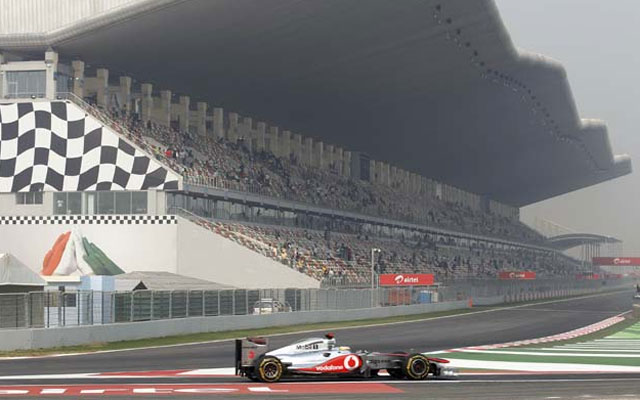
BP Satellite Solutions, compañía que proporciona a la FIA Formula One World Championship servicios de enlaces RF para cámara está empleando diferentes soluciones de Blackmagic Design en su infraestructura de transmisión. Entre ellas, destacan Compact Videohub y Videohub Smart Control. Los equipos de comentaristas de Globo, RTL, ZDF Sport, Viasat (Suecia, Dinamarca y Noruega) y la finlandesa MTV3 está usando esta solución para que enviar señales de forma inalámbrica desde el paddock, la pitlane y la parrilla de salida.
La compañía holandesa ha desarrollado sus enlaces partiendo del router Compact Videohub y el panel de control Videohub Smart Control.
Un total de cinco cámaras inalámbricas se utilizaron, por ejemplo, en el reciente Gran Premio de F1 de la India, distribuyéndose a través de la red de fibra de Riedel y grabando la señal en varios grabadores HyperDeck Studio SSD. Capturando en ProRes, los HyperDeck Studios se utilizan para la reproducción y el control de calidad posterior después de la producción.
Durante la carrera, BP Satellite Solutions proporciona a las emisoras tanto transmisores, receptores e intercomunicadores.También suministran equipos de audio basado en IP y los monitores SmartView Duo de Blackmagic Design destinados a los puestos de comentarista.
Para la cobertura de la Fórmula 1, broadcasters como Tv Globo en Brasil o RTL en Alemania adquieren la señal a la titular de los derechos Formula One Management (FOM) y, posteriormente, empaquetando para su transmisión con los correspondientes comentarios. La salida básica se lleva a cabo desde un mezclador master que incluye señales del trackside, pitlane y la cámara en el helicóptero. A partir de ahí se incluyen otras fuentes como telemetría o señales de cámaras a bordo desde FOM así como las señales generadas por cada broadcaster.
En este esquema de trabajo, Globo Tv en el Gran Premio de la India trabajaó con ocho señales procedentes de FOM con conversores de cámara ATEM conectados a dos conversores de estudio ATEM Studio. Las señales se enviaron al Blackmagic Design Compact VideoHub a través de cuatro Mini Converters de fibra a SDI. Un mezclador ATEM 2M/E con un panel broadcast ATEM 1M/E se empleó en la India para mezclar la señal empaquetada con los comentarios de la carrera mientras que al audio se embebía y desembebía mediante el uso de Mini Converters de Blackmagic de SDI a audio y de audio a SDI.
La señal final de Tv Globo se envió vía satélite, con soporte de Multilink Holland, el partner técnico de FOM y la UER para la distribución mundial de vídeo y su emisión en Brasil.
Did you like this article?
Subscribe to our NEWSLETTER and you won't miss anything.
Related articles
 The era of deepfake, revealed with solutions from Blackmagic Design
 Rockets inaugurates virtual studio with Blackmagic Design solutions
 EWTN Hungary renews its studio with solutions from Blackmagic Design
 PBS shoots and grades ‘When We Were Shuttle’ with solutions from Blackmagic Design
 Blackmagic Design Solutions Bring Horror Movie 'Alone With You' to Life
 The Japanese production company Kan-Nari relies on Blackmagic Design solutions
 ESL reinforces its eSports production studios with Blackmagic Design solutions
 Summer billboard benefits from Blackmagic Design solutions
 Blackmagic Design wins prestigious Red Dot Award
 Mediapro, host broadcaster of the Spanish Formula 1 Grand Prix
 El Gran Premio de Fórmula 1 de Australia utiliza controladoras de vídeo de Matrox
 The Mediapro group distributed the signal of the Formula 1 European Grand Prix to countries around the world
 Mediapro, host broadcaster of the Spanish Formula 1 Grand Prix
 Mediapro distributed the signal of the Formula 1 European Grand Prix to countries around the world