





‘Bedlam’: a challenging 65mm digital shoot with the Blackmagic cloud ecosystem
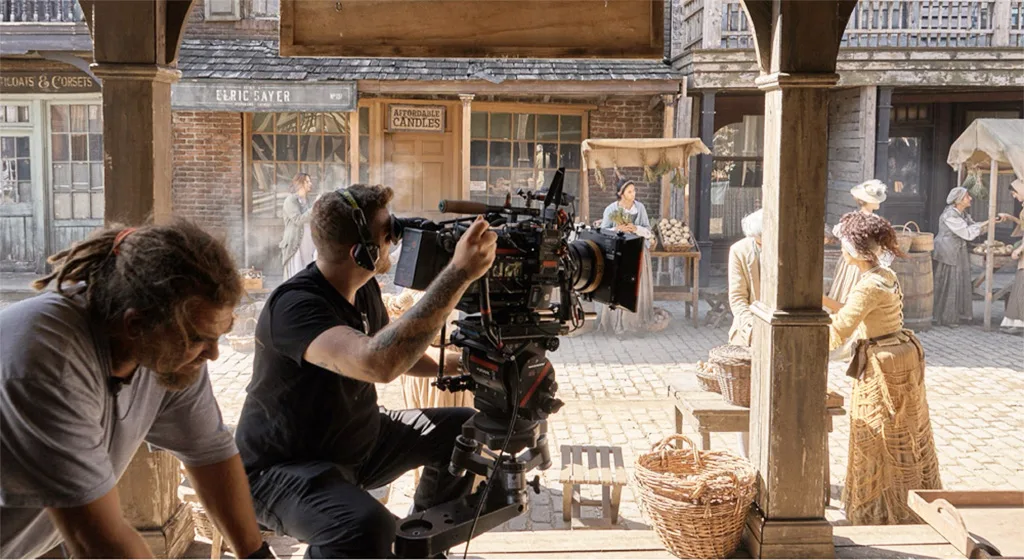
Director John Sheikh and cinematographer James Butler shaped the universe of the independent film 'Bedlam' with the URSA Cine 17K 65 film camera and a work dynamic based on Blackmagic Cloud.
Bedlam, set in 1750s London, follows boxer Jack Slack (played by Scott Adkins) as he attempts to rescue his sister from the mental hospital from which the film is named. Your universe is defined by light from fire, smoke and confined interior spaces, which placed considerable demands on the cinematography. The director's vision Jon Sheikh was that the dramatic sequences had as much narrative weight as the fight scenes, and that the visual approach supported that balance with coherence and detail.
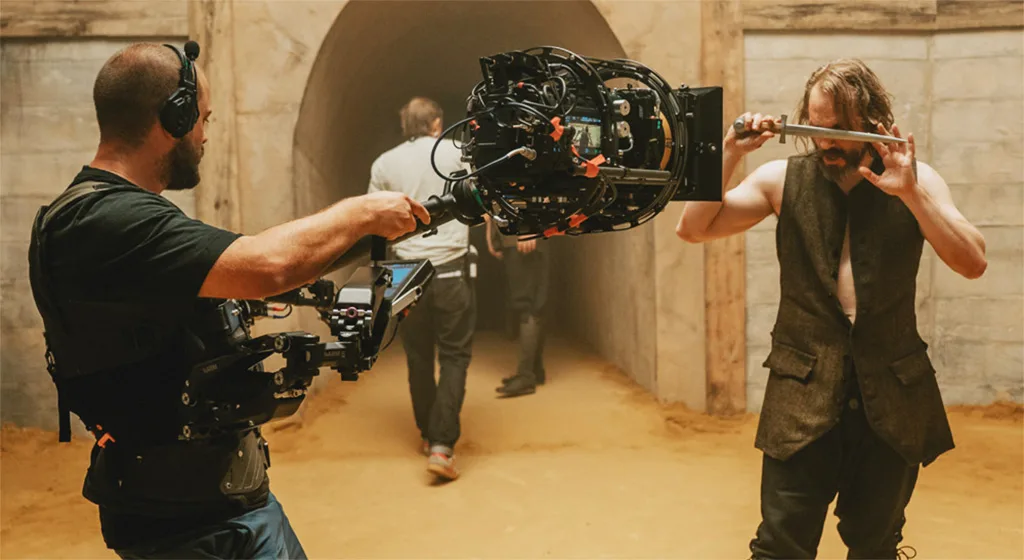 For the DoP James Butler He was attracted to the idea of shooting in 65mm, convinced that it offered the presence and texture necessary for the story. However, since 65mm cameras are expensive or prohibitive for an independent budget, Butler had to explore the market to find an affordable camera system that could meet his visual expectations.
After exploring the market, the director of photography tested the BEAR Who 17K 65, a camera that also gave him the opportunity to try a comprehensive work dynamics in format Blackmagic RAW, ranging from on-set recording to editing in DaVinci Resolve Studio. In this way, low resolution (proxy) files were uploaded to Blackmagic Cloud when connectivity allowed during principal photography.
"What I like about Blackmagic's RGBW sensor is that it's really adaptable. Whatever resolution you choose, you're still using the entire 65mm sensor. There's no cropping, so you maintain the original field of view and that deeply reduced depth look in every frame," he says. Butler, who decided to choose to film at a 8K resolution at 5:1 despite the camera's up to 17K RAW capabilities. Apart from choosing two BEAR Who 17K 65 as main cameras, Butler and his team decided to introduce another 12K boxes by Blackmagic for some of the action sequences.
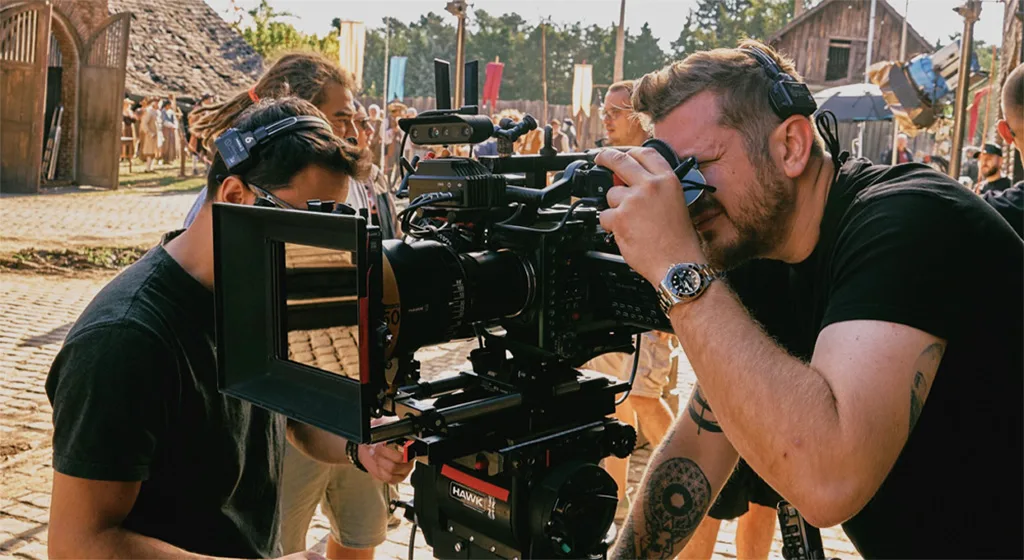
Classic optics for a 100% digital workflow
To shape the aesthetics of the film, Butler was clear that the lighting of the scenes had to be supported by the sun, moon and fire. “The upper levels featured softer blues and whites, and they got stronger as you descended,” he recalls.
The lowest level of Bedlam depended almost entirely on real flames, which took the camera to the lower limit of its latitude. Working with a ISO sensitivity of around 1250 In those sequences, Butler and Kozlowski often operated with some risk, but within a range they knew would hold up to grading: “Rather than underexposing creating noise and trying to recover it later, we deliberately allowed ourselves to increase the exposure a little on set and then lowered the blacks in Resolve to get clean, structured shadows,” Butler said.
The coverage of the goals It was another fundamental decision. After evaluating different possibilities, it was decided to go for anamorphic models Hawk65 of Vantage, ““ideals” for the film’s visual approach. BEAR Who 17K 65, combined with large format anamorphic lenses, it constituted a considerable package that had to work on cranes, tripods and studio structures. Butler's team collaborated with Hawk y Ratworks Engineering to design a complete cage system, compatible with production requirements.
The depth of field management It was also key to the production. The aperture of the lenses was generally kept between T4 y T5.6, stabilizing the backgrounds and maintaining continuity between scenes. Butler remembers a illuminated key sequence by a single diffuse lunar light source, where the combined effect of the sensor and the anamorphic crystal provided the desired clarity and emotional weight: "It was a simple portrait. The image gave us exactly what we needed to convey the importance and emotion of the scene."
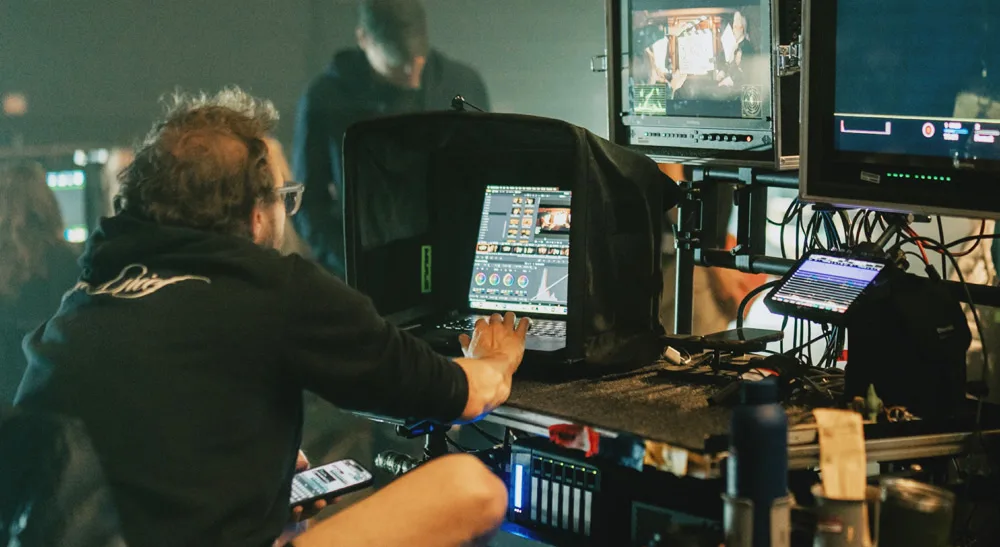
Monitoring and assembly in real time, with Blackmagic Cloud
The production included the editor Will Gilbey from the first day of filming. Working from London, I received the files “proxy" daily, synchronizing and making preliminary assemblies of scenes as filming continued. The producer Kevin Harvey He monitored progress from his home studio in Essex using a “calibrated setup” of DaVinci Resolve: "Kevin became an extra set of eyes. He could review scenes early and provide comments that helped the story."
This daily circuit of feedback allowed the crew to review progress during filming and plan additional shots while the sets and cast were still available. For Butler, that was the real benefit of working entirely with DaVinci Resolve Studio and Blackmagic Cloud: “close the creative loop and avoid discovering deficiencies in production months later.
By the last day of principal photography, all the material had already been incorporated into a shared DaVinci Resolve project. Kozlowski had made backups, applied settings display and delivered the “proxy” files, so that, a few days after finishing filming, Sheikh y Butler They were able to sit and watch a first complete assembly of the film, an unprecedented event in Butler's career.
Did you like this article?
Subscribe to our NEWSLETTER and you won't miss anything.
Related articles
 Indigo (Ross Video): a new digital ecosystem to unify ingestion, editing, planning and publishing
 The Blackmagic ecosystem, the backbone of the Esports World Cup festival in Riyadh
 PGMTV's latest mobile unit, created with a Blackmagic ecosystem
 Blackmagic cloud ecosystem allows RKM Studio to create a collaborative workflow for filming video clips
 Real-time cloud synchronization for broadcast with Blackmagic Cloud Live Sync
Real-time cloud synchronization for broadcast environments with Blackmagic Cloud Live Sync
Real-time cloud synchronization for broadcast with Blackmagic Cloud Live Sync
Real-time cloud synchronization for broadcast environments with Blackmagic Cloud Live Sync
 EITB presents Makusi, a digital ecosystem in Basque for children and young people
 Kutztown University replaces its old equipment with a Blackmagic ecosystem
 The Dalet ecosystem grows at NAB 2023 with the multiplatform cloud editor Dalet Cut
 C&I adopta flujos colaborativos cloud con el ecosistema de Blackmagic
 Sony's Ci cloud ecosystem comes to Teradek solutions
 Reach Media, a transversal advertising ecosystem with multiple commercial possibilities in television and the digital environment
 Aviwest will show in Las Vegas the latest solutions in its ecosystem for Digital Mobile News Gathering (DMNG)
 Nagra will unveil its proposals for a new digital television ecosystem at the NexTv summit in Buenos Aires