





'The Odyssey': Christopher Nolan takes photochemical cinema to the limit with the greatest technical challenge of his career
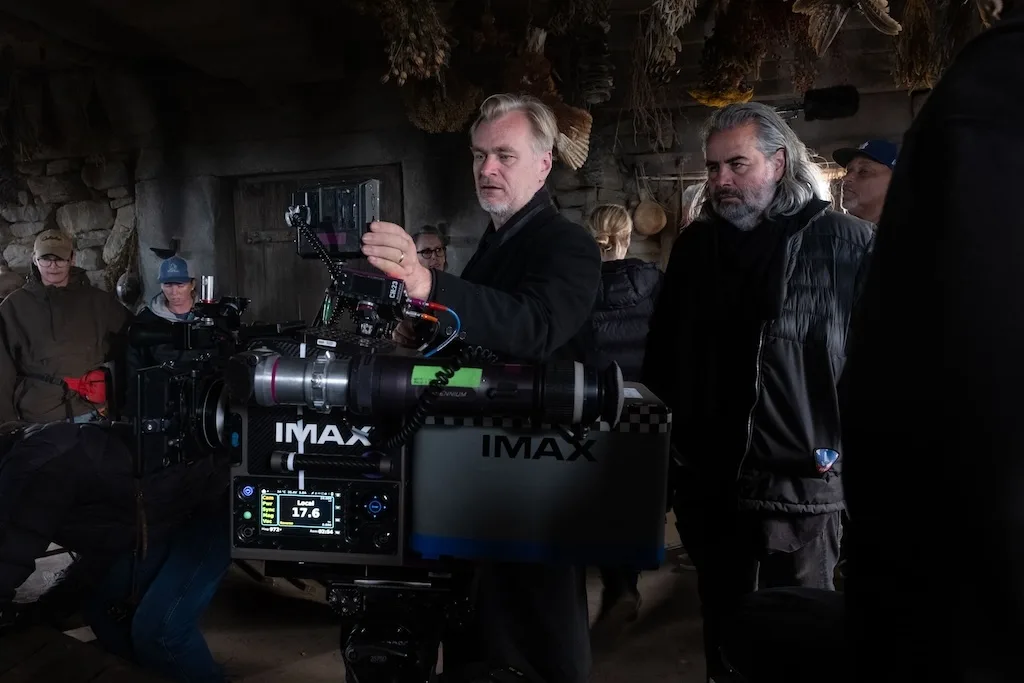
'The Odyssey', the long-awaited adaptation of Homer's epic directed by Christopher Nolan, not only aspires to become one of the great cinematographic events of 2026. It also represents one of the most technically ambitious projects ever undertaken by a director who has made the capture format, photography and practical effects an essential part of his cinematographic language.
The production companies Syncopy (owned by Nolan himself and Emma Thomas) and the Italian company Wildside, in association with the Universal Pictures studio, got to work to bring The Odyssey to the big screen as has never been seen before. After the success of Oppenheimer, Cristopher Nolan set a goal that for years had seemed unattainable: to shoot a feature film entirely with cameras IMAX on 65mm film y 70mm exhibition prints. To make it possible, it was necessary to develop a new generation of cameras together with IMAX and the director of photography Hoyte van Hoytema, resolve historical limitations of the format and design a photochemical workflow capable of managing one of the largest volumes of negative ever used in a film production.
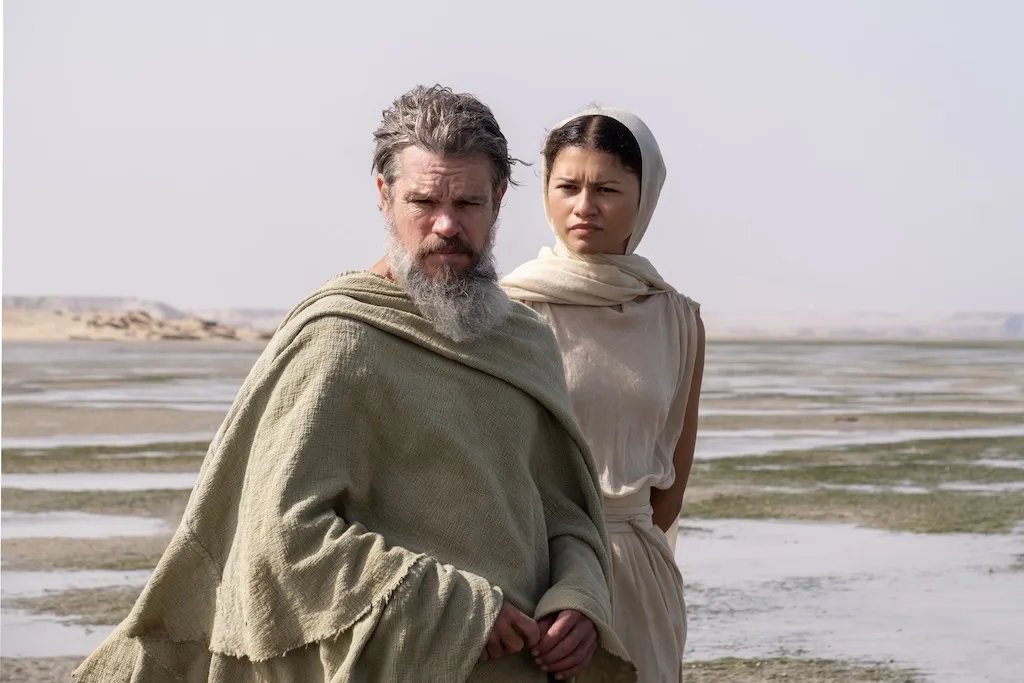 From The Dark Knight, Christopher Nolan has promoted the use of the IMAX format beyond the big action sequences. However, the 15-perf cameras on 65 mm negative They continued to present important limitations for conventional filming: their high weight, the mechanical noise generated by transporting the negative and the reduced autonomy of the chassis prevented them from being used continuously in dialogue scenes.
To The Odyssey, IMAX developed a new camera platform that is considerably quieter thanks to a redesign of acoustic encapsulation and film transport system. The improvement allowed record direct sound in interpretive sequences without systematically resorting to subsequent dubbing, something practically unthinkable until a few years ago. The new acoustic enclosure increased the volume of the set, so the camera department even had to develop mirror systems to properly maintain lines of gaze between actors when the camera body prevented direct eye contact.
According to Nolan himself, the experience acquired during Oppenheimer definitively convinced him that the IMAX format could also be used for close-ups and intimate scenes, taking advantage of the extraordinary level of detail offered by the large format negative.
More than 600 kilometers of photochemical film
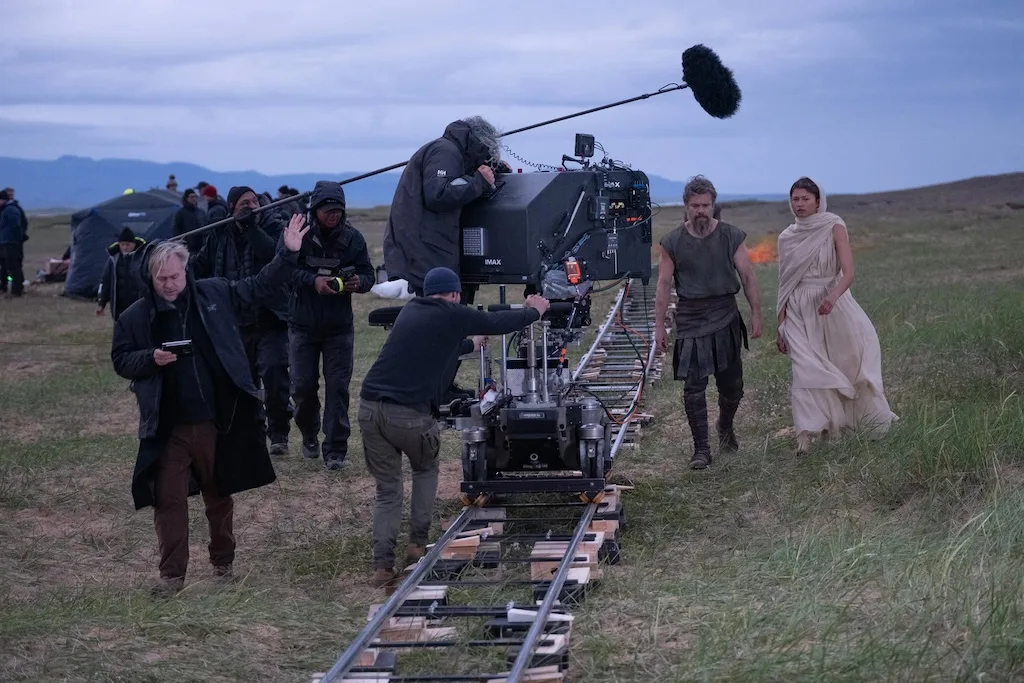
The magnitude of the project is reflected in a figure that is difficult to imagine: production consumed almost 610 kilometers of negative, setting a new record for a production shot in this format. Working exclusively with photochemical film conditioned a good part of the planning of the shoot. Each roll only provided a few minutes of footage, so the camera crew designed extremely fast replacement protocols to minimize interruptions during performances.
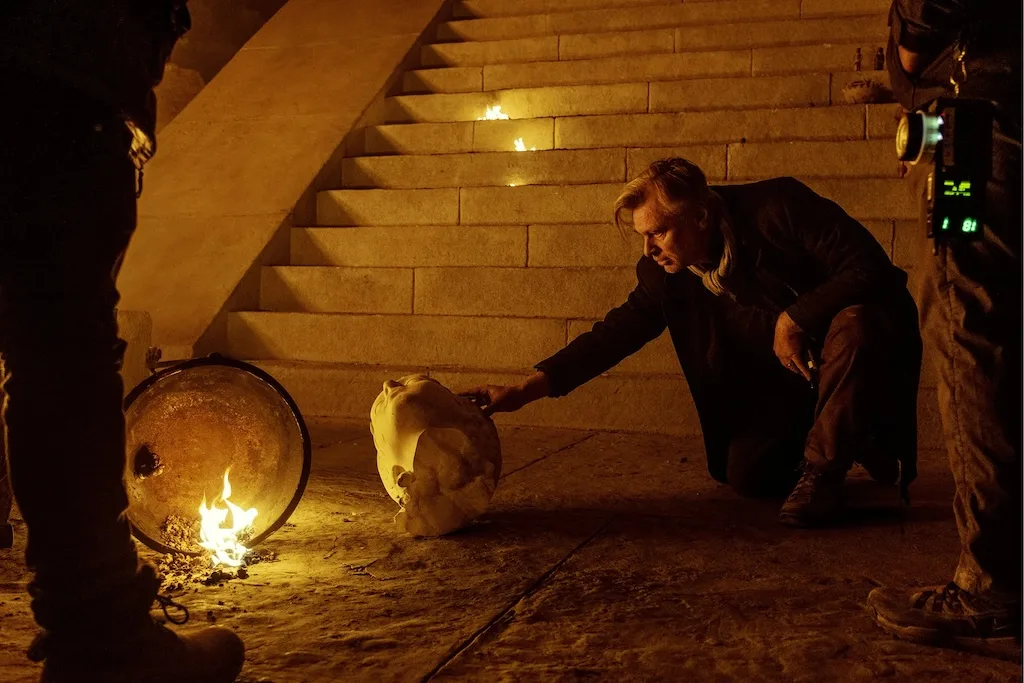 Each day concluded with sending the negative to the laboratory for development, inspection and digitization of the dailies. Although the project maintains Nolan's characteristic photochemical philosophy, the Workflow becomes hybrid again: VFX sequences are scanned at very high resolution for digital compositing before returning to the photochemical pipeline for the generation of the final master and 70mm exhibition prints.
It should be noted that the dailies They served for editing, shaping and planning visual effects, while the original negative remained as a master preservation element. Once the editing was completed, only the sequences that required digital intervention went through the CGI compositing processes. Nolan maintained his usual policy of limiting visual effects to enlarging sets, eliminating contemporary elements and recreating mythological creatures, avoiding building complete shots through digital rendering.
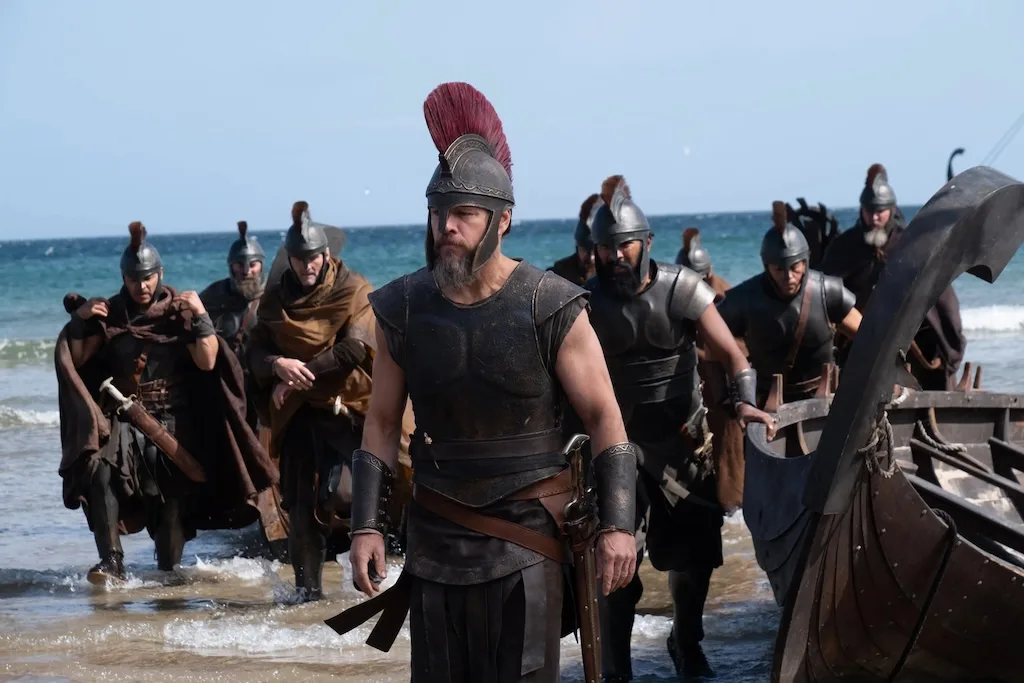
On the other hand, true to his philosophy of privileging real locations over large virtual settings, Nolan largely ruled out LED environments and distributed the filming between Greece, Italy, Morocco, Iceland and Scotland, seeking each landscape to provide authenticity to the Homeric hero's journey. Production took place for 91 days, ending even earlier than planned. From the coasts of the Peloponnese to the volcanic landscapes of Iceland to the Moroccan deserts, each location posed significant logistical challenges for a crew transporting IMAX cameras, hundreds of film cassettes and large-format equipment across some of the filming's most remote locations. In certain locations, some of the material even had to be moved manually due to the impossibility of access with heavy vehicles.
VFX work
As already happened in Dunkirk, Tenet o Oppenheimer, Nolan once again reduced the reliance on entirely computer-generated scenarios to a minimum. Many of the most spectacular elements were physically constructed, including boats, sets and a large-scale reproduction of the legendary Trojan horse. These elements later served as a reference for visual effects teams, who used digital tools mainly to expand settings, integrate mythological creatures, and complete sequences impossible to achieve using physical effects.
This approach facilitates a much more natural integration between photography, lighting and digital composition, reducing the need to artificially recreate the interaction of light on actors and sets.
Beyond the technical deployment, The Odyssey once again demonstrates Christopher Nolan's firm defense of the theatrical cinema experience. All production has been designed to make the most of IMAX screens, with photography designed specifically for the large format negative and a sound mix aimed at offering maximum immersion.
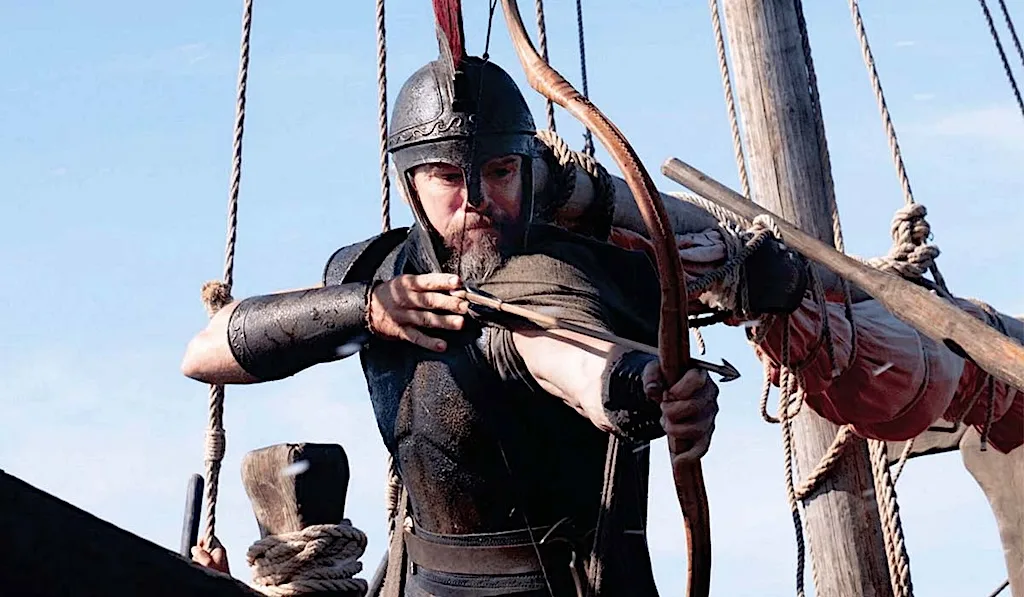 Traditionally, IMAX cameras had been associated with large optics and a visual language designed for documentaries or spectacular sequences. However, The Odyssey required a staging much closer to the classic drama. Next to Panavision and IMAX, the director of photography's team Hoyte van Hoytema worked with a set of lenses specifically selected to maintain the enormous resolving power of the 65 mm negative without giving up a more controlled depth of field and a more natural representation of faces. The objective was get away from the “permanent wide angle” feeling that has traditionally characterized the IMAX format.
He negative size, almost ten times greater than that of a Super 35 frame, provides enormous resolution capacity and tonal range, but also requires extreme precision in focusing. The camera department worked with minimal tolerances, especially in close-ups, where any movement of the actor could take the focus point out of the critical area.
The permanent use of IMAX cameras also forced us to redesign a good part of the movement systems. Operators used state-of-the-art remote heads, telescopic cranes and specially reinforced platforms to support camera-optics-magazine sets considerably heavier than those used in conventional digital production.
In sequences filmed on boats, stabilization was one of the biggest challenges of filming. The teams combined cushioned platforms, gyroscopic systems and complex coordination work between operators, machinists and the maritime department to maintain the stability of the frame without losing the physical sensation of the movement of the sea.
As for the lightning, Nolan's philosophy continues to be to intervene as little as possible on natural light. The photography of The Odyssey take advantage of the huge exposure latitude of the IMAX negative to record scenes with high levels of contrast without resorting to excessively invasive lighting. This allowed numerous exteriors to be filmed taking advantage of only carefully planned natural light windows.
Instead of building large lighting schemes, the team used extensive diffusion surfaces, large format reflectors and negatives to shape existing light, maintaining visual coherence between very different locations such as the Greek coasts, the Moroccan deserts or the Icelandic volcanic landscapes.
Finally, it should be noted that the new generation of cameras developed for this project demonstrates that the IMAX format can no longer be used only for spectacular sequences, but as a narrative tool for a complete feature film. If this platform ends up being incorporated into future productions, The Odyssey could mark a before and after in the evolution of large format photochemical film. More than a century after the birth of celluloid, Nolan once again demonstrates that innovation does not always involve replacing a technology, but rather taking it to limits that seemed impossible.
Did you like this article?
Subscribe to our NEWSLETTER and you won't miss anything.
Related articles
 Christie pushes contrast to the limit via software with VDR
 Trump's film tariffs: the Spanish industry positions itself in the face of a challenge of global dimensions
 The Film Academy recognizes Belén Atienza's career as a producer with the Elías Querejeta Award
 The Canary Islands, prepared to be the definitive setting for Spanish cinema after the removal of the limit on incentives
 TV3 broadcasts its second mountain race with a great technical display in the high mountains
 Cine Técnico Estudio launches its ambitious Film Direction and Photography course
 'Survivors 2017' begins with the greatest technical-human deployment
 Greater quality, flexibility and web services: the three paradigms of the future of television that Hispasat brings to IBC
 Live! Audiovisual carries out the largest deployment of mobile units in Ka band and 4G LTE
 Eurovision deploys its greatest technical device in the World Cup
 SGL carries out the greatest integration of its filing system with VSNExplorer at Telson Madrid
 ESNE launches an official career in animation and digital cinema design and production
 The Professional and Technical Museum of Cinema is born
 Christopher J. Dodd, president of the MPA, celebrates the Sustainable Economy Law and the talent of Spanish cinema