





Sony desarrolla un eficiente sistema para transferencia inalámbrica de electricidad
Parece ciencia ficción, pero no lo es. Numerosos grupos de trabajo y empresas I+D están apostando fuerte por el desarrollo de la electricidad wireless. Ahora, Sony ha dado a conocer su propuesta basada en resonancia magnética que destaca por su alta eficiencia energética siendo capaz de transferir 60 vatios de electricidad a una distancia de, por el momento, medio metro.
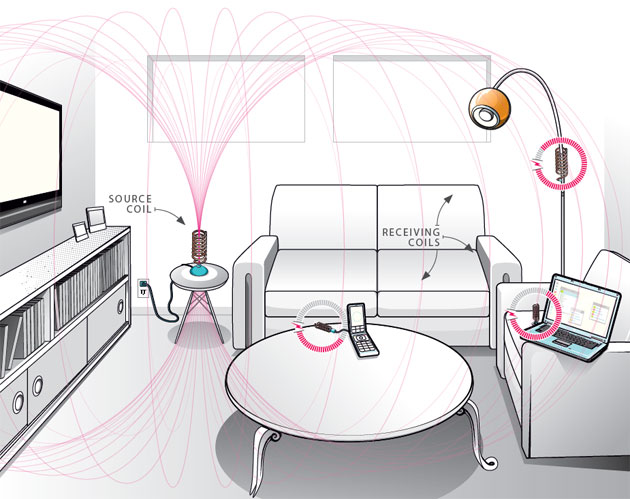
Sony Corporation está trabajando intensamente en un interesante desarrollo encaminado a enviar electricidad, un eficientísimo sistema inalámbrico de transferencia de energía que evita tener que usar cables de alimentación en dispositivos electrónicos tales como televisores. Con este sistema, es posible llevar hasta 60 vatios de energía eléctrica sin cable alguna a una distancia de 50 cm. Su eficiencia es de aproximadamente 80% y de aproximadamente 60% cuando se incluye un rectificador.
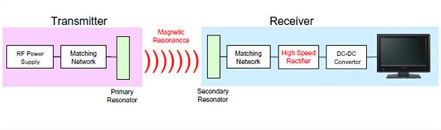
El nuevo sistema inalámbrico de transferencia de energía incorpora una forma de tecnología de transmisión de energía eléctrica sin contactos, basada en la resonancia magnética. Con la resonancia magnética, la energía electromagnética es sólo transferida a dispositivos receptores que comparten las mismas frecuencias resonantes de la fuente de energía, de manera que se mantiene la eficiencia de transferencia de energía, incluso cuando hay desalineamientos. Por otra parte, incluso si hay objetos metálicos situados entre el transmisor y el receptor, no hay inducción térmica.
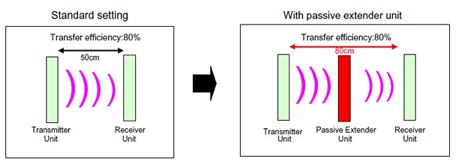
Sony ha aprovechado también sus largos años de experiencia en el desarrollo de tecnologías de radiofrecuencias de alta frecuencia para usarlas en productos de comunicaciones y radiodifusión inalámbricas a fin de crear un nuevo rectificador que realice tanto altas velocidades como altos niveles de eficiencia. El nuevo sistema inalámbrico de transferencia de energía combina estas tecnologías para entregar una eficiencia de transferencia de 60%, aun cuando se incluya un rectificador. Sony ha desarrollado también unidades expansoras pasivas configuradas en las mismas frecuencias de los dispositivos de transmisión y recepción, lo que permite extender la distancia de transferencia de 50 a 80 cm sin degradación de la eficiencia transmisora.
Con el aumento de productos conectados en red, el número de cables usados para conectar estos productos ha aumentado también. Si bien los cables de datos son rápidamente sustituidos por sistemas inalámbricos de comunicación, tales como Wi-Fi, la demanda de sistemas inalámbricos de transferencia de energía sigue creciendo también. Sony proseguirá sus esfuerzos por desarrollar otras tecnologías que respondan a las necesidades de los clientes para transferir energía en una amplia gama de productos, distancias y niveles de energía.
Mínima pérdida energética
Sony ha sacado partido de su larga experiencia y de su pericia en tecnologías de radiofrecuencias, y ha incorporado nuevos componentes óptimos para desarrollar un nuevo rectificador que combina altas velocidades y altos niveles de eficiencia. Este logro minimiza la pérdida de energía al transferir ésta del transmisor al receptor, y permite que productos tales como televisores o portátiles puedan ser alimentados eficientemente por vía inalámbrica.
Distancia extensible
Con el uso de unidades expansoras pasivas situadas entre el transmisor y el receptor es posible extender la distancia de transferencia sin degradación de la eficiencia. En experimentos llevados a cabo por Sony usando sólo dispositivos componentes, la distancia de transferencia ha podido ser extendida de 50 cm a 80 cm. Aun cuando generalmente se requieren transmisores y receptores relativamente grandes para transferir energía en distancias largas, las unidades expansoras pasivas pueden usarse para retransmitir energía entre un transmisor pequeño y unidades receptoras.
Un reto perseguido desde hace añosAunque Sony ha logrado reducir uno de los mayores escollos del sistema, la pérdida de eficiencia energética, la verdad es que desde varias instituciones y empresas de I+D se lleva años investigando sobre esta electricidad wireless. Uno de los grupos de trabajo que primero llevó con éxito la experiencia fue un equipo del departamento de Física del Instituto Tecnológico de Massachusetts (MIT) que logró encender una bombilla de 60W utilizando unas bobinas de cobre situadas a dos metros de distancia de ésta. Los integrantes de este grupo de trabajo, Andre Kurs, Aristeidis Karalis, Robert Moffatt, y los profesores Peter Fisher y John Joannopoulos) lograron llevar electricidad sin cables, pero con el inconveniente de perder casi la mitad de la energía en el camino entre las bobinas emisoras y la bombilla.
El ‘secreto’ de estos experimentos se encuentra en la resonancia magnética que hace vibrar un determinado objeto cuando se le aplica energía de cierta frecuencia. Cuando dos objetos poseen la misma frecuencia de resonancia (generalmente por debajo de 10 Mhz) intercambian energía sin que eso destruya los objetos situados alrededor. ‘Witricity’ utiliza la resonancia de ondas electromagnéticas con una frecuencia muy baja, exactamente de 10 Mhz.
Además de Sony, otras compañías como MIT están invirtiendo grandes cantidades de fondos en mejorar el sistema, incluso algunas empresas como MIT ya han puesto nombre a este sistema: WiTricity. Su CEO Eric Giler mostró por primera vez en público sus resultados en la Convención TED (Technology, Entertainment, Design) organizada por esta organización academicista el pasado verano en Oxford.

Did you like this article?
Subscribe to our NEWSLETTER and you won't miss anything.
Related articles
 Ikan develops the M-PTZ-Pedestal, a motorized lifting system for PTZ and teleprompters
 Provys desarrolla Sphere, un sistema escalable para gestión de canales
 Sony desarrolla la cuarta generación de su serie de microfonía inalámbrica UWP-D
 Sony desarrolla C3 Portal, un servicio que permite conectar las cámaras a la nube para producciones remotas y colaborativas
 Mediapro develops a robotic system to remotely operate cameras with heavy optics
 PMD-750: el nuevo sistema de microfonía inalámbrica de Marantz para cámaras DSLR
 Sony amplía su serie DWX con un nuevo sistema de microfonía inalámbrica digital
 Sony desarrolla nuevos discos SSD específicamente diseñados para la grabación de 4K
 ERECA desarrolla un sistema de transmisión por fibra para la Panasonic AW-HE120
 AsYouWish Creations desarrolla un sistema para interactuar con los spots de televisión
 TVN adopta el sistema Artist de Riedel para intercom digital inalámbrica
 Vislink desarrolla un sistema portátil de conexión satelital para entornos hostiles
 Barco desarrolla su sistema abierto Theater Management para cine digital
 Canon desarrolla un sistema especialmente pensado para estudios virtuales