





Vuvuzelas: the strident trumpets that drive television to despair
Sin duda, habrá a quienes les encante el sonido de las vuvuzelas pero las estridentes trompetas que se han popularizado en el Mundial están creando más de un dolor de cabeza a periodistas, realizadores y técnicos de sonido tanto de HBS, como host broadcaster, como del resto de cadenas de todo el mundo que se ven en la tesitura de atenuar el ruido, empobreciendo el ambiente en la retransmisión, o mantenerlo. La BBC ofrecerá en los próximos días la posibilidad de silenciar el sonido ambiente a través del popular botón “rojo” de su servicio digital activando el segundo canal de audio en dual.
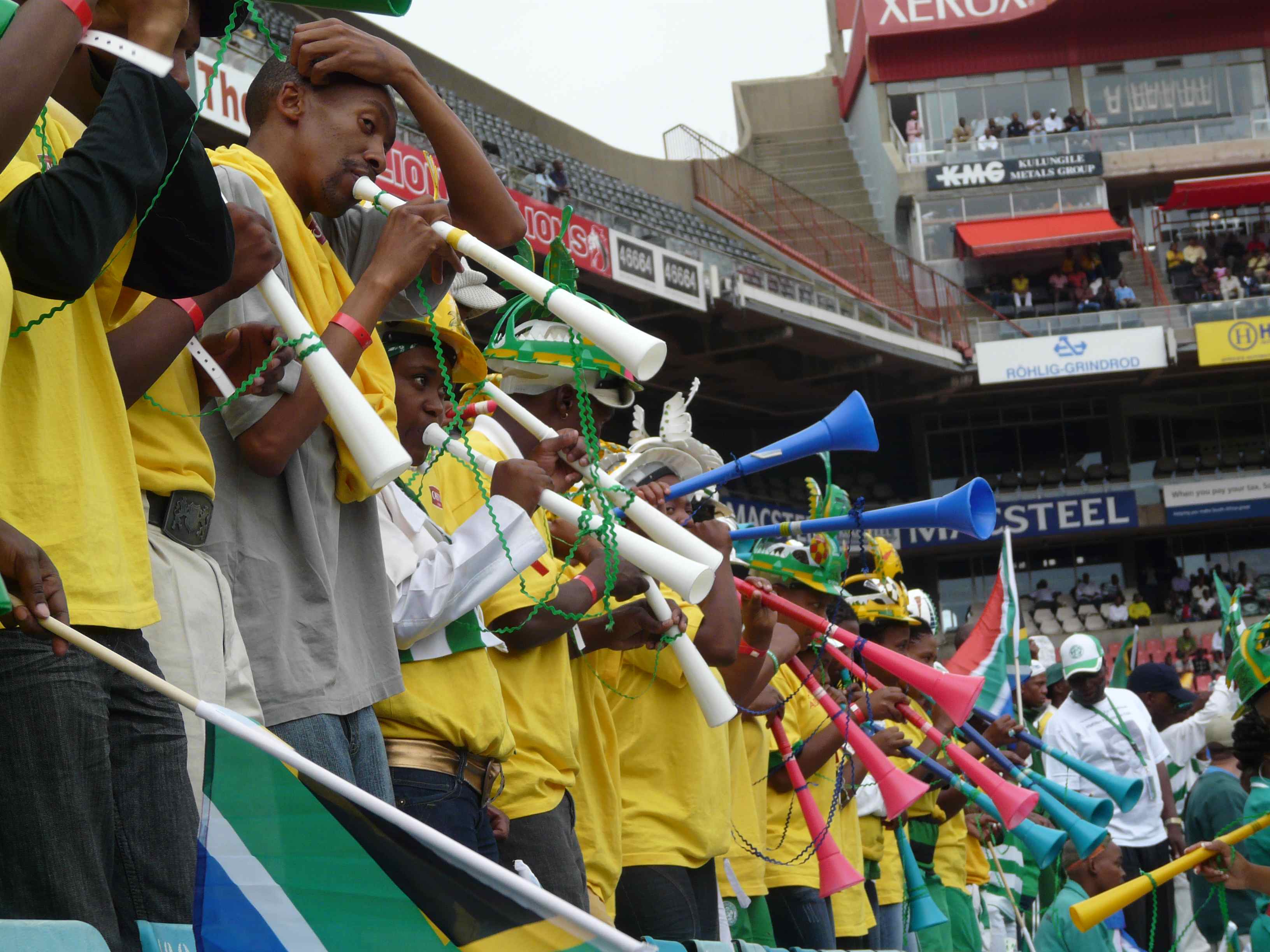
Si algo está caracterizando al Mundial de Sudáfrica es el estridente sonido de miles de vuvuzelas sonando sin parar a lo largo de cada encuentro. Aunque habrá quienes disfruten con su sonido, la verdad es que estas trompetas están causando más de un dolor de cabeza a periodistas, realizadores y técnicos de sonido tanto de la HBS, como host broadcatser, como del resto de cadenas de todo el mundo.
Pese a las continuas disculpas que los presentadores de las diferentes canales suelen hacer al inicio de cada partido, broadcasters como la BBC han visto sus centralitas inundadas de quejas de espectadores. Por ello, la pública británica ha optado por atenuar el zumbido de los famosos cuernos de plástico haciendo público en un comunicado que pese a su interés por transmitir lo más fielmente el ambiente en el estado, en caso de que “las vuvuzelas continúen con un gran impacto en el disfrute público, estudiaremos otras opciones para reducir el volumen aún más”.
De hecho, la BBC ofrecerá en los próximos días la posibilidad de silenciar el sonido ambiente a través del popular botón “rojo” de su servicio digital, lo que activaría un segundo canal dual en el que se habría eliminado el molesto sonido de las vuvuzelas.
Por su parte, las alemanas, ARD y ZDF, se han visto obligada sa optar por la locución tradicional con el micrófono en mano para amortiguar el permanente zumbido ambiental de las vuvuzelas. Tras probar en vano varios sistemas para aminorar el zumbido y visto que no se puede simplemente eliminar, puesto que forma parte del sonido ambiente suministrado por el agencia suiza Infront, con derechos exclusivos de la FIFA, los locutores han vuelto al tradicional micro de mano.
Por parte del host broadcaster, según algunas fuentes, la HBS habría pedido a la FIFA que prohibiera la entrada de las vuvuzelas, algo a lo que la Federación se ha negado, por considerar que forma parte de la sociedad sudafricana. Curiosa respuesta teniendo en cuenta que son precisamente las televisiones las que sufragan gran parte de la ‘fiesta del fútbol’.
Haciendo el agosto en junio
Algunas empresas se han lanzado a hacer su agosto de forma anticipada, y así, por ejemplo, antivuvuzelafilter.com ha lanzado una campaña para la venta en el mercado del “filtro antivuvuzelas”, destinado a eliminar el ruido de estos artilugios en su “equipo de música, ordenador, iPod, iPhone etc…”, según señala en su página.
Las vuvuzelas producen un sonido a una frecuencia de 235 hercios, aunque la molestia real las producen los armónicos, sonidos múltiplos de la frecuencia original que van desde 470, 700, 940, 1171, 1400 y hasta 1630 hercios. Precisamente son estas altas frecuencias las que el ser humano percibe con mayor sensibilidad y, por lo tanto, resultan más irritantes.
[youtube]http://www.youtube.com/watch?v=MoghZhwnOOg[/youtube]
Did you like this article?
Subscribe to our NEWSLETTER and you won't miss anything.
Related articles
 Google helps EBU television stations to digitize their archives
 The present and future of televisions goes through IP
 COVID drives remote production on television
 The influence of 5G on televisions, at the 5G Forum
 Más de 15 televisiones emiten en directo el debate electoral a cuatro
 YouTube redesigns its service for televisions
 Televisions from all over the world cover the proclamation of Felipe VI
 Imasblue will distribute the spots to television stations with DG VideoFusion
 Televisions become “ready” at CES
 Sennheiser desafía a las vuvuzelas con la función NoiseGard
 I Euro-Ibero-American Meeting of Educational Televisions
 Open war between television and cinema
 Merger earthquake in Spanish television
 Telecinco, líder de las televisiones comerciales en octubre con 15,2 de share