





Atomix HDMI, the DVS card designed for 3D
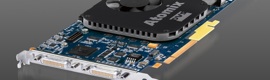
DVS está presentando en NAB el último componente de su familia de tarjetas de vídeo: la tarjeta Atomix HDMI. Cuenta con cuatro puertos HDMI y es capaz de manejar imágenes 3D de alta resolución gracias a su puerto 1.4a de última generación.
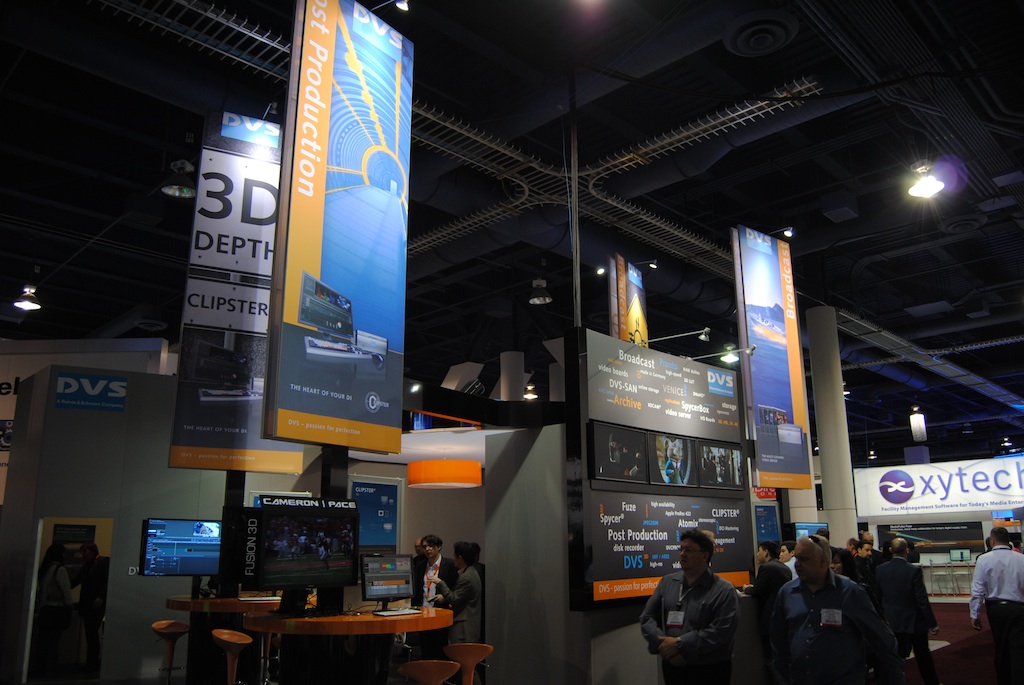
En esta edición de NAB, DVS (SL3305) está presentando un producto en primicia para postproducción y presentación de gama alta: la tarjeta de vídeo Atomix HDMI con la que complementará la línea de productos existentes de DVS y expandirá su rango de aplicaciones. Equipado con cuatro puertos HDMO, la tarjeta Atomix HDMI satisface incluso las más altas necesidades en edición de imágenes.
Atomix HDMI tiene un impacto impresionante mostrando lo último en tecnología: la tarjeta de video de altas prestaciones permite un procesado de imagen en tiempo real en cualquier resolución desde SD a 4K. Gracias a sus cuatro puertos HDMI, puede reproducir contenido 4K en cuadrantes a través de los cuatro puertos o a través de su puerto HDMI compatible con 1.4a. El contenido estereoscópico se puede extraer tanto por distintos puertos para cada ojo o a través del puerto HDMI 1.4a en full HD 3D, haciendo que la tarjeta Atomix HDMI sea perfecta para el mercado 3D, y la base hardware ideal para post-producción de largometrajes así como para presentaciones de alta calidad.
Para la edición de secuencias en tiempo-real, la tarjeta de vídeo permite reescalados programables para cambio de formato, una LUT 3D, múltiples LUTs 1D así como diversos conversores de espacio de color. Todas las etapas de procesado se pueden utilizar también independientemente para cada canal en operaciones de dos canales, de forma que la tarjeta de vídeo Atomix HDMI se dirige hacia vídeo de gama alta, post-producción así como aplicaciones de presentación. Características adicionales incluyen una captura y reproducción a través del link dual 3.0 Gbps SDI, 16 canales de audio embebidos así como 16 canales AES/EBU. El potente kit de desarrollo de software (SDK) propio de DVS está disponible para Windows, Linux y Mac OS, permitiendo un control sencillo y de baja latencia para todas las funciones hardware. El interfaz RS-422 integrado en la tarjeta DVS se puede utilizar para controlar máquinas profesionales de vídeo para transmisión de vídeo con precisión a nivel de cuadro.
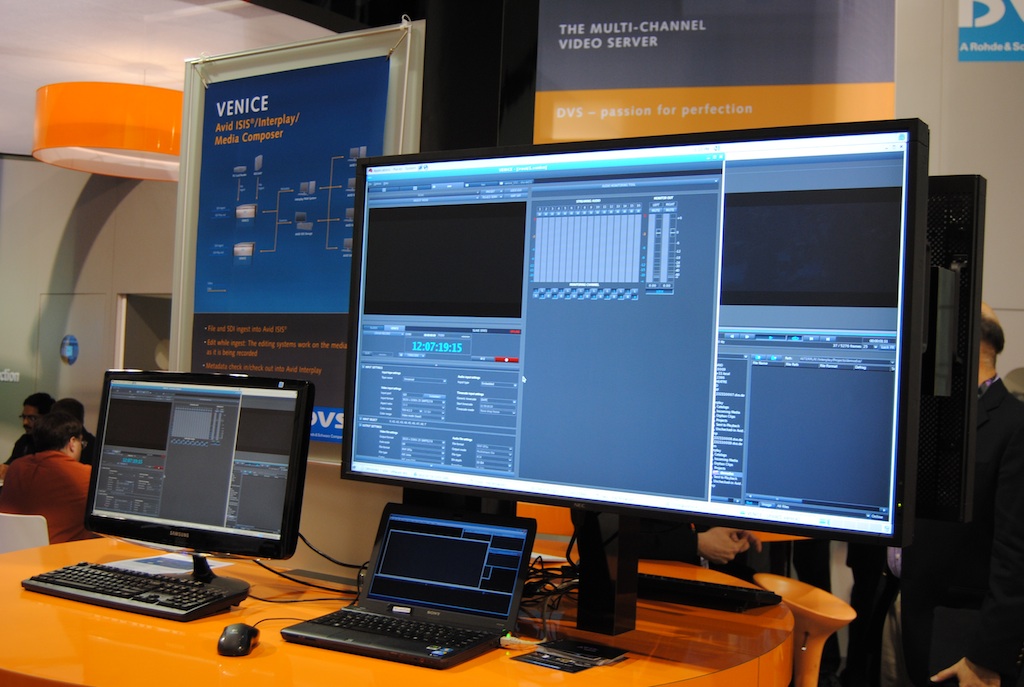
Venice
DVS está también mostrando en Las Vegas importantes mejoras en su servidor multicanal. Lanzado hace dos años, ha conseguido posicionarse como una solución a prueba del futuro para la ingesta y emisión en tiempo real y se puede integrar sin esfuerzo en cualquier entorno gracias a su estructura de sistema abierto. El servidor de video soporta una variedad de formatos comprimidos y puede intercambiar material con los últimos sistemas NLE, incluyendo Avid Media Composer y Apple Final Cut Pro.
Las principales características del servidor DVS incluyen la capacidad de trabajar con el sistema de almacenamiento Avid ISIS y con Interplay y gestión de activos de producción. La combinación de los sistemas DVS y Avid permite que el usuario lleve a cabo ingesta de video en directo por medio de HD-SDI y con ingesta de archivo de almacenamiento de media Professional Discs utilizando Venice. Además de Final Cut Pro, Venice también soporta muchos otros sistemas no lineales. Su variedad de codec y capacidades de multicanal proporcionan al usuario máxima flexibilidad. Gracias a su función “edit while write” (editar a la vez que se escribe), el material de video puede ser visionado y editado a la vez que se graba.
Venice se puede usar con ingesta 3D y con play-out 3D, asegurando así un flujo de trabajo en directo estereoscópico sin fisuras. Venice, que esta integrado con el software STAN (analizador estereoscópico) del Instituto Fraunhofer Heinrich-Hertz, asegura que el trabajo diario de los equipos de producción S3D sea mucho mas sencillo, porque analiza y corrige los parámetros, como puede ser la geometría, distancia de cámara y línea de base estereoscópica en tiempo real y gestiona la grabación y la emisión de material 3D estereoscópico en calidad HD, consiguiendo así ahorrar mucho tiempo y haciendo que la edición adicional se vuelva superflua.
Did you like this article?
Subscribe to our NEWSLETTER and you won't miss anything.
Related articles
 RTS designs NOMAD, an intercom designed for critical communications
 Quicklink ST250 – an all-in-one studio hardware solution for remote production
 Clay Paky Sinfonya Profile 600: a new LED luminaire designed for television
 Quantum225: the new Digico console designed for a changing world
 Amimon develops Connex, a latency-free HD video transmission solution designed for drones
 MOG Mobile Studio: la solución basada en MXFSpeedrail pensada para unidades móviles
 Petrol Bags launches a bag specially designed for large format camera accessories
 Sachtler develops the FSB 6 fluid head, designed for the Blackmagic Cinema Camera
 Shure FP, wireless microphone designed for DSLR
 Shure FP, wireless microphone designed for DSLR
 Orad and IBIS announce PowerPlay, a MAM solution designed for sports
 Gekko Karesslite 6012: iluminación LED pensada para chromas
 Genelec 4000 Series, designed for audiovisual installation
 DVS Atomix will process up to 4K in real time without compression