





3D needs to escape from glasses
James Cameron with 'Avatar' reminded us that there is an audiovisual technique, very widespread in cinemas in the 1950s, with which we can increase the realism of films. But why didn't 3D triumph in the 50s? Is 3D going to be useful for everything?... Gorka Muñecas (Soda.tv) reflects on these and other questions in this Tribune.
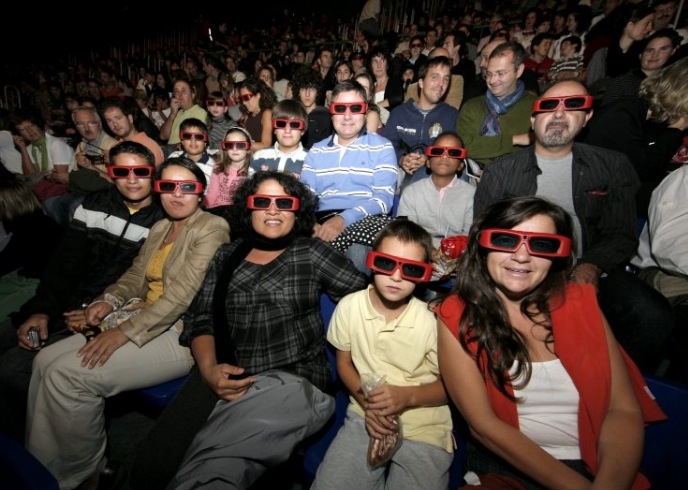
James Cameron with Avatar He reminded us that there is an audiovisual technique, very widespread in cinemas in the 1950s, with which we can increase the realism of films. But why didn't 3D triumph in the 1950s and end up disappearing if hundreds of films were produced? Why did our parents stop finding 3D movies attractive?
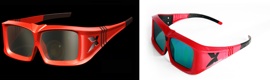
I suppose that the stereoscopy technology with anaglyph images ended up making the audience dizzy since the image quality behind the cardboard and colored plastic glasses left a lot to be desired. In recent years, technology has advanced a lot. We have polarized glasses and especially active glasses that allow us a more real three-dimensional effect. Although we still need those glasses.
Maybe we will continue going to the cinema to see 3D movies, but I highly doubt that many entire families will sit in front of the living room television, put on glasses, and watch 3D movies on a regular basis. This cumbersome process goes against the movie-couch-relax philosophy. So we are not going to fool ourselves. No matter how much the system has improved, 3D will not spread until we have glasses-free technology at democratic prices.
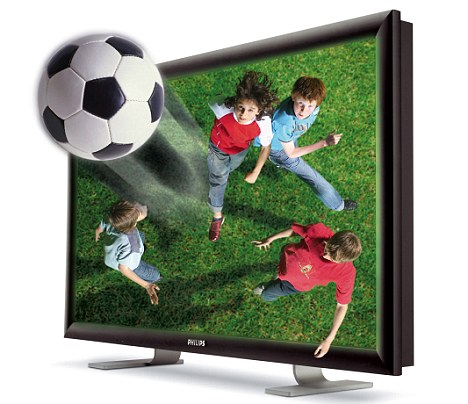 More accessible technology
A lot of work is being done to achieve more accessible technology both in glasses-free screens and in production systems. The rig system with two cameras is slow and expensive and in its place more single-body systems will emerge, especially aimed at television production. At the moment, video gamers are the ones driving the car. Games are natively created in 3D and much more realism can now be achieved using stereoscopy.
But we come to the big question: is 3D going to be useful for everything? It seems that everyone agrees that watching a football match in stereoscopy is much more exciting. The big shows have been the first to be filmed exclusively for television and it works. But will we see the news, afternoon magazines and cooking shows in 3D?
Although in a few years we will be able to offer our viewers everything in 3D, we must look at whether 3D contributes to the format in question. At Soda.tv we believe that stereoscopy has a long way to go and will have applications that we have not even imagined yet. We are working to understand this new language that requires a new way of making audiovisuals.
Gorka Dolls
Strategy and Innovation Soda.tv
Did you like this article?
Subscribe to our NEWSLETTER and you won't miss anything.
Related articles
 When creativity needs numbers: management, technology and strategic vision in Beta
 John August: “a strong collective of screenwriters is needed to achieve good jobs and fair remuneration”
 Campo Vidal: “the audiovisual industrial sector needs clarity, stability and momentum”
 Dolby 3D: the path to glasses-free autostereoscopy
 Dolby takes a new step to forget glasses in 3D
 A work on stereoscopy without glasses wins the IBC Best Conference Paper Award
 SES Astra and iPont to show glasses-free 3DTV at IBC 2011
 Panasonic, Sony, Samsung and XpanD agree on a standard for active 3D glasses
 3D television without glasses… in five years
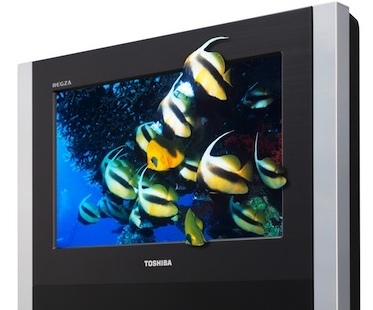 Toshiba will launch the first glasses-free 3D screen in December
 XpanD launches its second generation of 3D glasses
 Sunny Ocean Studios develops 3D technology… without glasses
 3D: from the glass… or the glasses with which you look
 4K and 8K 3D…without glasses!