





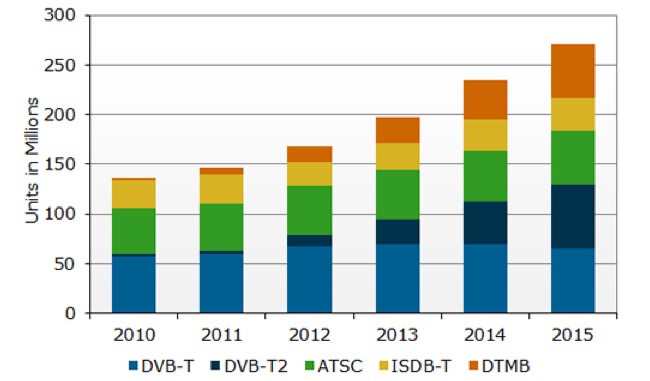
En 2015, el número de dispositivos DVB-T y DVB-T2 será similar
Según un estudio de NPD DisplaySearch, el compromiso de los gobiernos de Rusia y la India con el DVB-T2 significará un impulso definitivo a la segunda generación de este estándar. En cuanto al 3D, mientras mercados como el norteamericano se estacan, en Europa Occidental y China se incrementa la demanda.
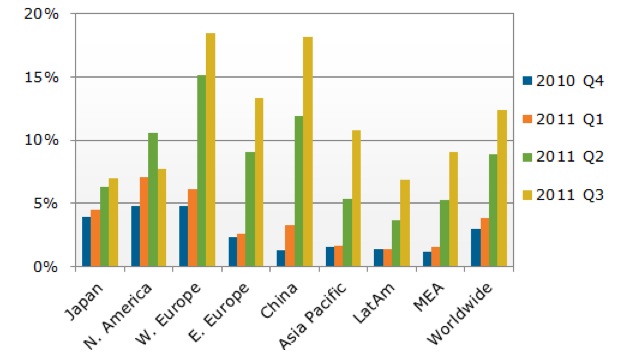
Según el estudio de mercado Quarterly TV Design and Features Report que NPD DisplaySearch ha elaborado para el Q4, las regiones más entusiastas con el 3D son Europa Occidental y China, mientras que el empuje de los televisores estereoscópicos pierde fuelle en América del Norte.
Paul Gray, Director de Investigación de Electrónica en NPD DisplaySearch, se ha mostrado sorprendido “al encontrar que el 3D parece ser una característica mucho más popular en China que en América del Norte, con una tasa de penetración dos veces mayor en el último trimestre. Nuestro informe pone también de manifiesto que en América del Norte y Japón es más bajo que el de Oriente Medio”.
 El informe revela que los consumidores de América del Norte tienen a televisores de menor coste con menos funciones, a diferencia de otras regiones. Los consumidores chinos son, por el contrario, entusiastas de televisores ampliamente equipados con, entre otras características, 3D, LED de retroiluminación y televisión inteligente.
El informe también examina el crecimiento de la televisión inteligente en las diferentes regiones y revela que hay varios mercados emergentes, donde la banda ancha fija se está generalizando. En Arabia Saudita, Polonia, Filipinas e Indonesia, que cuentan con entre 10 y 15 veces más abonados a la 3G de banda ancha, los consumidores aún quieren ver video de Internet en sus televisores, pero su uso es totalmente diferente en los mercados desarrollados, donde se conecta el televisor directamente a una línea de banda ancha por cable.
DVB-T2
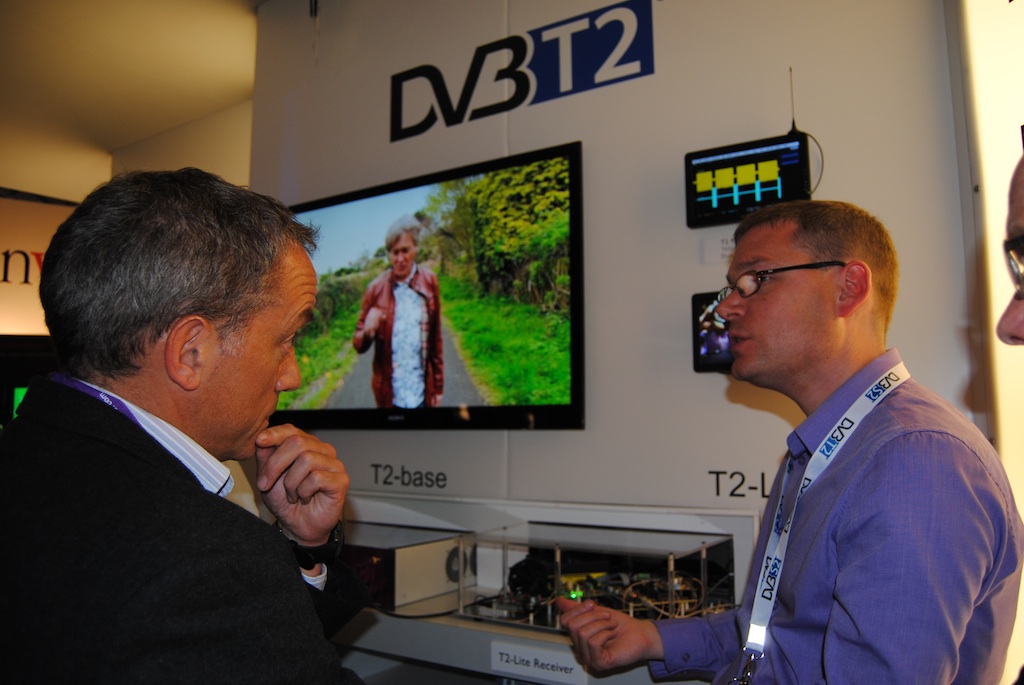
La adopción simultánea de nuevas tecnologías es también clara en la radiodifusión digital. Mientras que los mercados desarrollados han introducido la digital terrestre desarrollando el apagón analógico, una segunda generación de transmisión digital (DVB-T2) está irrumpiendo en Europa, Oriente Medio y Asia.
El informe únicamente las previsiones de las perspectivas de recepción de DVB-T2 en la TV. Se estima que una masa crítica de países han adoptado o DVB-T2. Los envíos de DVB-T2 con capacidad fija se espera un crecimiento de 3,4 millones en 2011 hasta 64,7 millones en 2015.
“En 2015, el número de dispositivos DVB-T y DVB-T2 será similar”, añadió Gray. “La decisión de los gobiernos de Rusia y la India para adoptar el T2 ha dado un gran impulso de confianza, rápida adopción y la reducción de costes”, señala Gray.
Según el informe, el nuevo estándar de transmisión digital no sólo se está introduciendo en los mercados maduros como el Reino Unido y Suecia, sino también en Nigeria y Kenia.
Did you like this article?
Subscribe to our NEWSLETTER and you won't miss anything.
Related articles
 El número de usuarios de AVoD aumenta significativamente en Europa
 The number of devices that access Movistar+ breaks its historical record with almost 10 million
 En 2024 habrá en el mundo 8.400 millones de dispositivos con asistencia por voz
 El número de hogares españoles abonados a plataformas audiovisuales crece en un 20%
 El sistema de vídeo Free Viewpoint de Canon ofrece una experiencia similar a la vivida dentro del terreno de juego
 Samsung will overtake Sony in the number of connected television devices this year
 Mobile devices attract the most viewers in global AVOD services
 Mobile devices now account for more than half of online video views
 8 billion connected video devices in 2017
 Mobile devices, far from cannibalizing television, complement it
 DVB aprueba la especificación NGH para dispositivos de mano
 Advertising investment in pay and open television is already similar in the United States
 El consumo de contenidos mediante dispositivos conectados en EE.UU. alcanza ya el 38% de los hogares
 SES Astra prevé que la evolución del 3D en el hogar sea similar a la de la alta efinición