





AJA actualiza el firmware de los Ki Pro y Ki Pro Mini
Esta actualización incorpora algunas mejoras como transferencia de ficheros sobre Ethernet y Firewire, así como la nueva función “super out” de grabación de código de tiempo.
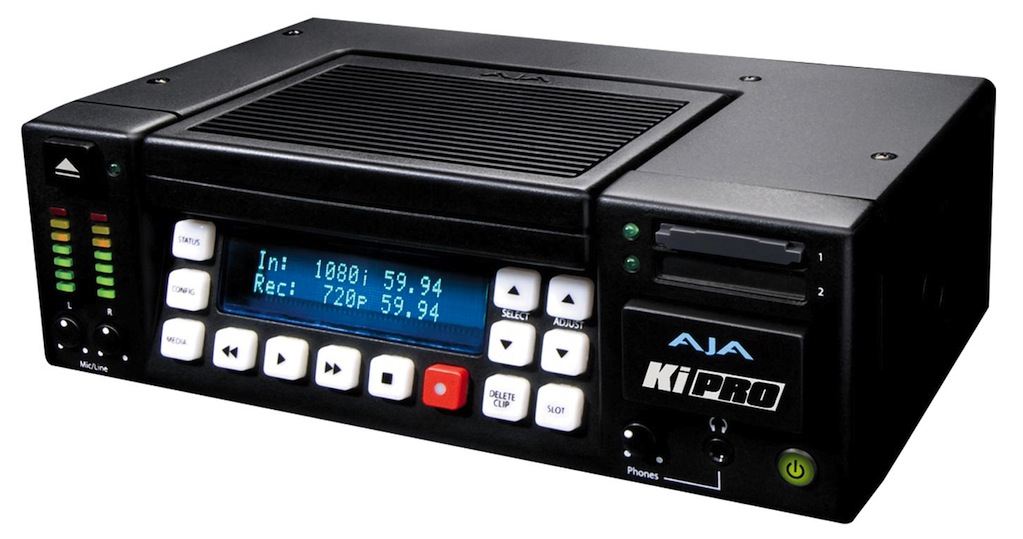
AJA Video Systems acaba de lanzar la versión v3.0 de su firmware para sus grabadores flash disk a 10 bit 4:2:2 Ki Pro y Ki Pro Mini. Esta actualización será gratuita para los actuales usuarios de estos sistemas, e incorpora algunas mejoras como transferencia de ficheros sobre Ethernet y Firewire, así como la nueva función “super out” de grabación de código de tiempo.
Ki Pro podrá ahora configurarse para la transferencia de datos a equipos Apple vía FireWire 800 en situaciones donde no la unidad no es fácilmente accesible a removibles físicos de datos.
La conexión de datos a través de LAN permitirá a los usuarios transferir ficheros al Ki Pro y Ki Pro Mini a través de una red estándar Ethernet.
Ambos grabadores podrán también grabar timnecode y transportarlo en la señal de vídeo, proporcionando de un vistazo el estado a los usuarios a través de salida de monitor, sin tener que comprobar el propio dispositivo. También es conveniente de cara a realizar un seguimiento del código de tiempo a través de todo el proceso de postproducción.
El firmware permitirá, además, la creación de listas de reproducción de video.
Cabe destacar que el soporte al FireWire 400 (1394a) permitirá remotear inicio y parada, así como trabajar con código de tiempos, en cámaras HDV que carezcan de LTC en salida SDI.
El Ki Pro Mini soportará también el código de tiempo procedente de la Sony NEX-FS100 y otras cámaras Sony NXCAM.
Ki Pro ahora admite tarjetas de memoria ExpressCard/34 (34 mm de ancho) aunque no ExpressCard/54.
De cara a ampliar el número de aplicaciones en entornos de postproducción, estos grabadores cuentan con RS-422 adicional y soporte de LANC que permite a los operadores de cámara controlar la grabación a través de controladores basados en LANC y cámaras compatibles con LANC.
La última actualización de firmware permitirá crear, guardar y recuperar la configuración del dispositivo en cualquiera de los dos grabadores.
Por último, reseñar la incorporación de una opción de grabación continua por la que podrá continuar la grabación en casa de pérdida de la señal de entrada de vídeo, generando un cambio de estado en el frame de video, y retomar la grabación automáticamente cuando vuelva la señal.
Did you like this article?
Subscribe to our NEWSLETTER and you won't miss anything.
Related articles
 Canon actualiza el firmware de siete de sus cámaras profesionales
 Litepanels actualiza el firmware de los paneles LED Gemini 1X1 y 2X1
 Panasonic actualiza el firmware de la Lumix GH6
 Lawo actualiza el firmware de sus productos para radio a la versión 6.6
 Canon actualiza el firmware de algunas de sus cámaras más populares
 Canon actualiza el firmware de la XF705 con más opciones de grabación y HDR en alta velocidad
 Atomos actualiza el firmware de sus grabadores Shogun para admitir CDNG RAW
 AJA actualiza el firmware de Ki Pro Ultra para soportar ficheros Avid DNxHD
 Yamaha actualiza el firmware de sus consolas digitales TF
 Canon actualiza el firmware de la XF205
 AJA actualiza el firmware de sus cámaras Cion
Panasonic actualiza el firmware de la popular AJ-PX270
AJA actualiza el firmware de sus cámaras Cion
Panasonic actualiza el firmware de la popular AJ-PX270
 Canon actualiza el firmware de sus cámaras profesionales e incorpora el español en el menú
 Sony actualiza el firmware para XDCAM EX