





'Eva', Goya for excellence in the Best Special Effects
Arturo Balseiro y Lluís Castells se imponen a Raúl Romanillos y David Heras (‘Intruders’), Reyes Abades y Eduardo Díaz (‘La piel que habito’) y Raúl Romanillos y Chema Remacha (‘No habrá paz para los malvados’).
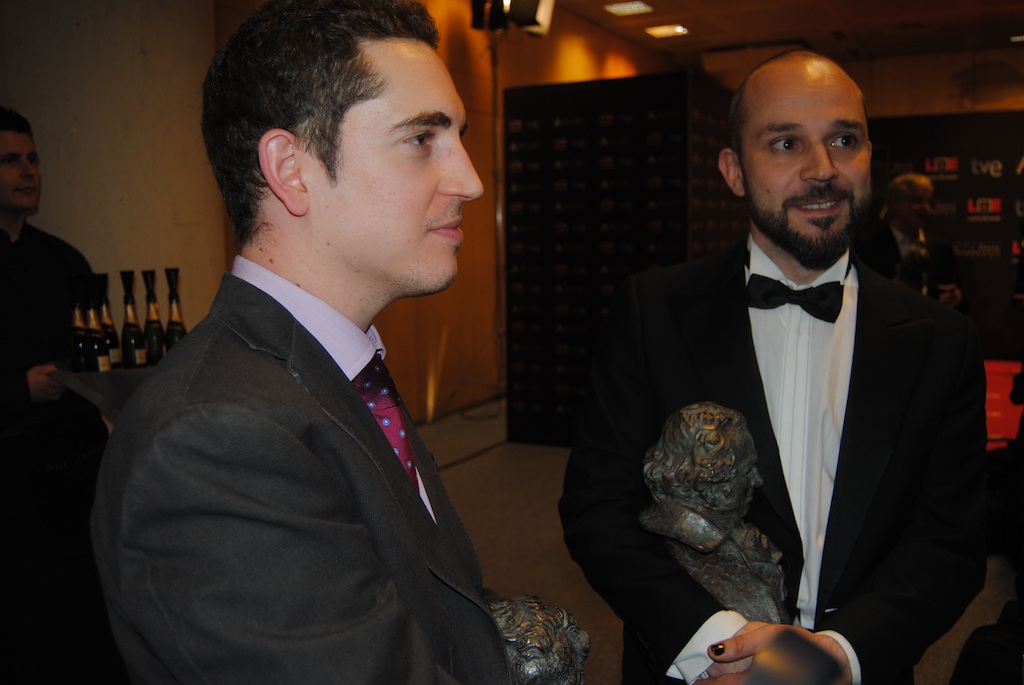
Arturo Balseiro y Lluís Castells se han alzado con el Premio Goya 2012 a los Mejores Efectos Especiales por su labor en la película de ciencia ficción Eva, imponiéndose a Raúl Romanillos y David Heras (Intruders), Reyes Abades y Eduardo Díaz (The skin I live in) y Raúl Romanillos y Chema Remacha (There will be no peace for the wicked).
La película ha supuesto el debut en la dirección de Kike Maíllo (con una amplia trayectoria en publicidad y videoclips), y cuenta como protagonistas con Daniel Brühl, Marta Etura, Alberto Amman, Lluís Homar y la presentación de la niña Claudia Vega como Eva.
Eva es la primera película de robots producida en España, y surge del proyecto Ópera Prima de ESCAC/Escándalo Films, la compañía de producción de la Escuela de Cine de Cataluña, de donde han salido nombres como J.A. Bayona (El Orfanato) y películas como Tres días con la familia. La cinta cuenta con un equipo técnico de altísimo nivel formado en la ESCAC, en el que destacan Elena Ruiz, Lluis Castells y Oriol Tarragó.
Esta producción de 4,5 millones de euros ha sido un verdadero éxito internacional, vendida a casi todo el mundo, incluido Estados Unidos, donde los Weinstein han adquirido los derechos para su estreno en cine. Tras recoger el premio, Arturo Balseiro y Lluís Castells reconocían a Panorama Audiovisual, no sin cierta tristeza, que Eva, más que ‘Made in Spain’, tenga más un halo de producción hollywoodiense. “Se trabajó mucho el envoltorio, el diseño de producción de la película, todo el apartado visual, tanto fotografía como vestuario y efectos, tratando de dar un aspecto más clásico de gran producción cuando no deja de ser una producción española, lo que demuestra que si quieres, puedes llegar a hacer este tipo de producto y la gente responde”.
Según los técnicos de efectos especiales de este filme, entre los aspectos más complicados de la película resalta el gato autómata, “que era muy difícil de manipular, porque no hay nadie dentro –lógicamente- y tenía que haber varias personas que lo manipulasen para hacer que se moviese de forma parecida a un animal real, algo que era difícil. Asimismo, en el caso del traje del robot teníamos que hacer un traje que fuese lo más pequeño posible, que entrase en una persona sin hacerle daño, y que fuese fácil de llevar en el rodaje”.
“Lo bueno que tiene Eva es que tanto los efectos físicos en rodaje como los digitales se llevaron muy bien y el resultado es bastante digno e interesante. A nivel de efectos hay más de 700 planos, lo que supone un récord de planos tratados digitalmente, y no estamos hablando solamente de tratamientos de color, sino también de otros elementos de tipo pantallas o algún robot, algo que simulaba ese mundo de ciencia ficción para dar sensación de credibilidad. Pero si a nivel de planos eran unos 700, a nivel de efectos especiales eran más de 1.000. El efecto más elaborado fue el que realizamos conjuntamente con Reyes Abades, que construyó un andamio de varios metros donde Marta Etura está colgando y cae en la película, hubo varias variaciones de montaje que hicieron que ese plano lo repitiéramos infinidad de veces”, ha añadido Balseiro y Castells.
El hecho de que no sea muy habitual que exista tanta carga de efectos visuales y efectos digitales en una película española hace que en nuestro país no exista, como sí ocurre en Gran Bretaña, EE.UU. o Canadá, una única empresa capaz de absorber toda este trabajo, por lo que para abordar la elaboración de los efectos de Eva se unieron un total de 6 empresas, cada una de las cuales estaba destinada a encargarse de un apartado concreto.
Fassman se encargó de llevar el racord de look de todas las empresas, asegurándose de que todos los efectos se mantuvieran igual a nivel de estilo y de acabado, así como del desarrollo de escenas como la de la caída o la espalda de la niña robot; la zaragozana Entrophy se ocupó del sistema de bolitas con el que interactúa Daniel Brühl; Infinia se encargó de integrar todas las pantallas futuristas; Mixing Motion integró todos los motion graphics que aparecen en estas pantallas; Dvein se encargó de los títulos de crédito de inicio; y Cubica diseñó del gato robot. “Todos nos pusimos de acuerdo y no hubo ningún problema. El hecho de que fuese una ópera prima hizo que Kike Maillo estuviese todo el tiempo supervisando los efectos visuales. Tenía las ideas muy claras y eso lo simplificó mucho todo”, han concluido.
Go to the GOYAS 2012 SPECIAL
Did you like this article?
Subscribe to our NEWSLETTER and you won't miss anything.
Related articles
 Telson and In Extremis win the Goya for Best Special Effects for 'El 47', a feature film with VFX in 80% of the shots
 Twin Pines and In Extremis win the Goya for best visual effects for 'Modelo 77'
 El Ranchito wins another Goya for Best Special Effects for 'Way Down'
 'Akelarre', recognized with a Goya for the power of its special effects to recreate an evocative atmosphere
 'Súper López': first Goya for a special effects team with a woman in charge
 David Heras, winner of the Goya for Best Special Effects for 'Handia', joins Elamedia Estudios
 The magic of Jon Serrano and David Heras achieves the Goya for best effects for 'Handia'
 Rivera and Castells' realistic special effects in 'Anacleto' win a Goya
 The impressive special effects in 'El Niño' conquer the Goya
 Juan Ramón Molina and Ferrán Piquer win the Goya for best special effects for 'The Witches of Zugarramurdi'
 ‘Noé’, con revolucionarios efectos especiales, estrena tráiler
 “The most difficult thing was creating the second wave of the tsunami” say the Goya winners for the special effects for 'The Impossible'
 The films shortlisted for the Oscar for Best Special Effects
 Presentaciones ‘a lo Minority Report’… ¡sin efectos especiales!