





Christie YK200 mobile digital luminaire makes German TV debut
The German TV program 'Deutschland sucht den Superstar (Germany is looking for the superstar)' relies on mobile projection. It is the first time that the motor-controlled double-arm mobile clamp with digital projector, Christie YK200, is used in German television.
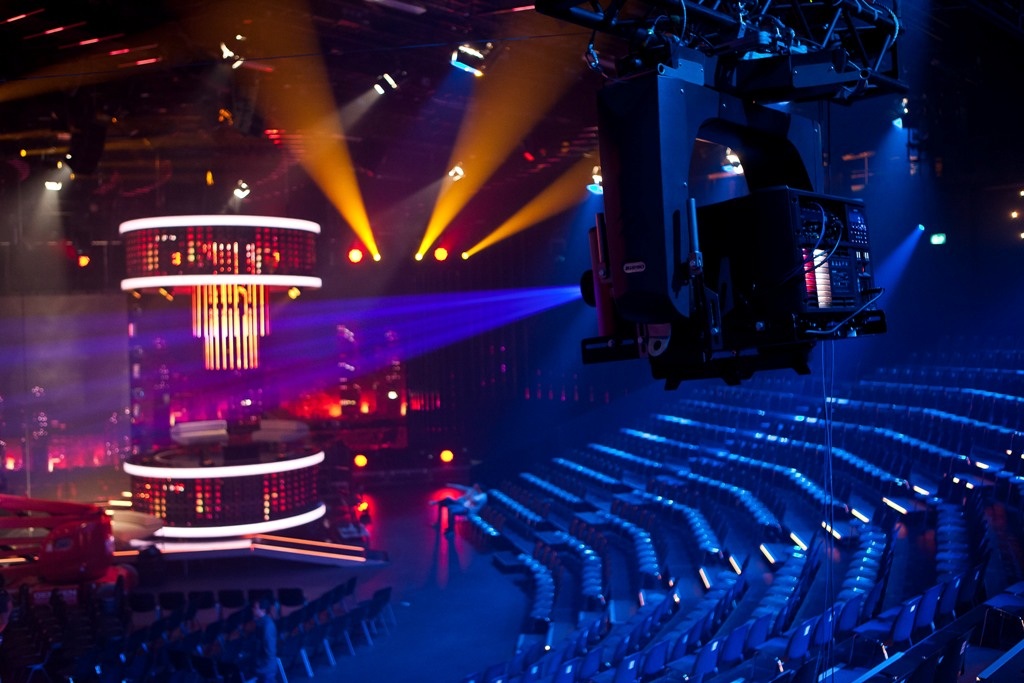
Since it started in 2002, Deutschland sucht den Superstar (Germany seeks the superstar) has enjoyed long success in Germany's television ratings and has become the number one talent show in this country in recent years. DSDS, as it is commonly called, is the German equivalent of the British television music competition Pop Idol. Its winners often top the charts and the same applies to the visual and technical highlights of the programme, which are responsible for the internationally successful creative team of Florian Wieder, who is in charge of staging, and Manuel da Costa, lighting director.
The goal is to allow the singers to look like they are already true superstars and to present each act in a way that is complementary to the artist and the song, while at the same time distinguishing themselves from other acts while staying within the general framework of the program.
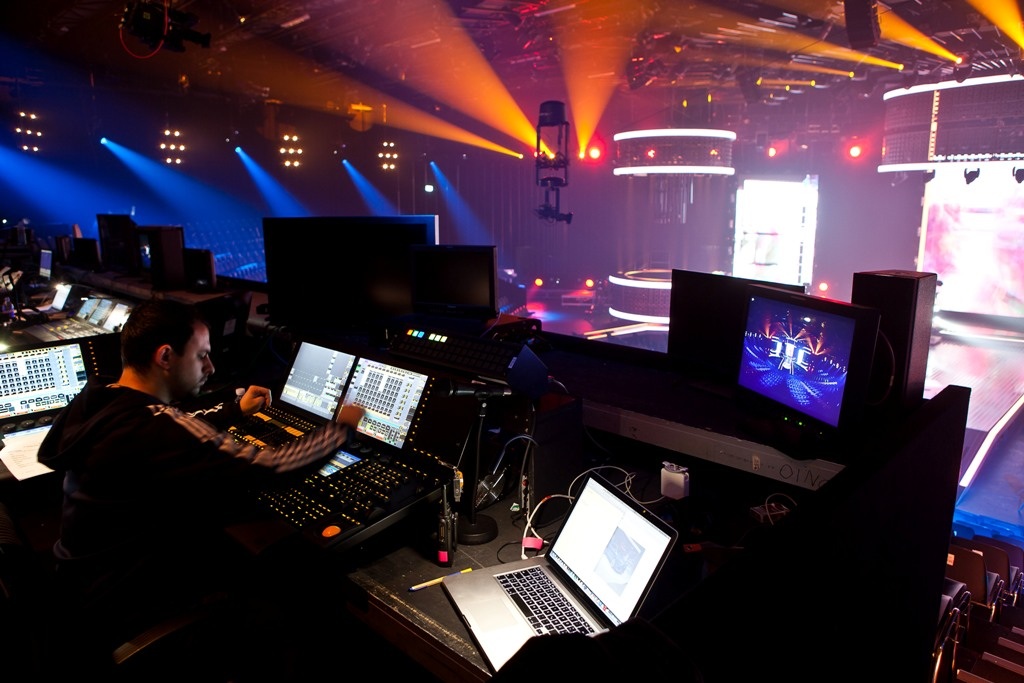
To achieve that goal, the show's creative team meets with content designer Falk Rosenthal and lighting designer Manuel da Costa, and presentation ideas are generated to the point where da Costa and his team can put them into practice on-site. The team members are media designer Stephan Flören and Björge Block, both in charge of operating the video mixing console during the different programs.
YK2000
At the ninth edition of DSDS, the team decided to use the new Christie YK200 mobile digital luminaire. It was the first time that this motor-controlled double-arm moving clamp with digital projector was used on German television.
YK200 supports high-performance projectors with a luminous flux of 12,000 to 22,000 lumens and is one of three models in the Christie Nitro Solutions series. The series also includes the Christie YK50 for the 7,000 ANSI lumens Christie LX700 and LHD 700 projectors, as well as the Christie YK100 single clamp, which can be used with either a digital projector unit (with a light output of up to 15,000 ANSI lumens), or a xenon light head. For all moving head projectors, settings and movement are controlled via DMX protocol.
What is particular is that the pan and tilt functions can be repeated with 100% accuracy at the touch of a button, meaning that operators can not only project moving images, but also direct the projector over different projection areas, a feature that is essential in theater or television productions.
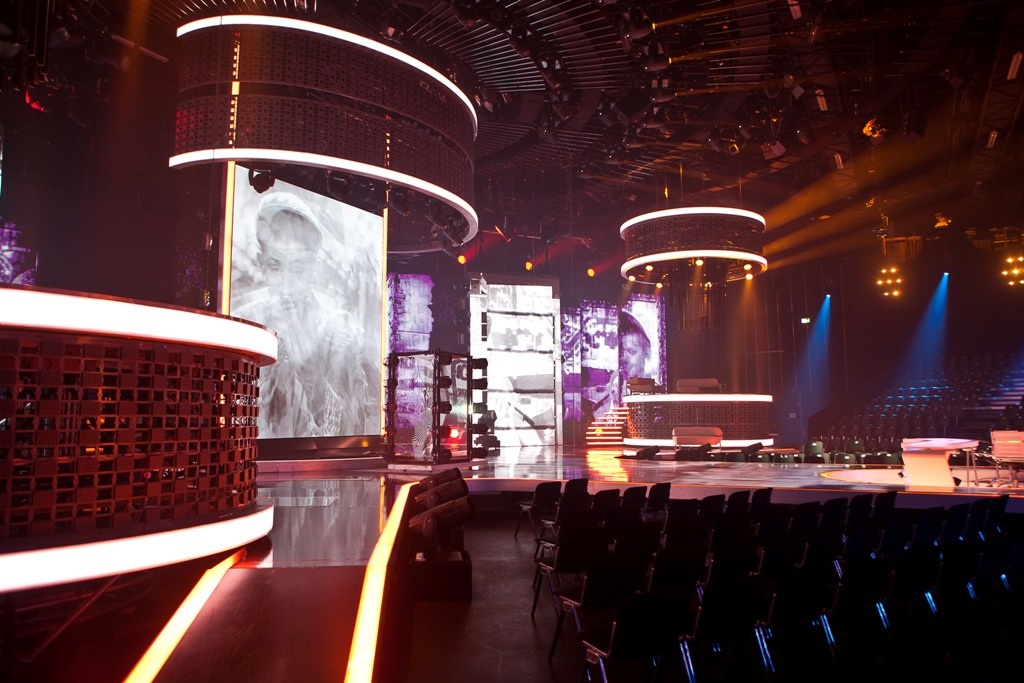
For the DSDS program, the dual clamp was used with a Christie Roadster HD20K-J, a 20,000 lumen 3-chip DLP projector, which provided powerful images on the television studio set. Aside from projecting video content onto a wall or onto people, it can also be used as a full-fledged moving light.
More possibilities with a moving head
Manuel da Costa explains how the deployment of this new system was adopted: "In previous programs, we often had a projector that was used for projection on special configurations or on the artists on stage. But the problem here was always the fixed suspension of the projector and consequently its direction towards a defined fixed space. This is the reason why the YK200 is ideal for our purposes. The moving head of the projector allows us to work with a much larger area."
The resources required for each individual song and each act are considerable. From the search for creative ideas through the production of content to the synthesis of everything at the mixing desk, the entire team of ten people is very busy in every act.
The studio video signal was transmitted to the Christie YK200 from a GrandMA VPU, while all the rest of the lighting signals were transmitted via DMX using a GrandMA 2. Projections were made on the walls, on particular constructions on the stage and even on the artists themselves. The difficulty here often lay in the management of the individual layers.
Da Costa has assured that "in part, it was a question of projecting on objects positioned in different ways, for example on large three-dimensional letters, while cutting out the artist: it is not a simple task."
Speed and flexibility
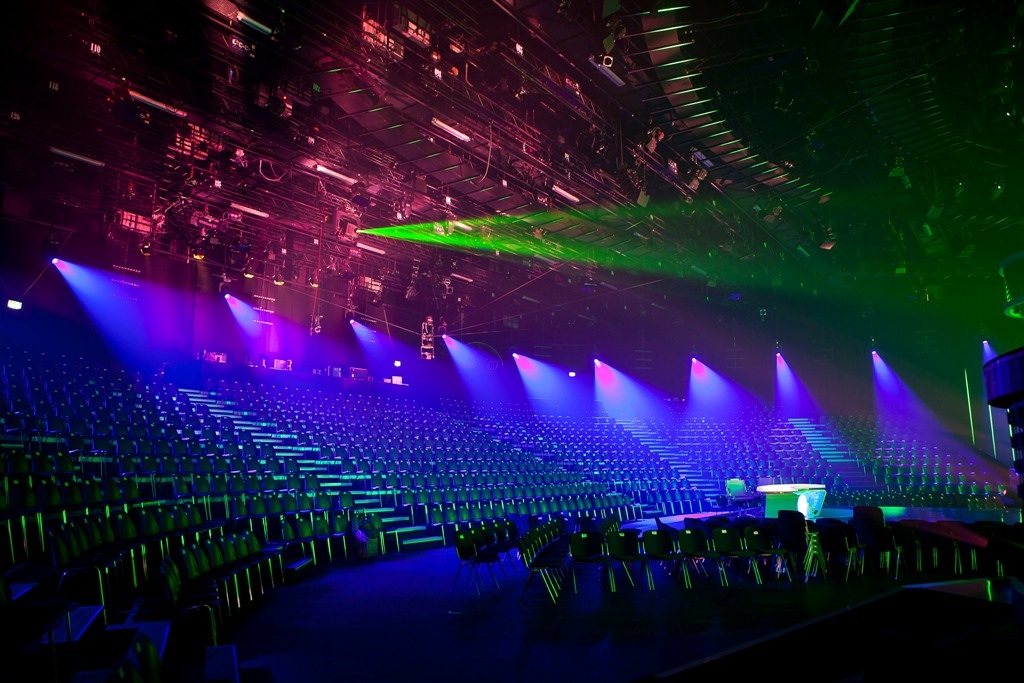
Another additional challenge is always the short sequence between each song where each construction needs to be precisely positioned on stage in order to ensure that the projection is accurate. “Sometimes we only had two minutes and this was just another example where the Christie YK200 proved its worth,” explains da Costa. “In several situations we had to readjust the projector, because the position of the studio build was not quite correct, but this was a big advantage of the moving heads, and it worked fantastically with the YK200,” he adds.
Manuel da Costa was delighted from the first use of the system. “It is a high-level device, both in terms of brightness and operation, and what impressed me most was the precision of the positioning, especially due to the large format of the device that had to be moved,” he commented. The projection distance was up to 25 meters.
Another important point for the creators of the DSDS program was the reliability of the shutter, since there was a lot of laser lighting used during the show. “We needed to rely 100% on the shutter,” says da Costa.
During the program it was Stephan Flören and Björge Block who worked with the Christie YK200. They confirmed the good performance throughout the show: "After an initial introduction phase, the two video operators got on with the device superbly. Of course it always takes time to program the different projection sizes and areas, but since the clamp motors work very intelligently, this was carried out very quickly," adds Da Costa.
Stephan Floren, who was responsible for monitoring the Christie YK200 on site, was delighted with the “mobile projector”, as he calls the device. "This mobile projector is truly one of a kind. The light output is miles ahead of other devices; it is simply brighter by 5,000 ANSI lumens and keeps the rest of the light in the studio, while the device is also very fast for its size."
Media server operator Stephan Flören was especially happy with the time-saving attributes: "We have been able to get things done much faster than they would normally have been without the Christie mobile projector. We have to design new visual effects for each act and this is where the device has helped us enormously."
Floren was also very impressed by Christie's support. “We were able to clarify all the questions in advance, so everything in the studio was very relaxed.” In summary, Floren assures that “add to this the fact that the YK200 worked accurately and continuously without any problems during all the programs.”
Did you like this article?
Subscribe to our NEWSLETTER and you won't miss anything.
Related articles
 IMAX takes stock of its debut at NAB
 Broadcast Solutions integrates a new mobile unit for the German WDR
 Sony and Germany's TVN mark a milestone in live production with the new 4K HDR mobile unit
 V-600UHD, Roland's new 4K HDR multi-format audio and video mixer makes its debut at ISE 2019
 Qvest Media designs and integrates a mobile unit and a DSNG for the German news agency Ruptly
 German Triofilm TV invests in Grass Valley equipment for its new mobile unit
 The German Bildquadrat updates its main mobile unit with Riedel
 JVC's GY-HM650 also enables mobile production for cable networks
 The German RecordLab launches its first mobile unit equipped with Grass Valley
 The German Wige Solutions equips its new mobile with Hitachi cameras
Grass Valley upgrades a mobile outdoor unit from Germany's Media Mobil
The German Wige Solutions equips its new mobile with Hitachi cameras
Grass Valley upgrades a mobile outdoor unit from Germany's Media Mobil
 The German TVN updates its Ü2HD mobile for HD and 3D relying on Riedel technology
 Christie makes the world's largest 3D projection possible
 Christie's M Series of three-chip DLP projectors makes its debut in Spain