





Los profesionales debaten sobre la nueva televisión y la revolución híbrida
La Asociación Española de Empresas de Televisión Interactiva (AEDETI) ha celebrado hoy en Madrid sus III Jornadas Internacionales centrándose en esta ocasión en la revolución híbrida que supone el consumo de contenidos online en multidispositivo.
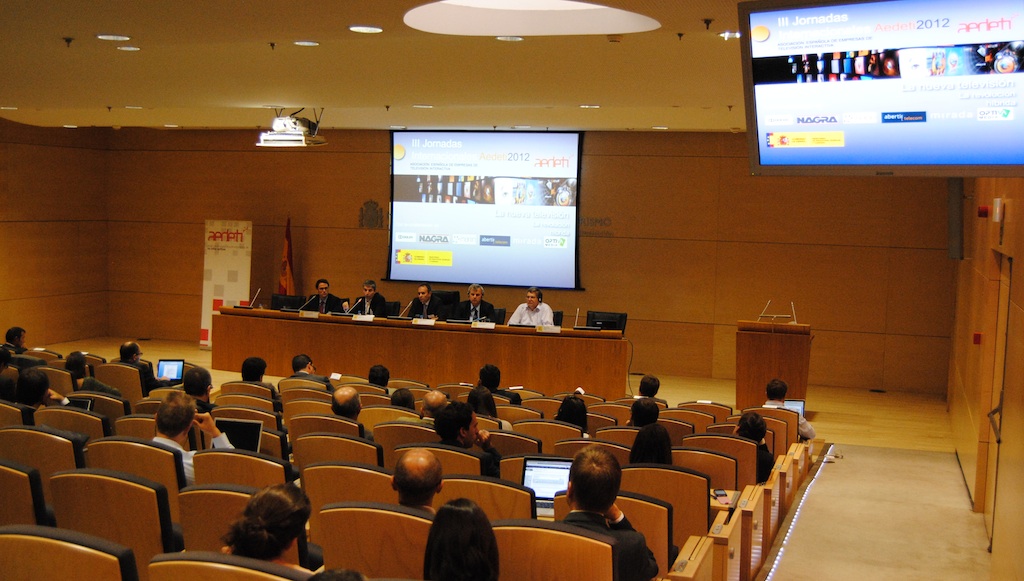
José Luis Vázquez, presidente de AEDETI, ha introducido las III Jornadas Internacionales de la Asociación Española de Empresas de Televisión Interactiva (AEDETI), centradas en esta ocasión en la televisión conectada, asegurando que si el año pasado fue un año de expectativas de avance, éste es un año de celebración porque se está cimentando el desarrollo de la televisión híbrida.
Alberto Rodríguez Raposo, director general de Telecomunicaciones y Tecnologías de la Información, ha inaugurado la jornada asegurando que el pasado 24 de agosto, “el Consejo de Ministro asentaba las bases para la liberalización del dividendo digital en España y ponía las bases para la reordenación de la televisión digital dando un impulso con la introducción de nuevas tecnologías como la HD y la tv conectada, anticipar el despliegue de la telefonía 4G y buscar una simplificación importante en la liberalización del dividendo digital evitando costes a los ciudadanos”.
El próximo año será la fecha marcada por los grandes países europeos para la introducción de la telefonía móvil de cuarta generación. Desde la SETSI, según Rodríguez Raposo, “creemos que hay que acortar las bases para la introducción de esta tecnología y sus modelos de negocio adyacentes. Somos el país de Europa que mayor consumo de televisión digital, y al mismo tiempo somos uno de los países con mayor ocupación de frecuencias en la zona del dividendo”.
El director General de Telecomunicaciones recordó que en la Unión Europea no hay todavía un acuerdo sobre las fechas de introducción en la nueva banda ancha del segundo dividendo digital por lo que creía que había que hacer “los mejores esfuerzos” para evitar la inversión en antenización de canales que ahora están implicados en la puesta en marcha del nuevo espectro radioeléctrico.
Eso sí, recordó que en febrero del presente año se estableció en Europa que la banda para el mismo debería quedar disponible para servicios móviles en enero de 2013, aunque se podría solicitar una prórroga para lograr ese nuevo dividendo digital. A pesar de que, según él, nuestro país tiene unas “circunstancias peculiares, porque es donde más se consume tv digital y donde hay más canales en la banda de ese dividendo”, cree que “España, como la mayoría de los grandes países europeos, no va a solicitar esa prórroga para introducir la telefonía móvil de cuarta generación”.
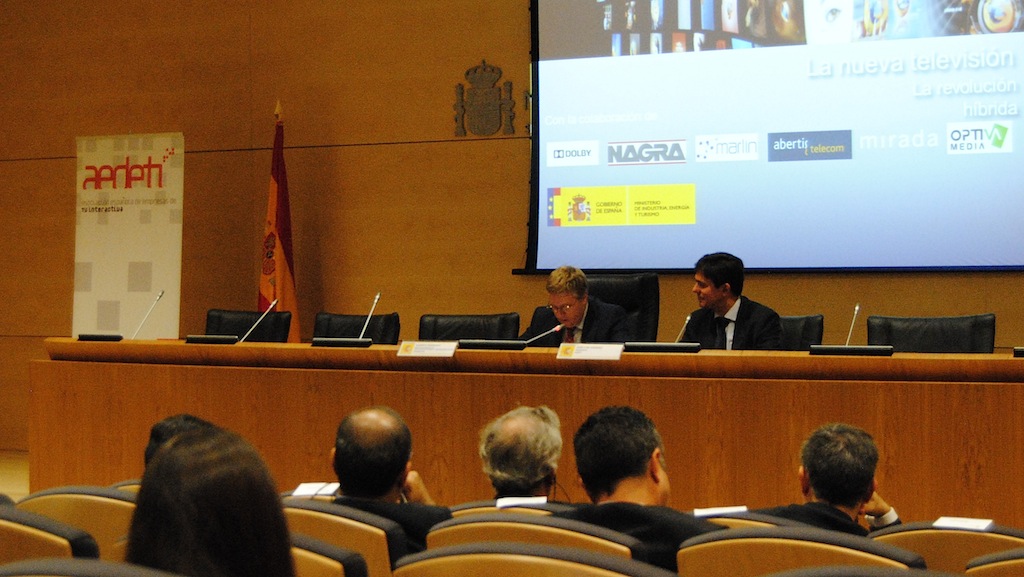 “Uno de los objetivos a la hora de planificar el espectro es que en un futuro más o menos cercano se producirá la liberalización del segundo dividendo digital, por lo que deberíamos tener en cuenta esta circunstancia para evitar en lo posible la inversión en antenización de los canales que pudieran verse afectados para no imponer a los ciudadanos en pocos años un proceso de re-antenización”, ha añadido.
El director general ha asegurado que “el plan de digitalización aprobado a finales de 2011 era un plan caro, por lo que en la situación actual debemos trabajar con un ahorro de costes de unos 900 millones de euros, del plan anterior, a unos 300 millones”. Además, ha asegurado que Ministerio de Industria trabaja ya en una norma reglamentaria para un nuevo Plan Técnico de la TDT, donde se regulará la transición al dividendo, los procesos de simulcast, abandono y adopción de los nuevos múltiplex.
Con respecto a la televisión conectada, la ha enmarcado “en un proceso incipiente y de definición de los modelos. Veo un paralelismo entre los modelos de negocio digital y los de la televisión conectada: terminales y dispositivos que orientan la base del negocio; publicidad online; sistemas operativos; conectividad; y distribución de contenidos de pago o abierto”.
Todavía se plantean muchos retos como la gestión de derechos de contenidos y DRMs, acceso multipantalla y multidispositivo, y posición de los radiodifusores y su modelo de explotación, según ha recaldado el director general.
“Vamos a seguir apostando por la tv conectada, y a seguir apoyando los trabajos del Foro Técnico, además del respaldo a los proyectos en I+D en la medida de lo que sea posible” ha concluido.
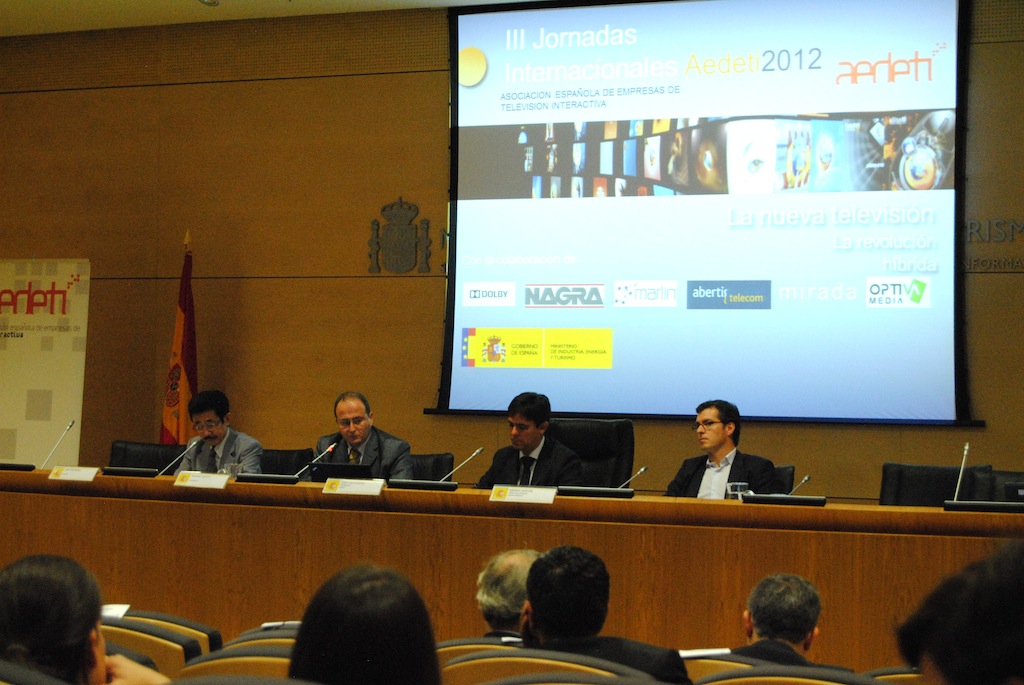
Protección de contenidos en OTT
En una mesa redonda moderada por el presidente de AEDETI, han participación Ignacio Sanchís, director geneal de Nagra Ibérica; Hide Hosokawa (Marlin); y Massimo Savazzi (Playready), analizando el reto de la protección de contenidos en servicios OTT.
Hosokawa, en nombre de las cinco compañías que conforman la asociación Marlin, se ha mostrado muy satisfecho con la elección de este estándar de para la distribución de contenidos en el mercado español.
En la actualidad existen más de doscientos millones de productos con la tecnología de protección de contenidos de Marlin en todo el mundo, presente en plataformas como TNT 2.0 en Francia o Freeview en Reino Unido.
Por su parte, Savazzi ha destacado el papel de Playready con más de cincuenta año de experiencia en la protección de contenidos y un papel destacado en la estandarización Ultravioleta.
La tecnología de Playready, está gestionada por Microsoft y cuenta con una encriptación estandarizada.
Sanchís se ha congratulado por los pasos dados que han permitido el incipiente desarrollo de HbbTV en España. Unos 120 operadores de todo el mundo cuentan con protección de Nagra, y en el caso de Europa la mitad de los ingresos procedentes de la televisión de pago están vigilados por esta compañía que invierte más de 20% de sus ingresos en I+D.
El director de Nagra ha llamado la atención sobre su tecnología de Nagra PRM (Persistent Rights Management) para protección de contenidos desde la propia entrega al dispositivo y, también, dentro de los dominios de la red del usuario. Una veintena de operadores de todo el mundo, como Echostar Dish, PRISA Tv o Mediaset protegen sus contenidos OTT con Nagra PRM.
“Nuestro concepto es que la seguridad no es un producto sino un servicio end-to-end evitando problemas de fragmentación en la seguridad, garantizando servicios y obligaciones en la prestación de la solución”, ha asegurado. “Estamos comprometidos con la estandarización. Es evidente que la interoperabilidad es una de las barreras para un despliegue masivo y efectivo de servicios OTT”, ha añadido Sanchís.
Con respecto al desarrollo de nuevos servicios en un entorno de recesión económica, Hosokawa ha manifestado su convencimiento que “pese a la crisis, podemos ofrecer nuevas opciones a los consumidores. Su demanda está siempre cambiando y son los ganadores los que responden siempre a estos cambios. Los consumidores están disfrutando ya contenidos a través de múltiples dispositivos, por ello es muy importante acomodarse a su demanda”.
Sanchís ha afirmado que “las tecnologías de la nueva generación de televisión lo que pueden hacer es permitir a los proveedores de servicios y broadcasters ofrecer nuevos contenidos, modos de monetización… adaptando la oferta a los usuarios llegando a partes del mercado que no estaban cubiertos hasta ahora y generar nuevos modelos de negocio. Todo puede ser así, si los contenidos están convenientemente protegigos. La tecnología abre nuevas posibilidades de negocio, pero también puede ayudar a la eficiencia y a la contención de costes”.
Savazzi cree que “la tecnología debería apoyar la agilidad en el mercado. El éxito siempre se relaciona con empresas que rápidamente han aprovechado nuevas posibilidades de negocio”.
Con respecto a la estandarización, el director de Nagra ha mostrado el compromiso de su compañía por la interoperabilidad en los protocolos de streaming, y ahí MPEG DASH es clave y la implementación de DRM son clave. No creemos que un proveedor pueda lanzar un servicio multipantalla con un único DRM según el contenido o el canal de distribución.
Sanchís ha asegurado, que con soporte de un buen número de fabricantes, Nagra está intentando estandarizar un entorno simulcrypt de DRM. No veo a nadie preocupado por la seguridad, y debajo de casi todos los modelos de negocio está la protección de contenido. Quizás porque el contenido que se está ofreciendo multidispositivo no es el más premium, pero esto va a cambiar. Cuanto más dispositivos haya y en lugar de catch up se ofrezcan canales live premium con grandes eventos deportivos… habrá una gran presión del pirateo y habrá que ver qué garantías yh compromisos tiene un proveedor de contenidos, quién decide qué dispositivos se rebocan y cuáles no… hay muchas preguntas que nadie se plantea hoy y sería buen que las fuésemos pensando”.
“Lo que tenemos que proteger no es el contenido sino los ingresos de una empresa. Da igual que sea HD o 4K, incluso contenido gratuito. Necesitamos proteger los ingresos del propio negocio y esto supone nuevos retos para ofrecer, por ejemplo, Internet películas, incluso antes de ir a las salas de cine”, ha resaltado Savazzi.
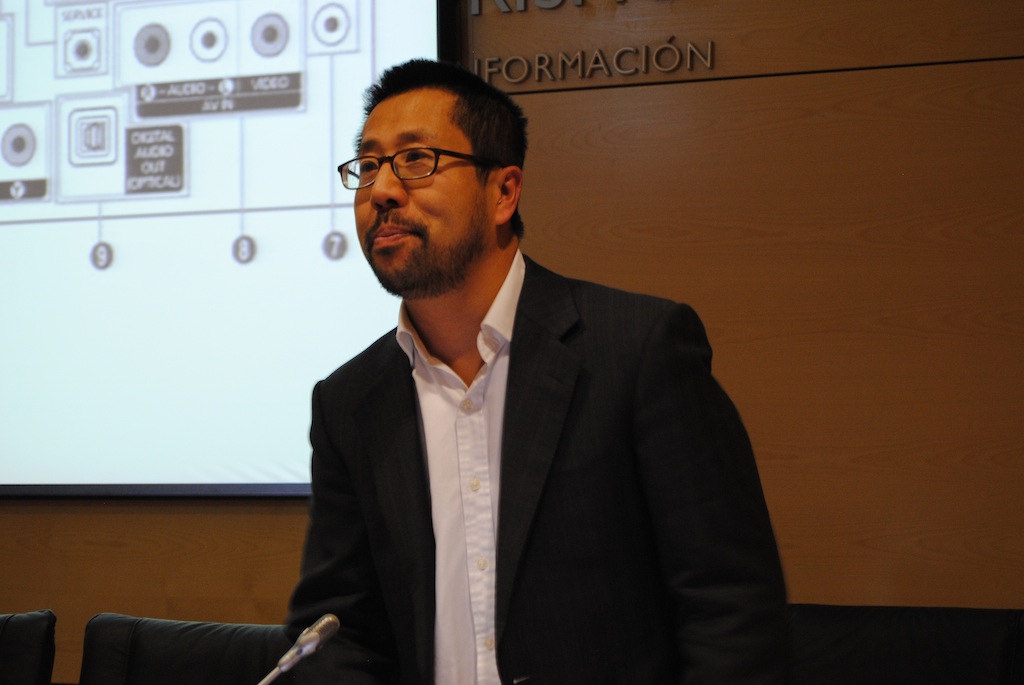
Nuevas formas de consumo televisivo
“El futuro de la televisión no corre ningún peligro mientras siga ofreciendo contenidos interesantes”. Así de rotundo se mostró hoy Paul Lee, responsable de tecnología, medios y telecomunicaciones de investigación de Deloitte en las III Jornadas AEDETI. Para él, ningún otro soporte podrá reemplazar en los próximos años a este medio, a pesar de la proliferación de aparatos tecnológicos que inundan e inundarán cada vez más unos hogares en los que, según él, “dentro de 15 años habrá más dispositivos conectados que enchufes”.
Lee, que además de ser responsable del millón de euros que invierte cada año su compañía en investigación sobre todo cuanto acontece en el medio televisivo, es columnista del diario Financial Times, destacó como principal virtud de la televisión que es una “actividad social que satisface necesidades que tiene el ser humano como relajarse y desconectar de su vida diaria, ya que, a diferencia de otras tecnologías, te permite reunirte con la familia”. Aunque es consciente de que los jóvenes la ven cada vez menos, puntualiza que éstos, a medida que se vayan haciendo mayores, apostarán de nuevo otra vez por ella.
Una muestra clara del interés de la gente en el medio televisivo es, según él, que “pese a la crisis, cada vez se compran más televisiones”. Como ejemplo de ello puso al Reino Unido, donde en la actualidad se venden entre 8 y 10 millones de televisores al año y donde como mucho cada tres años se reemplazan por otros nuevos. “En vez de comprar coches se compran televisiones”, señaló.
Teniendo por tanto en cuenta que, como indicó Paul Lee, “la televisión forma parte de nuestra vida social, porque pasamos frente a ella una cuarta parte del tiempo que estamos despiertos”, lo que también ha constatado es que cada vez se tiende a adquirir aparatos más grandes, por lo que prevé que “en 2020, como mínimo una tercera parte serán de más de 42 pulgadas”.
Aunque reconoce que “a mucha gente, sobre todo joven, le gusta chatear o mandar sms y twitter mientras ve televisión”, Paul Lee también lamenta que la interactividad con los programas es mínima, “se prefiere hablar con amigos”. Buena prueba de ello es para él un dato como el que mientras que en el Reino Unido el 70% de las familias ya puede acceder a la televisión conectada, tan sólo lo hace el 5%, lo que demuestra que “mientras la tecnología sí ha sido desplegada, el consumo no”.
Eso no quita, como precisa, que cada vez haya más demanda de vídeo a la carta y que cada vez sea mejor la calidad de los productos, pese a que “lo que más se ven son contenidos para adultos”. Por lo que respecta a nuestro país, el principal problema que ve en este sentido es que “la banda ancha suele tener precios muy elevados mientras que en otros países, como Reino Unido, hay mucha gente que no paga nada por este servicio”.
Lee ha llamado la atención sobre el hecho que si sumamos todas las horas que un consumidor pasa en las redes Facebook, Twitter, LinkedIn… este minutado en países potentes en el uso de Facebook como Reino Unido, está aún por debajo del consumo televisivo. “Esto demuestra que muchas veces sobrestimamos lo nuevos y subestimamos a la televisión”, ha asegurado.
La televisión satisface necesidades como relajarse, reunir a la familia ya que es una actividad social en el concepto más clásico.
Con respecto al consumo multidispositivo, Lee sostiene que según los estudios que maneja Deloitte no está demostrado que la segunda pantalla sea amenazante para el hecho de ver la televisión. Al revés, las segundas pantallas incrementan el consumo.
En Reino Unido, el 70% de las familias ya pueden acceder a televisión conectada a través de una conexión integrada o mediante o dispositivo periférico ya sea consola de juegos, Bluray, tabletas o con PC/Mac. “Mucha gente no se da cuenta de que pueden conectar su televisor. Al contar con buenos contenidos en abierto por satélite, cable o TDT, las familias no se preocupan por una conectividad bimodal. Ésta es una tendencia que cambiará en los próximos años”, ha afirmado.
Lee ha recalado en la cuestión de que no hay una correlación directa entre la penetración de la banda ancha y un mayor consumo. Aunque mejore la calidad de la banda ancha, también aumenta la calidad en la demanda. “Será muy difícil que un proveedor de OTT puro tenga éxito debido el coste de contenidos”, ha añadido.
Por último, Lee ha concluido su intervención asegurando que “va a haber cambios fantásticos en cuanto a muchos más dispositivos, calidad de los mismos y modelos de pago, y esto conllevará una mejora en la calidad de producción en televisión”.
Hacia un mundo multipantalla
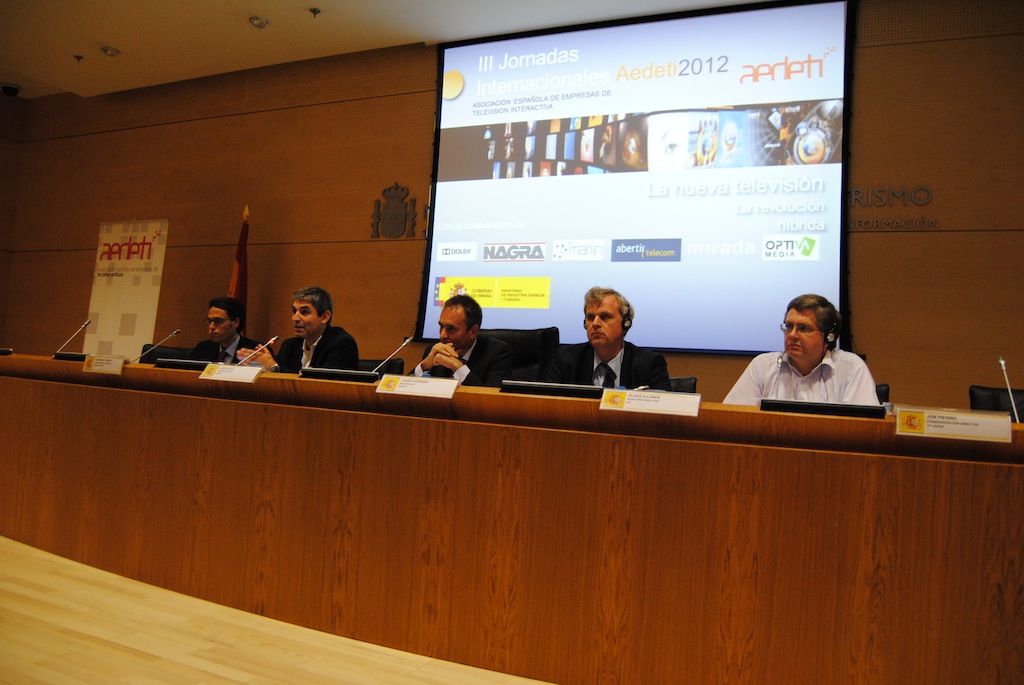
Moderada por Javier Herrero, Vocal de AEDETI, ha tenido lugar una mesa redonda con la participación de Josep Mitjà, Fundador y COO de Wuaki, Klaus Illgner Managing, director de IRT y Jon Piesing , Standardisation director de TP Vision
José María Zamora, Chief Marketing Director en LG Electronics, uno de los desafíos más importante es facilitar el desarrollo unificado de aplicaciones al mismo tiempo que se logra implantar un modelo de negocio rentable.
Zamora ha admitido que “hay cierta guerra entre fabricantes que hace que no haya estándares definidos, aunque HTML5 es hoy por hoy el más extendido. LG ha trabajado”. Además, ha destacado el papel de Smart TV Alliance, lanzada en junio de este año por los miembros fundadores LG Electronics y TP Vision, a los que se incorporó Toshiba poco después, como un importante paso para una experiencia más cómoda para el espectador y rentable para los distintos actores en distintas áreas de la industria de la TV inteligente.
El representante de LG ha remarcado el papel del televisor como aglutinador familiar. “El HbbTv va a devolver al televisor al escalafón que siempre tuvo con nuevas posibilidades interactivas de consumo y participación”.
Zamora ha afirmado que la nube ayudará a la compartición de contenidos ya que el consumidor quiere ver su película favorita en el televisor de casa y continuar viéndola de camino al trabajo en su móvil o tableta de la forma más transparente posible.
La facilidad de desarrollo de aplicaciones para un entorno televisivo y la simplicidad de acceso al contenido son claves según Josep Mitjà. Además, es imprescindible a su juicio una experiencia positiva en el consumo del usuario. Para ello, hay que trabajar aún más con streaming adaptativos y elegir el CDN que más convenga al usuario para evitar la frustración que supone un corte. Por otro lado, ha destacado que la tecnología debe ser muy transparente para el consumidor.
Illgner, por su parte, ha puesto énfasis en la necesidad de una estandarización para lograr una experiencia de consumo de contenidos sin ningún tipo de costuras o irrupciones entre diferentes dispositivos. Sobre la preguntar de si algún día el HbbTV podría ser un estándar a escala global, Illgner ha reconocido que la especificación está universalizándose. En el caso de América Latina y Asia-Pacífico, la Comisión Europea no está financiando, por el momento, ningún proyecto de investigación para impulsar HbbTv en la región.
Piesing considera que ante un mayor número de dispositivos, se hace necesario adaptar y parametrizar las aplicaciones de los desarrolladores lo que está dificultando que se asiente un modelo de negovio viable. Por ello, entiende que la única forma de reducir costes es caminar hacia una estandarización.
El papel de los radiodifusores
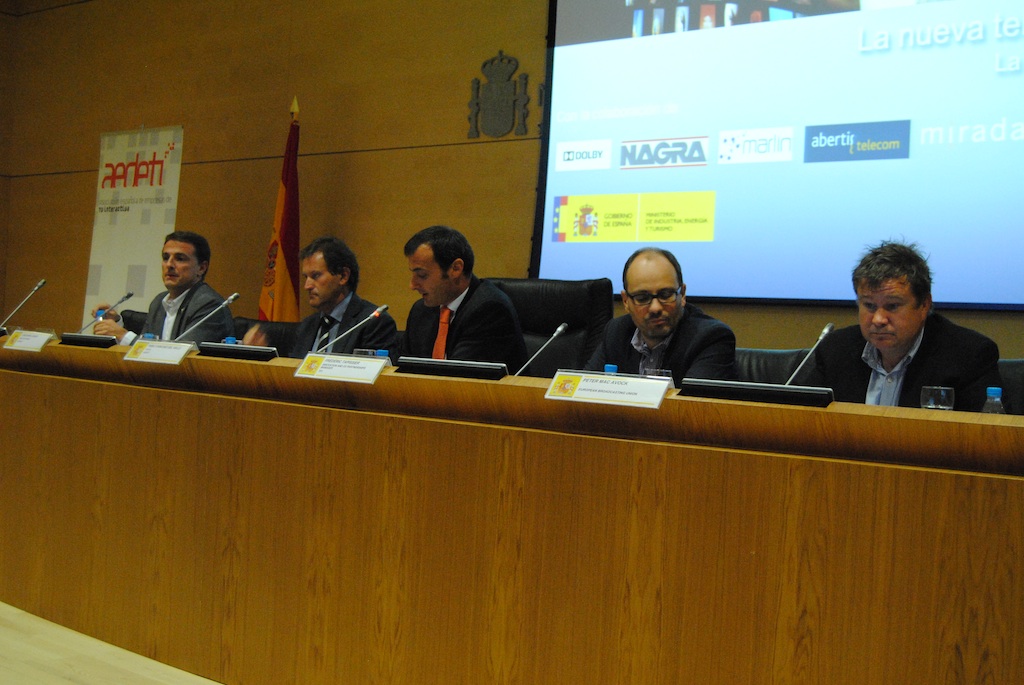
Moderada por Pablo Sánchez del Valle, vocal de AEDETI, un panel de expertos ha reunido en la misma mesa a José María Casaos, director técnico de Antena 3; Carles Manteca, Jefe de Programación y Servicios Interactivos (TVC); Frédéric Tapissier, Innovation and CE partnerships Manager (TF1) y Peter Mac Avock, en representación de la Unión Europea de Radiodifusión.
Carles Manteca ha afirmado que “la televisión híbrida amplía las emociones, y abre una ventana a nuevos consumidores con nuevos contenidos y players. Las emociones será la clave del éxito considernado la facilidad de uso, por ejemplo. Cualquier desarrollo técnico debería tener muy en cuenta al usuario que es quien financia toda la cadena como consumidor de publicidad o por pago de contenidos. La televisión híbrida supone mayor consumo, mayor posibilidad de crecer, aunque suponga más competencia”.
“La televisión conectada si fuera una amenaza, deberíamos convertirla en una oportunidad. Los radiodifusores hemos demostrado una gran flexibilidad y adaptación a nuevos retos como ha quedado patente en el desarrollo de nuevos canales derivados de la TDT”, ha comentado José María Casaos. Por parte de Antena 3, juega un papel importante su sistema de gestión multiplataforma con una amplia automatización de procesos para distribución multidispositivo apostando por nuevas oportunidades de negocio.
Frédéric Tapissier ha admitido que “la amenaza está ahí con gigantes como Google o Apple, por ejemplo, que pueden hacer grandes inversiones sin pagar apenas impuestos en los países en los que operen con contenidos. La manera de convertir la tv conectada en un éxito es gestionar los flujos de trabajo de forma adecuada. Por ello, en TF1 hemos invertido tiempo y recursos en HbbTv teniendo gran éxito en nuestra iniciativa de estandarización. La televisión, no hay que olvidar, que se creó para el vídeo. El resto, será siempre nicho. Ahora, los usuarios pueden tener acceso a una nueva forma de consumir vídeo en Internet, pero lo que busca la gente es contenido de primera calidad”.
Peter Mac Avock, por su parte, considera que “la tv híbrida es una oportunidad. No debemos olvidar que esta oportunidad debemos aprovecharla basándonos en los modelos de televisión lineal que destacan por su simplicidad. No veo a la televisión como un dispositivo multimedia como si fuera un ordenador, sino que seguirá siendo la principal puerta para el consumo de vídeo”. Es importante que las normas que se se aplican a los radiodifusores sean también de obligado cumplimiento para todos los miembros de la cadena que están entrando en la distribución de contenidos, ha afirmado Mac Avock.
Por otra parte, ha recordado que para replicar el actual modelo de distribución de contenidos de los broadcasters en la situación actual de las redes significaría, para llegar a la misma cobertura, multiplicar por entre 2 y 5 veces el coste de distribución con respecto a la radiodifusión tradicional.
En la clausura de esta jornada, el subdirector general de Inspección de las Telecomunicaciones, Ricardo Alvariño, ha mostrado su satisfacción por el consenso alcanzado entre toda la industria, como fabricantes, radiodifusores y creadores de contenidos a la hora de poner en marcha la interactividad de la televisión digital terrestre. Alvariño, que clausuró este miércoles las III Jornadas AEDETI, recordó que “en 2002 se firmó un acuerdo entre todos y no estuvimos acertados”.
El camino no ha sido fácil, en opinión del subdirector general y agradeció a AEDETI “haber mantenido la llama de la interactividad encendida durante estos años”. “La plataforma MHP no cuajó , quizás por la ausencia de un canal de retorno, o porque quizás no era el momento propicio para su puesta en marcha”.
Ahora, diez años después, sí cree que en su idoneidad porque “se produce una conjunción de factores, como la generalización de la banda ancha, las nuevas posibilidades de acceso con las tablets, la mejora en los usos y costumbres, la fabricación de receptores conectados y el que todos los radiodifusores están involucrados”. Por todo ello Alvariño considera que “ahora sí es factible el despegue de la televisión conectada”, aunque puntualizó que “aún quedan pasos que recorrer para tratar de garantizar la interactividad”.
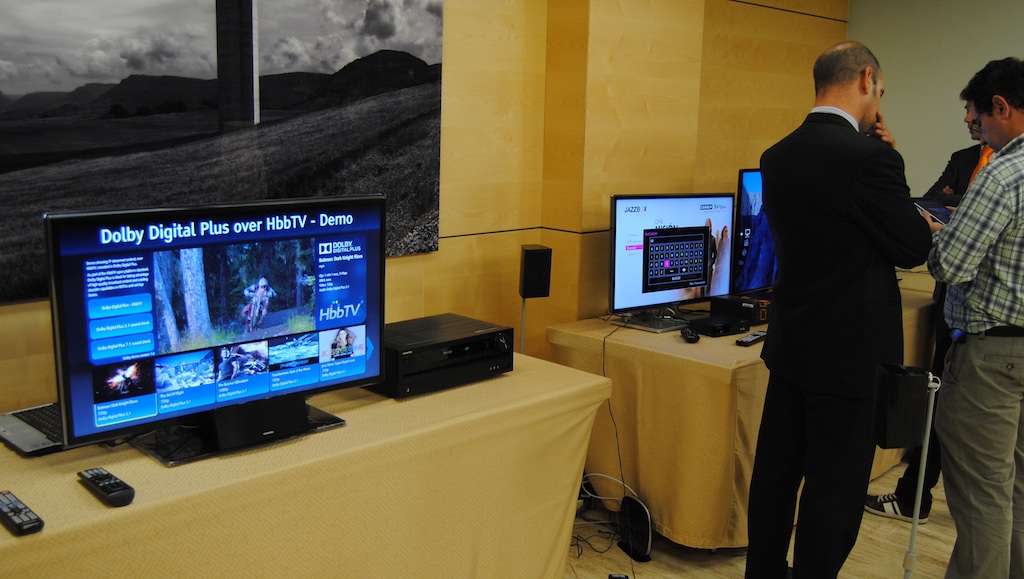
Las III Jornadas Internacionales de AEDETI han contado con la colaboración de Dolby (empresa que ha llevado a cabo demostraciones de audio 5.1 en un entorno HbbTv), Nagra, Marlin, Abertis Telecom, Mirada y Optiva Media.
[youtube]http://www.youtube.com/watch?v=B-uz7-uTiCU[/youtube]
[youtube]http://www.youtube.com/watch?v=RoLzTQvmpbw[/youtube]
[youtube]http://www.youtube.com/watch?v=xJMiiJxeoho[/youtube]
Did you like this article?
Subscribe to our NEWSLETTER and you won't miss anything.
Related articles
 Los broadcasters portugueses debaten sobre el futuro de la tecnología broadcast en BMS Talks
 Los nominados a los Premios Iris a Mejor Ficción debaten sobre la situación en la industria audiovisual
 Connecting Media: los expertos debaten sobre la verdadera transformación digital del broadcast al IP
 Los profesionales debatirán en BIT Audiovisual sobre temas candentes en la industria como televisión híbrida, nube, 4K y redes 5G
 Los profesionales debaten sobre promoción comercial y cultural del cine español en el extranjero
 XVI Jornadas Profesionales ‘Brand in Media. La Revolución Over The Top’
 Directivos de la UER debaten en Madrid sobre el marco regulador en el entorno digital
 Arranca la 4K-UHD Summit en la que expertos de todo el mundo debaten sobre Ultra Alta Definición
 Broadcasters, operadores de red y telcos debaten sobre el futuro de la banda UHF
 Paul Lee abrirá la Jornada ‘El futuro de la televisión: La televisión Híbrida’
 La revolución híbrida a debate en Broadcast IT
 La nueva televisión: la revolución híbrida
 II Jornadas AEDETI: “la nueva televisión, la revolución híbrida”
 Vodafone Internet Tv: la nueva televisión híbrida llega a España