





A Televés satellite dish, chosen as one of the objects of the National Museum of Science and Technology
The 2.8 meter diameter satellite dish with which the simultaneous reception of signals from up to three satellites was possible for the first time in Spain is part of the MUNCYT.
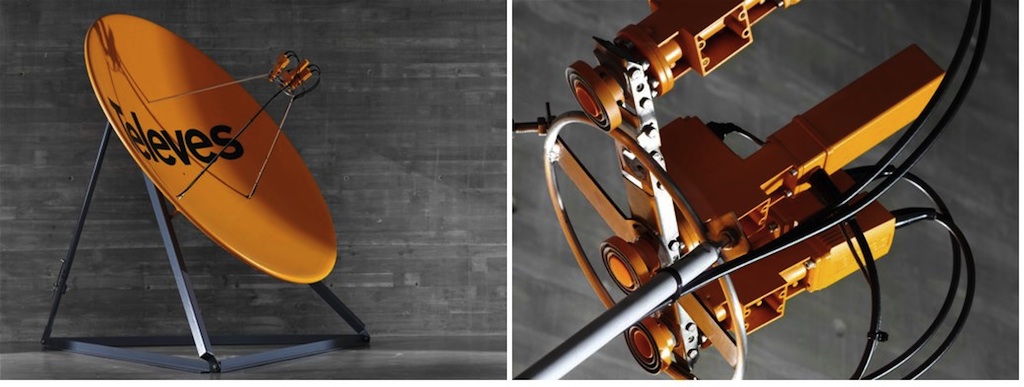
The parabolic Televes with which for the first time in Spain it was possible the simultaneous reception of signals from up to three satellites, is now part of the new room dedicated to the 20th century of the National Museum of Science and Technology (MUNCYT) at its headquarters in A Coruña.
With its 2.8 meters in diameter, it is the largest piece in the exhibition and will share exhibition space with pieces as representative of the evolution of science and technology in Spain as a SEAT 600 automobile, a Macintosh Plus Apple personal computer or a sewing machine from 1904.
Televés' innovative vocation has distinguished the company since its founding in 1958, and has allowed it to develop and launch hundreds of cutting-edge products, remaining at the international forefront of technology for the reception, measurement and distribution of radio-television signals.
Under the title of Cachivaches, the room dedicated to the 20th century completes the exhibition discourse of the A Coruña headquarters of the National Museum of Science and Technology and, as José Ignacio Fernández Vara, general director of the Spanish Foundation for Science and Technology, highlighted at the inauguration, conveys to the public the idea that research, development and innovation must always go together.
The new room has an area of 500 square meters and is divided into one hundred spaces, one for each year. In each one there is an object related to science and technology, often in terms of everyday life: appliances, vehicles, consumer products, toys... There are also professional tools, and materials from industries or laboratories that help define technical progress during the century.
Ramón Núñez Centella, director of MUNCYT, explained in the exhibition presentation that this tells one of the possible stories about the evolution of technology in Spain and the way in which it has impacted the lives of citizens.
Did you like this article?
Subscribe to our NEWSLETTER and you won't miss anything.
Related articles
 ITV News strengthens its relationship with LiveU by deploying its technology to the national and regional fleet of reporters
 The National Taiwan Museum debuts an 8K immersive piece shot with Blackmagic
 The new Academy of Motion Picture Museum (USA) opens its doors with Christie technology
 STEAMBites is born, the new online training platform in Science and Technology for young people
 I National Congress 'Women in Engineering, Technology and Industry' in Valencia
 The Portuguese Foundation for Science and Technology integrates a Dante network
 Malaga becomes the national capital of 5G technology
 Porto Canal relies on VSN technology to renew its image and offer broader national coverage
 Cuatro celebrates ten years, positioning itself as the third television of the national commercial networks
 Andalusia consolidates itself as a destination for national and international film and television filming
 Canon technology, chosen to cover the World Cup in Brazil
 LiveU technology, chosen by leading Spanish newspapers to produce online videos
 How technology changed my life
 'Tell me how it happened', National Television Award