





Sapec launches Sivac One, a new modular MPEG-2 / H.264 system that allows up to 3 encoders in 1RU
The Spanish manufacturer brings to NAB all the experience accumulated in offline 4K encoding, as will be evident in the demonstrations it will carry out at its stand with 4kp50 10-bit encoding in HEVC 4:2:0.
Sapec comes to Las Vegas this year with great news with which to provide complete coverage to all broadcasters and telcos on the American continent, largely through its headquarters in Mexico and Colombia, and through all the distributors it has spread throughout the continent.
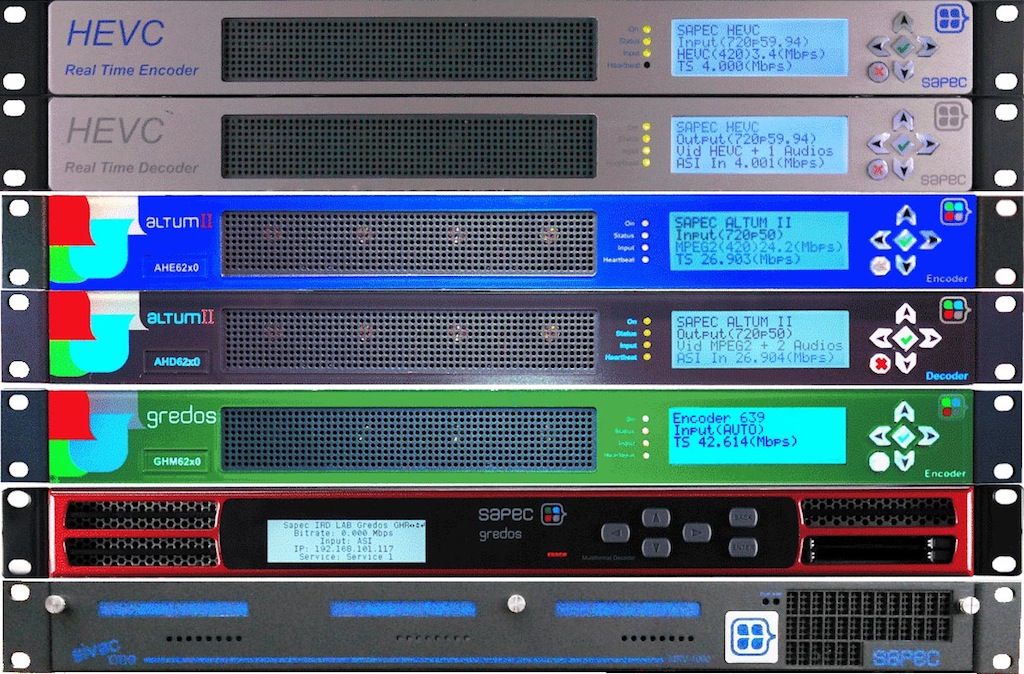
Sapec's R&D&I continues working on its successful real-time HEVC Encoder and Decoder, equipment with ITU-H.265 implementation that will be 100% operational at stand SU-11.413 at this NAB 2015.
Among the main features of the new versions of these real-time HEVC encoders and decoders, with support for SD and HD interlaced signals, include 10-bit video coding (Main10@L4) and MPEG/AAC/ Dolby Digital/Dolby Digital Plus audio coding (with up to 8 stereos).
The outputs are DVB-ASI and/or Ethernet 100/1000 under the SMPTE 2022-2 standard, and allow the bitrate to be reduced, although with the same video quality.
It is a device with a 1RU Chassis with a Redundant Power Supply of a high level of engineering designed and designed for large broadcasters and telcos worldwide.
Optimal transmission for optimal resolution
The experience of Sapec's R&D&I team in 4K coding has continued to expand throughout this last year. An example of this has been its latest participation in the latest edition of the Mobile World Congress (MWC), 2015, held from March 2 to 5 in Barcelona, within the project of the telecommunications infrastructure operator of the Abertis group, which showed in its exhibition area – Congress Square, Spain Pavilion – the latest advances in the DTT environment, with demonstrations of UHD broadcasting over DVB-T2 and on Hbbtv.
Regarding the demonstration of UHD broadcast over DVB-T2, Sapec, as in the three previous editions, was in charge of the compression of the content that was shown, using the HEVC coding standard (ITU-H.265) used for the second consecutive year.
At booth SU-11.413 at the Las Vegas Convention Center we can see this HEVC encoding in 4K (4kp50) in 4:2:0 at 10 bits.
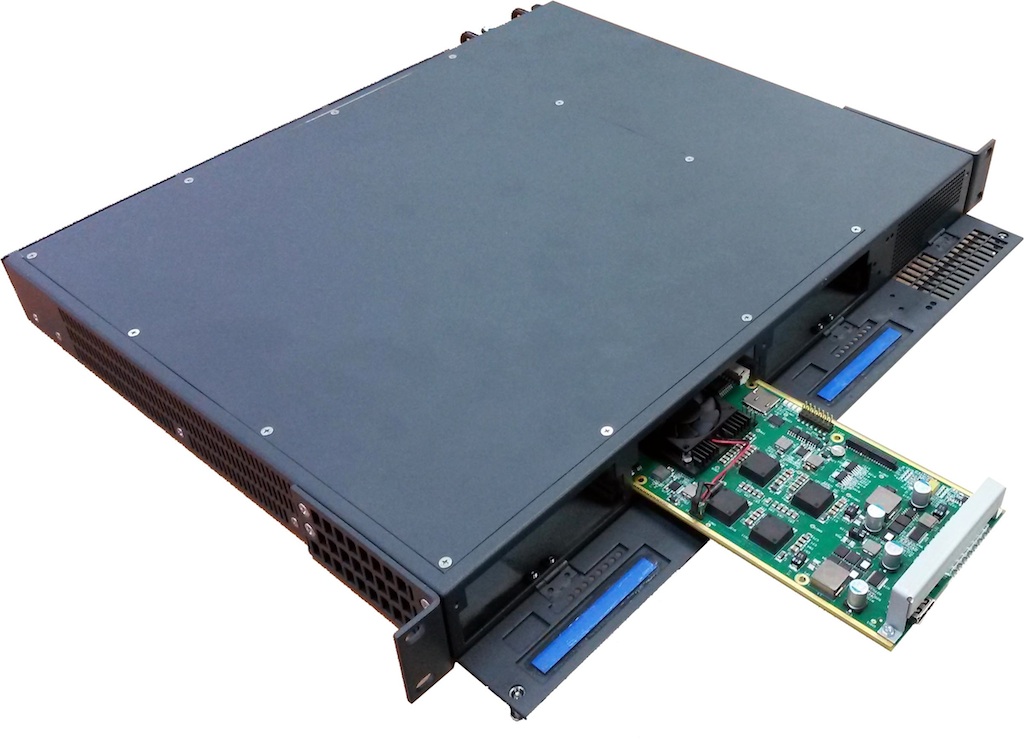
New Sivac One
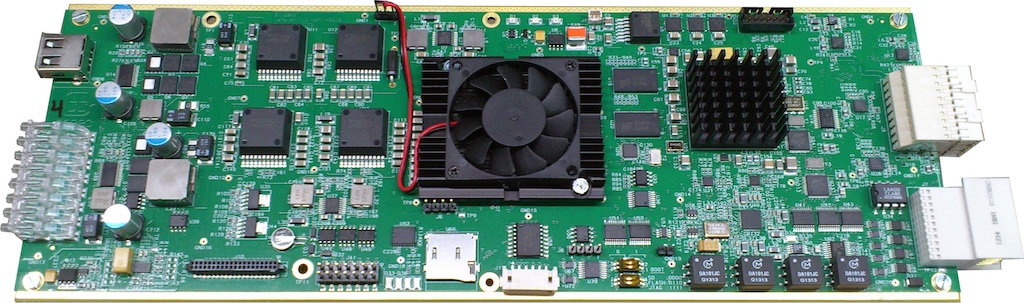
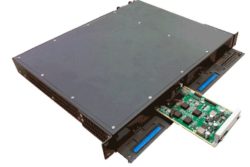
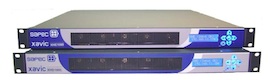
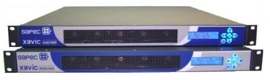
The new Sivac One modular coding system will be one of Sapec's great revelations at this NAB 2015. It is a device capable of including up to three encoders in only 1RU (allowing Hot Insertion), and has a redundant power supply. The new Sivac One has MPEG-2 and H.264 encoding with 4:2:2 and 4:2:0 profiles, and 8 and 10 bit support, with HD-SDI inputs (1 video / 16 audio), audio inputs (4 AES-EBU), generation of up to 8 PMTs and two ASI and two IP outputs (SMPTE 2022).
Gredos Family
Sapec also comes with its range of products that aim to offer solutions for the transport of the signal through satellite with lower consumption, less space and lower cost: The equipment for Gredos satellite applications includes a video encoder and a DVB-S/S2 satellite modulator in only 1RU. All encoding algorithms have the same quality as the Altum II family, but also with a DVB-S/S2 satellite modulator.
The modulator supports the DVB-S, DVB-S2 and DSNG standards in addition to the Carrier ID, mandatory in DVB-S2, with a Roll-off factor up to 0.05 and modulation up to 32-APSK, with the novelty that it can be upgradeable through software to the new DVB-S2X and multistream features.
For its part, the fourth generation encoder supports HDTV (and/or SDTV) as well as MPEG-2 and/or H.264, including 4:2:2 profiles, and has simultaneous outputs via ASI, Ethernet and L-Band. Among the characteristics of the Receiver-Decoders (IRD's), we highlight that it has L-band, Ethernet and ASI inputs, supporting MPEG-2 and/or H.264, including profiles 4:2:2, and allows redundancy management between inputs, as well as signal forwarding via Ethernet and/or ASI.
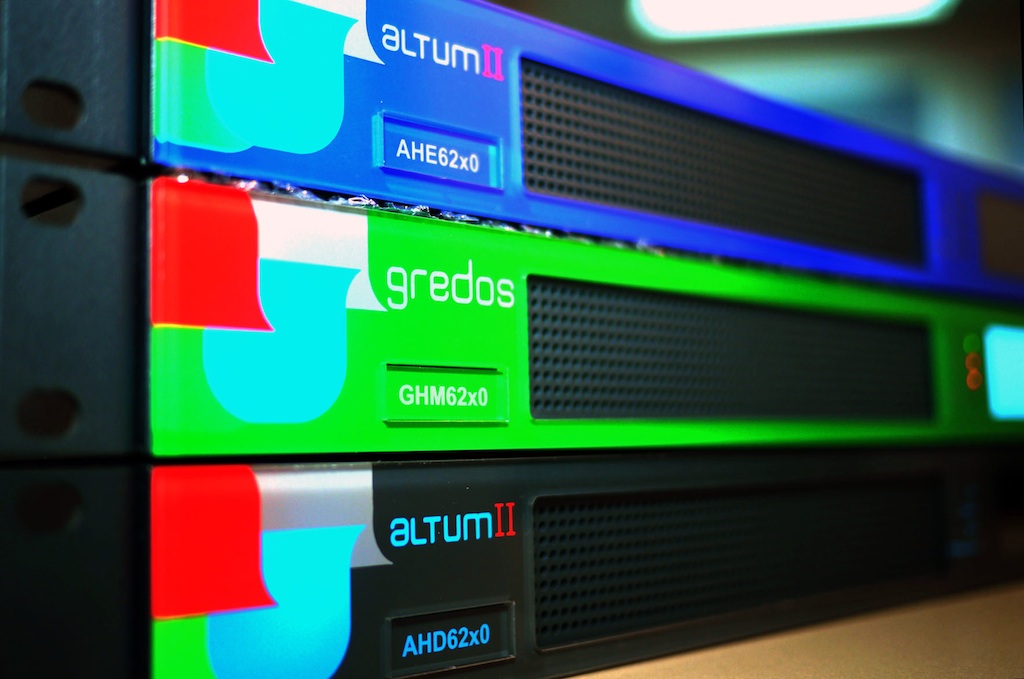
Fourth generation Altum II
The Altum II now have lower consumption, more features and lower cost.
These are MPEG-2 / H.264 encoders and decoders that have 4:2:2 profiles that support HD and SD, and have the novelty of PSI / EPG insertion (from the company Triveni Digital).
It has two ASI and two IP interfaces, with input/output interfaces via IP for networks without QoS and has a redundant AC/DC power supply. And now they include a larger capacity Display that allows you to configure all the encoder parameters from the front of the device.
The equipment greatly improves the compression algorithms, with a lower bit-rate, but with the same image quality; reduce total video-to-video latency by 20%; They are committed to an environmental commitment with the improvement of energy efficiency (reduction of consumption by 30%); They have N+1 redundancy without external managers and with the possibility of re-broadcasting the TSoIP received by the decoder to another destination.
Multiviewer QView
Finally, we highlight the QView 3G-SDI multiscreens – multiviewers, developed and manufactured by DQE that will be exhibited at the SAPEC stand in Las Vegas (Stand: SU11413). These are compact 1RU and ½ rack devices with 3G / HD / SD-SDI, optical and HDMI inputs, and HDMI and HD-SDI outputs, and now with the capacity of up to 8 auto-sensing inputs.
This low-latency QVIEW Multiviewer is a multi-screen processing system based on autonomous units, very easy to use, ideal for monitoring high-quality signals in studios, mobile units and in the field. It has up to 10 memory presets, VU meters, UMD, Tally, Time Code, clocks, and up to 32 inputs to one output, through cascade connection.
Did you like this article?
Subscribe to our NEWSLETTER and you won't miss anything.
Related articles
 ARRI lights up IBC 2023 with new SkyPanel X modular system
 Sapec's Sivac-one encodes 4K UHD broadcasts Spain
 NEC will present at CineEurope 2019 the new NC2402ML that integrates a modular laser light system with a projector head
 Sapec will present a new modular encoder from the Sivac family at NAB
 Sapec coders unite the Congress of Deputies with Torrespaña
 A new DJI system allows you to avoid obstacles in flight
 Sapec encoders at the Pan American and Paralympic Games
 Sapec will unveil the Altum family of encoders at IBC
 Sapec will demonstrate the improvements in its Sivac line at NAB
 Sapec will present encoders with H4:2:2P contribution profile for H.264 in SD and HD at NAB
 Percon presents the new 1RU modular fiber optic system from Opticis
 Sapec supplies encoders and decoders to Tv Castilla y León
 Sapec will present the H4:2:2P profile in its new MPEG-4 encoders at IBC
 SAPEC: new HD MPEG 2 and H.264 decoders