





Optimization of the DTT network in ISDB-T/Tb environments
IP, OTT, DTO (download-to-own) y el acceso a contenido móvil son tendencias principales en los mercados desarrollados y una opción en crecimiento en muchas otras regiones. Pero, ¿cómo optimizar estas redes?
No hay duda de que hoy en día el mundo de la distribución de contenidos es un escenario rápidamente cambiante. IP, OTT, DTO (download-to-own) y el acceso a contenido móvil son tendencias principales en los mercados desarrollados y una opción en crecimiento en muchas otras regiones. Sin embargo, antes de descartar la televisión de broadcast tradicional, vale la pena recordar que para la gran mayoría en todo el mundo, el IP es, en el mejor los casos, parte de nuestro mundo de entrega fragmentada y no la principal forma en que se recibe el contenido televisivo. La entrega de broadcast probada y confiable (ya sea analógica o digital, por satélite, cable o terrestre) sigue predominando en grandes zonas del mundo. En el mundo de la señal abierta, la entrega digital terrestre constituye hoy el método más eficaz, especialmente cuando se requiere de contenido regional.
De acuerdo con un informe de Digital TV Research de julio de 2013, el número de hogares que recibirán señales de TDT en 2018 será más del doble que en 2013, equivaliendo a 553 millones a nivel mundial. El número de hogares recibiendo principalmente TDT (aquellos sin suscripción de cable, IPTV o satélite y que usan esencialmente TDT) también se duplicará en ese período a 380 millones. Y la mitad del contenido proviene de canales de televisión regionales.
Enensys es conocida en el mundo de DVB por sus tecnologías de optimización de red y regionalización. Estas abordan codificación/multiplexado y transmisión, y están diseñadas para crear redes optimizadas que a su vez posibilitan oportunidades de monetización más eficientes. Esto es vital en el entorno de TDT. Sus más recientes éxitos incluyen instalaciones con Thai PBS para el lanzamiento de una red de TDT; Thai TV5 y también con Televisa.
 Desde hace algún tiempo, Enensys ha estado explorando los mercados latinoamericanos y evaluando donde sus productos pueden proporcionar un beneficio real en un entorno ISDB-T/ISDB-Tb, en comparación con el DVB-T/T2. También ha dedicado mucho esfuerzo en el proceso de reingeniería, una vez completada la evaluación inicial. Como resultado, ha desarrollado OneBeam, una de sus soluciones líderes de TDT para ayudar a los mercados de LatAm a reducir Capex y Opex. Sin embargo, el sistema ha evolucionado desde su iteración de DVB para abordar cuestiones específicas de ISDB-T.
Uno de los problemas clave que aborda OneBeam es la naturaleza específica del stream de transporte de broadcast (BTS) en ISDB-T. Esto a su vez requiere un equipamiento específico que no es interoperable para recibir señales. Debido a la forma en que está diseñado el ISDB-T, también puede haber ineficiencias de ancho de banda significativas dentro de un stream de transporte.
En un entorno ISDB-T normal, un BTS específico tiene que ser generado en la cabecera de emisión, con mecanismos propietarios de compresión, para hacer frente a los streams ISDB-T altamente especializados. Por ejemplo, los operadores de cable requieren equipamiento propietario adicional para decodificar y leer la señal BTS. Además, el ISDB-T requiere un stream de 32 Mbit/s, independientemente del número de canales o servicios incluidos, siendo una opción costosa cuando se entrega contenido vía satélite para cabeceras de TDT, como es el caso general en América Latina desde una perspectiva geográfica.
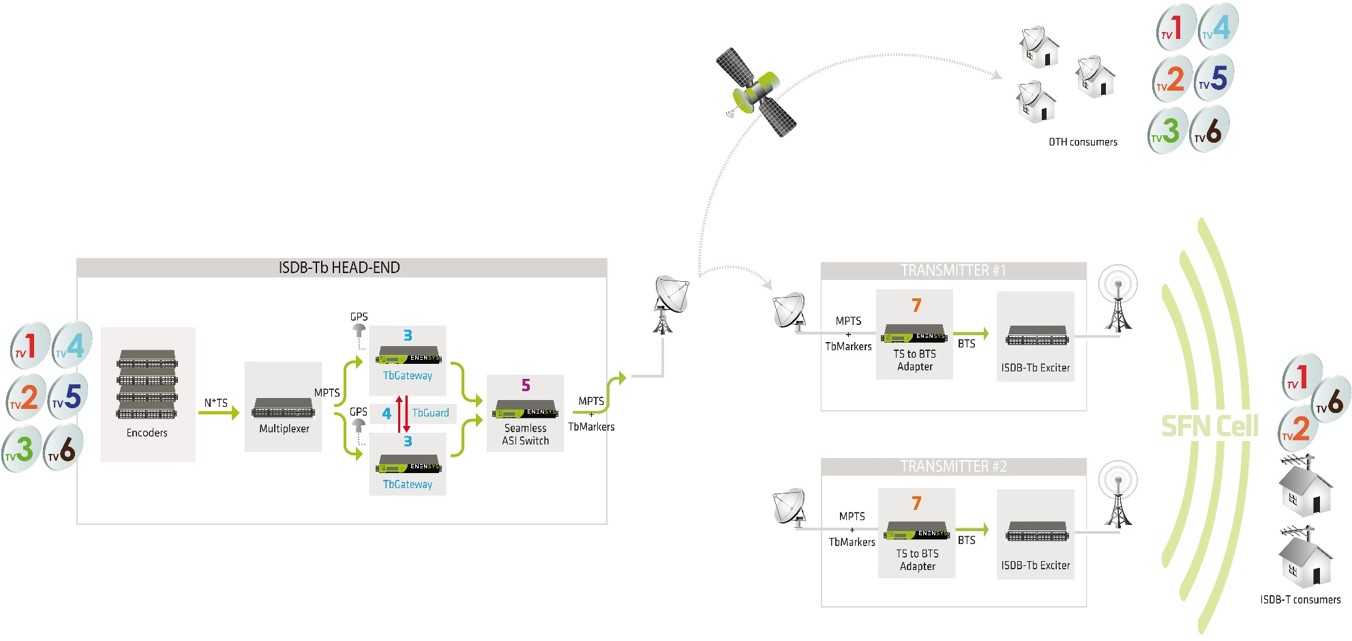
En el contexto del ISDB-Tb, OneBeam ofrece la posibilidad de utilizar un stream de transporte (MPEG-2) estandarizado dentro de la red de distribución. Como resultado, no se requiere equipamiento propietario para acceder o monitorear el stream de contenido. El contenido regional se gestiona con mayor facilidad a través de una ubicación central, mientras que se puede utilizar sistemas CAM estándar para proteger el stream de contenido. El uso de ancho de banda también se puede optimizar de manera más eficaz, ya que el sistema sólo envía el contenido que está siendo utilizando a través de la red de distribución.
El mismo stream de transporte MPEG-2 se puede entregar vía satélite como a través de la red de TDT. Esto significa que los servicios pueden ser fácilmente monitoreados a través de la red de entrega debido a la señal MPEG estandarizada. También significa que los operadores tienen una red de entrega con múltiples servicios. En cada sitio de transmisión ellos pueden seleccionar fácilmente los servicios que se requieren, de esta manera utilizarán una red de distribución a través de múltiples regiones, posibilitando la regionalización. El BTS que se genera en el sitio de transmisión final está donde está el contenido, que es adaptado para SFN y asociado con las diferentes capas relacionadas que existen dentro del stream de ISDB-T. En este caso, OneBeam actúa como un generador de BTS determinista.
 Usando OneBeam, una señal de transmisión normal se puede utilizar en la red de distribución. Esto a su vez ofrece una opción eficiente y fácil de manejar para contribuciones habilitadas, contribuciones de afiliados, retransmisión analógica (usando IRD con salida analógica) o transmisión digital en entornos MFN y SFN.
En el contexto de ISDB-Tb, OneBeam permite que cuatro servicios diferentes (contribución de operador de cable, contribución de afiliado, streams de transporte terrestres analógicos y señales digitales terrestres) sean manejados dentro de un único stream de transporte, proporcionando importantes ahorros de costos y oportunidades de monetización adicionales.
Cada estación de televisión afiliada necesita recibir el contenido en un formato que pueda reutilizarse fácilmente y también insertar su propio contenido local. Es por eso que las emisoras locales necesitan una red de entrega dedicada con stream de transporte MPEG estándar. Los operadores de cable también se benefician de esta flexibilidad y hay una gran cantidad de operadores en toda la región. Ellos también pueden utilizar la red de distribución del mismo modo que los afiliados locales.
Incluso en una situación de desconexión analógica, la entrega analógica terrestre sigue siendo requerida y, mediante el uso de la red de distribución que hemos descrito anteriormente, no hay necesidad de una red de distribución analógica separada. Por último, tenemos la distribución de servicios a una red de TDT en la mejor calidad posible. Todas estas aplicaciones pueden usar la misma red de distribución, con el ahorro de costos asociado, gracias a que los equipos receptores de MPEG-2 estandarizados se pueden utilizar para recibir el stream de transporte.
También se puede utilizar banda Ku para entregar el mismo stream vía satélite, brindando como beneficio adicional la capacidad de ofrecer simultáneamente un servicio TDH. Esto puede ser usado para cubrir los puntos sin cobertura existentes, permitir a las emisoras llegar a más clientes y ofrecer una mayor variedad de servicios de televisión a los clientes existentes, todo sin la necesidad de dos redes separadas para TDH y TDT.
Richard Lerhmitte
Vicepresidente de Ventas y Marketing de Enensys

Did you like this article?
Subscribe to our NEWSLETTER and you won't miss anything.
Related articles
 Viaccess-Orca will unveil its AI-based video optimization solutions at NAB 2024
 Calibrite Profiler: Easy Color Optimization for Everyone
 La tecnología basada en datos de Jump prueba con RTVE la optimización del etiquetado de vídeo
 Tedial bases cost optimization on artificial intelligence
 Enensys acquires Expway, a company specialized in mobile video streaming optimization software
 TeamCast launches a solution for automatic optimization of satellite links
 Yamaha launches switches with Dante optimization and network visibility
 Philippines opts for ISDB standard
 Thomson Video Networks will focus its presence at IBC 2013 on optimizing bandwidth in OTT services
 Guatemala opts for ISDB-T
 Ericsson continues to focus on network optimization for multiplatform distribution
 New range of DVB-T2 and ISDB-Tb equipment from Itelsis
 Uruguay will begin its ISDB-T emissions in 2012
 South Africa's firm commitment to DVB-T2 versus ISDB-T